One unpaid tenancy can cost far more than the rent that never arrived. The cost of a bad tenant in Ottawa can include arrears, repairs, vacancy, eviction-related expenses, and NSF, tribunal, or enforcement fees.
It’s understandable to focus first on missed rent, but that’s only one part of the financial impact. Damage, time spent preparing an empty unit, and the steps involved in regaining possession can add costs and uncertainty for landlords.
This article explains how those costs add up, which fees may arise, and practical ways to reduce financial risk. It also covers how tenant placement, inspections, and ongoing property oversight can help landlords manage the process.
Key Takeaways
- Unpaid rent is only one part of the financial impact; vacancy, repairs, and the steps involved in eviction can add to the total.
- NSF, tribunal, and enforcement charges may add to a landlord’s costs, so track each charge and keep clear records as the situation unfolds.
- Compare a difficult tenancy with ordinary turnover by accounting for lost rent, repair work, and the time needed to prepare and re-rent the unit.
- Reduce avoidable risk with careful tenant placement, regular inspections, and organized financial records.
Bad tenant costs, including missed rent, property damage, eviction fees, and vacancy
The cost of a bad tenant in Ottawa reaches beyond unpaid rent. These examples show why property owners should track arrears, damage, vacancy, and enforcement separately.
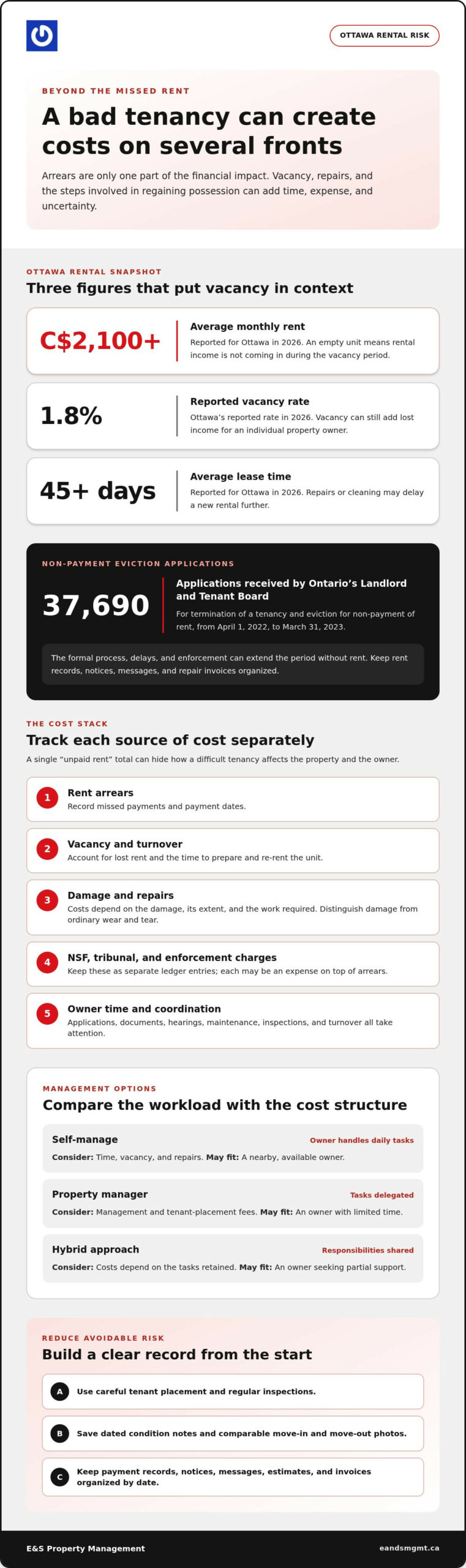
Vacancy adds another layer. In 2026, average monthly rent in Ottawa was more than C$2,100, the reported vacancy rate was 1.8%, and average lease time was more than 45 days. Each empty day can mean lost income, while repairs or cleaning may delay a new rental. Record the move-out date, repair work, and date the property is ready to market to see where time and money accumulate.
Eviction is not simply a matter of changing locks when rent stops paying. The Ontario Landlord and Tenant Board received 37,690 applications to terminate a tenancy and evict for non-payment of rent between April 1, 2022, and March 31, 2023. Keep rent records, notices, messages, and repair invoices organized. Legal process, delays, and enforcement can extend the period without rent and add expense.
Property management fees in Ottawa commonly take the form of a monthly percentage of collected rent, and some companies charge separately for placing a tenant. Compare the full fee structure with the time you spend coordinating rent, maintenance, inspections, and turnover. Consider your workload and distance from the property, not just the number of units.
Tenant insurance can help cover a tenant’s belongings and personal liability, but it is separate from a landlord’s property coverage. These figures describe tenant insurance, not protection for a landlord’s building or lost rent.
| Option | Time required | Cost considerations | Best fit |
|---|---|---|---|
| Self-manage | Owner handles daily tasks | Time, vacancy, repairs | Nearby, available owner |
| Property manager | Tasks delegated | Management and placement fees | Limited owner time |
| Hybrid approach | Owner shares responsibilities | Depends on tasks retained | Owner wants partial support |
Choose the option that best balances your available time, desired level of oversight, and manageable costs.
NSF, tribunal and enforcement fees
A returned rent payment can mean more than an awkward conversation. Ottawa Community Housing lists NSF, Tribunal/Board, and enforcement fees among charges associated with rent-payment difficulties. For landlords, each may be a separate expense on top of arrears. Record each item separately in your rental ledger rather than grouping everything under “unpaid rent.”
Start with the payment record. Note when rent was due, when payment was attempted, and when the bank returned it. Save the bank notice and tenant communications. Then record each fee separately, with its reason and related tenancy event. This makes the account easier to follow if a tenant disputes a charge or a tribunal reviews the history.
NSF means a payment was returned unpaid, but the basis for any fee matters. Don’t assume every bank or administrative charge can automatically be passed on to a tenant. Keep the bank record, lease, and payment messages together, then assess the charge under the applicable tenancy rules. A clear paper trail helps you respond calmly instead of reconstructing events months later.
Tribunal proceedings can cost time as well as money. Preparing an application, organizing documents, and attending a hearing all take attention away from other property responsibilities. In Ontario, the Residential Tenancies Act governs tenancy requirements, including eviction processes and tenant rights. Put notices, rent records, and relevant correspondence in date order before taking a formal step.
Enforcement is another distinct stage. A landlord’s order stated tenants could be evicted by enforcement if they had not vacated by August 31, 2023. That example shows why an order and the physical recovery of a rental property are not always the same event. Owners should record the order, deadlines, communications, and any enforcement-related expense as separate items.
In Canada, the practical cost varies with the situation and the steps required. Don’t estimate a total from a single fee label. Instead, build a timeline with four columns: event date, action taken, supporting document, and expense. For example, match a returned-payment notice to its date, then connect later tribunal or enforcement records to the same tenancy file.
- Keep bank notices and payment records together.
- Separate NSF, tribunal, and enforcement entries.
- Attach each expense to a dated document.
- Review the timeline before responding to a dispute.
This sequence shows what caused each charge and where the rental account stands. It also gives owners a clearer basis for deciding how to respond to a difficult tenancy.
Estimated cost of repairing tenant damage
Repair costs depend on what was damaged, the extent of the damage, and how quickly the work can be completed. That example shows how costs can reach the tens of thousands when several parts of a property need attention. It is not a standard repair price; each home’s condition and required work determine the expense.
Distinguish damage from ordinary wear before deciding what to document. Ottawa Community Housing says tenants aren’t charged for normal wear and tear, which it treats as regular maintenance. It charges tenants for repairs or maintenance resulting from willful or negligent damage by the tenant, household members, or guests, or from failure to maintain tenancy conditions. This distinction helps owners separate routine upkeep from damage that needs closer review.
Build a reliable record before repairs begin. At signing, save a dated description of the rental property’s condition and clear photographs of rooms, fixtures, and appliances. At move-out, take comparable photos and note specific changes, such as a broken door or damaged flooring. Keep estimates, invoices, and relevant messages together. A consistent before-and-after record explains the work and why repairs were needed.
Once you identify damage, organize the response in a practical sequence:
- Document the condition. Photograph each affected area and describe the issue plainly.
- Separate maintenance from damage. Note which work reflects ordinary aging and which addresses a specific incident or neglect.
- Collect repair details. Keep written estimates, completed-work invoices, and dates in one property file.
- Update the rental ledger. Record repair expenses separately from rent, utilities, and other charges.
For example, a worn finish and a newly broken fixture aren’t the same issue. In Ontario, careful records are especially useful when owners need to explain how a repair relates to the tenancy. Don’t rely on memory months after a tenant leaves; dated records are clearer for everyone involved.
Handle insurance and credit records carefully, too. Keep the repair file separate from insurance correspondence and ordinary credit records so each document has a clear purpose. Don’t assume every repair is recoverable from a tenant or that an estimate guarantees reimbursement. The condition, cause, supporting evidence, and applicable tenancy requirements all matter. A thorough file helps owners assess the actual expense and decide what to do next.
How do the costs of a bad tenant compare with normal vacancy and tenant turnover costs in Ottawa?
Routine turnover has costs, but they’re usually tied to a clear transition: the tenant leaves, the unit is prepared, and marketing begins. A difficult tenancy can add unpaid rent, damage, disputes, and delays before that transition starts. Compare the two by separating planned turnover expenses from losses caused by arrears or avoidable damage.
For a routine vacancy, track the rent lost while the unit is empty, plus cleaning, repairs, advertising, and tenant-placement work. The main cost drivers are the property’s condition, the time required to prepare it, and how quickly a suitable renter is found. Ottawa’s average lease time was more than 45 days in 2026, so owners should include the marketing period in their turnover estimate.
A difficult tenancy can extend several parts of the timeline. Rent may remain unpaid while the landlord addresses the situation; repairs may prevent showings; and legal steps can delay access to the unit. The difference isn’t simply one empty month versus another. Consider whether lost rent, repair work, and delays overlap or compound before the next tenancy begins.
Use a side-by-side worksheet for each property. Start with the same rent figure and compare these categories:
- Ordinary turnover: vacancy, cleaning, routine maintenance, and preparation for showings.
- Problem tenancy: unpaid rent, documented damage, dispute-related expenses, enforcement, and extended vacancy.
- Shared costs: work required before the next renter can move in, regardless of why the unit became vacant.
That last category helps prevent double-counting. For example, if flooring needs replacement before the next renter can move in after either a routine or difficult tenancy, record the repair once. Then note whether the condition reflects ordinary upkeep or documented tenant damage. A dated move-out record and repair invoices support the distinction.
Timing can change the comparison. Treat speed as an operational factor, not a promised result: a unit ready to show, complete records, and prompt scheduling can reduce avoidable gaps. Compare the time saved with the added expense of professional management, without assuming a faster lease is guaranteed.
Judge the totals across the full turnover, not by one line item. A routine vacancy can still be costly, especially if preparation takes longer than expected. A difficult tenancy becomes more expensive when unpaid rent, repairs, and delayed re-renting happen together. Document each event, then compare the final ledger with a routine-turnover baseline for that property.
What steps can Ottawa landlords take to reduce the financial risk of a bad tenant?
Reduce risk before a tenant moves in. Use a consistent screening process for every applicant, review the information provided, and base decisions on documented criteria. At signing, record the rental property’s condition with dated photos and written notes. A clear starting record makes later comparisons more useful if damage or maintenance concerns arise.
Set up rent tracking before the first payment is due. Record each due date, amount received, and communication about missed or returned payments. If a payment problem arises, contact the tenant promptly and keep a written timeline. Ottawa Community Housing says rent for its tenants is due on or before the first day of each month; late payments create a record of arrears.
Early communication can clarify the situation. Ottawa landlords can try negotiating a different payment schedule, such as weekly instead of monthly payments. Document the discussion and agreed arrangement, then track whether payments follow it. A written record shows whether the plan is working and helps owners respond consistently if arrears continue.
Protect the property with regular condition checks and prompt maintenance. Compare current observations with move-in photos, note changes, and save relevant messages and repair documents. This creates a timeline instead of relying on memory. Responding promptly to maintenance issues can also help distinguish a developing repair concern from damage discovered only after move-out.
If rent remains unpaid, organize the tenancy file before considering formal next steps. Keep the rental agreement, payment ledger, notices, correspondence, photographs, and expense records together. The Residential Tenancies Act governs Ontario tenancy requirements, including eviction processes and tenant rights. Depending on the situation and applicable laws, landlords may pursue legal options such as suing tenants or seeking wage garnishment.
Use a simple monthly review to catch gaps early:
- Match rent received against the ledger and flag missed payments.
- Save dated records of tenant communication and agreed payment changes.
- Review property observations and track repairs separately from routine upkeep.
- Keep tenancy documents and expenses in one organized file.
These steps don’t prevent every dispute, but they make the sequence of events clearer. If managing screening, rent records, and property follow-up becomes difficult, get support organizing rental oversight as part of a steadier approach.
E&S Property Management: Full-Service Property Management
E&S Property Management helps Ottawa landlords manage the work involved in renting a home, from tenant placement to ongoing oversight. Its Full-Service Property Management brings key responsibilities together, while its Tenant Placement Service supports the search for a new renter. Regular Property Inspections help document the property’s condition, and Financial Reporting and Accounting keep rental activity organized.
This support can help when rent follow-up, turnover, property checks, and records are difficult to coordinate alongside other responsibilities. Consistent oversight gives landlords a clearer view of their property’s condition and finances without requiring them to handle every task alone.
To discuss property management for your rental, contact E&S Property Management.
Set up a steadier plan for your rental
Organize your rental’s oversight before the next challenge begins. Decide which tasks you’ll handle personally, which records you’ll maintain, and where consistent support could make ownership easier. A practical plan can turn concern about the cost of a bad tenant in Ottawa into steps to protect your property and stay informed.
E&S Property Management offers Full-Service Property Management, Tenant Placement Service, and Regular Property Inspections. These services help landlords coordinate rental responsibilities, prepare for a new tenancy, and keep track of property condition. Choose the level of support that fits how involved you want to be.
When you’re ready to discuss a more organized approach to your rental, contact E&S Property Management. A clear plan can help you move forward with greater confidence and focus.
Frequently Asked Questions
What are the typical financial costs of a bad tenant for an Ottawa landlord?
The total may combine unpaid rent, repairs, vacancy, and costs tied to resolving the tenancy. The cost of a bad tenant in Ottawa depends on how long rent remains unpaid, the property’s condition, and the work needed before re-renting. To estimate the impact, create separate ledger entries for lost rent, repair invoices, vacancy days, and dispute-related expenses. This makes the total easier to assess without mixing costs with different causes.
How much rent can an Ottawa landlord lose during a tenant eviction?
Calculate lost rent by multiplying the monthly rent by the months, or partial months, for which rent isn’t received. The period may include time spent addressing arrears, following the required process, regaining possession, and preparing the unit for a new tenant. Track each stage separately in a calendar and rent ledger. This shows which delays overlap and whether repairs or marketing extend the vacancy after the tenant leaves.
What does it cost to repair tenant damage in Ottawa rental properties?
Repair costs depend on the type and extent of damage, materials, labour, and any related work required. Damage to one fixture, for example, differs from repairs affecting flooring, walls, and plumbing. Compare dated move-in and move-out records, then keep written estimates and final invoices. In Ontario, distinguish tenant-caused damage from normal wear and tear before assessing what the records support.
What are the Ontario rules and costs for evicting a tenant for non-payment or damage?
Ontario’s Residential Tenancies Act governs tenancy requirements, including eviction processes and tenant rights. For non-payment or damage, landlords must follow the applicable legal process rather than treating a tenant’s departure as an informal decision. Costs may arise from preparing documents, tribunal proceedings, and enforcement. Keep the lease, payment history, notices, photographs, and repair records together so the facts and requested remedy are organized for the relevant process.
Can Ottawa landlords recover unpaid rent or repair costs from former tenants?
Depending on the circumstances and applicable laws, landlords may pursue legal options, including suing tenants or seeking wage garnishment. Keep a clear account of the amount claimed, supporting rent records, repair invoices, and communications. Separate ordinary maintenance from documented tenant damage, and don’t combine unrelated expenses. A decision or claim doesn’t mean money has been collected, so record any payments against the outstanding balance.
What are typical legal, filing, and enforcement costs for an Ontario landlord-tenant dispute?
There isn’t one total that applies to every dispute; expenses depend on the steps involved, the records required, and whether enforcement follows. Ottawa Community Housing identifies NSF, Tribunal/Board, and enforcement fees as relevant charge categories. For your file, list each expense by date and reason, then attach its supporting document. This separates direct charges from lost rent, repairs, and the time spent managing the dispute.