
Fair rental policies and planned maintenance can create peace of mind for landlords with demanding careers by clarifying expectations and making repairs easier to coordinate. In Ontario, landlords must not substantially interfere with tenants’ reasonable enjoyment of their rental units or residential complexes. Respectful communication, timely repairs, and careful planning help put that principle into practice.
It’s understandable that maintenance requests and renovation work can be difficult to fit around a full work schedule. Creating peace of mind for landlords with demanding careers starts with a clear process for recording concerns, informing tenants, and coordinating work without losing track of important details.
Fair policies and planned upkeep can make a tenancy easier to manage. Professional oversight can also create peace of mind for landlords with demanding careers by handling coordination, leaving rental responsibilities more manageable alongside a busy work life.
Key Takeaways
- Set clear, fair rental expectations and plan routine maintenance to reduce preventable disruption for tenants and landlords.
- Organize rent collection, repair coordination, and emergency responses around a consistent process that works when you’re managing the property remotely.
- Weigh the time and oversight involved in self-management against the coordination and reporting support a property manager can provide.
- Understand what to examine when assessing a management company’s credentials and reputation before entrusting it with your rental.
Fair rental policies, maintenance, and repairs
In Ontario, fair rental practices combine clear tenancy expectations with timely attention to maintenance and repairs. A consistent process helps protect tenants’ enjoyment of their homes while keeping property responsibilities manageable around a demanding career.
Fair rental policies and property upkeep
Fair rental policies set reasonable expectations for tenant conduct, communication, access, and upkeep. Clear terms can prevent avoidable disputes. Put agreed responsibilities in the tenancy agreement and explain how tenants can report a disturbance or repair need.
Ontario’s Residential Tenancies Act, 2006 prohibits substantial interference with a tenant’s reasonable enjoyment of the rental unit or residential complex. It also prohibits landlord harassment, obstruction, coercion, threats, or interference. In practice, a complaint about repeated noise calls for a prompt, documented response, not an assumption that the issue will resolve itself.
Remote rent and repair workflows
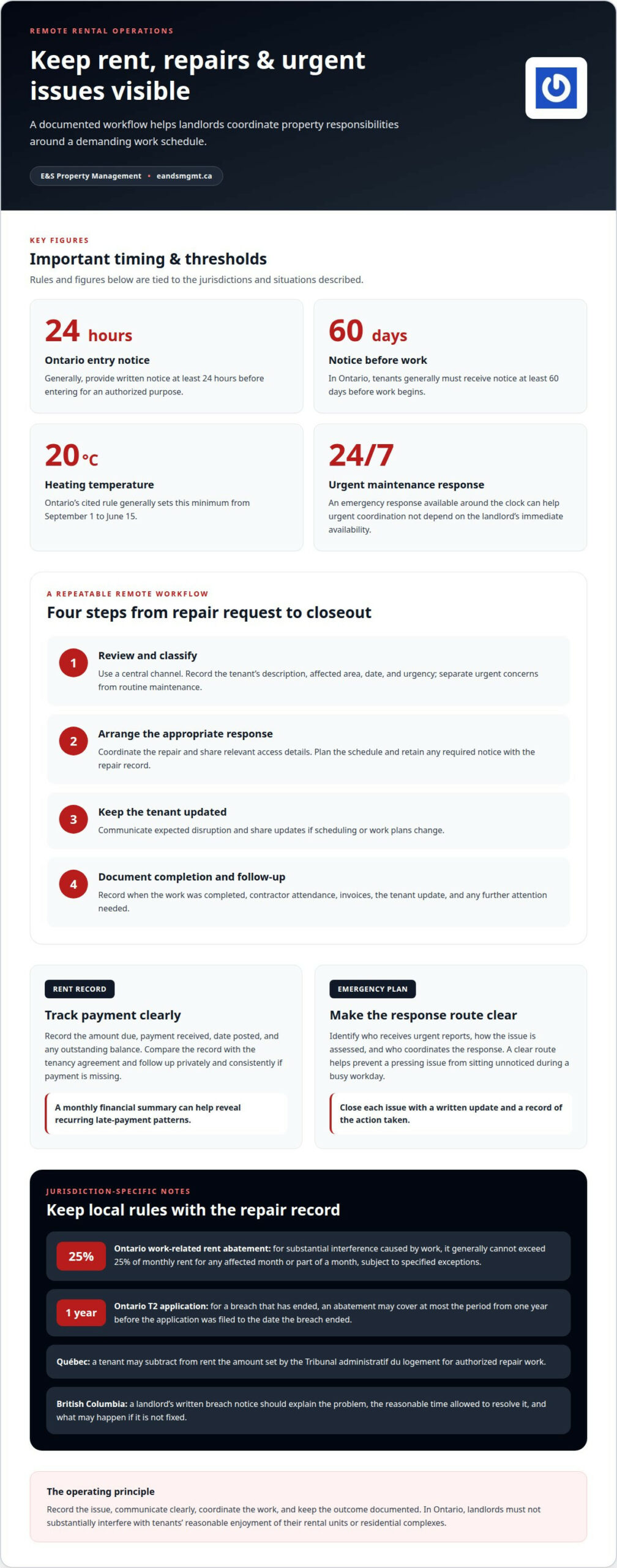
A remote workflow records rent status, maintenance requests, decisions, and follow-up in one consistent process. This is useful when work commitments make it difficult to respond to every message immediately or attend a property in person.
For example, log each repair request with its date, location, reported impact, and next action. A leaking sink and a loss of heat require different responses, so classify the issue, arrange appropriate attention, and record when it is resolved and how the tenant was updated. A written record also clarifies agreed responsibilities and timing.
Ontario’s entry rules support orderly scheduling: landlords generally must give at least 24 hours’ written notice before entering for an authorized purpose. For work, landlords generally must give tenants notice at least 60 days before it begins. Plan the schedule, communicate the expected disruption, and keep the notice with the repair record.
Heating is another upkeep priority. Ontario’s cited rule generally sets a minimum temperature of 20 degrees Celsius from September 1 to June 15. A planned maintenance calendar can prompt timely checks of heating equipment, while documented requests help identify recurring problems before they disrupt residential enjoyment.
What are the steps for handling rent collection, repairs, and emergencies remotely?
Remote management works best when rent, repair requests, and urgent incidents follow separate, documented workflows. A shared record keeps each issue visible when a landlord is travelling, in meetings, or managing several responsibilities at once.
For rent collection, record the amount due, payment received, date posted, and any outstanding balance. Compare the record with the tenancy agreement, then follow up privately and consistently if payment is missing. A monthly financial summary can reveal patterns, such as recurring late payments, without relying on scattered messages or memory.
For repair requests, use a central channel and record the tenant’s description, affected area, date, and urgency. Then:
- Review the report and separate urgent concerns from routine maintenance.
- Arrange the appropriate repair response and share relevant access details.
- Keep the tenant updated if scheduling or work plans change.
- Record completion, invoices, and any follow-up needed for the property.
An emergency plan should identify who receives urgent reports, how the issue is assessed, and who coordinates the response. For Ottawa landlords, a clear route for urgent messages helps prevent a pressing problem from sitting unnoticed during a busy workday. An emergency 24/7 maintenance response can help keep urgent repair coordination from depending on the landlord’s immediate availability.
Close each issue with a brief written update and a record of the action taken. Note when a contractor attended, what work was completed, and whether further attention is needed. This creates a useful timeline if a similar problem returns and keeps rent, repairs, and emergency decisions organized in one dependable process.
Where local rules apply, keep jurisdiction-specific records with repair documentation. In Québec, a tenant may subtract from the rent the amount set by the Tribunal administratif du logement for authorized repair work. For substantial interference caused by work, an Ontario rent abatement generally cannot exceed 25% of monthly rent for any affected month or part of a month, subject to specified exceptions.
A British Columbia landlord’s written breach notice should explain the problem, the reasonable time allowed to resolve it, and what may happen if it is not fixed. For an Ontario T2 application filed within the limitation period, a rent abatement for a breach that has ended may cover at most the period from one year before the application was filed to the date the breach ended.
Property manager vs self-managing a rental: costs, benefits, and drawbacks in Canada
Self-management gives landlords direct oversight of rent, tenant communication, repairs, and property decisions. It also makes the owner responsible for coordinating each task, including arranging access when repairs need attention during work hours. A property manager takes on agreed duties, easing that workload while requiring the owner to share operational decisions.
Compare the options by considering both financial costs and the time required to manage the rental. Self-management avoids a management service fee, but the owner still handles records, tenant questions, maintenance coordination, and property visits. A leaking pipe during a workday, for example, may require several calls, access arrangements, and follow-up.
- Self-management: The landlord controls tenant communication and decisions, but must stay available to handle routine and urgent tasks.
- Property management: Agreed responsibilities can be delegated, including rent collection, tenant placement, inspections, and repair coordination.
- Time commitment: Consider how often the property needs attention and whether travel or a demanding schedule makes visits difficult.
- Oversight: Decide how much direct involvement you want in tenant selection, maintenance decisions, and financial records.
Management fees depend on the scope of service and property requirements, and are provided after a quote request. The relevant factors include which responsibilities are delegated, the property’s maintenance needs, and the level of reporting required. Compare the agreed scope with the tasks you currently handle, rather than weighing a fee against an imagined workload.
A manager may suit an owner with limited time for tenant communication or who cannot coordinate repairs locally. Self-management may fit someone who wants direct oversight and can reliably handle administration and property needs. Regular inspections can help identify upkeep concerns, while financial reporting makes rental income and expenses easier to review. Choose the approach that fits your available time, desired control, and ability to follow through on landlord responsibilities.
Landlords still need to set the manager’s scope and oversee decisions and reporting. They remain responsible for tasks outside the agreed duties and must follow through on their other landlord responsibilities.
How can landlords verify a property management company’s credentials and reputation in Canada?
Start with the written service scope and the rental property’s location. Canadian provinces have different housing frameworks, so evidence should relate to the property’s province and the specific management work. Distinguish formal credentials from experience by noting the credential issuer, its relevance, and the company’s residential property management history. Examples tied to tenant placement, inspections, accounting, or maintenance coordination are more useful than broad claims of expertise.
Review the proposed management agreement before relying on reputation claims. It should explain responsibilities, communication channels, reporting, and how decisions or repair approvals are handled. If rent collection is included, look for a clear description of how payments and outstanding balances appear in financial reports. If inspections are included, establish what the records cover.
- Match scope to needs: Compare each stated service with the tasks you want delegated.
- Look for specific evidence: Sample inspection or financial reports can show how property information is recorded.
- Assess communication: Review how the company documents tenant concerns, maintenance updates, and follow-up.
- Read reputation details: Look for specific examples about responsiveness or record-keeping, not just broad praise.
Consistency matters more than polished claims. A detailed example should explain the issue, the action taken, and how the outcome was documented, without exposing tenant information. Compare that account with the written scope and reporting approach. If regular property inspections are promised, for instance, the description should explain how findings inform upkeep decisions and owner updates.
These checks help clarify whether delegated management fits your needs and working schedule. For landlords seeking coordinated oversight, explore full-service property management to see how rental responsibilities can be handled through an organized management relationship.
E&S Property Management
E&S Property Management helps landlords manage residential rental responsibilities when a demanding career leaves limited time for day-to-day oversight. Full-Service Property Management brings key tasks together, while Tenant Placement Service supports finding a suitable tenant. Regular Property Inspections help keep property conditions visible, and Financial Reporting and Accounting provide organized records of rental activity.
This support can help when rent administration, tenant communication, maintenance coordination, or property oversight becomes difficult to manage alongside work. E&S Property Management can align its services with the responsibilities you want handled while keeping you informed about your rental.
If you’re ready to make your rental easier to manage, contact E&S Property Management to discuss your needs.
Make room for a more manageable rental routine
Your rental should fit into your life, rather than compete with every work commitment. Peace of mind for landlords with demanding careers can begin by deciding which responsibilities to keep and which to delegate. That choice turns a broad goal into a practical property plan.
Consider how much time and attention you want to give your rental in the months ahead. If balancing property responsibilities with work feels difficult, peace of mind for landlords with demanding careers may come from discussing an arrangement that suits your priorities and preferred level of involvement.
Contact E&S Property Management to explore a more manageable approach. A thoughtful plan can support peace of mind for landlords with demanding careers and leave more room for the demands that matter most.
Frequently Asked Questions
What property management services help busy Canadian landlords save time?
For Ottawa landlords, full-service property management can bring rent collection, tenant communication, maintenance coordination, and financial administration under one arrangement. Tenant placement can help manage the work of filling a vacancy, while regular inspections provide updates on property condition. E&S Property Management also supports NR6 processing, monthly tax withholdings, and annual NR4 slips for eligible non-resident landlords, helping simplify related administrative tasks.


