You don’t have to handle every rental task yourself. If you’re thinking, “I’m too busy to manage my rental property anymore,” consider what is consuming your time: hiring a property manager can transfer agreed responsibilities, while clearer communication and organized tenant screening can reduce avoidable follow-up. You can choose one or combine them, depending on what you want to delegate.
It’s understandable to feel stretched when maintenance requests, tenant questions, and property administration compete with everything else in your week. A more organized approach can ease the pressure, help tenants feel heard, and make rental management more consistent.
This article explains what each approach can do, when professional management may make sense, and how better communication and tenant relationships can reduce daily friction. Use it to decide which responsibilities to delegate and where practical changes could make managing your property more manageable.
Key Takeaways
- Delegate recurring management responsibilities when they’re taking more time than you can comfortably give.
- Set clear, organized ways to receive tenant requests and follow through so issues don’t get lost in a busy schedule.
- Use consistent tenant screening and respectful communication to support better resident relationships from the start.
- Compare the time and oversight involved in self-management with the support a property manager can provide.
1. Hiring a property manager or property management company
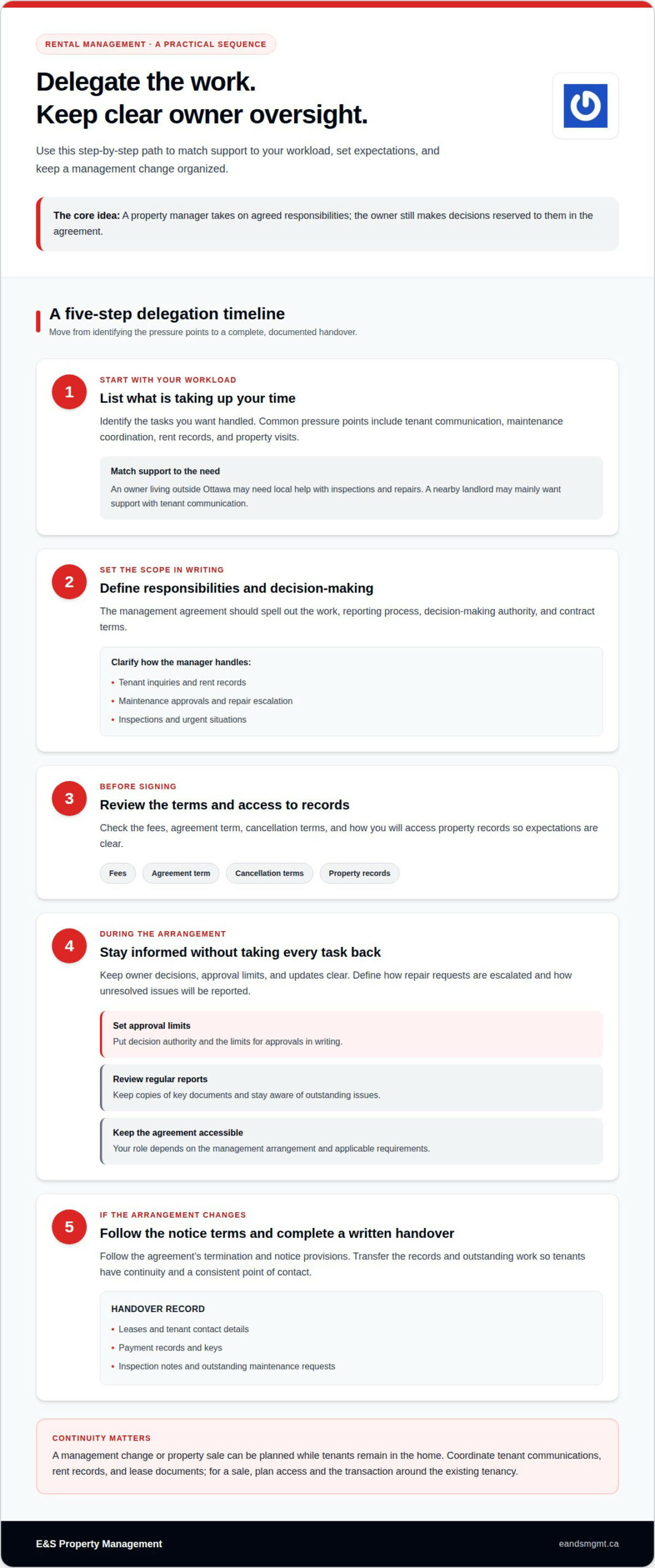
Delegating management can help when tenant communication, maintenance coordination, rent records, or property visits are crowding out other responsibilities. First, list the tasks you want handled. An owner living outside Ottawa, for example, may need local support with inspections and repairs, while a nearby landlord may mainly want help with tenant communication.
A property management agreement should spell out the work, reporting process, decision-making authority, and contract terms. Clarify how the manager handles tenant inquiries, rent records, maintenance approvals, inspections, and urgent situations. Before signing, review the fees, agreement term, cancellation terms, and access to property records so you know what to expect.
To end an agreement or change managers, follow its termination and notice provisions. Arrange a written handover of leases, tenant contact details, payment records, keys, inspection notes, and outstanding maintenance requests. A complete transfer helps maintain continuity and gives tenants a consistent point of contact.
Risks include unclear authority, missed follow-ups, incomplete records, or decisions that don’t match your expectations. Reduce them by defining approval limits in writing, reviewing regular reports, and keeping copies of key documents. Agree, for example, on how repair requests are escalated and how you’ll be updated about unresolved issues.
You can plan a property sale or management change while tenants remain in the home. Coordinate the transition so tenant communications, rent records, and lease documents are handled consistently. For a sale, plan access and the transaction around the existing tenancy rather than assuming the property will be vacant.
Hiring a manager delegates agreed tasks, but it doesn’t remove your role as owner. You still make decisions reserved to you in the agreement, such as setting priorities or approving significant work. Your responsibilities also depend on the management arrangement and applicable requirements, so keep the contract and property records accessible.
Use the agreement to assess whether the arrangement addresses your actual workload. If maintenance is the main pressure, clarify how requests are coordinated. If tenant communication takes most of your time, establish who responds and how updates reach you.
2. Reducing stress and improving tenant responsiveness
A clear response routine helps prevent tenant requests from getting lost in email, voicemail, or text messages. Choose one channel for maintenance reports, then log each request with its date, property, issue, and next action. For example, record a leaking tap, assign follow-up, and mark the request complete once the repair is finished.
An organized process also helps you respond without immediately agreeing to every request. Acknowledge the tenant’s message and clarify the issue, then decide whether it needs urgent attention or can be scheduled. Explain the next step and update the tenant if plans change. Prompt communication doesn’t require promising an immediate fix.
- Keep one record: Add each request and follow-up to a shared log, including the tenant’s preferred contact details.
- Set a review routine: Check new messages at planned times, and flag unresolved maintenance items for follow-up.
- Close the loop: Tell the tenant when a repair is scheduled and ask whether the reported issue is resolved.
If a tenant reports a heating problem, record the concern, clarify what is happening, and arrange the next step. Keep the tenant informed if coordinating the repair takes time. A brief status update can prevent repeated messages caused by uncertainty.
Separate urgent requests from routine ones, but don’t leave either without a response. An emergency maintenance response gives tenants a defined route for urgent repair concerns, while planned follow-ups keep ordinary requests visible. Clear expectations help tenants understand how to report an issue and what communication to expect.
If messages arrive through several channels, direct tenants to the preferred reporting method and transfer outstanding requests into one record. This makes it easier to see what remains open, who is handling it, and which tenant needs an update. Consistent tracking can ease the daily work of managing requests and make communication more dependable.
Staying organized can help landlords respond to tenant needs and improve tenant satisfaction. A tenant in Melbourne said it took 36 forms of communication to get basic maintenance done at their rental property. Property managers can reduce overload by avoiding automatic agreement to every request.
3. Tenant screening and resident relations
Careful tenant screening starts with consistent criteria, not a quick impression during a viewing. Apply the same rental criteria to each applicant and assess the information against them. For example, review rental history, references, and the applicant’s ability to meet rent obligations. A written process makes decisions easier to explain and keeps comparisons focused on relevant information.
Keep each screening step organized. Tell applicants what information you need, gather it consistently, and record how it relates to your criteria. Ask references comparable questions, such as whether the applicant paid rent as agreed and maintained the home. A clear record helps you make a considered decision rather than relying on first impressions.
- Set criteria first: Decide which rental-history and reference details matter before reviewing applications.
- Apply them consistently: Use the same process for each applicant and keep notes tied to the stated criteria.
- Explain the next step: Tell applicants when you expect to follow up and communicate the decision clearly.
Resident relations continue after move-in. At the start of a tenancy, explain how to report maintenance, where to direct questions, and how you’ll share updates. A tenant who knows the right contact route can report a dripping tap without guessing whom to approach. Clear expectations prevent avoidable confusion.
When a concern arises, listen to the tenant’s description, confirm the issue, and agree on a practical next step. If a tenant reports recurring noise, note the concern, ask for relevant details, and respond respectfully without dismissing it. A calm, documented exchange gives both sides a clearer path forward.
Screening and resident relations work together: setting clear expectations at the outset can support smoother communication later. If selecting tenants and coordinating placement take too much of your time, delegating those steps can free you to focus on ownership decisions while keeping the process consistent.
4. How do I compare self-managing a rental property with hiring a property manager?
Compare the actual workload, not just the rent collected or the tasks you enjoy. Self-management gives you direct control over tenant communication, property decisions, and repair coordination. It also means tracking requests, arranging visits, and following up when plans change. A manager can take on agreed responsibilities while you retain decisions reserved to you.
Start by reviewing a typical month. Note the time spent on tenant messages, rent records, maintenance arrangements, and property visits. Include interruptions, such as leaving work to address a repair or rearranging plans for an inspection. If you keep thinking, “I’m too busy to manage my rental property anymore,” this review can show which tasks are driving that feeling.
- Choose self-management if you have time for ongoing communication and can coordinate property needs consistently.
- Consider a manager if routine follow-ups, local visits, or maintenance coordination regularly disrupt your schedule.
- Compare responsibilities by listing what you’ll handle personally and what the management agreement assigns elsewhere.
Distance can change the calculation. An Ottawa owner living nearby may find visits easier to coordinate than someone managing a property from another city. But proximity alone doesn’t solve a crowded schedule. A local owner who travels frequently for work may still need help maintaining continuity for tenants and keeping property tasks moving.
Consider the impact of unfinished tasks, too. A delayed response can prompt repeated tenant follow-ups, while a missed inspection can leave you with less visibility into the property’s condition. Compare that strain with the oversight and reporting a manager provides. If you’re again thinking, “I’m too busy to manage my rental property anymore,” weigh your availability, desired control, and capacity to follow through.
Write down your priorities, then match each one to a clear responsibility. If delegated oversight fits better, discuss your rental property management needs and the support that would ease your workload.
E&S Property Management
E&S Property Management helps landlords manage rental administration, tenant placement, property oversight, and records. Its Full-Service Property Management brings these responsibilities under professional oversight. Regular Property Inspections and Financial Reporting and Accounting also support property-condition monitoring and organized financial records.
If you’re unsure what to delegate, identify the tasks causing the most pressure, such as coordinating property matters or keeping records organized. The right level of support depends on what you want managed and which responsibilities you prefer to retain. Contact E&S Property Management to discuss management support for your Ottawa rental property.
Make room for a more manageable rental routine
If you’re thinking, “I’m too busy to manage my rental property anymore,” treat that feeling as a signal to change how the work is handled. You don’t have to wait until every task feels urgent. Identify the responsibilities creating the most pressure, then decide what to keep and what you’re ready to delegate.
E&S Property Management offers Full-Service Property Management, Tenant Placement Service, and Regular Property Inspections. These services can meet different needs, whether you want day-to-day oversight, help placing a tenant, or regular visibility into your property. Discuss your rental situation with the team and outline the responsibilities you’d like managed.
Contact E&S Property Management to discuss support for your rental property. A thoughtful change to your management routine can help you approach ownership with greater clarity and confidence.
Frequently Asked Questions
How do I choose a reputable property manager in my province?
Choose a manager whose written scope matches your property’s needs and explains how the work is handled. For an Ottawa rental, look for clear procedures for tenant placement, maintenance coordination, inspections, and financial reporting. Review how updates reach you, which decisions remain yours, and how records are maintained. E&S Property Management focuses on residential rentals in Ottawa, Ontario, a local focus that may suit owners who want support managing their Ottawa property.