What if the rent that looks highest on paper earns you less over the year? Knowing how to optimize rental income with a property manager starts with balancing the rent you charge against vacancy, operating costs and the demand for rentals in your area. A gross rental yield of 4% to 8% can be attractive, depending on the city and local market, but it’s only one part of the picture.
Focusing on monthly rent makes sense, but even a well-priced Ottawa rental can underperform if it sits vacant or needs recurring repairs. A property manager can help protect income by setting rent with local demand in mind, placing tenants, tracking costs and coordinating maintenance.
This article explains four ways to assess profitability, track cash flow and expenses, compare self-management with professional management, and account for local rental demand. You’ll see how these pieces work together to support steadier rental income without losing sight of the property’s condition and long-term performance.
Key Takeaways
- Assess rent against comparable local properties, their amenities and current demand to avoid pricing that works against occupancy.
- Track rental income alongside vacancies, repairs, taxes and other operating expenses to see how the property is performing after costs.
- Compare the time and responsibilities of self-management with professional support for tenant placement, rent collection and maintenance coordination.
- Review pricing and marketing when a unit is vacant; the right approach depends on local conditions and the property’s features.
1. How a property manager optimizes the profitability of a rental property investment
A property manager begins with the local market, not an assumed rent target. In Ottawa, comparisons of similar rental listings reveal how location, condition, size, and amenities affect asking rents. Vacancy rates, rental trends, and property values add context about demand. A growing job market may attract more renters, while repeated vacancies can point to pricing, marketing, or property-condition issues. These signals help keep rent decisions informed as conditions change. Understanding how to optimize rental income with a property manager starts with assessing those local factors consistently. Gross rental yield offers a starting measure: divide annual rent by the property’s purchase price, then multiply by 100. A yield between 4% and 8% is considered attractive, depending on the city and local market.
Yield alone cannot show whether a higher asking rent will improve returns. Set rent too high and the property may stay vacant longer; set it too low and you may miss potential income. Even a month without rent matters when comparing a proposed increase with similar local listings. A property manager weighs likely rent against tenant interest and local vacancy patterns, then adjusts the asking price when the evidence points to a mismatch. Property values and rental trends can also help assess whether an investment suits local demand.
Marketing supports the pricing strategy. When considering how to optimize rental income with a property manager, remember that listing quality and the choice of marketing channels also matter. A manager can select online rental platforms, social media or rental-focused real estate agents based on the property and its likely tenant audience. Daylight photos can make rooms look brighter, while clear details about rent, the deposit and pet policy help attract serious inquiries. If interest is limited, the manager can review the listing, its channels and the price. Rent discounts or move-in specials may help secure a lease, but weigh their cost against the income preserved. Reviewing these signals regularly helps keep the property visible and competitively priced.
2. Tracking cash flow, occupancy, and maintenance costs
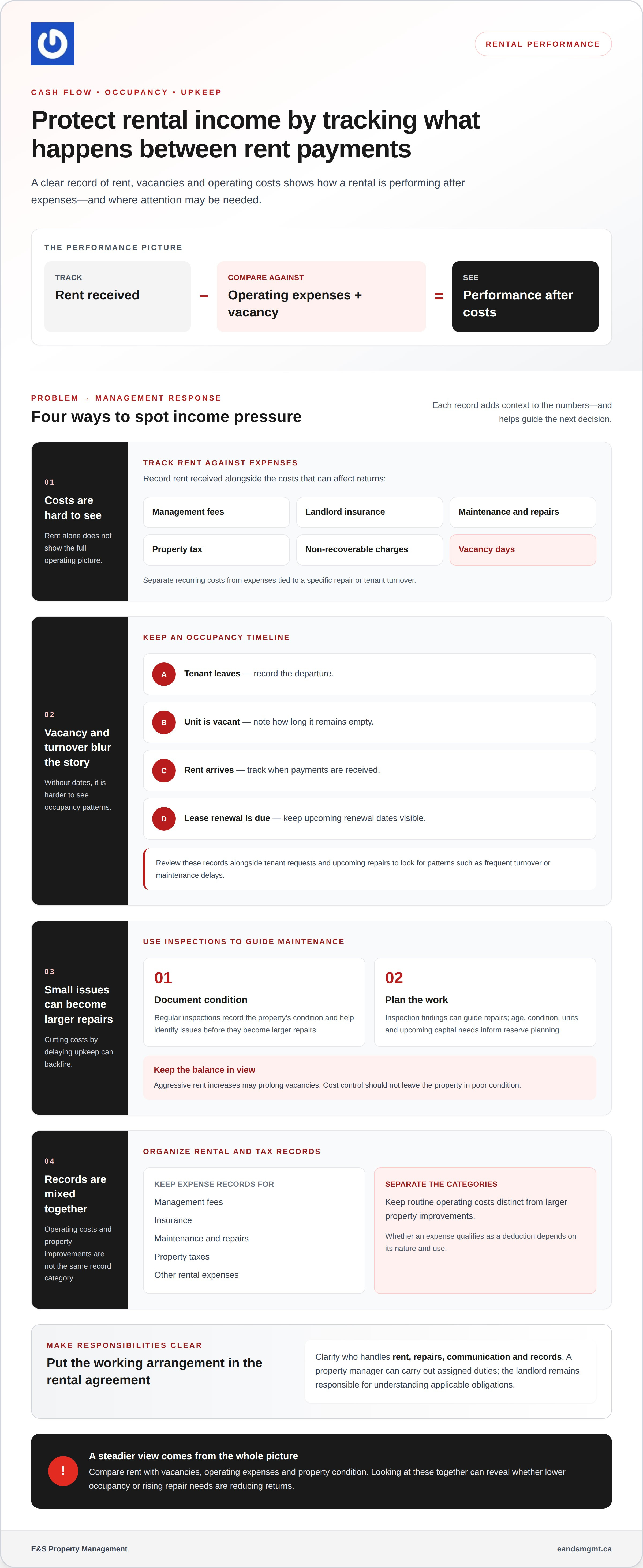
A property manager tracks rent received against operating expenses to show how the rental is performing. Records may include management fees, landlord insurance, maintenance and repairs, property tax, non-recoverable charges and vacancy days. Comparing costs with rental income can reveal whether lower occupancy or rising repair needs are reducing returns. Landlords can also distinguish recurring costs from expenses tied to a specific repair or tenant turnover.
Occupancy records add useful context. A manager can record when a tenant leaves, how long the unit stays vacant, when rent arrives and when leases are due for renewal. Reviewing this information alongside tenant requests and upcoming repairs can reveal patterns, such as frequent turnover or delays in maintenance. Regular inspections also document the property’s condition and help identify issues before they become larger repairs.
Landlords and tenants should clarify their respective responsibilities in the rental agreement. A property manager can carry out duties assigned to them, while the landlord remains responsible for understanding applicable obligations; a clear agreement helps define who handles rent, repairs, communication, and records.
For Canadian tax records, track management fees, insurance, maintenance and repairs, property taxes and other rental expenses separately. Whether an expense qualifies as a deduction depends on its nature and use. Keep routine operating costs distinct from larger improvements in the property’s records.
Cutting costs can backfire if it delays repairs or leaves the property in poor condition. Aggressive rent increases may prolong vacancies, while unfair or unsuitable tenant screening can lead to disputes and damage tenant relationships. A manager balances income goals with property condition, consistent screening practices and the requirements that apply to the tenancy.
Planned maintenance supports a steadier operating strategy: inspection findings can guide repairs, while the property’s age, condition, units, and upcoming capital needs inform reserve planning. For landlords who want help coordinating records and upkeep, professional rental property management can bring these tasks together.
3. Self-management versus professional property management
Self-management keeps decisions in the landlord’s hands, but routine tasks stay on the landlord’s calendar too. Rent collection, tenant concerns, maintenance coordination and lease obligations all need timely attention. A vacancy or repair may also require action while the owner is working or travelling. The trade-off is control versus time and administration, not simply rent versus a management fee.
A professional manager can handle tenant screening, rent collection, maintenance coordination and lease administration. Dividing these duties can make operations more efficient, especially when a landlord has limited time or lives away from the property. Consistent records can also reveal recurring repairs and inform upgrade decisions, such as whether a bathroom improvement addresses a condition issue or tenant concern. These steps can support investment returns, but do not guarantee higher rent.
Before hiring a manager, landlords can review relevant experience, seek recommendations, clarify assigned duties and discuss payment terms and performance measures. Agree on how the manager will report rent collection, tenant requests, repairs and vacancies. For example, specify what financial updates should include and how maintenance decisions will be communicated. Clear expectations help both parties understand who handles each task.
A property management agreement should specify services such as tenant screening, rent collection, maintenance coordination, and lease enforcement, along with reporting duties and how responsibilities are divided. Landlords should review the management fee, what it covers, payment terms, and any separately billed costs. The price depends on the case and is provided after a quote request; the scope, property needs, and assigned duties affect it.
Professional management can be useful when rent collection, tenant communication or repair coordination is taking too much of the landlord’s time. Self-management may suit an owner who can reliably handle these responsibilities. The right arrangement depends on the property, the owner’s availability and the level of oversight needed to maintain the home and manage it efficiently.
4. What rental pricing strategies help maximize income while keeping vacancy low?
A property manager sets rent by comparing local listings with the unit’s location, condition and amenities. In Ottawa, an apartment near transit may draw different interest from a similar unit farther from services. Comparisons should account for meaningful differences, not just bedroom count. This puts the asking rent in context instead of choosing a higher figure without evidence. Local vacancy patterns and renter interest offer further clues: a weak response may signal that the price or property features need attention.
Once the property is listed, the manager tracks inquiries, viewing requests and applications to assess whether the rent fits the market. If comparable homes attract interest but this unit receives little, review the price and listing details together. A modest adjustment may be more productive than waiting for a higher offer while the property remains vacant. The decision should also account for amenities and location, since a feature that supports rent in one neighbourhood may matter less in another.
Pricing can respond to leasing conditions without treating every vacancy alike. A rent discount or move-in special may encourage a prospective tenant to commit, but weigh the concession against the income lost while the unit is empty. Even a short vacancy can reduce annual rental income. Set a clear purpose for any promotion, such as improving response or filling the unit, then compare it with actual leasing results.
At renewal or turnover, the manager revisits comparable rents, local vacancy trends, and property features. This avoids carrying forward an outdated asking price simply because it worked previously. If demand shifts, a manager can revise rent or marketing, then compare subsequent inquiries and leasing outcomes. For help with pricing and leasing decisions, get professional rental management support.
E&S Property Management
E&S Property Management helps landlords bring rental operations and income decisions together through professional oversight. If managing tenant placement, property condition, and financial records is taking time away from other priorities, its Full-Service Property Management can coordinate these responsibilities. Tenant Placement Service supports the leasing process, while Regular Property Inspections help monitor the home’s condition. Financial Reporting and Accounting gives landlords a clearer view of rental income and expenses, making it easier to assess performance over time.
This support can be useful when a property is vacant, oversight feels difficult to manage consistently, or you want clearer financial reporting. Contact E&S Property Management to discuss your rental property management needs.
Set a clear direction for your rental
Before changing how the property is managed, decide what you want professional oversight to make easier. Identify the main pressure point: time spent coordinating the rental, uncertainty about financial performance or difficulty managing consistently. That priority gives a conversation with E&S Property Management a clear focus and keeps decisions centred on your property’s needs, not a generic promise of higher returns.
Planning how to optimize rental income with a property manager also means deciding how involved you want to remain and which responsibilities you’re ready to delegate. Clear expectations make the working relationship more useful from the outset and help you stay informed about decisions affecting your investment. Revisit your priorities as your needs change so the management arrangement continues to suit your goals.
Contact E&S Property Management to discuss a practical next step for your rental. You can move forward with a clearer plan and greater confidence in managing your investment.
Frequently Asked Questions
How can rental income be increased?
Support rental income by setting rent in line with local demand and keeping the property appealing to suitable tenants. Before investing in an upgrade, weigh its cost against its likely effect on tenant interest, retention and future repairs. A targeted improvement may make more sense than a major renovation if it addresses a feature renters notice most.
How can a property manager optimize the profitability of a rental property investment?
A property manager can assess the investment across the full rental cycle, not just by looking at the advertised rent. Leasing gaps, turnover work and repair timing all affect the income the owner ultimately retains. Reviewing these patterns alongside rent can distinguish a temporary dip from a recurring operational issue that may call for a change in management.
What costs should be included in the profitability calculation?
Include management fees, landlord insurance, maintenance and repairs, property tax, non-recoverable charges, and agency fees. Separate routine expenses from larger or less predictable needs, such as tenant turnover and future repairs. Reserve planning should reflect the property’s age, condition, number of units, and upcoming capital requirements, so expected income isn’t treated as fully available for other uses.
What factors influence rental profitability?
Profitability depends on more than rent. Purchase price, local demand, location, amenities, condition, operating expenses and vacancy all play a part. A growing local job market may support rental demand, while repeated repairs can reduce the income retained. Tenant stability matters too, since turnover can mean leasing gaps and additional work between tenancies.
When should you consult professionals?
Consider professional support when managing a property is taking time from other responsibilities, you live away from the rental, or tenant and maintenance issues are difficult to coordinate. Non-resident Canadian landlords may also need help with NR6 forms, monthly tax withholdings, and annual NR4 slips. The right time is when specialist oversight can address a clear operational or administrative need.
How can a property manager increase rental income in Canada?
A property manager can support rental income by adapting leasing decisions to local demand and following the provincial tenancy rules that apply. In Ottawa, that means considering neighbourhood-level renter interest instead of relying on assumptions about Canada as a whole. A manager can also help maintain the property’s appeal and coordinate practical work between tenancies.