
A polished rental listing may attract attention, but consistent follow-through is what earns a tenant’s trust. For owners, maintaining a good landlord reputation in Hintonburg means being clear, fair, and responsive after a tenant moves in, especially when a repair or concern needs attention.
Tenants value knowing how to raise an issue, who will respond, and what happens next. A delayed repair or unanswered message can strain the relationship, while respectful communication and an organized response process help prevent problems from escalating. You don’t need to anticipate every issue; you do need a reliable way to address one when it arises.
This guide covers practical ways to set expectations, communicate consistently, handle concerns fairly, and follow through on maintenance. It also explains how inspections and organized property oversight can support respectful tenant relationships and more stable tenancies, giving you a clearer path to managing your Hintonburg rental with confidence.
Key Takeaways
- Maintaining a good landlord reputation in Hintonburg depends on the tenant’s day-to-day experience of fairness, communication, privacy, and follow-through.
- Acknowledge maintenance requests, set out clear next steps, and update tenants if plans change.
- Compare self-management with professional support to choose a routine that keeps responsibilities and communication consistent.
- Use a practical process for move-ins, ongoing care, record-keeping, and tenancy transitions while respecting tenant privacy.
- Tenant placement, inspections, rent collection, and repair coordination can support dependable property oversight.
What Maintaining a Good Landlord Reputation in Hintonburg Really Means
A rental listing can shape a tenant’s first impression, but maintaining a good landlord reputation in Hintonburg is about the experience that follows. Tenants form their view over time, through the way a landlord communicates, handles concerns, respects privacy, applies expectations fairly, and keeps commitments. A friendly first conversation helps, but dependable conduct across ordinary interactions matters more.
Reputation isn’t the same as popularity. Landlords and tenants may disagree about a request or decision, and avoiding every difficult conversation isn’t realistic. Trust comes from explaining decisions clearly, responding respectfully, and acting consistently within the rules that apply in Ontario. A landlord can set firm boundaries while still taking a tenant’s concern seriously.
The everyday signals tenants use to assess a landlord
Tenants often judge reliability through small, practical moments. A timely acknowledgement shows that a message has been received; a clear update gives the tenant a reasonable idea of what happens next. If a repair appointment needs to change, explaining the change is more reassuring than leaving the tenant to guess.
- Acknowledge a message and give a realistic next step, even if the issue can’t be resolved immediately.
- Explain expectations in plain language and apply them consistently.
- Speak respectfully, including when you need to decline a request or clarify a responsibility.
- Keep a commitment, or provide an update when circumstances change.
Unresolved small concerns can accumulate. A tenant who gets no response about a minor issue may wonder whether a more serious concern will also be overlooked. That doesn’t mean every request needs an instant solution. It does mean tenants shouldn’t be left without an acknowledgement or useful update. Professional boundaries help establish when and how to communicate; they shouldn’t become a reason to be unreachable or dismissive.
Hintonburg context: local housing, individual responsibilities
Hintonburg has different kinds of residential rentals, including condominiums, houses, and other rental homes. Layouts, shared spaces, and maintenance needs vary, as do tenants’ circumstances. A communication approach that works for one property may not suit another, so avoid assuming that everyone in the neighbourhood has the same priorities or expectations.
Make communication specific to the home and tenancy. Clarify how a tenant should raise a concern, which areas are shared, and what updates to expect when work is being coordinated. Respect for privacy also belongs in these everyday practices: handle tenant information carefully and communicate about property access appropriately, in line with current requirements. Ontario’s rules provide an important framework, but a landlord’s reputation is shaped by how consistently and respectfully they manage the details of a particular tenancy.
For a Hintonburg landlord, the practical standard isn’t perfection. It’s a clear, fair process that tenants can understand and rely on, even when a request takes time or a disagreement arises.
How Communication and Maintenance Build Tenant Trust
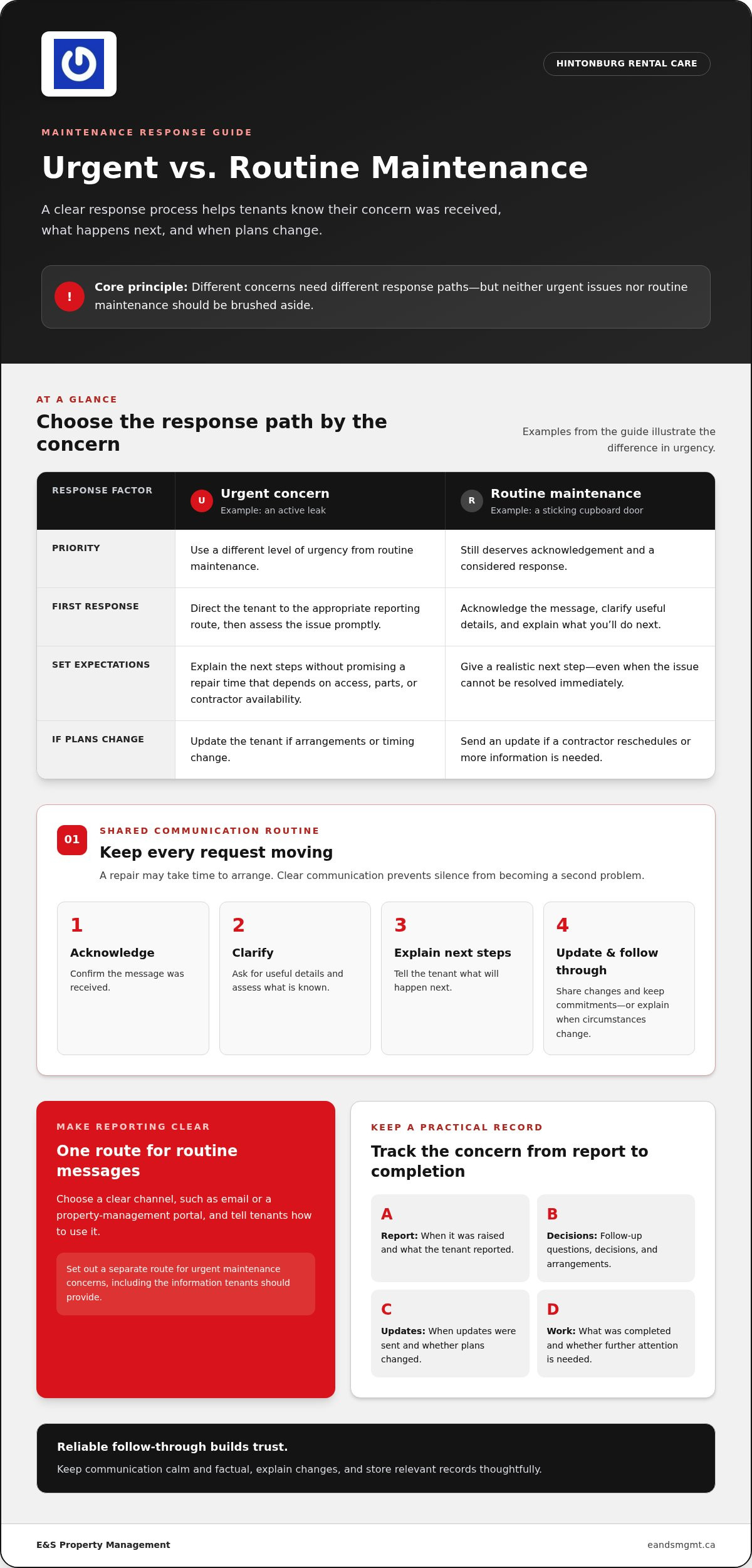
A tenant who reports a concern shouldn’t have to wonder whether the message was received or what will happen next. A steady process turns an uncertain moment into a manageable one: acknowledge the request, clarify what’s known, explain the next step, and provide an update if circumstances change. A repair may take time to arrange, but clear communication prevents silence from becoming a second problem.
Trust grows when landlords explain what happens next and follow through. That principle is central to maintaining a good landlord reputation in Hintonburg, where each rental property has its own needs and each concern deserves a considered response.
A predictable process for tenant messages
Choose one clear channel for routine communication, such as email or a property-management portal, and tell tenants how to use it. Set out a separate route for urgent maintenance concerns, including the information to provide. This structure helps tenants know where to turn and keeps requests from getting scattered across calls, texts, and inboxes.
An acknowledgement doesn’t need to include a complete solution. Confirm you received the message, ask for useful details, and say what you’ll do next. If a contractor needs to reschedule or more information is required, send an update rather than leaving an earlier estimate unexplained. Keep your language calm and factual, especially when clarifying expectations or addressing a misunderstanding.
Maintenance follow-through that protects the relationship
Urgent concerns and routine maintenance need different response paths, but neither should be brushed aside. An active leak, for example, calls for a different level of urgency than a sticking cupboard door. Direct tenants to the appropriate reporting route, assess the issue promptly, and explain the next steps. Avoid promising a repair time that depends on access, parts, or contractor availability.
Keep a practical record of each concern from first report to completion. A simple log can capture:
- When the tenant raised the issue and what they reported.
- Follow-up questions, decisions, and arrangements.
- When updates were sent and whether plans changed.
- What work was completed and whether further attention is needed.
These notes support continuity if someone else needs to follow up, and they make recurring concerns easier to spot. Store records thoughtfully and limit them to relevant property-management details, respecting tenant privacy.
Maintenance also starts before a tenant reports a problem. Regular property inspections and preventative checks can help identify developing concerns, such as signs of a minor leak or wear that may need attention. Handle inspections respectfully and in line with applicable requirements. Record any follow-up and, where relevant, let the tenant know what action is being taken.
For landlords who want an organized process for repairs and property oversight, residential property management support can coordinate these steps throughout a tenancy.
Self-Management or Professional Support: Which Approach Protects Your Reputation?
No management arrangement guarantees a strong landlord reputation. What matters is whether tenants can reach the person responsible, receive clear updates, and see concerns handled consistently. An owner with time and reliable systems may manage these duties directly. A landlord who is often away, works demanding hours, or oversees several properties may prefer professional support to maintain continuity.
Compare the day-to-day responsibilities, not just the labels. Who responds to tenant messages? Who records decisions and maintenance? Who arranges repairs and follows up? Who tracks rent and monitors the property? Clear answers help prevent missed handoffs, whether one person manages everything or tasks are shared. Maintaining a good landlord reputation in Hintonburg is less about choosing one model than ensuring tenants know how to get help and responsibilities don’t fall between the cracks.
When managing the relationship yourself may fit
Hands-on management can suit an owner with time to handle tenant communication, rent collection, maintenance coordination, and records. It also requires a dependable plan for periods when work, travel, or other commitments make you unavailable. Establish routines early, including where messages go, how requests are tracked, and how you’ll provide updates. Delegating a task doesn’t remove the need to understand the obligations attached to owning a rental property.
- Set aside regular time to review tenant messages and outstanding tasks.
- Keep organized records of communication, rent, decisions, and repair work.
- Arrange a clear point of contact for times you can’t respond personally.
- Stay informed about the requirements that apply to your tenancy and property.
When delegated management can add continuity
Professional management can provide a designated process for routine property tasks, particularly when an owner lives farther away or has limited time. A manager can coordinate tenant placement, rent collection, and maintenance, helping keep responsibilities organized throughout the tenancy. Regular inspections and financial statements can also give owners a clearer view of property condition and rental activity.
E&S Property Management is a family-owned Ottawa firm founded in 1981. Its full-service residential management brings together tenant placement, rent collection, inspections, financial reporting, and repair coordination. E&S arranges and oversees repairs through a network of trusted contractors. These services give landlords an organized way to manage ongoing responsibilities, with the work tailored to the property and tenancy.
Before deciding, consider your availability, distance from the property, number of rentals, and confidence in keeping records and coordinating repairs. If you self-manage, build a routine you can sustain. If you delegate, make responsibilities and communication pathways clear. Either approach can support respectful tenant relationships when someone is accountable for each step and follows through consistently.
A Practical Routine for Maintaining a Good Landlord Reputation
Good intentions are easier to sustain when they’re backed by a routine. A simple process for move-in, regular check-ins, maintenance, and tenancy transitions helps ensure important details don’t depend on memory or a landlord’s availability on a particular day. Adapt the steps to your property, keep communication respectful, and make records focused on what’s needed to manage the tenancy.
Build trust from move-in onward
Start with clear, property-specific information. Explain how tenants can raise routine concerns and report urgent ones, outline relevant responsibilities in line with the lease, and make agreed next steps easy to understand. Document the home’s condition and any follow-up items in appropriate written records. Keep notes factual, store them securely, and limit access to people who need the information to manage the rental.
- Prepare for move-in. Share practical information about the property and how to communicate with you. Record the rental’s condition and note agreed work or outstanding items, so both sides have a clear reference point.
- Set a regular check-in rhythm. Invite tenants to raise questions or concerns after they’ve had time to settle in. Ask whether anything needs attention, listen without assuming there’s a problem, and avoid promising changes or timing that depend on circumstances outside your control.
- Track concerns through to resolution. Keep a dated record of requests, decisions, updates, repair arrangements, and completed work. Use it to follow up on open items and spot recurring maintenance needs. Keep documentation relevant and private to protect personal information.
- Close out the tenancy carefully. Plan the transition using the lease and current requirements as your guide. Communicate clearly about outstanding matters, document the property’s condition appropriately, and record agreed follow-up so the tenancy doesn’t end with avoidable uncertainty.
Respond constructively when a disagreement arises
When a concern turns into a disagreement, pause before replying. Listen to the tenant’s account, keep a factual record, and respond with a clear next step or explanation. Don’t retaliate, reply emotionally, or publicly identify a tenant in response to criticism. If a matter may involve a formal process, verify current Ontario requirements and Landlord-Tenant Board procedures through authoritative sources before taking action. Lease, notice, and dispute-process details can change.
This routine won’t prevent every misunderstanding, and it doesn’t require agreeing to every request. It gives you a consistent way to hear concerns, make considered decisions, and keep the practical details of the tenancy organized. That steady approach can support maintaining a good landlord reputation in Hintonburg without sacrificing appropriate boundaries or privacy.
For support coordinating the ongoing details of a residential tenancy, explore full-service property management with E&S Property Management.
How E&S Management Services Supports Hintonburg Landlords
Maintaining a good landlord reputation in Hintonburg takes attention throughout a tenancy, not only when finding a tenant. Tenant communication, rent administration, property condition, and repair coordination all require follow-through. E&S Property Management provides residential property management in Ottawa, supporting landlords with these responsibilities and drawing on more than four decades of property-management experience.
Founded in 1981, E&S is a family-owned firm that provides practical oversight for landlords. Its services connect key stages of rental management, from tenant placement to ongoing property care. That continuity helps owners keep responsibilities on track, while the quality of each tenancy still depends on the property, circumstances, and consistent management.
Consistent oversight for tenants and property owners
Tenant placement helps establish the relationship at the start, while rent collection and tenant services support the ongoing work. When a maintenance concern arises, E&S coordinates repairs through a network of trusted contractors. Regular property inspections give owners an additional view of the home’s condition, and monthly financial statements help them review rental activity and property finances.
These tasks are connected. A repair concern may need follow-up, coordination, and a clear record; an inspection may surface an item that needs attention; financial reporting helps owners stay informed about the property. Managing these processes together makes it easier to maintain steady oversight rather than handling each responsibility in isolation.
Owners can choose how involved they want to be in day-to-day decisions. Some prefer to stay closely informed and retain an active role, while others delegate more of the ongoing coordination. Clear communication between the owner and management team helps set expectations about responsibilities and keeps the owner appropriately informed.
A steady local partner for Ottawa landlords
E&S has more than 40 years of property-management experience and serves local landlords as well as Canadian Foreign Service personnel abroad. For an owner managing a Hintonburg rental alongside work, travel, or other responsibilities, E&S can coordinate tenant placement, rent collection, inspections, financial reporting, and repairs. The goal is dependable oversight, not a promise that every tenancy will be free of challenges.
Strong tenant relationships still depend on fair, respectful handling of each situation. Professional support can organize the work behind that effort, while owners remain connected to the decisions that matter to them. It’s a practical option for landlords who want a consistent way to manage their residential property.
If you’re weighing how much of the day-to-day work to handle yourself, learn about residential property-management support for your Hintonburg property from E&S Property Management.
Make Your Next Step a Consistent One
A landlord’s reputation isn’t built through grand gestures. It grows through ordinary decisions that make a tenancy feel predictable and respectful. Choose one part of your process to strengthen now, whether that means setting aside time to review messages, creating a simple maintenance log, or making your next tenant check-in more intentional. A small, repeatable improvement is easier to sustain than a promise to do everything differently.
As you shape your approach to maintaining a good landlord reputation in Hintonburg, consider what level of hands-on involvement fits your schedule and property. Revisit that choice as your circumstances change, and make sure tenants know who is responsible for responding to their concerns. You can refine your own routines or bring in experienced support for ongoing coordination, keeping tenant communication and property responsibilities in view.
Contact E&S Property Management about residential property management for your Hintonburg rental to discuss a practical next step. With a clear plan and dependable support, you can move forward with greater confidence and care.
Frequently Asked Questions
How can I improve my reputation as a landlord in Hintonburg?
Make your process reliable and easy for tenants to understand. For maintaining a good landlord reputation in Hintonburg, periodically review your tenant communications: are responsibilities clear, are open concerns being tracked, and do tenants know how to reach the right person? Ask for feedback at an appropriate point in the tenancy, then use it to identify practical changes. Check current Ontario and City of Ottawa guidance for legal obligations.
Can a landlord respond publicly to a negative tenant review?
Yes, but keep any public reply brief, factual, and careful about privacy. Acknowledge the concern without confirming a tenancy or sharing details about a repair, payment, or dispute. For example, say you take feedback seriously and invite the reviewer to continue the conversation privately through an appropriate channel. Avoid arguing point by point online; review the underlying issue and correct any process gaps you identify.
What should a landlord do when a tenant reports a repair issue?
Acknowledge the report and gather enough information to understand what’s happening, such as where the issue is and whether it’s getting worse. Record the details, assess the urgency, and arrange the appropriate follow-up. If a contractor needs access or plans change, keep the tenant informed. Don’t assume a problem is minor based on a short message or photo alone. Verify current Ontario requirements before relying on specific repair deadlines or legal timelines.
Does hiring a property manager guarantee a good landlord reputation?
No. A property manager can organize tasks and provide continuity, but no management arrangement controls every tenant’s experience or guarantees positive public comments. Before delegating, agree on who handles tenant messages, repair decisions, records, and owner updates. For instance, clarify how you’ll be consulted if a proposed repair affects your budget or requires a decision. A clear working arrangement helps prevent confusion, while reputation still depends on fair, consistent conduct.
How often should a landlord inspect a rental property in Ontario?
There isn’t one schedule that should be applied without considering the tenancy, the property, and current Ontario requirements. Before setting a routine, verify the rules for entry and any applicable notice requirements through current official guidance. Explain the purpose of a planned visit and keep notes focused on property condition and necessary follow-up. An inspection plan should support responsible oversight, not be treated as permission to enter whenever it’s convenient.
What is the Landlord-Tenant Board’s role in a landlord-tenant dispute?
The Landlord and Tenant Board handles certain disputes between residential landlords and tenants under Ontario’s tenancy framework. The steps and available processes depend on the issue and current rules, so don’t rely on a general online summary to decide what to file or when. Keep relevant documents organized, including communications and records related to the concern, then consult current Board guidance for the process that applies to your situation.
How can an out-of-town landlord maintain a good reputation in Hintonburg?
An out-of-town landlord can support a reliable tenant experience by naming a clear local contact and explaining how that person handles messages, property concerns, and updates to the owner. Don’t leave tenants unsure about who is responsible for a request. E&S Property Management serves Canadian Foreign Service personnel abroad and coordinates residential management tasks for owners. This can help when distance makes direct oversight harder to sustain.


