
One missed repair doesn’t define a landlord, but how you respond can shape a tenant’s trust and safety. If you’re wondering how to avoid being a “slumlord” in Ottawa, build a consistent process: take concerns seriously, communicate respectfully, and follow through on maintenance.
Ontario tenancy rules and Ottawa requirements can feel like a lot to manage alongside repair requests, property upkeep, tenant communication, and record-keeping. A clear system makes it easier to handle these responsibilities and protect both the people who live in your property and the home itself.
This guide covers practical steps for managing an Ottawa rental responsibly, from understanding relevant rules to setting fair processes and keeping useful records. You’ll also learn how regular oversight and timely updates can help prevent small issues from growing into bigger problems and support a more reliable landlord-tenant relationship.
Key Takeaways
- “Slumlord” is a pejorative label. Focus instead on preventing repeated neglect, unsafe conditions, and unfair treatment.
- Understand the Ontario and Ottawa rules that apply to your rental, and act before problems escalate.
- Learn how to avoid being a “slumlord” in Ottawa by responding to repair requests, communicating clearly, and keeping consistent records.
- Use a repeatable maintenance process to document concerns, assign follow-up, update tenants, and close the loop.
- Inspections, tenant placement, financial reporting, and repair coordination can help keep rental management organised.
What Does “Slumlord” Mean for an Ottawa Rental Property?
“Slumlord” is a pejorative description of a landlord associated with poor housing conditions or neglect, not a legal finding on its own. In practical terms, a “slumlord” is a label for a landlord perceived to repeatedly neglect a rental property or the people living in it. The term can describe a pattern of ignored repair concerns, unsafe conditions, unfair treatment, or unanswered communication. For general background on the term, see What is a Slumlord?
For Ottawa owners, the more useful questions are whether tenants can live safely and comfortably, whether concerns receive a reasonable response, and whether the home is being maintained over time. Tenant well-being and property condition are connected: a leaking fixture left unattended can disrupt daily life and contribute to further damage. Addressing issues thoughtfully supports both the people in the home and the rental’s condition.
Why the label can obscure the real issue
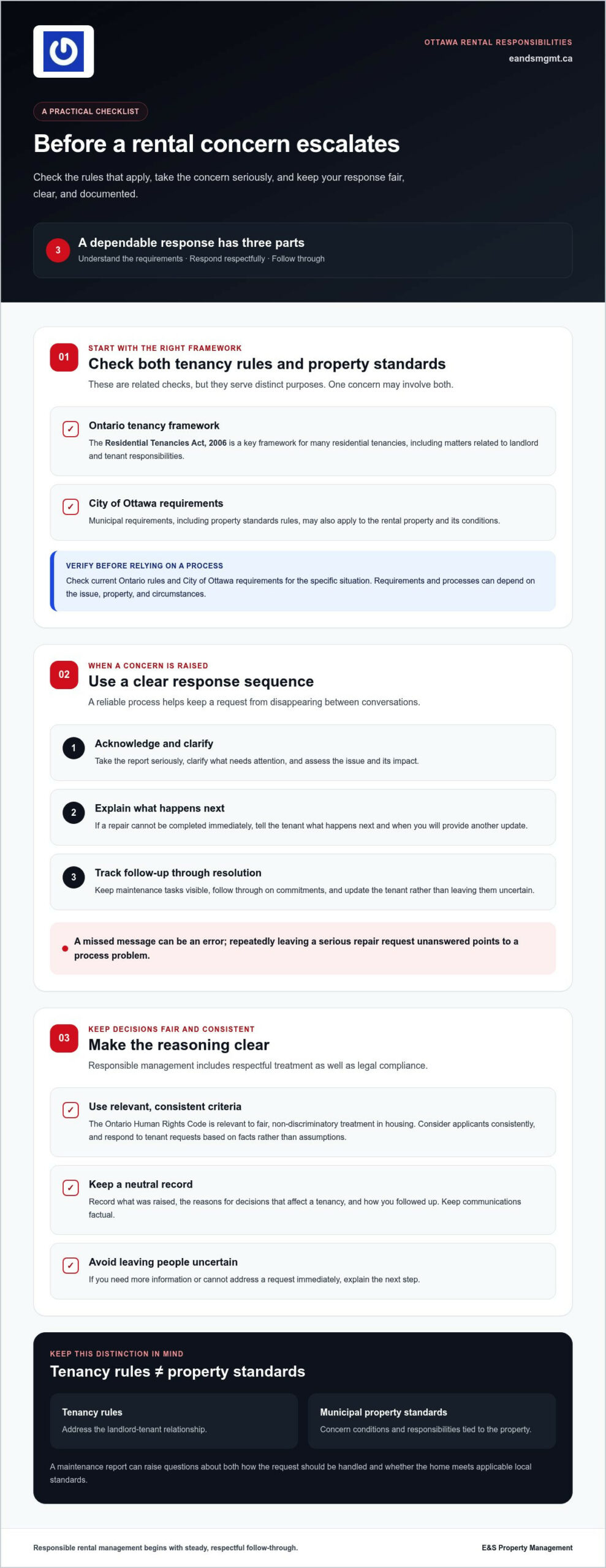
An isolated administrative mistake is different from ongoing disregard for tenant concerns. To assess a situation fairly, consider its impact, whether it has happened before, how promptly you responded, and what steps you took to resolve it. A missed message may be an error; repeatedly leaving a serious repair request unanswered points to a process problem. Focus on the actions you can change, not on shaming yourself or a tenant.
When a concern arises, acknowledge it, clarify what needs attention, and track the follow-up. If a repair cannot be completed immediately, tell the tenant what happens next and when you’ll provide another update. A responsive approach won’t erase the problem, but it can prevent silence or confusion from making it worse.
What responsible Ottawa landlording looks like
A responsible landlord takes reports seriously, maintains the home, treats tenants respectfully, and follows through on commitments. That means having a reliable way to receive concerns and making sure maintenance tasks don’t disappear between conversations. Clear, calm communication matters, especially when a reported condition affects a tenant’s comfort or use of the home.
Ontario’s Residential Tenancies Act, 2006 is a key framework for many residential tenancies, while City of Ottawa requirements, including property standards rules, may also apply. The details depend on the circumstances and current rules, so don’t treat a label or a general online description as a complete statement of your obligations. Assess the issue, consult applicable official requirements, and take the steps the situation calls for.
Ultimately, how to avoid being a “slumlord” in Ottawa is less about managing appearances than building dependable habits. Respond, take concerns seriously, and address problems with care. Those steady actions help create a better home and a more respectful landlord-tenant relationship.
Understand Ottawa Landlord Responsibilities Before Problems Escalate
Knowing which rules apply can make decisions clearer before a concern turns into a dispute. The Residential Tenancies Act, 2006 is a key Ontario framework for many residential tenancies, including matters related to landlord and tenant responsibilities. Ottawa’s municipal requirements may also apply to a rental property. These frameworks serve related but distinct purposes, so don’t rely on a general summary or an outdated checklist when deciding what to do.
Before acting on a tenancy or property concern, check the current Ontario rules and City of Ottawa requirements that apply to the specific situation. Requirements can change, and the right process may depend on the issue, the property, and the circumstances.
Keep legal and property-standard duties distinct
Tenancy rules address the landlord-tenant relationship, while municipal property standards concern conditions and responsibilities tied to the property. A single issue may involve both. For example, a tenant’s maintenance report can raise questions about how the request should be handled and whether the home meets applicable local standards. Treat these as connected checks, not interchangeable rules.
The City’s Ottawa Landlord Responsibilities page is a useful starting point for municipal guidance. For provincial tenancy questions, consult current Ontario government and Landlord and Tenant Board information. Verify details in official materials before relying on a deadline, exception, process, or consequence. If the situation is complex, appropriate legal advice can help you understand how the rules apply.
Make fairness part of everyday landlord decisions
Legal compliance is only one part of responsible management. The Ontario Human Rights Code is also relevant to fair, non-discriminatory treatment in housing. Apply consistent criteria when considering applicants, and respond to current tenants’ requests based on the facts rather than assumptions about a person or their circumstances. A respectful process gives people a clear way to raise concerns and helps keep decisions grounded in relevant information.
For practical consistency, keep communications factual and record the reasons for decisions that affect a tenancy. If a request needs more information or cannot be addressed immediately, explain the next step rather than leaving the person uncertain. A neutral record of what was raised, what you considered, and how you followed up can help you review whether your approach was fair and consistent.
Building this habit is part of how to avoid being a “slumlord” in Ottawa: understand the applicable rules, make decisions carefully, and act with respect. Landlords who want support coordinating property responsibilities can explore full-service property management to keep local oversight and administration organised.
Spot the Ottawa Rental Management Habits That Erode Tenant Trust
Trust is often shaped by what happens after a tenant raises a concern. A single misunderstanding or delay doesn’t automatically prove unlawful conduct, but repeated silence, shifting expectations, or unresolved problems can leave tenants unsure whether anyone is taking responsibility. Small issues can compound: a vague reply prompts repeated follow-ups, while a missed repair becomes harder to manage if no one records what was reported.
Look for patterns you can change. The table compares habits that weaken confidence with practical alternatives that make follow-through clearer.
| Trust-eroding habit | Responsible alternative |
|---|---|
| Leaving a repair request unanswered, so the tenant doesn’t know whether it was received. | Acknowledge the report, note the concern, and explain what will happen next. Provide updates if the plan changes. |
| Giving vague updates such as “someone will look into it” without explaining who is handling the issue or what comes next. | Use plain language to explain the next step and keep the tenant informed until the concern is addressed. |
| Keeping maintenance details in scattered messages or relying on memory. | Record the request, key communications, work arranged, and outcome in a consistent property file. |
| Arranging access casually or changing plans without clear communication. | Plan access respectfully and verify current Ontario rules for notice, permitted reasons, and timing before entering. |
| Applying different expectations to similar requests without a clear reason. | Use consistent, documented processes and explain decisions respectfully. |
Maintenance delays and poor follow-through
Silence can be stressful even before a tenant knows how serious a maintenance issue is. A report about a leak, for example, may leave the resident wondering whether it reached the right person while the condition remains unassessed. Start by acknowledging the concern, clarifying relevant details, and deciding what follow-up is needed. Keep the tenant updated as the situation develops, without promising a repair date you can’t verify or control.
Unclear communication and inconsistent treatment
Vague messages and undocumented decisions create room for different expectations. A tenant may believe access was agreed for one day while the landlord has another in mind. Use a reliable communication channel, confirm important arrangements in writing, and keep messages courteous and specific. Ottawa landlords can also consult Crime Prevention Ottawa’s Safety Guide for Ottawa’s Residential Landlords for practical context on inspections and handling concerns. Check current Ontario rules for entry, privacy, and notice requirements that apply to the circumstances.
Improving these habits is a practical part of how to avoid being a “slumlord” in Ottawa. The goal isn’t to treat every disagreement as proof of wrongdoing. It’s to spot recurring friction, respond consistently, and make sure concerns don’t vanish into an inbox or an informal conversation. Clear communication and reliable records help both parties understand what was raised and what happened next.
Build a Practical System for Maintaining and Managing Your Ottawa Rental
Property care is easier to sustain when it doesn’t depend on memory or last-minute decisions. A repeatable workflow helps you track tenant concerns, coordinate maintenance, and confirm that follow-up happened. It also creates a useful history of the property’s condition and the steps taken to care for it.
Create a clear maintenance and communication workflow
Give tenants a reliable way to report routine maintenance concerns and explain how to flag urgent situations. Then move each request through a consistent sequence:
- Inspect appropriately: Gather enough information to understand the concern, arrange any necessary assessment, and respect applicable entry and privacy rules.
- Record the details: Note when the concern was received, what the tenant reported, and any relevant observations.
- Assign the next action: Identify who will coordinate the work, and track contractor arrangements or decisions.
- Update the tenant: Explain what’s happening in plain language, especially if plans change or further assessment is needed.
- Close the loop: Record the outcome, confirm the work has been addressed as appropriate, and retain related documents.
Separate routine upkeep from concerns that may need urgent attention, but don’t assume that calling an issue “routine” settles how quickly it must be handled. The right response can depend on the issue and applicable requirements. Check current Ontario and Ottawa rules before relying on a specific deadline or procedure. If more than one person handles requests, make sure everyone knows where reports go and who is responsible for follow-through.
A useful property record can bring together maintenance logs, invoices, tenant communications, contractor notes, and inspection observations. Keep entries factual: record dates, the reported issue, actions taken, and the outcome rather than personal impressions. Organised records make it easier to spot recurring problems, understand past work, and plan future maintenance.
Use inspections and records as preventive tools
Appropriate inspections can help identify wear or maintenance needs before they grow into more disruptive problems. Set a consistent review schedule that suits the property and its upkeep needs, without treating inspections as a substitute for responding to reports between reviews. During an inspection, document observable conditions clearly and handle access in accordance with current tenant-rights requirements.
Use inspection notes to create follow-up tasks, then check that each task is completed and recorded. For each item, note the condition observed, any action required, who is coordinating it, and whether the work is complete.
A dependable system turns good intentions into visible follow-through. If coordinating inspections, records, and repairs is difficult to manage alone, explore full-service property management for organised oversight of an Ottawa rental. Consistent processes are a practical part of how to avoid being a “slumlord” in Ottawa, and they can support tenant well-being and the property’s long-term condition.
When Ottawa Landlords Benefit From Professional Property Management
Managing a rental takes steady attention, even when everything appears to be running smoothly. If you live far from the property, have limited time to coordinate requests, or find maintenance increasingly difficult to oversee, professional management can provide a more organised way to handle recurring work. Delegating day-to-day responsibilities doesn’t remove your role as an owner, but it can give important tasks a clear place in the process.
Consider where your current system is under strain. Are tenant questions answered consistently? Do inspection notes, repair invoices, and financial records stay organised? Can you coordinate contractors while keeping tenants informed? If these tasks compete with work or other commitments, a local management partner may be a practical option. Management doesn’t guarantee against disagreements, unexpected repairs, or every possible problem. It provides structured support for routine responsibilities and communication.
What coordinated management can take off an owner’s plate
These responsibilities work best when they connect. Tenant placement begins the rental relationship; rent collection and tenant communication continue it. Regular inspections help owners keep track of property condition, while maintenance coordination turns identified concerns into follow-up work. Financial reporting and accounting bring rental records together, giving owners a clearer view of ongoing administration.
E&S Property Management provides tenant placement, rent collection, regular property inspections, financial reporting, and accounting. It coordinates maintenance and repairs through its contractor network and provides an emergency 24/7 maintenance response. Coordinated oversight can help keep requests, property information, and follow-up from becoming disconnected, particularly when an owner is managing a property from a distance.
Before delegating, consider which responsibilities take the most time and where a consistent process would help. One owner may need support with tenant placement and ongoing communication; another may value regular inspections and repair coordination. The right fit depends on your property and how involved you want to be. You can stay engaged in decisions while assigning recurring administration and coordination to a professional manager.
A steady local partner for long-term property care
E&S Property Management focuses on Ottawa residential properties and was founded in 1981. Local, consistent oversight can help owners keep property responsibilities organised and maintain responsive communication with tenants. A manager coordinating inspections and repairs can give reported issues a path from initial notification to follow-up, while keeping relevant records available for ongoing management.
For landlords considering how to avoid being a “slumlord” in Ottawa, professional management can support dependable habits, but it doesn’t replace fair treatment, sound decisions, or attention to applicable rules. It makes the work more manageable, but it can’t promise that disputes or maintenance challenges will never arise. If you’d like support with your rental, Explore E&S Property Management in Ottawa and consider whether full-service management fits your needs.
Make Your Next Landlord Decision a More Consistent One
Responsible landlording isn’t about never facing a complaint or maintenance surprise. It’s about creating a dependable way to respond, learn from what happens, and keep improving how you care for the home. Choose one practical step now, such as setting a regular time to review property records or clarifying how tenants can raise concerns. Small systems make responsible decisions easier to repeat.
If managing a rental is becoming difficult to balance with other commitments, you don’t have to organise every responsibility alone. A conversation about your property and the support you need can help you decide what makes sense. For a clearer path forward on how to avoid being a “slumlord” in Ottawa, Talk with E&S about managing your Ottawa rental.
With a thoughtful approach and reliable support, you can build a rental experience that feels more manageable for you and more respectful for your tenants.
Frequently Asked Questions
What makes someone a “slumlord” in Ottawa?
“Slumlord” is a pejorative description, not a legal test that decides whether an owner has met their responsibilities. The term is usually associated with patterns such as neglected maintenance, poor communication, or unfair treatment. A single disagreement doesn’t establish such a pattern. To understand how to avoid being a “slumlord” in Ottawa, focus on the facts, address concerns promptly, and keep a record of the steps taken to correct problems. Legal responsibilities depend on the circumstances and current Ontario rules.
Can a landlord be called a slumlord for delaying a repair?
A label alone doesn’t determine whether a landlord has met their responsibilities. The type of problem, its urgency, how the landlord responds, and the applicable Ontario requirements all matter. For example, a tenant may need an update while a reported issue is being assessed, even before a repair plan is final. Acknowledge the report, arrange appropriate follow-up, document what happens, and verify current legal obligations rather than relying on a general online rule.
What are a landlord’s responsibilities in Ottawa?
Ottawa landlords should understand the Ontario tenancy rules and City of Ottawa property standards relevant to their rental. The Residential Tenancies Act, 2006 is a key provincial framework, while municipal standards address local property requirements. Specific duties can depend on the tenancy and circumstances. Consult current official Ontario and City guidance before relying on a specific procedure, deadline, or exception, and note which requirements apply to the issue you’re handling.
How should an Ottawa landlord handle a tenant’s maintenance request?
Start by acknowledging the request so the tenant knows it has been received. Record the date and details, ask for clarification if needed, assess whether the concern needs urgent attention, and coordinate appropriate next steps. For example, note whether the tenant reports an active leak or a fixture that isn’t working as expected. Keep the tenant informed as plans develop, verify applicable legal requirements, and avoid promising a universal repair deadline.
Can a landlord enter a rental unit without notice in Ontario?
Don’t assume you can enter a rental unit whenever it’s convenient. Ontario tenancy law sets rules for entry, and requirements can depend on the reason and circumstances. A genuine emergency may be treated differently from a routine visit, but verify current official guidance before relying on an exception, notice period, or permitted reason. Respecting a tenant’s privacy means confirming the proper process before arranging access and keeping a record of the communication.
How can landlords document that they are maintaining a rental property responsibly?
Keep a secure, organised record for each property with maintenance reports, dates received, tenant communications, inspection notes, contractor records, invoices, and follow-up actions. For example, connect an invoice to the original concern and note when the work was completed. Factual records help you see what remains unresolved and understand the property’s maintenance history. They don’t replace legal compliance, and tenant information should be handled respectfully and shared only as appropriate.
Is hiring an Ottawa property manager a good way to avoid becoming a slumlord?
Professional management can help organise recurring rental responsibilities, but it can’t guarantee that every disagreement or property issue will disappear. Coordinated tenant placement, rent collection, inspections, reporting, and maintenance oversight can support consistent administration and care. The right arrangement depends on how much time you have and what tasks need support. If you’re looking for local help with an Ottawa rental, explore E&S Property Management services.


