
What if a tense exchange with your condo board didn’t have to derail your rental? Managing a rental property with a difficult condo board can leave you caught between unclear boundaries, slow responses, and tenants who still need timely answers. Condominium rules and your responsibilities as a landlord can overlap, while repairs, access arrangements, and resident concerns take time to resolve.
A difficult relationship doesn’t mean you have to manage every issue reactively. Clear communication, careful records, and consistent follow-through can help prevent misunderstandings and keep day-to-day rental matters on track while respecting the condominium’s rules.
This guide explains how to clarify who handles what, set up a reliable process for communicating with the board, and document requests and decisions. You’ll also learn how to share relevant rules with tenants and maintain steady oversight of your Ottawa rental, even when board interactions are challenging.
Key Takeaways
- When managing a rental property with a difficult condo board, separate shared-property concerns from your responsibilities as the landlord before deciding how to respond.
- Review the condominium declaration, bylaws, and rules that apply to the concern, especially when it involves tenants, move-ins, pets, or shared spaces.
- Use a consistent communication sequence: acknowledge the issue, check the relevant documents, reply factually, and record any agreed follow-up.
- Choose a response that fits the urgency and tenant impact, from a straightforward clarification to a formal process or legal advice.
- Keep rental oversight steady with an owner action plan that organizes contacts and records alongside routine tenant, inspection, rent, and maintenance matters.
Managing a rental property with a difficult condo board: start by clarifying roles
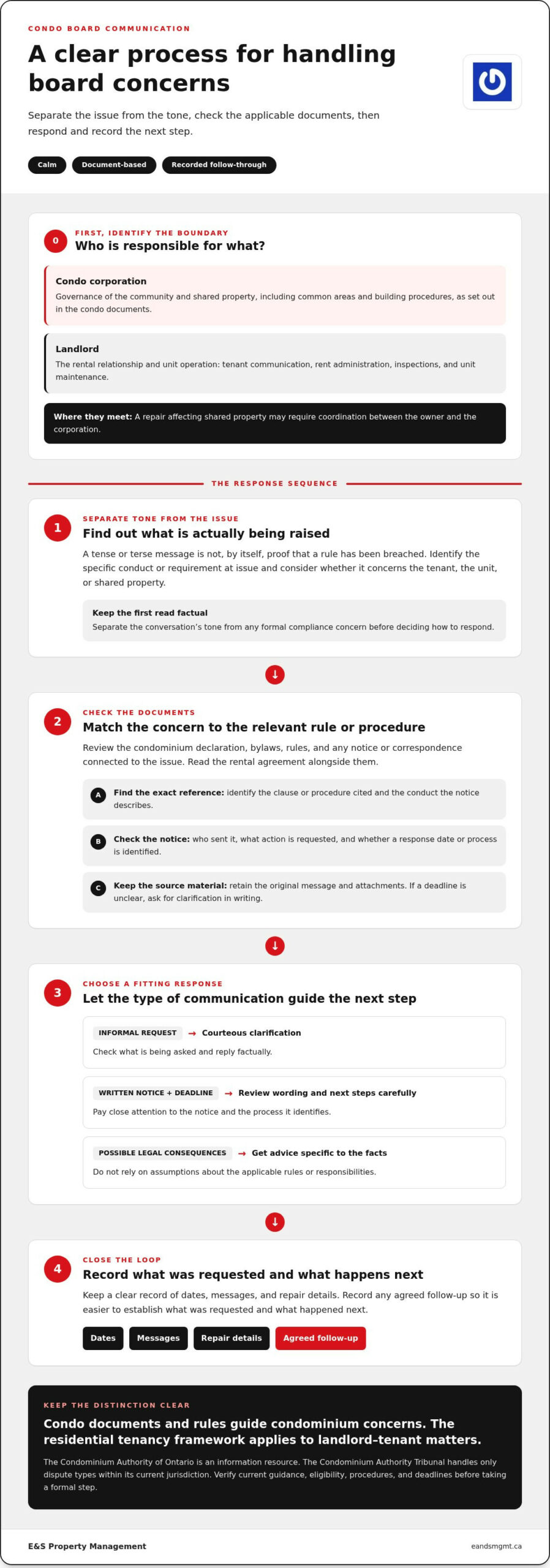
When board requests, rules, or responses feel difficult, managing a rental can be draining. You’re responsible for keeping your tenant informed and the unit operating, yet some concerns involve shared spaces or condominium requirements. Start by separating the issue from the tone of the conversation. A tense message may need a calm, factual reply; a formal compliance concern calls for a careful review of the documents and applicable Ontario law.
For Ottawa landlords, don’t assume every condominium follows the same process. The declaration, bylaws, and rules for your specific corporation help define how the community is governed and what owners and occupants are expected to follow. As the unit owner, you remain responsible for understanding those documents and your obligations as a landlord, even if someone else helps with day-to-day rental oversight.
What the condo board controls, and what the landlord manages
The condo corporation governs matters affecting the community and shared property. Depending on its governing documents, these may include common areas, building procedures, and rules that apply to residents. The board acts in a governance role for the corporation; its specific authority and procedures depend on the condominium’s documents and applicable law.
The landlord’s role centres on the rental relationship and the unit’s operation: communicating with tenants, administering rent, arranging inspections, and coordinating unit maintenance. If a repair could affect shared property, coordination may involve both the owner and the corporation. Keep the responsibilities distinct, but recognize when an issue crosses that boundary.
Ontario’s condominium framework and the Residential Tenancies Act govern different aspects of this arrangement. The Landlord and Tenant Board addresses landlord-tenant matters under the residential tenancy framework, while condominium concerns must be considered in light of the applicable condo documents and rules. If the issue has legal consequences, get advice specific to the facts rather than relying on assumptions.
Why rental arrangements can create friction with a condo board
Routine events can become points of tension: a tenant’s move-in, access through a common area, a noise report, or a repair that needs coordination with building staff. If the board contacts the owner while the tenant reports the issue to a property manager, unclear points of contact can slow the response. Missing dates, messages, or repair details can also make it harder to establish what was requested and what happened next.
Make an early distinction between communication style and compliance. A terse reply isn’t, by itself, proof that a rule has been breached. Ask what specific conduct or requirement is at issue, review the relevant document, and keep the exchange factual. This helps protect the tenant relationship while giving you a clearer basis for deciding what to do next.
Understand Ontario condo rules before responding to a board dispute
Before replying to a board concern, identify what it relates to and which document or procedure applies. A message about a move-in, pet, noise complaint, or shared space may refer to a condominium rule, a building procedure, or a tenant issue. The distinction matters: a courteous clarification may resolve an informal request, while a written notice with a deadline calls for close attention to its wording and next steps.
Which condo documents should a rental owner review?
Gather the condominium declaration, bylaws, rules, and any notice or correspondence connected to the issue. Match the board’s concern to the specific clause or procedure it cites. If a tenant is moving in, for example, check for move-in procedures and shared-space requirements. For a pet or noise complaint, look for the relevant rule and note exactly what conduct the notice identifies.
Read the rental agreement alongside the condo documents. Rental terms and tenant communications should make applicable building requirements clear, including those involving occupants and common areas. Don’t assume a lease changes a condominium rule, or that a board message automatically settles what your tenant is required to do. The Government of Ontario’s guidance on Ontario tenant rights can help clarify the landlord-tenant framework. If the documents conflict or the matter could lead to a legal dispute, seek advice from a qualified legal professional.
Distinguish an informal request from a formal notice. Check who sent it, what action is requested, whether a specific document is cited, and whether a response date or process is identified. Keep the original message and attachments. If a deadline is unclear, ask for clarification in writing rather than letting the issue sit.
How Ontario dispute and information channels may apply
The Condominium Authority of Ontario (CAO) is an information resource for condominium owners and residents. Its guidance can help you understand condo processes, but it doesn’t replace advice tailored to your documents and circumstances. The Condominium Authority Tribunal (CAT) handles only dispute types within its current jurisdiction. It isn’t a catch-all for every disagreement involving a board, landlord, or tenant.
Before naming a dispute pathway or taking a formal step, verify current CAO and CAT guidance, the issue’s eligibility, and any required procedures or deadlines. Ontario rules can change, so confirm current requirements rather than relying on an old article or an assumption about how another building handled a similar concern. For owners who want steady support with routine tenant matters, maintenance coordination, and organized records, Ottawa rental property management support can help keep day-to-day oversight consistent while board concerns are addressed.
Use a calm communication and documentation system with the condo board
A repeatable process makes board exchanges easier to manage, especially when a message feels tense or incomplete. Before replying, separate what’s being reported from what’s being requested. Acknowledge the message, identify the specific issue, check the relevant documents, respond clearly, and record what happens next. This keeps the focus on resolving the concern rather than reacting to its tone.
A step-by-step template for replying to a difficult board
Choose one professional point of contact for board communication, whether that’s you or a designated property manager. Keep messages concise and factual, and avoid debating assumptions before you understand the concern. If the board’s message is unclear, ask which rule, decision, or next step it refers to. The Condo Authority Tribunal dispute-resolution information can help explain available processes, but first confirm that the issue falls within its current jurisdiction.
A simple reply structure can help:
- Acknowledge: “Thank you for letting me know about the reported noise concern.”
- Clarify: “Could you identify the applicable rule and the date or details of the reported incident?”
- Respond: “I’ll review the information and speak with my tenant about the concern.”
- Follow up: “I’ll provide an update once I’ve reviewed the details.”
This wording recognizes the concern without accepting a disputed claim as fact. Set a reminder to follow up, especially if the board has requested a response by a particular date. Keep the complete exchange, including attachments, rather than saving only the latest message.
Keep tenants and maintenance work coordinated
Share relevant building procedures with tenants in plain language. For example, if the documents set out a move-in booking process or instructions for using a shared space, pass along the applicable details and keep a record of what you shared. Avoid presenting an interpretation as a legal conclusion; if a rule is unclear, verify the wording before advising the tenant.
Use one central file for board notices, tenant communications, repair requests, access arrangements, contractor visits, and completion updates. Note dates and who took each action. If a repair requires coordination with the building, send consistent updates to the tenant and the board so each understands what’s planned and what has changed. When managing a rental property with a difficult condo board, an organized record helps prevent crossed messages and makes follow-through easier to verify.
Choose the right response when a condo board issue affects your rental
Not every difficult exchange calls for escalation. Choose the next step based on urgency, the effect on your tenant or unit, the written evidence available, and what the condominium’s governing documents say. A calm clarification may resolve a misunderstanding; repeated delays, conflicting instructions, or a formal notice may call for a more structured response.
Routine concern or repeated conflict: how to decide
Use the specifics of the issue to choose a proportionate first step. Keep copies of messages and documents, and record what you did and when.
| Issue type | Appropriate first action | Record to retain |
|---|---|---|
| Possible misunderstanding about a rule or request | Ask for a calm clarification and identify the relevant document or procedure. | The original message, your reply, and the clause or procedure reviewed. |
| Repeated delays or inconsistent instructions | Send a concise written follow-up summarizing the timeline and asking for a clear next step. | Dated requests, responses, promised actions, and follow-up attempts. |
| Formal notice or stated deadline | Read the notice carefully, check the cited documents, and respond through the appropriate process. | The complete notice, attachments, relevant condominium documents, and your response. |
| Urgent safety concern or active property damage | Take prompt, appropriate steps to address the immediate concern and notify the relevant parties. | Time-stamped communications, photos where useful, and repair or access updates. |
If a concern keeps recurring, move from individual replies to a written timeline. That summary makes patterns easier to explain without relying on memory or escalating the tone. Don’t retaliate, disregard a notice, or withhold an obligation because communication has been frustrating. Keep following applicable requirements while you clarify the issue.
When to seek professional or legal guidance
Consider legal advice when the dispute involves a contested interpretation of rights, formal enforcement, potential liability, or consequences you don’t understand. Before describing or starting a formal condo dispute process, verify current Condominium Authority of Ontario information, including whether the issue fits the Tribunal’s current jurisdiction and what steps apply. The appropriate route depends on the matter and the current rules.
Recurring board delays or conflicting directions can also justify professional guidance on rental operations, particularly if they affect tenant communication, maintenance coordination, or access. Property management can provide a steady point of coordination for those day-to-day matters, but it doesn’t replace legal representation or give control over the board. If consistent rental oversight would help, get support managing your Ottawa rental through E&S Property Management.
Keep your Ottawa rental property on track with steady property management
A difficult board interaction is easier to contain when it doesn’t pull attention away from the rest of your rental responsibilities. Use a consistent owner action plan: know which documents apply, designate a point of contact, keep related records together, and set a reminder to follow up. That routine helps you respond to board concerns while continuing to care for the tenant and unit.
A practical rental-owner checklist for the next board interaction
Before replying, check the essentials. A short, organized review can prevent missed details and keep everyone working from the same information.
- Confirm the issue: Identify what the board is asking about and whether it affects the tenant, the unit, or shared property.
- Check the document: Locate the relevant rule, notice, or procedure, and note any stated response deadline.
- Assign the contact: Decide who will communicate with the board and keep tenant updates coordinated.
- Gather the record: Bring together tenant messages, inspection notes, maintenance details, and earlier board correspondence.
- Reply and follow up: Send a concise, factual response, save it with the related documents, and schedule a reminder to check for a reply or update.
Keep the file useful, not complicated. A dated sequence of requests, decisions, repair updates, and responses gives you a clear record if the issue returns or takes time to resolve.
How full-service rental management can ease the workload
Board communication is only one part of owning a rental. Tenant placement, rent collection, regular inspections, and financial reporting all require consistent attention. Maintenance coordination adds another layer, especially if a repair needs to be arranged with the tenant and communicated to the condominium corporation. A property manager can serve as an operational partner by organizing these day-to-day responsibilities and keeping a clear record of follow-through.
E&S Property Management has supported Ottawa residential property owners since 1981. Its full-service rental oversight brings tenant relations, inspections, rent administration, financial reporting, and maintenance coordination into a more organized process. Emergency maintenance response also helps owners address urgent property-care needs while keeping communication organized. This support can reduce the administrative load, while decisions about condominium requirements and any legal dispute remain with the appropriate parties.
For a consistent approach to rental operations and board communication, explore E&S Property Management in Ottawa.
Build a steadier routine for your Ottawa rental
Managing a rental property with a difficult condo board becomes more manageable when responsibilities are clear and communication is consistent. Review the documents that apply to each concern, keep a written record of board and tenant exchanges, and choose a response that reflects the issue’s urgency and impact. These habits can reduce avoidable misunderstandings while helping you stay attentive to your tenant and property.
Steady rental oversight also means keeping tenant relations, inspections, financial reporting, and maintenance coordination moving alongside board communication. E&S Property Management has served Ottawa residential property owners since 1981, bringing more than four decades of experience to the practical work of managing rentals.
For support with the day-to-day responsibilities of your rental, explore E&S Property Management’s Ottawa rental services. An organized process and a reliable point of coordination can help you address board concerns thoughtfully and keep your property on track.
Frequently Asked Questions
Can a condo board prevent me from renting out my unit in Ontario?
Not necessarily, but the answer depends on the condominium’s governing documents and applicable law. Review the declaration, bylaws, and rules for rental restrictions, tenant-registration requirements, or procedures that may apply to your unit. Don’t assume the same conditions apply in every Ottawa condominium. If the board says your rental isn’t permitted, ask which provision it relies on and get legal advice before deciding how to respond.
What should I do if a condo board ignores my messages?
Send a concise, polite follow-up that refers to your original message, states the unresolved issue, and asks for a response or next step. Include relevant dates and documents, and keep the full exchange. If the matter is urgent or affects tenant access, repairs, or safety, use the appropriate building contact or procedure rather than relying only on unanswered email. For a recurring issue, organize a timeline before considering escalation.
Can a condo board contact my tenant directly?
A board or condominium manager may communicate directly with a tenant about building-related matters, such as shared-space procedures or a reported concern. The appropriate communication process can depend on the condominium documents and circumstances. Ask your tenant to share relevant notices or requests with you, and keep one clear channel for follow-up. This helps you address rental responsibilities while avoiding conflicting instructions or assumptions about who should respond.
How should I handle a condo board complaint about my tenant?
Ask for the specific concern, including relevant dates, details, and any rule or procedure cited. Review the applicable condominium documents, then speak with your tenant calmly and share the relevant building requirements. Keep a record of the complaint, your response, and any follow-up. Separate an unverified allegation from a confirmed issue, and don’t ignore a formal notice or deadline. Seek legal advice if the complaint could lead to enforcement or liability.
Can a property manager deal with a difficult condo board for me?
A property manager can help coordinate routine rental matters and board communication, including tenant updates, maintenance arrangements, inspections, and organized records. This gives owners a consistent point of contact and reduces administrative follow-up. A manager doesn’t control the condominium board or replace legal representation. For Ottawa owners, E&S Property Management provides residential oversight, drawing on more than four decades of experience to help keep tenant and property matters on track.
What records should I keep when there is a dispute with a condo board?
Keep the complete written exchange, notices and attachments, relevant condominium documents, and a dated log of requests, responses, decisions, and follow-up. Add tenant communications, inspection notes, maintenance requests, access arrangements, contractor visit details, and repair updates when they relate to the issue. Store everything together so you can quickly establish what was raised, what action followed, and whether any response date or next step remains outstanding.
When should I get legal advice about a condo board dispute?
Get legal advice if the dispute involves a formal enforcement step, a deadline with significant consequences, potential liability, or a contested interpretation of your rights or the condominium documents. It can also be prudent when board instructions conflict or repeated attempts to resolve the matter have failed. Before pursuing a formal dispute route, verify current Ontario requirements and whether the issue falls within the relevant process or tribunal’s jurisdiction.


