
One tenant says the late-night noise is unbearable; the neighbour says they’re doing nothing unusual. If you’re searching for how to handle tenant complaints about neighbours Ottawa, start by gathering clear information rather than taking sides. A consistent process helps you understand what happened before deciding what to do.
Vague or repeated complaints can be stressful, especially when you can’t verify the details and need to protect everyone’s privacy. A calm response and clear records help you acknowledge the concern without escalating conflict or treating either tenant unfairly.
This article explains how to receive complaints, ask useful follow-up questions, document specific incidents, and assess whether an issue may involve noise, property standards, or another concern. You’ll also learn how to choose a proportionate next step, communicate with both tenants, and recognize when contacting the City of Ottawa, emergency services, or a qualified professional may be appropriate. An organized process makes it easier to respond consistently and keep the situation manageable.
Key Takeaways
- Learn how to handle tenant complaints about neighbours Ottawa by following a consistent process instead of taking sides.
- Record dates, times, locations, reported effects, and follow-up actions to help distinguish recurring patterns from assumptions.
- Match your response to the circumstances, from clarifying details to checking the property or seeking outside support.
- Communicate respectfully with each tenant, protecting privacy and sharing only relevant information.
- Recognize when repeated incidents, threats, property damage, or rights-related concerns may call for professional or legal guidance.
How to Handle Tenant Complaints About Neighbours in Ottawa: Start by Listening
Repeated disturbances can affect a tenant’s comfort, sleep, and trust in their rental home. A prompt, thoughtful response can help address the concern, but receiving a complaint doesn’t mean the allegation has been proven. If you’re deciding how to handle tenant complaints about neighbours Ottawa, listen without taking sides or promising a particular outcome.
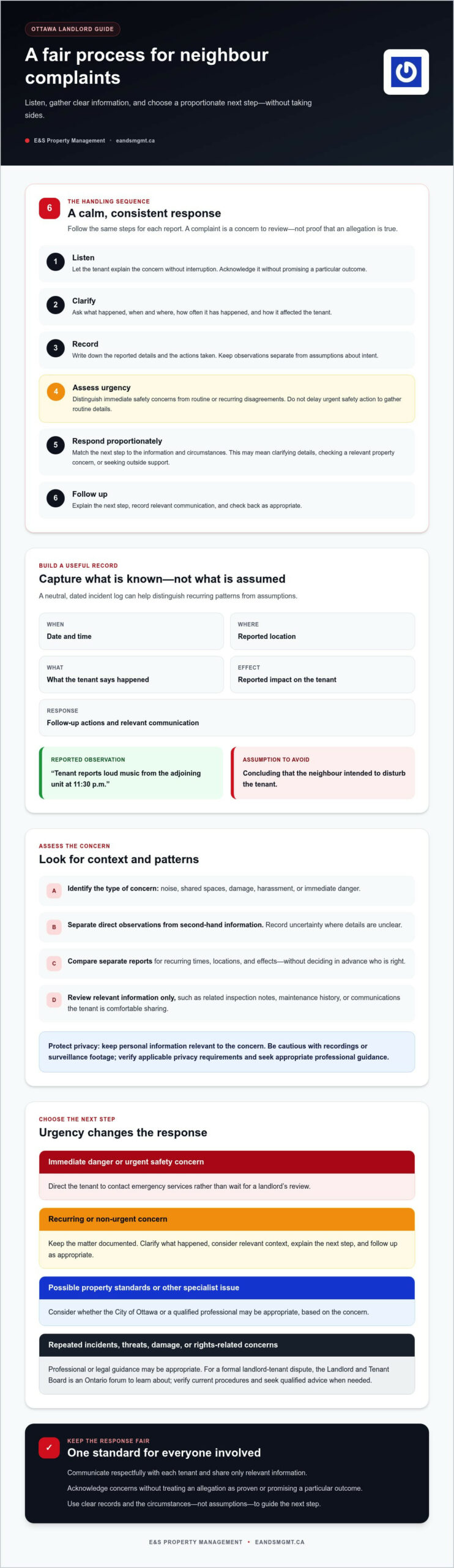
Use a steady sequence: listen, clarify, record, assess urgency, respond, and follow up. This gives the tenant a clear way to explain the concern and helps you make decisions based on specific information rather than assumptions.
- Listen: Let the tenant explain the concern without interruption.
- Clarify: Ask questions to understand what happened and when.
- Record: Note the details and your actions.
- Assess urgency: Separate immediate safety concerns from routine disputes.
- Respond and follow up: Explain the next step and check back as appropriate.
A useful standard is: A neutral complaint record is dated, factual, and free from assumptions. For example, write “tenant reports loud music from the adjoining unit at 11:30 p.m.” rather than concluding that the neighbour intended to disturb them.
What to ask when a tenant first reports a neighbour
Ask what happened, when and where it occurred, how often it has happened, and how it affected the tenant. Clarify whether the report concerns noise, shared spaces, damage, harassment, or immediate danger. If some details are uncertain, record what the tenant directly observed separately from what they heard from someone else.
Ask what outcome they’re hoping for. They may want the issue documented, a shared area checked, or help understanding possible next steps. Acknowledge the request without guaranteeing a result. Assess the information first, then respond fairly to everyone involved.
How to distinguish urgent concerns from recurring disputes
Immediate threats or urgent safety concerns need a different response from recurring disagreements about noise or shared-space use. If someone may be in immediate danger, direct the tenant to contact emergency services rather than wait for a landlord’s review. Don’t delay urgent safety action while gathering routine details.
For non-urgent concerns, explain when you’ll follow up and keep the matter on a documented path. Record new incidents and relevant communication as they arise. If a disagreement develops into a formal landlord-tenant dispute, the Landlord and Tenant Board (LTB) is an Ontario forum to learn about; verify current procedures and seek qualified advice when needed.
Assessing Neighbour Complaints in Ottawa: Evidence, Patterns, and Context
A complaint deserves careful review, but an interpretation isn’t the same as an observation. “I heard loud music through the bedroom wall at 10:45 p.m.” describes a reported event. “My neighbour is trying to make my life miserable” is a conclusion about intent. Keep that distinction clear in your notes so an allegation doesn’t become an assumed fact through repetition.
For landlords considering how to handle tenant complaints about neighbours Ottawa, a consistent incident log can reveal context without deciding in advance who is right. For each report, note the date, time, location, what the tenant says happened, the reported effect, and any action taken. Keep entries neutral and include only relevant personal information.
Dated reports are more useful than unsupported labels because they can show when and where a concern occurs without assuming why.
What evidence can help clarify a recurring complaint?
Ask the reporting tenant for a written account made close to the time of the incident, along with relevant messages or other communications they’re comfortable sharing. Don’t request unrelated details. Review records you already have, such as relevant inspection notes or maintenance history, to see whether a physical condition or shared-space issue could be involved.
Be cautious about collecting recordings or surveillance footage. Before recording conversations, installing a camera, or requesting footage, verify applicable privacy requirements and get appropriate professional guidance. More information isn’t automatically better if it intrudes on privacy or isn’t relevant to the concern.
How to recognize patterns without taking sides
Compare separate reports for recurring times, locations, and effects. For example, reports of footsteps may relate to a shared wall or a particular time of day. That pattern can guide a proportionate check, but it doesn’t prove that a neighbour acted deliberately or broke a rule. Building layout, sound transmission, common areas, and ordinary household activity can all provide context.
Give each tenant a fair opportunity to share relevant information. Describe the concern in measured terms, without disclosing unnecessary personal details about the reporting tenant, and record each response separately from your assessment. Don’t treat one account as established fact before reviewing the available information. For questions about formal processes or responsibilities, consult the official Landlord and Tenant Board (LTB) website and verify current guidance before taking legal steps.
Consistent records and follow-up can be easier to maintain with professional oversight. Ottawa landlords looking for support with tenant relations and property records can learn about residential property management.
Ottawa Noise and Neighbour Disputes: Choose a Proportionate Response
The right response depends on what’s reported, how often it happens, and whether anyone may be at risk. A one-time concern about noise may call for clarification; repeated, specific reports may justify a written reminder or a property check. For landlords deciding how to handle tenant complaints about neighbours Ottawa, address the concern without treating an allegation as a finding.
Before describing a sound as a bylaw violation, check the current City of Ottawa Noise By-law and confirm that the rule applies to the reported activity, time, and location. Landlords can communicate expectations and document follow-up, but municipal bylaw enforcement is the City’s role. A report to the City doesn’t guarantee a particular finding or outcome.
| Concern | Reasonable first step | When to escalate |
|---|---|---|
| One unclear or isolated disturbance | Clarify the details and record the report. | If it recurs or new information suggests a safety issue. |
| Repeated, specific noise reports | Review the incident pattern and send a neutral reminder if appropriate. | Check the current bylaw and consider City reporting if the concern may fall within its scope. |
| Shared-space or property concern | Arrange a relevant property check and document what you find. | If there’s damage, a hazard, or an issue that needs outside expertise. |
| Immediate threat or danger | Direct the tenant to emergency services. | Don’t delay urgent help for an internal review. |
When a calm conversation or written reminder may be appropriate
For a lower-risk concern, use calm, specific language focused on reported conduct and practical expectations. For example: “We’ve received reports of loud sound late in the evening. Please be mindful of how sound carries between units.” Avoid naming or accusing another tenant unless disclosure is necessary and appropriate. Keep a copy of the message, note any response, and choose a reasonable date to review whether the concern continues.
When to consider Ottawa services or urgent help
If there’s immediate danger, direct the tenant to emergency services rather than waiting for landlord review. For a possible bylaw concern, check the City of Ottawa’s definition of a problem property and verify its current reporting channels and procedures. The City may assess reports under its own processes; don’t promise enforcement. For tenancy or legal questions, seek qualified Ontario guidance rather than guessing.
Consistent tenant communication and property follow-up can help keep responses organized. Landlords seeking support with Ottawa residential property management can explore professional management as one option.
A Fair Complaint-Handling Process for Ottawa Landlords
A consistent process helps you respond thoughtfully, even when accounts differ or a concern returns. For landlords learning how to handle tenant complaints about neighbours Ottawa, use the same basic steps each time, then adapt your response to the facts and urgency:
- Acknowledge: Confirm you’ve received the concern and explain what information you’ll review.
- Document: Record the report, relevant evidence, communication, and actions taken.
- Assess: Consider urgency, available information, and whether a property check or outside guidance may help.
- Communicate: Give each party a respectful opportunity to share relevant details.
- Act proportionately: Choose a response that fits the concern without assuming fault.
- Review: Follow up on the agreed date and note whether the issue recurred or appears resolved.
Keep communication timely and consistent, but share only details relevant to the person receiving the message. The tenant who reported a concern should know that you reviewed it and what general next step you took. You can close the loop without identifying another tenant, sharing their account, or disclosing private information. Verify applicable privacy obligations if you’re unsure what can be shared.
How to document complaints and follow-up
Make a record promptly. Include who reported the issue, what they said, your response, and any follow-up action. Store complaint records securely and limit access to people who need the information to manage the matter. Set a realistic review date, then note whether the concern continued, changed, or was reported as resolved.
A simple log can use these fields:
- Date: When the report or follow-up occurred.
- Concern: The reported issue and relevant location.
- Evidence: Information reviewed, clearly separated from assumptions.
- Action: Communication, check, or other step taken.
- Owner: The person responsible for the next step.
- Next review: The planned follow-up date and eventual outcome.
How to communicate fairly with everyone involved
Use calm, non-accusatory wording that describes the conduct needing clarification, not a person’s character or presumed intent. Give each party a reasonable chance to provide relevant information, and record their responses separately. Keep messages focused on practical expectations and next steps. Don’t promise a particular outcome before you’ve completed a reasonable review.
For landlords who want help keeping tenant communication, records, and property follow-up organized, explore Ottawa full-service property management.
When Ottawa Landlords Should Seek Professional or Legal Support
Some neighbour complaints call for more than a reminder or routine follow-up. Repeated incidents, threats, harassment, property damage, or a concern involving a tenant’s rights warrant careful review. For landlords weighing how to handle tenant complaints about neighbours Ottawa, recognize when the situation has moved beyond an ordinary disagreement. Avoid making legal decisions based on assumptions or incomplete information.
Ontario’s Residential Tenancies Act, the Landlord and Tenant Board, and the Human Rights Code may be relevant depending on the facts. Their requirements and processes can change, so verify current official guidance before relying on it. Don’t promise an eviction, bylaw enforcement, or any particular legal outcome. If you’re considering a formal notice or other legal step, seek advice from a qualified Ontario legal professional.
When a neighbour complaint may involve safety or human-rights concerns
Treat an immediate threat or danger differently from a routine noise complaint. Direct anyone facing immediate danger to emergency services. Record reports of threats, harassment, or property damage carefully, and take appropriate steps without trying to investigate beyond your role. If a concern mentions disability, accommodation, or another possible Human Rights Code issue, don’t dismiss it as a personality conflict. Verify current Ontario guidance and refer complex or urgent legal questions to a qualified professional.
How property management can reduce stress and inconsistency
When several tenants are involved, a consistent point of contact can help keep communication measured and records organized. A property manager can coordinate tenant follow-up, maintain relevant documentation, and arrange property inspections or maintenance where appropriate. These actions support an orderly response, but they don’t replace legal advice or determine whether a law or bylaw has been breached.
E&S Property Management is an Ottawa residential property management firm founded in 1981. Its services include tenant relations, regular property inspections, maintenance coordination, and emergency maintenance response. Professional oversight can help landlords manage property-related next steps consistently while directing urgent legal questions to qualified support.
If ongoing tenant concerns are taking time away from managing your rental, explore full-service property management in Ottawa and consider whether professional support fits your needs.
Build a Calmer, More Consistent Response
Neighbour complaints can be difficult to resolve, but a fair process gives everyone a clearer path forward. Listen carefully, record what’s reported without assumptions, and look for patterns before choosing a proportionate response. Keep communication respectful, protect each tenant’s privacy, and seek qualified guidance when safety, human-rights, or legal concerns arise.
Knowing how to handle tenant complaints about neighbours Ottawa also means keeping follow-up organized so concerns don’t get lost or handled differently each time. E&S Property Management is an Ottawa residential property management firm founded in 1981, with services that include tenant relations, inspections, and maintenance coordination.
If managing tenant communication and property follow-up is difficult to balance, talk with E&S about managing your Ottawa rental property. A steady process and appropriate support can help you address concerns thoughtfully.
Frequently Asked Questions
What should a landlord do when a tenant complains about a neighbour?
Listen, clarify the details, document the report, assess urgency, and explain the next step. Ask what happened, when and where it occurred, how often it has happened, and how it affected the tenant. A complaint is not proof of wrongdoing, so don’t take sides before reviewing the available information. If there’s immediate danger, direct the tenant to emergency services. For routine concerns, keep a written record and follow up.
Can a landlord tell a tenant who made a noise complaint?
Don’t automatically identify the reporting tenant. Share only information necessary to address the concern, and consider privacy obligations before disclosing someone’s identity or account. You may be able to describe the reported conduct, such as repeated late-night noise, without naming the person who raised it. If disclosure seems necessary for a fair process or legal reason, get qualified guidance before sharing private details.
What happens if a tenant keeps complaining about neighbours?
Repeated complaints call for consistent documentation and a fresh assessment, not an automatic conclusion that either tenant is at fault. Compare dates, times, locations, reported effects, and information from both parties. Consider whether building layout, shared spaces, or a maintenance issue may be relevant. Explain what steps you’ll take and when you’ll review the matter again. If reports involve threats, damage, or possible rights concerns, seek appropriate outside guidance.
Can a landlord evict a tenant because of noise complaints in Ontario?
A noise complaint alone doesn’t establish that a tenant can be evicted. Eviction decisions must follow Ontario’s Residential Tenancies Act and the proper Landlord and Tenant Board process. The facts and any applicable legal grounds matter, so don’t threaten eviction or assume a particular outcome based on an allegation. Keep accurate records and consult a qualified Ontario legal professional before serving a notice or taking formal steps.
How do I report a neighbour noise complaint in Ottawa?
For a possible City of Ottawa noise bylaw concern, check the current bylaw’s scope and the City’s reporting instructions. You can contact the City through 3-1-1 to ask about reporting a municipal bylaw issue. Provide clear details, such as when and where the noise occurred, and follow the City’s process. Don’t assume every disturbance falls under the bylaw or that reporting will result in a particular enforcement outcome. For immediate danger, call emergency services.
Is a landlord responsible for resolving disputes between tenants?
A landlord can take reasonable, even-handed steps to assess concerns connected to the rental property, communicate expectations, and address relevant property or maintenance issues. That doesn’t mean every disagreement can be resolved by the landlord or that a complaint proves a breach. Respond consistently, protect tenants’ privacy, and verify current Ontario requirements before deciding what action is appropriate. Seek qualified legal guidance if the dispute raises complex tenancy, safety, or human-rights questions.
What should be included in a tenant complaint log?
Include the report date, the concern and location, the incident date and time if known, the tenant’s account, relevant evidence, your response, actions taken, the person responsible for follow-up, and the next review date. Separate direct observations from opinions or conclusions, and record whether the issue recurred or was reported as resolved. Store notes securely, limit access to those who need them, and avoid collecting unnecessary personal information.


