
You’ve just received your posting orders or finalized plans for a move, and while the excitement of a new chapter is building, a heavy knot of worry is forming in your stomach about the home you’re leaving behind. Deciding how to rent out an apartment in Ottawa shouldn’t feel like a high-stakes gamble with your financial security. It’s natural to feel anxious about potential property damage or the confusion of navigating Ontario’s strict rental laws, especially with the 2026 rent increase guideline set at 2.1% and the recent shortening of N4 notice periods. You need to know your asset is protected while you focus on your own transition.
We believe that being a landlord should offer relief and stability, not a second full-time job. This guide provides a clear, professional roadmap to help you master the local market, from rigorous tenant screening to managing complex NR6 tax filings from abroad. You’ll learn how to secure a steady rental income while ensuring your property remains in expert hands. We will walk through the latest legal requirements and logistical steps, giving you the confidence to delegate the heavy lifting and enjoy true peace of mind.
Key Takeaways
- Navigate the Ontario Residential Tenancies Act with confidence by using the mandatory Standard Lease and understanding the specific rules regarding legal deposits.
- Time your vacancy to align with Ottawa’s unique government posting seasons and university cycles to attract a reliable, high-quality tenant pool.
- Protect your physical asset through meticulous move-in inspections and established maintenance channels that prevent minor issues from becoming major burdens.
- Learn how to rent out an apartment in Ottawa while living abroad by managing CRA non-resident tax obligations and using NR6 forms to optimize your cash flow.
- Evaluate the long-term relief of professional property management to act as a protective buffer between you and the daily complexities of tenant relations.
Understanding the Legal Framework: The Ontario Residential Tenancies Act
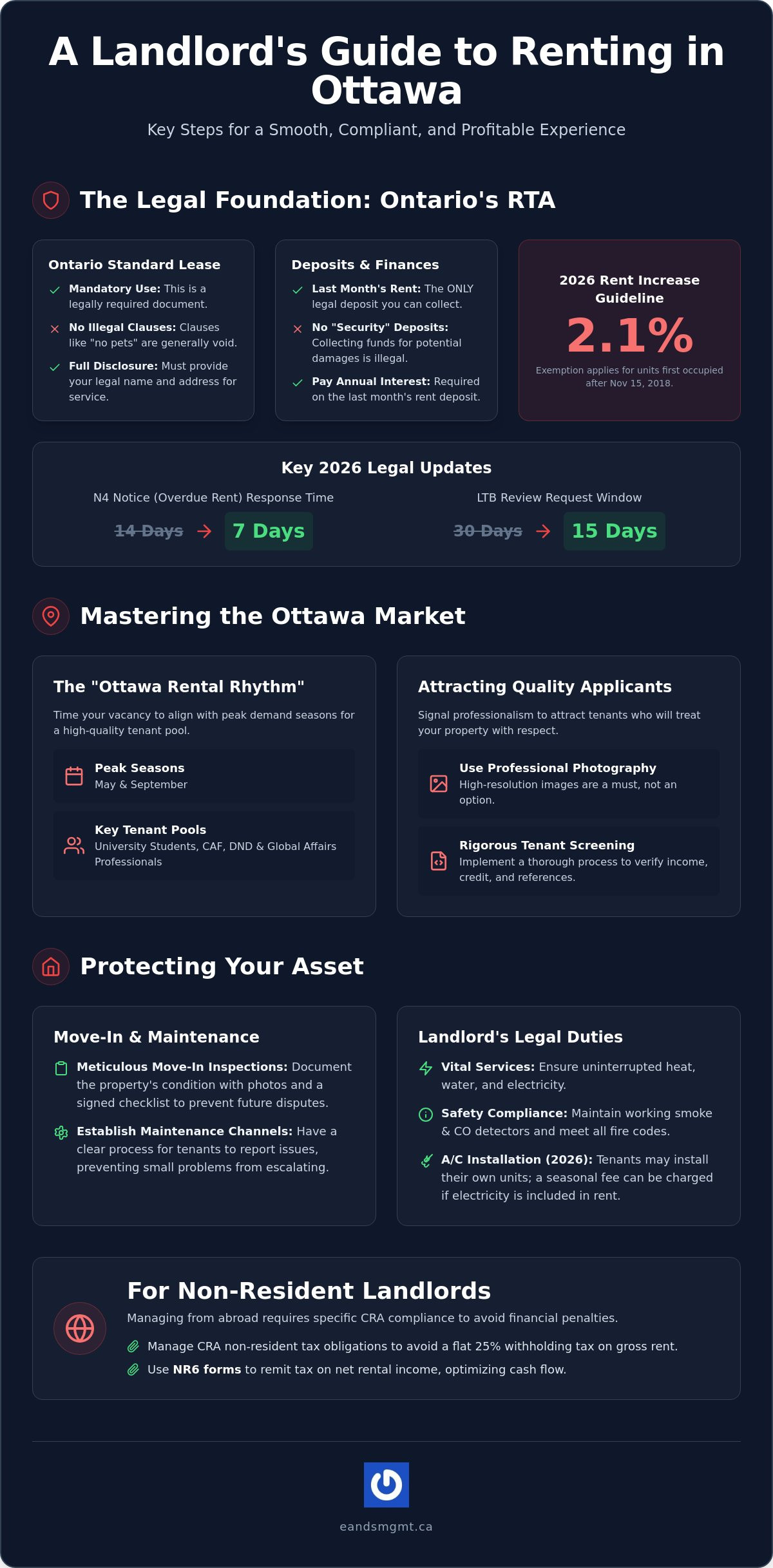
The legal landscape for landlords in Ontario is designed to be protective, but it can often feel restrictive if you aren’t prepared for the specific rules that govern your property. When you are learning how to rent out an apartment in Ottawa, your first step is grounding your process in Ontario’s Residential Tenancies Act. This legislation dictates almost every interaction between you and your tenant, from the moment the lease is signed until the keys are returned. For 2026, the provincial rent increase guideline is set at 2.1%, which applies to most residential units. However, if your property was first occupied for residential purposes after November 15, 2018, it remains exempt from this annual cap. Additionally, Ottawa landlords of multi-residential buildings built before 2001 must account for the 0.89% automatic rent reduction that took effect on January 1, 2026, following a decrease in municipal property taxes.
Understanding the financial boundaries is equally vital to maintaining a stress-free relationship with your tenants. In Ontario, you cannot collect a “security deposit” to cover potential damages. The only legal deposit you can request is for the last month’s rent, and it must be applied solely to that purpose. You are also required to pay the tenant annual interest on this deposit, which typically matches the rent increase guideline. By mastering these legal essentials, you simplify the process of how to rent out an apartment in Ottawa while staying fully protected.
The Ontario Standard Lease: Your Legal Shield
Using the most current version of the Ontario Standard Lease is a legal requirement. You cannot draft your own contract or add custom clauses that contradict provincial law. For instance, a “no pets” clause is generally void in Ontario, regardless of what the lease says. You must also provide your legal name and a physical address for the service of documents so the tenant has a reliable way to reach you. Recent 2026 updates have also streamlined some enforcement processes. As of September 21, 2026, the time for a tenant to pay overdue rent after receiving an N4 notice is reduced from 14 to 7 days, providing landlords with a faster path to resolution when payments stall.
Compliance and Safety Standards
Your role as a dedicated steward of your property includes meeting strict safety benchmarks. You are legally required to maintain working smoke and carbon monoxide detectors and ensure the unit meets all local fire codes. You are also responsible for “Vital Services,” which include providing uninterrupted access to heat, water, and electricity. As of July 1, 2026, tenants are permitted to install their own air conditioning units, though you may charge a seasonal fee if electricity is included in the rent. The Landlord and Tenant Board (LTB) acts as the provincial tribunal responsible for adjudicating disputes and enforcing these regulations. Their procedures were updated on July 1, 2026, requiring review requests for decisions to be submitted within 15 days, down from the previous 30-day window. Understanding these nuances allows you to manage your asset with a sense of order and clarity.
Marketing and Tenant Screening in the Ottawa Market
Ottawa’s rental market moves with a distinct rhythm that sets it apart from other Canadian cities. If you want to know how to rent out an apartment in Ottawa successfully, you have to look beyond a simple listing on popular classified sites. The city’s geography and economic pillars, such as the federal government and various tech hubs, create localized demand that varies significantly by neighborhood. A modern apartment in Westboro attracts a different demographic and price point than a spacious unit in Kanata. Using professional photography rather than rushed smartphone snapshots is the first step in signaling to high-quality applicants that you are a serious, professional landlord. High-resolution images highlight the care you’ve put into the asset, which in turn attracts tenants who will treat it with the same respect.
The “Ottawa Rental Rhythm”
The capital’s demand peaks during May and September, driven largely by university cycles and the “Government Posting Season.” This is when members of the Canadian Armed Forces, Global Affairs, and the DND are most likely to relocate. These professionals represent a unique, highly stable tenant pool that values reliability and clear communication. If you are moving away for a posting yourself, you must also consider your obligations under the Non-resident rental income tax rules to ensure your financial transition is as smooth as your tenant’s move-in. Marketing your property effectively means reaching these specific groups through targeted channels that value professional oversight.
A Bulletproof Screening Process
Finding the right tenant is about more than just a friendly handshake; it requires a methodical approach to verification. A thorough screening process acts as your primary defense against future stress. You should always verify income through recent pay stubs and formal employment letters, ensuring the numbers align with the rent expectations. Running comprehensive credit checks via Equifax or TransUnion is essential to assess financial responsibility, while calling previous landlords provides a glimpse into how the tenant treats their living space.
Pay close attention to behavior during viewings. Red flags often appear as inconsistencies in an applicant’s story or a reluctance to provide standard documentation. This level of scrutiny can feel overwhelming for a DIY landlord, which is why many homeowners choose a dedicated tenant placement service to handle the rigorous vetting on their behalf. This professional layer ensures your property is occupied by someone who is not only financially stable but also respectful of the home you’ve worked hard to maintain.
The Move-In Process and Ongoing Property Maintenance
Once you’ve selected a qualified tenant, the focus shifts to protecting your physical asset and building a professional relationship based on trust. Learning how to rent out an apartment in Ottawa involves more than just handing over keys; it requires a structured approach to the move-in day and a proactive maintenance plan. This transition is also a reminder that your management practices should align with Ontario’s human rights policy for rental housing, ensuring every tenant is treated with dignity and fairness. A smooth start sets the tone for the entire tenancy, turning a potentially stressful handover into a clear, orderly process for everyone involved.
The Move-In Inspection Report
A thorough inspection is your most effective tool for preventing future disagreements regarding the property’s condition. Before the tenant moves their first box, walk through every room to document the state of appliances, flooring, and paint. Take high-resolution photos of any existing wear and tear to create a permanent visual record. This is also the time to finalize utility transfers with providers like Hydro Ottawa and Enbridge, ensuring that billing accounts are correctly transitioned to the tenant’s name. A signed inspection report serves as a mutual agreement on the unit’s condition, providing a clear baseline that protects both parties if damage occurs during the lease. This document is a vital piece of evidence that can resolve disputes before they ever reach a tribunal.
Preventative Maintenance Strategy
Maintaining a property in the capital requires constant attention to the changing seasons. Ottawa’s harsh winters mean you must have a reliable plan for snow removal and annual HVAC servicing to prevent furnace failures during a cold snap. Establishing a clear channel for both routine and emergency maintenance requests ensures that small issues, like a slow leak, don’t escalate into expensive repairs. Legally, you must provide at least 24 hours’ written notice before entering the unit for non-emergency repairs or inspections, respecting your tenant’s right to privacy.
Conducting regular property inspections every six to twelve months allows you to spot potential problems early. It’s best to work with a network of licensed contractors for plumbing and electrical work to ensure all repairs meet safety codes and insurance requirements. When you are determining how to rent out an apartment in Ottawa from a distance, having an emergency 24/7 maintenance response is critical. Tenants feel a sense of relief knowing that a professional hand is ready to step in at any hour, which significantly improves tenant retention and protects the long-term value of your investment.
Managing Non-Resident Taxes and CRA Compliance
Ottawa’s unique position as a diplomatic and military hub means many homeowners eventually find themselves managing properties from thousands of miles away. When you are learning how to rent out an apartment in Ottawa as a non-resident, the Canada Revenue Agency (CRA) introduces specific tax obligations that can feel daunting without the right guidance. By default, the CRA requires a 25% withholding tax on the gross rental income of any Canadian property owned by a non-resident. This amount must be remitted monthly, and failing to do so can lead to significant penalties. Legally, you must appoint a Canadian “agent,” which is typically a professional property manager or a resident individual, who is responsible for withholding and remitting these funds on your behalf.
The NR6 Form: Cash Flow for Expats
The standard 25% withholding on gross rent can severely strain your monthly cash flow, especially when you still have a mortgage or maintenance costs to cover. To find relief, you can file an NR6 form, which requests the CRA’s permission to calculate withholding tax based on your net rental income instead. This means your tax is calculated after eligible expenses are deducted, keeping more money in your pocket throughout the year. You must submit this form by January 1st of each year, or before the first rent payment is due. Because the CRA can take several weeks to process these requests, early filing is essential to avoid the mandatory 25% gross deduction. For those posted abroad, our specialized Non-Resident Landlord Tax Services in Ottawa provide the professional oversight needed to ensure these forms are filed accurately and on time.
Annual Reporting Requirements
Compliance doesn’t end with monthly remittances. By March 15th of the following year, your agent must issue an NR4 slip to both you and the CRA, detailing the total gross income and the taxes withheld during the previous year. This document is the foundation for your annual Section 216 tax return. Filing this return allows you to report your actual rental expenses and, in many cases, recover a portion of the tax that was withheld. This process is a vital safeguard for Foreign Service members and expats, ensuring you only pay exactly what is owed under Canadian law.
Navigating these administrative duties with a seasoned partner transforms a complex cycle of tasks into a manageable, orderly system. It’s about more than just numbers; it’s about protecting your financial interests while you focus on your mission abroad. If you want to ensure your property remains a source of stability rather than a source of stress, consider delegating your NR6 and NR4 tax filing support to a team that understands the specific burdens of non-resident ownership.
DIY Landlording vs. Professional Management: Making the Choice
Deciding whether to manage your property yourself or hire a professional is the final, most critical step in understanding how to rent out an apartment in Ottawa. While the DIY path may seem cost-effective initially, it often overlooks the “cost of time”—the countless hours spent responding to midnight repair calls, chasing late payments, or staying current with shifting LTB regulations. A professional manager acts as a vital buffer, handling difficult conversations and legal notices so that your relationship with the tenant remains purely professional. This separation is especially valuable when you are dealing with sensitive issues like rent increases or maintenance disputes, as it allows a seasoned expert to navigate the friction on your behalf.
For those living outside the city or country, the logistical burden of DIY management can quickly become overwhelming. Managing a property effectively requires a local presence to conduct regular inspections and respond to emergencies. Without that physical proximity, you are often forced to rely on expensive, unvetted contractors or the goodwill of neighbors. By delegating these responsibilities, you transform a cycle of constant worry into a structured system of professional oversight, ensuring your asset is protected while you focus on your own transition.
The Risks of DIY in a Pro-Tenant Province
Ontario’s rental laws are notoriously complex and heavily weighted toward tenant protection. A single procedural error at the Landlord and Tenant Board, such as using an outdated form or missing a notice deadline, can lead to months of lost rental income and significant legal frustration. If you are managing how to rent out an apartment in Ottawa from 5,000 miles away, the stress of a sudden basement flood or a non-payment issue is magnified. You also risk losing high-quality tenants who expect a high standard of service and immediate responses to their concerns. The financial and emotional toll of a single bad tenant or an unmanaged emergency can far outweigh the investment in expert management.
The E&S Advantage: 40+ Years of Ottawa Expertise
Founded in 1981, E&S Property Management has spent over four decades serving as a protective guardian for Ottawa homeowners. We specialize in supporting Foreign Service members and military families who need a reliable partner to watch over their homes while they are posted abroad. Our approach is built on a foundation of reliability and meticulous care, utilizing a proven tenant placement service and a network of trusted local contractors to keep your property in peak condition.
We provide end-to-end support that covers everything from emergency 24/7 maintenance response to complex financial reporting and accounting. We understand the specific anxieties of non-resident landlords, which is why we handle the heavy lifting of NR6 and NR4 tax filing support. When you choose to work with us, you aren’t just hiring a service; you are gaining a dedicated steward who has navigated every possible challenge and is committed to shielding you from the pitfalls of landlording. This professional oversight offers the ultimate desired outcome: steady rental income with minimal stress and the total peace of mind that your home is in seasoned hands.
Moving Forward with Confidence
Transitioning from the initial stress of a relocation to the relief of a well-managed home requires a steady hand and deep local expertise. We’ve explored the essential legal framework of the Residential Tenancies Act and the meticulous screening processes needed to find reliable tenants in the capital’s unique market. Learning how to rent out an apartment in Ottawa is a journey toward financial stability, but it also means staying ahead of CRA obligations and seasonal maintenance. These tasks can feel overwhelming when you are posted abroad, but they don’t have to be your burden alone.
With over 40 years of experience specifically helping Foreign Service members and expats, E&S Property Management acts as your protective guardian. We handle the complexities of NR6 tax compliance and 24/7 emergency responses with a methodical, professional approach. Our goal is to provide the order and clarity you need to focus on your next chapter while we protect your most valuable asset.
Let E&S Property Management protect your Ottawa investment—Contact us today!
Your property deserves meticulous care, and you deserve true peace of mind. We look forward to being your reliable partner in the Ottawa rental market.
Frequently Asked Questions
Do I need a special license to rent out my house in Ottawa?
You do not currently need a city-wide landlord license for standard residential houses in Ottawa, though you must ensure your property complies with all zoning by-laws and fire codes. If you have created a secondary dwelling unit, such as a basement suite, it must be officially registered with the city. For those learning how to rent out an apartment in Ottawa, staying informed about local registration requirements is a key part of maintaining legal compliance.
How much can I increase the rent in Ottawa in 2026?
The 2026 Ontario rent increase guideline is set at 2.1% for the majority of residential rental units. This cap applies to buildings first occupied for residential purposes before November 15, 2018. If your property was built or occupied after that date, it is exempt from the annual guideline, allowing you to set increases that reflect current market conditions.
Can I refuse a tenant with a pet in Ontario?
You cannot legally enforce a “no pets” clause in an Ontario lease, as such provisions are considered void under the Residential Tenancies Act. While you can choose not to select an applicant who has a pet during the initial screening process, you cannot evict a tenant for moving a pet into the unit later. The only exceptions involve situations where the pet causes significant damage, allergic reactions for other residents, or safety concerns.
What happens if my tenant stops paying rent while I am overseas?
If a tenant stops paying rent while you are abroad, you must issue an N4 notice to start the legal recovery process. As of September 21, 2026, the time for a tenant to pay overdue rent after receiving this notice has been reduced to 7 days. Having a local agent or manager is essential in these cases to serve documents and represent your interests at the Landlord and Tenant Board while you are out of the country.
Is it better to rent out my apartment furnished or unfurnished in Ottawa?
Most long-term renters in the capital prefer unfurnished apartments because they want to bring their own furniture and create a permanent home. Unfurnished units typically attract stable, multi-year tenants, whereas furnished units are a niche market best suited for short-term diplomatic or executive stays. Choosing the unfurnished route often leads to lower turnover and less wear and tear on your assets.
How do I handle utilities when renting out my apartment?
It is standard practice to require tenants to set up their own accounts with Hydro Ottawa and Enbridge for electricity and gas. This ensures that the person consuming the energy is directly responsible for the payment. Water is often handled differently depending on the building’s metering, so you should clearly outline these responsibilities in the Ontario Standard Lease to avoid any confusion or unpaid bills.
What is an NR6 form and do I need one?
An NR6 form is a document filed with the CRA that allows non-resident landlords to have their withholding tax calculated on net rental income rather than the standard 25% of gross income. You need this form if you want to improve your monthly cash flow by deducting eligible expenses before the tax is applied. It is a vital tool for anyone figuring out how to rent out an apartment in Ottawa while living as an expat.
How long does it take to find a tenant in Ottawa?
Finding a qualified tenant typically takes between two to four weeks if the property is priced correctly and marketed professionally. This timeline can fluctuate based on the neighborhood and the time of year, with demand peaking during the spring and late summer months. Using a structured screening process ensures that you don’t just find a tenant quickly, but that you find the right one for the long term.


