
With fines for Residential Tenancies Act offences doubling as of July 1, 2026, the margin for error in your rental business has officially disappeared. Between the 2.1% rent increase cap and the city’s new renoviction by-law, mastering landlord responsibilities Ottawa has become a complex, high-stakes task. It’s completely natural to feel a sense of anxiety as these rules evolve; you want to protect your investment and provide a safe home, but the growing list of municipal requirements can feel like a heavy burden to carry alone.
This guide is designed to replace that stress with total clarity. You’ll learn how to navigate the latest legal, maintenance, and administrative requirements while protecting your property from costly compliance errors. We’ll walk through the 2026 RTA amendments, the new rules for tenant-installed air conditioning, and the specific steps you can take to ensure long-term tenant stability and a stress-free rental process.
Key Takeaways
- Navigate the dual layers of the Residential Tenancies Act and local by-laws to avoid common “ignorance of the law” pitfalls at the Landlord and Tenant Board.
- Master your landlord responsibilities Ottawa by maintaining a “Good State of Repair” and ensuring uninterrupted access to vital services like heat, water, and electricity.
- Implement the mandatory Tenant Service Request process and provide the required “Information for Tenants” document to remain compliant with Ottawa’s specific management by-laws.
- Protect your asset through legally compliant tenant screening and professional rent collection strategies that respect the Ontario Human Rights Code.
- Identify the transition point where professional oversight becomes the logical solution to shielding your investment from costly administrative and compliance errors.
Understanding Landlord Responsibilities in Ottawa: The Legal Framework
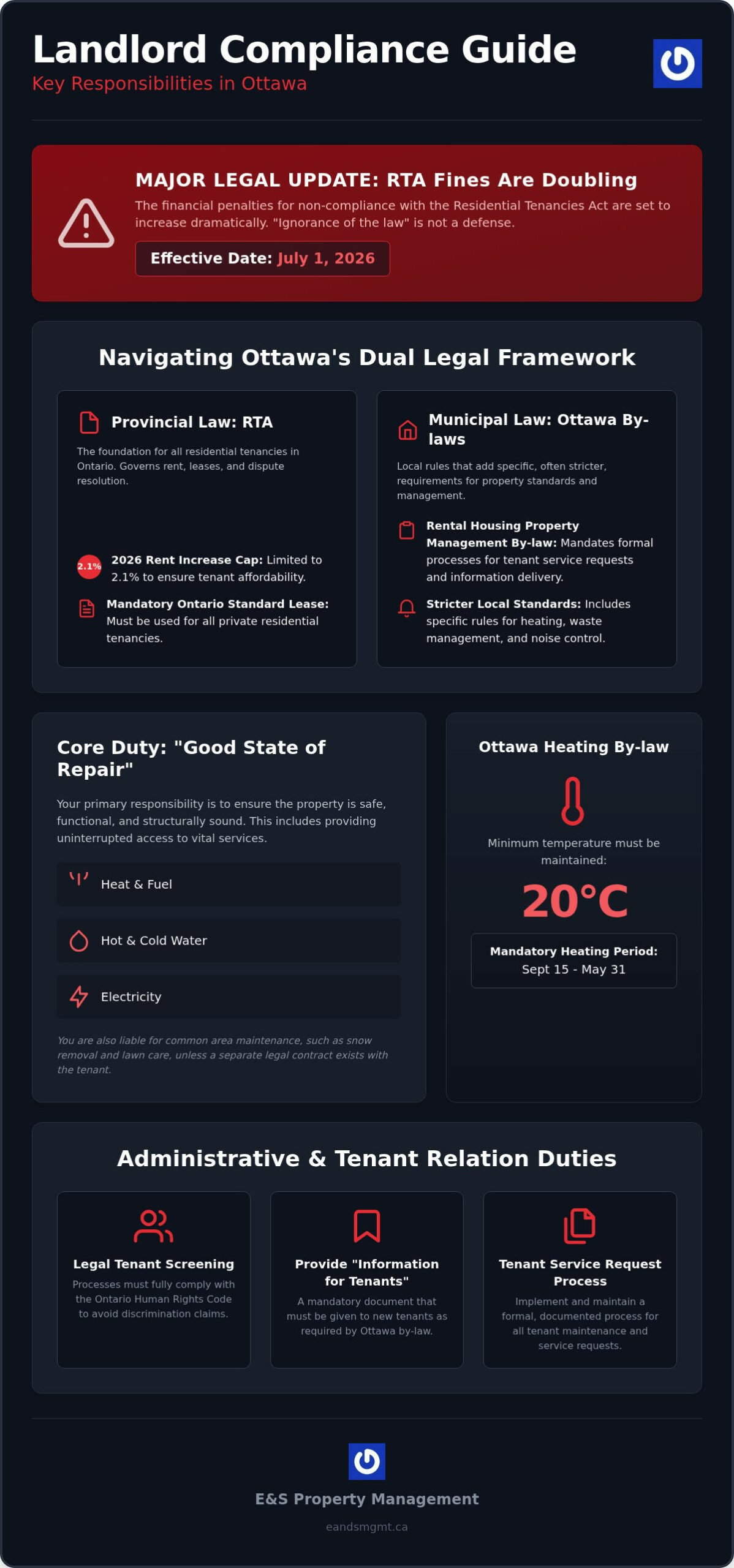
Owning a rental property in Ottawa often feels like standing at the center of a shifting legal landscape. You aren’t just following one set of rules; you’re balancing provincial legislation with specific local mandates. This dual-layer system ensures that your landlord responsibilities Ottawa are clearly defined, but it also means there’s a lot to track. If a dispute arises, you’ll likely find yourself before the Landlord and Tenant Board, where adjudicators expect you to know every detail of your obligations. With fines for RTA offences doubling as of July 1, 2026, relying on “I didn’t know” isn’t a valid defense when a tenant’s housing security or your financial investment is on the line.
The city’s Rental Housing Property Management By-law (No. 2020-255) has added a modern layer of accountability for local owners. It requires you to maintain a high standard of care to ensure your property remains a safe, functional environment for its occupants. To avoid liability, an Ottawa landlord must proactively maintain the property in a good state of repair and comply with all health, safety, and maintenance standards established by both the province and the municipality.
The Ontario Residential Tenancies Act (RTA)
The RTA is the primary rulebook for all residential tenancies in Ontario. It dictates everything from the 2.1% rent increase cap for 2026 to the mandatory use of the Ontario Standard Lease for all private residential tenancies. This document is your first line of defense; it’s a clear, legally binding agreement that protects your rights to collect rent on time and access the property for inspections with proper notice. While the Act protects tenants, it also grants you the authority to protect your asset from damage or illegal acts.
Ottawa-Specific Municipal By-laws
While the RTA sets the stage, Ottawa’s municipal by-laws provide the specific script for property standards and noise control. These rules are often stricter than provincial guidelines, especially regarding heating dates and waste management. The Rental Housing Property Management By-law is particularly crucial because it mandates a formal process for handling tenant service requests. If you manage a multi-unit building or even a single-family home, these local rules impact your daily operations and your legal standing. Staying compliant means understanding that the City of Ottawa can issue work orders or fines that exist entirely separate from LTB proceedings. This comprehensive approach ensures that every aspect of your property is managed with precision and care.
Essential Maintenance and Habitability Standards
The concept of a “Good State of Repair” is the cornerstone of landlord responsibilities Ottawa. It’s more than just fixing a leaky faucet; it’s a comprehensive mandate to ensure your property remains safe, functional, and structurally sound for its occupants. For many owners, the stress of reactive maintenance, like scrambling to find a plumber at 2 AM, is a significant emotional and financial burden. Shifting to a preventative model preserves your asset’s value. It also shields you from the heavy fines and repair orders often detailed on the official Landlord and Tenant Board (LTB) website.
Vital services are non-negotiable. You must provide uninterrupted access to water, electricity, and fuel for heat. If these services are cut off due to non-payment of your own utility bills or a failure to maintain essential equipment, the legal consequences are swift. Additionally, you are generally responsible for the upkeep of common areas. In our climate, this means meticulous snow removal and lawn care. Unless you have a very specific, separate contract for these services, the liability for a slip and fall on an icy walkway rests squarely on your shoulders. If managing these logistics feels overwhelming, a dedicated partner can help you transition to a cycle of regular property inspections that catch issues before they become emergencies.
The Ottawa Heating By-law
Ottawa winters are famously harsh, and local by-laws reflect that reality. Between September 15 and May 31, you must maintain a minimum temperature of 20°C in all residential units. This isn’t just a guideline; it’s a strict requirement. Regular furnace inspections are your best defense against mid-winter failures. When a tenant reports a cold unit, your response must be immediate. Documenting your efforts to restore heat is essential for compliance, as “vital service” disruptions are prioritized by both the city and the LTB. This proactive care ensures your tenants stay warm and your pipes stay intact.
Integrated Pest Management and Sanitation
A pest-free environment is a basic right for every tenant. Ottawa law emphasizes Integrated Pest Management (IPM), which requires landlords to have a proactive approach to prevention and treatment. While you are responsible for the costs of professional extermination from day one, successful treatment is a partnership. You provide the licensed contractor, and the tenant is responsible for unit preparation, such as clearing cupboards or laundering linens. Clear, empathetic communication during this process prevents the spread of infestations and maintains a healthy, respectful living space for everyone involved.
Navigating the Ottawa Rental Housing Property Management By-law
Moving beyond the provincial RTA, we must look at the specific municipal framework that defines your daily landlord responsibilities Ottawa. The Rental Housing Property Management By-law isn’t just for large apartment complexes; it applies to every residential owner in the city, including those with single-family rentals. Before a new tenant even turns the key, you’re required to provide a formal “Information for Tenants” document. This packet provides essential contact details, emergency procedures, and waste management rules, ensuring your tenants feel supported and informed from day one. It’s a simple step that sets a professional tone for the entire tenancy.
The by-law also introduces the Tenant Support Registry, which requires you to keep a record of tenants who may need additional assistance during emergencies or building evacuations due to disabilities. It’s a compassionate requirement that turns a legal duty into a meaningful safety net for your residents. Failing to maintain these records or meet compliance deadlines can lead to significant municipal fines. In an era where enforcement is becoming more rigorous, having a stabilized, organized approach to these administrative duties is the best way to transition from the stress of “what-ifs” to the relief of total compliance.
Developing Your Capital Maintenance Plan
One of the most overlooked requirements for individual landlords is the Capital Maintenance Plan. This isn’t just a legal hurdle; it’s a strategic 5-year forecast for major repairs like roof replacements, HVAC upgrades, or window installations. To satisfy a City of Ottawa inspector, you must document when these major components were last serviced and when they’re scheduled for renewal. Creating this roadmap allows you to budget effectively for the future, transforming a mandatory document into a powerful tool for investment growth and long-term property stability.
The Tenant Service Request Log
Transparency is your best defense against disputes. The city now mandates a formal Tenant Service Request Process, where every repair request and your subsequent response time are meticulously documented. According to Crime Prevention Ottawa’s Landlord Guide, maintaining a safe and secure environment is a shared responsibility that begins with clear communication. A digital log provides an irrefutable paper trail if a “failure to repair” claim ever reaches the LTB. Professional management systems often automate this record-keeping for you, providing the peace of mind that your compliance is handled with seasoned care while you focus on your broader financial goals.
Administrative, Financial, and Tenant Relation Duties
Managing the administrative side of a rental property often feels like a full-time job. It is the space where the personal nature of property ownership meets the rigid requirements of provincial law. While you want to maintain a neighborly relationship with your residents, you must also act as a diligent business owner. This balance is most critical during tenant screening. You have a duty to protect your asset, yet you must do so while strictly adhering to the Ontario Human Rights Code. Focusing on objective criteria like credit history and landlord references ensures you find reliable residents without overstepping legal boundaries.
Financial clarity is equally vital for fulfilling your landlord responsibilities Ottawa. Rent collection is the lifeblood of your investment. If a payment is missed, issuing a legal N4 notice immediately is a standard, professional procedure that protects your timeline for recourse. It is also important to remember that security deposits are illegal in Ontario. You may only collect a last month’s rent deposit and a modest key deposit. Managing the move-out process with a detailed inspection and a clear key return protocol prevents the common “failure to return” disputes that often clog the LTB system.
Non-Resident Landlord Tax Compliance
For Ottawa owners serving abroad in the Foreign Service or DND, administrative duties include specialized tax obligations. The CRA typically requires a 25% withholding on gross rent. However, you can often reduce this burden by filing an NR6 form to withhold tax based on net income instead. Failing to provide your tenant or manager with the correct documentation, or neglecting to file annual NR4 slips, can lead to massive penalties. If these cross-border complexities are causing you stress, our team provides specialized NR6 and NR4 tax filing support to ensure you remain in good standing with the CRA from anywhere in the world.
Record Keeping for Tax and Legal Protection
Detailed records are your best defense against future claims. You should maintain a comprehensive file for each tenancy that includes the signed Ontario Standard Lease, move-in and move-out inspection reports, and a log of all communications. Under Ontario law, keeping these records, along with repair receipts and property tax statements, is essential for both legal defense and year-end tax preparation. Professional financial reporting replaces the stress of a disorganized shoebox of receipts with a clear, audit-ready narrative of your property’s performance. This methodical approach ensures that your investment remains a source of relief rather than a source of paperwork.
Compliance vs. Profit: Why Professional Oversight is the Logical Conclusion
The “DIY” landlord trap is often built on the belief that managing a property yourself saves money. However, in the modern Ottawa market, a single missed by-law notice or a procedural error at the Landlord and Tenant Board can quickly erase a full year of rental profit. As fines for RTA offences have doubled as of July 1, 2026, the financial risk of an oversight is higher than ever. True profitability isn’t just about the rent you collect; it’s about the costly compliance errors you avoid through meticulous, seasoned oversight. Transitioning from the daily stress of management to the relief of professional stewardship allows you to treat your property as a performing asset rather than a second job.
E&S Property Management acts as a protective guardian for your investment. We’ve spent 40 years navigating the specific nuances of the local market, from shifting heating by-law dates to the complexities of the new renoviction regulations. This experience serves as your best legal insurance. We understand that your property represents a significant part of your financial future, and we treat that responsibility with the weight it deserves. By delegating your landlord responsibilities Ottawa to a team that understands both the technical and emotional aspects of property ownership, you secure long-term tenant stability and peace of mind.
The E&S Approach to Ottawa Compliance
Our systems are built to satisfy every requirement of the Rental Housing Property Management By-law automatically. We provide a robust Tenant Service Request system that tracks every repair from the initial report to the final fix, creating the documented paper trail the city demands. Our services include:
- 24/7 Emergency Response: We handle the late-night calls and urgent repairs so you don’t have to.
- Automated Capital Maintenance Planning: We forecast your major repairs over a five-year window, ensuring your property stays in a “Good State of Repair.”
- Specialized Foreign Service Support: For owners living abroad, we provide the meticulous care needed to ensure your home is in perfect condition for the day you return to Ottawa.
Taking the Next Step
Moving from a stressed landlord to a confident property investor begins with a clear understanding of where your property stands today. We invite you to request a professional rental assessment and compliance review. This process identifies potential risks before they become liabilities and ensures your rental rates are aligned with the 2026 market. It’s time to stop worrying about the latest by-law update and start enjoying the rewards of your investment. Simplify your landlord journey with E&S Property Management and let our seasoned hands guide your property toward lasting success.
Securing Your Investment’s Future
The landscape of property ownership in the nation’s capital is increasingly defined by rigorous standards and complex legal requirements. Mastering landlord responsibilities Ottawa means staying ahead of the 2026 RTA amendments and municipal by-laws that demand a proactive approach to maintenance and tenant relations. Whether you’re managing a single home or a multi-unit property, the transition from constant worry to professional clarity is the most effective way to protect your financial legacy.
With over 40 years of experience in the local market, E&S Property Management provides the stabilizing force you need. We specialize in tax and compliance support for non-resident owners and offer 24/7 emergency maintenance coordination to shield you from the burdens of daily operations. You don’t have to carry these legal and administrative weights alone. By delegating the complexities to a seasoned guardian, you can focus on the growth of your investment while we ensure your property remains a safe, compliant, and thriving home for your tenants.
Let E&S Handle Your Landlord Responsibilities in Ottawa
Frequently Asked Questions
Do I legally have to use the Ontario Standard Lease in Ottawa?
Yes, you must use the Ontario Standard Lease for most private residential tenancies. This mandatory document ensures that both you and your tenant are protected by the same set of clear, provincial rules. If you fail to provide this standard form upon request, your tenant may have the legal right to withhold one month’s rent or even terminate the tenancy early, so it’s a vital first step for any new rental agreement.
What is the minimum temperature I must provide for my tenants in Ottawa?
You are required to maintain a minimum temperature of 20°C in all residential units between September 15 and May 31. This is a strict requirement under the City of Ottawa Heating By-law. Ensuring your heating system is reliable before the frost hits is a key part of your landlord responsibilities Ottawa, as failing to meet this standard can lead to immediate municipal work orders and fines.
Can I charge a security deposit or “damage deposit” in Ottawa?
No, security and damage deposits are illegal in the province of Ontario. You are only permitted to collect a rent deposit, which must be applied to the last month of the tenancy, and a modest, refundable key deposit. Charging anything beyond these specific amounts puts you at risk of a dispute at the Landlord and Tenant Board, where you would be ordered to return the funds immediately.
What happens if I don’t have a Capital Maintenance Plan for my Ottawa rental?
Failing to maintain a Capital Maintenance Plan leaves you vulnerable to municipal penalties and increased liability. This plan is a requirement under the Rental Housing Property Management By-law and helps you forecast major repairs like roofing or furnace replacements. Without it, a city inspector may issue a formal notice of non-compliance, which can lead to daily fines until the documentation is properly established and filed.
Am I responsible for snow removal at my rental property?
Yes, the responsibility for snow removal and ice control generally rests with the landlord. Maintenance of common areas, including walkways and driveways, is a non-delegable duty under the Residential Tenancies Act. While you can hire a tenant to do this work under a separate, specific contract, the legal liability for any slip and fall accidents on the property remains yours as the owner.
How much notice must I give a tenant before entering their unit in Ottawa?
You must provide at least 24 hours of written notice before entering a tenant’s unit. This notice must specify the date, the time of entry between 8 AM and 8 PM, and a valid reason, such as a repair or a property inspection. The only exception to this rule is a genuine emergency, like a fire or a major flood, where immediate entry is necessary to protect the property and its occupants.
What are my tax responsibilities if I rent out my Ottawa home while living abroad?
Non-resident landlords are subject to a 25% withholding tax on gross rent, which must be remitted to the CRA monthly. However, you can often reduce this amount by filing an NR6 form to pay tax on your net rental income instead. It’s also your duty to file annual NR4 slips. Navigating these requirements with a professional helps you avoid the heavy penalties associated with international tax non-compliance.
How often should I perform property inspections to stay compliant?
Performing property inspections quarterly or bi-annually is a professional best practice that helps you fulfill your landlord responsibilities Ottawa. These regular check-ins allow you to document the property’s condition and identify small maintenance issues before they become expensive emergencies. Consistent inspections also demonstrate your commitment to the “Good State of Repair” mandate, providing you with a strong defense if a habitability dispute ever arises.


