You’ve just handed over the keys to your family home in Westboro, and as you drive away, a familiar knot forms in your stomach. While the prospect of C$2,395 in monthly rent is a welcome boost to your finances, the fear of property damage or a “professional tenant” exploiting Landlord and Tenant Board delays feels like a heavy weight. It’s a common struggle for Ottawa homeowners who want to build wealth but worry that Ontario’s pro-tenant laws leave them vulnerable. You deserve to feel like a protected guardian of your investment, not a target for legal headaches.
We understand that transition from stress to relief. This landlord guide to renting out a house in Ottawa provides the stabilizing force you need to manage your property with confidence in 2026. We’ll outline a clear roadmap for staying compliant with the latest Ontario Standard Lease requirements and the 2.1% rent increase guideline. This article walks you through finding quality tenants, understanding the new rules for N12 compensation, and protecting your property’s long-term value. By following these steps, you can turn your house into a reliable source of passive income without the burden of midnight repairs.
Key Takeaways
- Learn to handle the Ontario Residential Tenancies Act and the mandatory Standard Lease so your rental agreement remains legally sound from day one.
- Set competitive rental rates in neighborhoods like Kanata and Westboro by analyzing 2026 market trends to attract the right demographic.
- Master a rigorous screening process to find reliable stewards for your property, using this landlord guide to renting out a house in Ottawa to shield yourself from legal delays.
- Implement a proactive maintenance schedule that addresses Ottawa’s unique climate, from winter snow removal to furnace reliability.
- Simplify the transition to an expat landlord by understanding CRA non-resident tax withholding and NR6 filing requirements.
Understanding the Legal Landscape: The Ontario Residential Tenancies Act (RTA)
Renting out your property in Ottawa involves more than just finding a tenant; it requires a deep understanding of the legal framework that governs your investment. Ontario’s Residential Tenancies Act (RTA) serves as the primary rulebook, and it’s designed with a strong focus on tenant security of tenure. This means that once a tenant moves in, they have a right to stay unless you have a specific, legally valid reason to end the tenancy. This landlord guide to renting out a house in Ottawa is here to help you navigate these complexities without the usual anxiety.
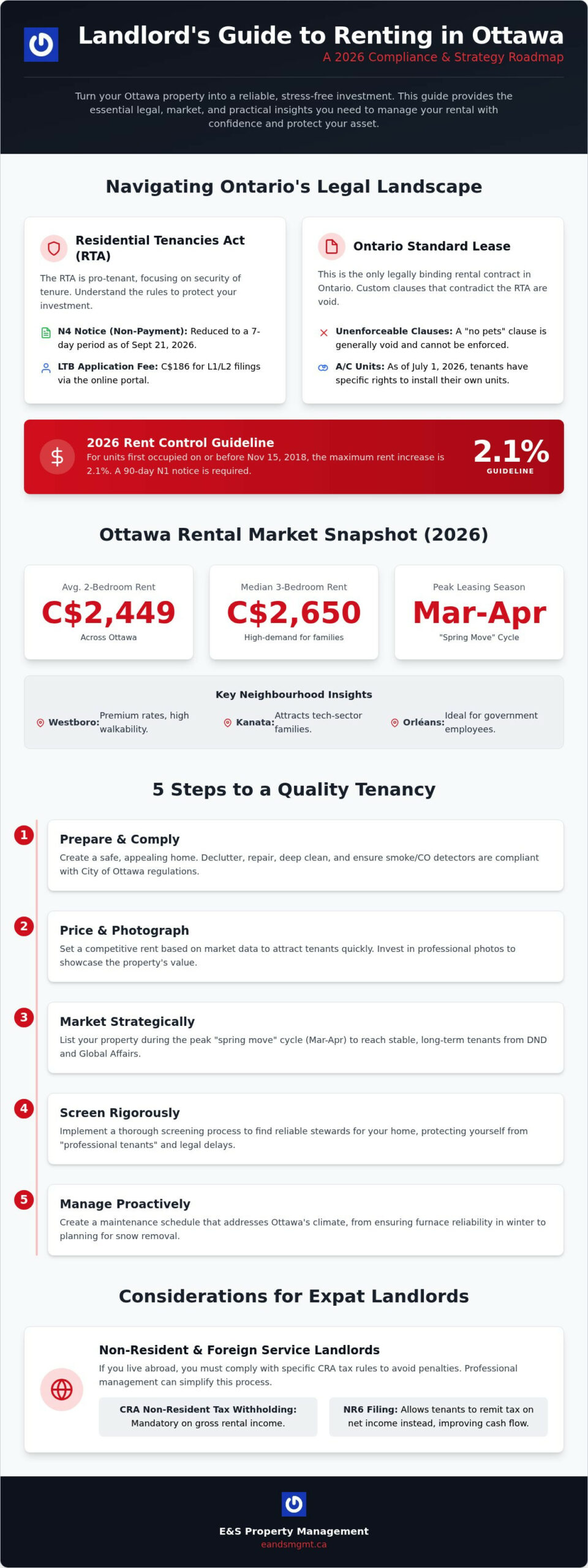
In 2026, the Landlord and Tenant Board (LTB) remains the arbiter for disputes, but recent legislative shifts have changed the tempo of enforcement. As of September 21, 2026, the notice period for non-payment of rent (N4) has been reduced from 14 days to just 7 days. While this offers some relief, filing an L1 or L2 application still costs C$186 through the online portal. Professional stewardship ensures you don’t miss these critical windows, protecting your cash flow from preventable delays and administrative errors.
The Ontario Standard Lease: A Mandatory Starting Point
The Ontario Standard Lease is the only legal contract allowed for residential rentals in the province. Many landlords mistakenly try to add custom clauses to bypass RTA rights, but these are often legally “void.” For example, a “no pets” clause is generally unenforceable in Ontario and can create unnecessary friction with otherwise excellent tenants. You should also be aware that as of July 1, 2026, tenants have specific rights regarding the installation of their own air conditioning units. Overlooking these details in your additional terms can lead to legal friction later, so it’s best to keep your lease clean and compliant.
Rent Control and 2026 Guidelines
Understanding rent control is vital for your long-term financial planning. For residential units first occupied on or before November 15, 2018, the 2026 rent increase guideline is set at 2.1%. To implement this, you must serve an N1 notice at least 90 days in advance. Newer buildings aren’t subject to this cap, allowing you to adjust rents to match the current Ottawa market more freely. However, even with newer homes, staying within a reasonable range helps maintain the stability of your tenant base. Between tenancies, you have the opportunity to reset the rent to market value, which currently averages around C$2,449 for a two-bedroom home in Ottawa.
Preparing and Marketing Your Ottawa House for Rent
Preparing your home for the rental market is a transition from seeing it as a personal sanctuary to viewing it as a high-value asset. This landlord guide to renting out a house in Ottawa emphasizes that quality tenants are attracted to quality homes. Transforming your property involves a methodical five-step process: decluttering personal items, performing essential repairs, verifying safety compliance, investing in a professional deep clean, and capturing the space through professional photography. These steps create a sense of order and care that resonates with discerning renters.
Strategic pricing is your next priority. As of July 2026, the median asking rent for a three-bedroom house in Ottawa is C$2,650. While Westboro continues to command a premium due to its walkability and trendy boutiques, suburban hubs like Kanata and Orléans remain highly attractive to families seeking space and proximity to tech hubs or government offices. Setting your rent accurately prevents long vacancies while ensuring you don’t leave money on the table. A well-priced home in a desirable neighborhood often finds a tenant within weeks rather than months.
Timing plays a critical role in the National Capital Region. Ottawa’s rental market follows a distinct rhythm, heavily influenced by the “spring move” cycle. Families within Global Affairs Canada and the Department of National Defence (DND) typically begin their search in late March or April to settle before the school year begins. Aligning your listing with this window maximizes your reach to stable, long-term tenants who value a smooth transition for their families.
Property Preparation & Safety Compliance
Safety is your first priority. You must ensure all smoke alarms and carbon monoxide detectors are functional and placed according to the City of Ottawa’s rental housing regulations. Beyond legal requirements, perform an “empathetic audit” by fixing the small things, like a sticky door or a dim hallway light. These gestures show you’re a diligent steward. A professional deep clean sets a high standard for the move-in inspection, signaling to the tenant that you expect the property to be returned in the same pristine condition.
Strategic Marketing for High-Quality Tenants
In 2026, the best tenants look for professional management portals that signal reliability. Your descriptions should highlight local perks like proximity to the LRT, top-rated schools, or Gatineau Park. If the administrative rush of managing dozens of showings feels overwhelming, a professional tenant placement service can handle the logistics while ensuring only the most qualified candidates reach your doorstep. This professional oversight shields you from the stress of a hurried selection process.
The Art of Tenant Screening: Protecting Your Asset
Selecting the right tenant is perhaps the most critical step in your journey as a property owner. It’s about more than just filling a vacancy; it’s about finding a reliable steward who will treat your house with the same care you do. While the Landlord and Tenant Board (LTB) provides a framework for resolving disputes, the best strategy is to avoid them entirely through rigorous vetting. This landlord guide to renting out a house in Ottawa emphasizes that a thorough screening process is your first line of defense against the anxieties of property damage or non-payment of rent. By investing time upfront, you shield yourself from the stress of potential legal delays later.
Our approach to vetting is grounded in over 40 years of local experience. We look for patterns of reliability that go beyond a simple credit score. In the 2026 rental market, red flags often include inconsistent housing histories or income that cannot be verified through standard documentation. Balancing Human Rights Code compliance with rigorous financial due diligence is a delicate task. You must ensure your selection process is fair and non-discriminatory while still verifying that a candidate can comfortably afford the median Ottawa rent, which currently sits at C$2,395 for a two-bedroom unit.
The Three Pillars of a Solid Application
A reliable application rests on three essential pillars: financial verification, rental history, and credit health. In Ottawa’s hybrid-work economy, financial verification often requires looking at more than just a recent pay stub; T4s and letters of employment help confirm long-term stability. When checking rental history, the previous landlord’s reference is often more revealing than the current one, as the current landlord might have an incentive to see a difficult tenant move on. Finally, we analyze credit checks to understand debt-to-income ratios. This ensures the tenant isn’t overextended, which is a primary predictor of consistent rent payments.
The Move-In Inspection: Your Baseline for Protection
Before any keys are exchanged, you must establish a clear “Statement of Condition.” This document serves as a detailed, room-by-room record of the property’s state, supported by high-resolution photo evidence. It’s a transparent process where both you and the tenant sign off on the baseline condition of the home. This step isn’t just a formality; it’s your primary evidence if a maintenance dispute ever reaches the LTB. Having this professional record in place creates a sense of order and mutual respect from the very first day of the tenancy.
Ongoing Management: Maintenance and the Ottawa Climate
Ottawa’s weather is famously unpredictable, swinging from humid summers to bone-chilling winters. For a property owner, these cycles demand a transition from passive ownership to active stewardship. This landlord guide to renting out a house in Ottawa emphasizes that proactive maintenance is your best defense against the high costs of emergency repairs. By staying ahead of the seasons, you protect your property’s value and maintain a positive relationship with your tenants. It’s a neighborly approach that pays dividends in long-term property preservation.
Imagine the relief of knowing you won’t be the one answering a 3 AM call about a burst pipe or a failed furnace in the middle of January. When a furnace fails at -30°C, it isn’t just an inconvenience; it’s an emergency that requires an immediate, professional response. A dedicated emergency maintenance network acts as a stabilizing force, handling urgent issues with professional ease while you sleep undisturbed. This level of oversight ensures that your tenants feel safe and your asset remains protected around the clock.
Regular property inspections shouldn’t feel like an intrusion. Instead, they’re a supportive way to ensure the home is being cared for and that the lease terms are being respected. These visits allow a seasoned hand to spot small issues, like a slow leak under a kitchen sink or wear on the roof, before they turn into major structural problems. It’s about being a protective guardian of your investment, ensuring that the transition from a family home to a rental asset remains successful for years to come.
Ottawa Seasonal Maintenance Checklist
In the fall, your focus should be on gutter cleaning and winterizing outdoor faucets to prevent frozen pipes. Furnace servicing is non-negotiable before the first frost to ensure reliability throughout the long winter months. During the winter, maintaining clear egress is a critical safety requirement, and professional snow removal contracts are essential for both liability and tenant accessibility. Once the spring thaw arrives, it’s time to check the foundation for any water ingress and service the air conditioning units, especially given the 2026 regulations regarding tenant-installed cooling systems.
Coordination of Repairs
Building a network of trusted, licensed Ottawa contractors takes years of trial and error. We manage the entire coordination process, from vetting the work of third-party trades to tracking warranties and repair histories. This administrative thoroughness is vital for your financial reporting and tax preparation. Delegating these complex logistical duties to a full-service property management team ensures that every repair is done right the first time, providing you with total peace of mind and an organized record of your property’s care.
Special Considerations for Non-Resident and Foreign Service Landlords
Moving abroad for a posting with Global Affairs Canada or the Department of National Defence (DND) is a significant life event. It marks your transition from a local homeowner to an expat landlord, which brings a unique set of administrative and emotional challenges. This landlord guide to renting out a house in Ottawa is specifically designed to bridge that geographic distance. Managing a property from thousands of miles away can feel daunting, but it becomes manageable when you have a reliable partner on the ground. A local “Agent of Record” is essential for legal service and property oversight, providing a stabilizing force while you’re away from the National Capital Region.
The Canada Revenue Agency (CRA) has strict requirements for non-residents, including a mandatory 25% withholding tax on gross rental income. While this sounds like a heavy burden, professional administration can significantly lower your actual tax payments. Without a local agent to handle the paperwork, you risk falling out of compliance or overpaying on your Canadian obligations. Having a seasoned hand to manage these logistical duties ensures that your transition to life abroad is defined by relief rather than tax-related stress.
Tax Administration and the CRA
The NR6 form is a vital tool that allows you to withhold tax based on your net rental income after expenses, rather than the much higher gross amount. Each year, you must also ensure that NR4 slips are issued by March 31 to report the total income and tax withheld to the CRA. We act as your dedicated financial liaison, meticulously tracking every deductible expense to ensure you stay in the CRA’s good books. This thorough approach to accounting provides the clarity and order you need to focus on your new role abroad.
Peace of Mind for Global Affairs & DND Members
For those in the Foreign Service or DND, your home is often the place you plan to return to once your posting concludes. We provide a “protective guardian” service that treats your property with the same care you would if you were still there. Our team understands the personal value of your asset and monitors it through regular, detailed inspections. When your time abroad ends, we coordinate the entire transition back to your home, ensuring it’s ready for your family’s arrival. This end-to-end support makes your return to Ottawa feel both comprehensive and effortless. Discover our specialized services for Foreign Service officers.
Securing Your Ottawa Investment for the Long Term
Transitioning from a homeowner to a landlord is a significant step that shouldn’t be taken alone. This landlord guide to renting out a house in Ottawa has highlighted the importance of navigating the 2026 legal landscape with precision, from the 2.1% rent increase guideline to the updated N4 notice periods. By prioritizing thorough tenant screening and a proactive maintenance schedule, you transform a potentially stressful venture into a stable source of wealth. Your property is more than just an asset; it’s a piece of your future that deserves meticulous care.
For those heading on a Foreign Service or DND posting, the added complexity of NR6 and NR4 tax filings requires a seasoned hand. We’ve been managing Ottawa homes since 1981, acting as a protective guardian for local and non-resident owners alike. You deserve the peace of mind that comes from knowing your property is in expert hands while you’re away. Request a Professional Rental Assessment for Your Ottawa Home today. Let’s work together to protect your investment and build your future with confidence.
Frequently Asked Questions
Can I refuse a tenant with a pet in Ottawa?
Under Ontario law, “no pet” clauses in a lease are generally void and unenforceable. While you can choose not to rent to someone with a pet during the initial screening, you cannot evict a tenant for getting a pet later unless it causes damage or disturbs others. This is a common point of confusion, so it’s best to focus on finding responsible tenants who will respect your property and the neighborhood.
How much does property management cost in Ottawa?
Property management fees in Ottawa vary based on your specific needs and the level of care required. Whether you need full-service oversight or help with tenant placement, the cost reflects the professional expertise used to protect your investment. Delegating these duties provides a transition from daily stress to professional relief, ensuring your home is managed by a seasoned hand who understands the local market’s unique nuances.
What is the Ontario Standard Lease, and is it mandatory?
The Ontario Standard Lease is a mandatory document for most private residential tenancies in the province. It was designed to be easy to understand and to ensure that both landlords and tenants are aware of their rights. Using this form is not optional; if you don’t use it, a tenant can demand one and may even withhold a portion of their rent until the document is provided by the owner.
How do I handle the 25% non-resident tax if I am posted abroad?
If you’re posted abroad, the CRA requires a 25% withholding tax on gross rental income. This must be remitted monthly by a Canadian agent on your behalf to remain compliant. To manage this efficiently, many non-residents work with a professional team that handles the administrative burden of these filings, ensuring you stay in the CRA’s good books while you focus on your new assignment in a different country.
What happens if my tenant stops paying rent in Ontario?
If rent is not paid, the first step is serving an N4 notice. Effective September 21, 2026, the period for a tenant to pay outstanding rent is 7 days. If the issue persists, you’ll need to file an L1 application with the Landlord and Tenant Board. This landlord guide to renting out a house in Ottawa recommends professional oversight to ensure every form is filed correctly, preventing administrative delays at the LTB.
Am I responsible for snow removal at my Ottawa rental property?
Landlords are legally responsible for snow removal and keeping the property safe, according to the Residential Tenancies Act and city bylaws. While you can hire a contractor or make a separate agreement with a tenant to do the work, the ultimate legal liability rests with you. Professional management ensures these contracts are in place so your property remains accessible and compliant throughout the long Ottawa winter season.
How often can I inspect my rental house in Ottawa?
You can inspect your rental property provided you give at least 24 hours written notice for a reasonable purpose. Most professional managers recommend a quarterly or bi-annual schedule to maintain the home’s condition. This supportive approach allows a seasoned hand to check for maintenance needs without being intrusive, ensuring the property is well-tended and that the terms of the lease agreement are being respected by the occupants.
What is an NR6 form, and why do I need one?
The NR6 form is a document filed with the CRA that allows you to remit withholding tax based on your net rental income after expenses, rather than the gross amount. It’s a vital tool for non-residents to improve their monthly cash flow. You’ll need a Canadian agent to sign this undertaking with you, promising to file a tax return at the end of the year to reconcile your accounts.