
What if your most valuable asset became your greatest source of stress overnight because of a single legal oversight? It’s a common fear for homeowners entering the rental market, especially with Ontario’s strict regulations and the daunting prospect of Landlord and Tenant Board delays that can stretch for many months. You want the security of a steady income and a tenant who treats your home with respect, yet the complexity of learning how to rent out your house in Ottawa can feel like a heavy burden to carry alone.
We understand that your property is more than just a building; it’s a vital part of your financial future. This guide provides the steady hand and expert insight you need to follow the 2026 rent increase guidelines, manage non-resident tax obligations like NR6 forms, and comply with the latest provincial legislation. You’ll discover the essential steps to vet tenants thoroughly and protect your investment, allowing you to transition from the anxiety of the unknown to the relief of professional, compliant management.
Key Takeaways
- Understand why Ottawa’s stable economy creates consistent demand and how the Residential Tenancies Act shapes your rights as a landlord.
- Learn how to rent out your house in Ottawa by achieving a “Move-In Ready” standard that attracts high-quality stewards rather than just tenants.
- Master a multi-layered screening process that looks beyond credit scores to ensure your family home is protected by reliable residents.
- Navigate complex financial obligations like NR6 tax filings and establish a maintenance routine that catches small issues before they become costly repairs.
- Evaluate the true cost of managing your property from a distance and see how professional oversight can replace administrative stress with genuine peace of mind.
Understanding the Ottawa Rental Market and Ontario’s Legal Realities
Ottawa’s rental market remains a bedrock of stability. While other cities experience volatile shifts, our local economy is anchored by the federal government and a robust technology sector. This foundation creates a consistent, high-quality demand for housing. When you consider how to rent out your house in Ottawa, you aren’t just looking for a temporary occupant; you’re seeking a steward for your financial future. We view stewardship as a transition from seeing your home as a simple residence to treating it as a protected asset that requires professional oversight and meticulous care.
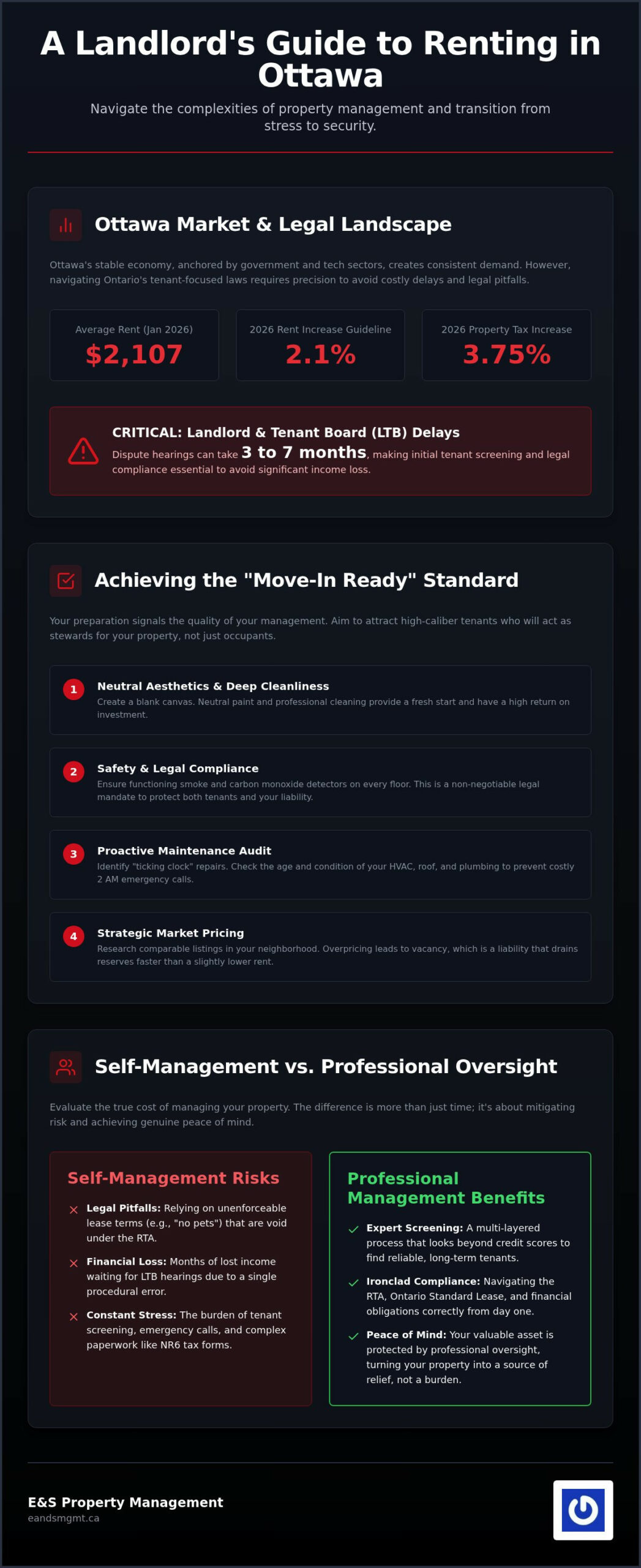
Renting in Ontario requires a deep understanding of Ontario’s Residential Tenancies Act, 2006 (RTA). This legislation is designed with a strong focus on tenant security, which means landlords must be precise with every document and interaction. The Landlord and Tenant Board (LTB) currently manages a heavy volume of cases, and as of 2024, applications for rent arrears or general disputes can take between 3 to 7 months to reach a hearing. This wait highlights why “getting it right the first time” isn’t just a goal; it’s a necessity to avoid months of lost income and administrative stress.
The Legal Framework: Ontario’s Standard Lease
The Ontario Standard Lease is mandatory for almost all private residential tenancies. It’s a template designed to ensure clarity, yet many landlords still fall into the trap of including unenforceable terms. Common mistakes include “no pets” or “no smoking” clauses, which are often void under the RTA regardless of what the tenant signs. To protect your property effectively, you must focus on additional terms that are legally sound, such as specific maintenance responsibilities or insurance requirements, rather than relying on prohibited restrictions.
Ottawa Market Trends for 2026
As of January 2026, the average rent in Ottawa reached $2,107, reflecting a market that is beginning to balance after years of rapid growth. Neighborhoods like Westboro, the Glebe, and Kanata continue to see low vacancy rates as return-to-office mandates for federal employees and tech workers bolster demand for well-located homes. Even with the provincial rent increase guideline set at 2.1% for 2026, Ottawa remains a “safe haven” for owners. The city’s 3.75% property tax increase for 2026 underscores the need for a strategic approach to how to rent out your house in Ottawa to ensure your rental income keeps pace with rising carrying costs.
Recent legislative updates, such as Bill 60, have shortened the notice period for non-payment of rent from 14 days to 7 days. While this helps streamline some LTB processes, the margin for error remains slim. Successful landlords are those who act as protective guardians, staying ahead of these regulatory shifts to ensure their property remains a source of relief rather than a burden.
Preparing Your House for Rent: A Step-by-Step Strategy
Preparing your home for the market is about more than just a quick tidy up. It’s about setting a standard that attracts high-caliber tenants who will treat the property with care. When you’re considering how to rent out your house in Ottawa, your goal is to reach a “Move-In Ready” state. This means neutral aesthetics, deep cleanliness, and a house that feels like a fresh start. Premium tenants are often looking for stability and quality; providing a spotless environment signals that you’re a diligent and responsive landlord.
Safety isn’t just a best practice; it’s a legal mandate. Ensure every floor has functioning smoke detectors and carbon monoxide alarms. Reviewing the guidelines provided by the Landlord and Tenant Board (LTB) will help you stay compliant with municipal property standards. Neglecting these basics can lead to liability issues that far outweigh the cost of a few batteries or a new detector. Setting the right price also requires a delicate balance. You need to cover your expenses, but overpricing can lead to months of vacancy. In the Ottawa market, a vacant house is a liability that drains your reserves. Look at comparable listings in your specific neighborhood to find a realistic range.
The Maintenance Audit
Before the first viewing, conduct a thorough walkthrough to identify “ticking clock” repairs. Check the age of your HVAC system, the condition of the roof, and any slow-dripping pipes. Addressing these now prevents emergency calls at 2:00 AM later. Fresh paint and professional carpet cleaning offer some of the highest returns on investment. These small updates make the space feel cared for and secure. Ensure all locks and windows are fully functional to meet modern safety expectations. If this process feels overwhelming, a professional property management assessment can identify these risks before they become expensive problems.
Marketing Your Ottawa Rental
Your first impression is almost always digital. High-quality photography and virtual tours are essential in a market where tenants often pre-screen homes from their phones. While Kijiji is a common starting point, listing on high-intent platforms like Zumper or PadMapper connects you with serious seekers. Craft a description that emphasizes local benefits like proximity to the LRT, reputable schools, or parks. Remember, the exterior photo is your most important asset; strong curb appeal draws people in before they ever step through the front door. Learning how to rent out your house in Ottawa effectively means mastering this digital handshake.
The Art of Tenant Placement: Screening for Long-Term Security
Finding a tenant is relatively simple in a high-demand market, but selecting a steward for your family home requires a much more discerning eye. When you’re learning how to rent out your house in Ottawa, you must move beyond the goal of filling a vacancy. Your objective is to find an individual who will care for the property as if it were their own. This shift in mindset protects your investment from the wear and tear that often accompanies a purely transactional relationship. While a “gut feeling” might feel like a reliable compass, it’s never a substitute for empirical data. In Ontario’s rigid legal environment, relying on intuition over evidence can lead to costly delays at the Landlord and Tenant Board.
The interview process is your first opportunity to establish a professional tone, but it must be handled with care. The Ontario Human Rights Code strictly prohibits questions regarding a candidate’s race, religion, family status, or source of income. You can, however, focus on their ability to meet the financial obligations of the lease. For more guidance on best practices and federal standards, you can consult CMHC renting resources to ensure your process remains both fair and effective. By focusing on verifiable facts, you shield yourself from potential discrimination claims while still identifying the most reliable candidates.
Verifying the Essentials
A multi-layered screening process is your best defense against future disputes. Credit scores offer a window into a tenant’s financial responsibility, but you should look deeper than the final number. A history of late payments on utility bills or credit cards is often a more significant red flag than a low score caused by a single life event. In Ottawa, verifying employment often involves navigating Government of Canada (GOC) or Department of National Defence (DND) pay structures. Understanding these stable but specific income streams is vital for local landlords. Finally, always call previous landlords. Be wary of the current landlord’s report; if they’re struggling with a difficult tenant, they might provide a glowing reference just to facilitate the tenant’s move.
The Move-In Inspection
Once you’ve selected a steward, the hand-over process sets the stage for the entire tenancy. Document the property’s condition with high-resolution photos and a detailed written report before the tenant moves a single box. This creates a clear baseline that prevents “he-said, she-said” arguments when the lease eventually ends. Collecting the last month’s rent deposit is a standard part of how to rent out your house in Ottawa, but remember that this money must be held specifically for the final month’s rent. You’re also legally required to pay interest on this deposit annually, usually matching the provincial rent increase guideline, which is 2.1% for 2026. This level of administrative precision demonstrates that you’re a professional guardian of the property, encouraging the tenant to mirror that same level of respect.
Ongoing Management and Financial Compliance for Ottawa Landlords
The transition from finding a tenant to managing a property is where many homeowners feel the most weight. Once the keys are handed over, your role shifts into that of a vigilant guardian. Professional management ensures that the initial success of your placement doesn’t erode over time. Regular inspections are the cornerstone of this approach. By visiting the property twice a year, you can identify a slow faucet leak or a furnace filter that needs replacing before these small issues turn into catastrophic expenses. It’s about protecting the asset’s value while maintaining a positive relationship with your tenant.
For those wondering how to rent out your house in Ottawa while serving abroad or living in another city, financial reporting becomes your lifeline. You need clear, audit-proof records that track every dollar. If a tenant stops paying, the legal landscape has changed recently. Bill 60, passed in November 2025, shortened the notice period for non-payment of rent from 14 days to 7 days. Acting quickly and correctly within these new timelines is the only way to minimize losses and ensure the Landlord and Tenant Board processes your case without administrative delays.
Non-Resident Landlord Tax Compliance (NR6)
Many of our clients are members of the DND or Global Affairs Canada who have been posted overseas. If you live outside of Canada, the CRA mandates a 25% withholding tax on your gross rental income. This can be a significant drain on your cash flow. However, by filing an NR6 form, you can apply to have this tax calculated on your net income instead. This process requires a Canadian agent to act as your primary contact. We specialize in NR6 and NR4 tax filing support to ensure you remain compliant without overpaying the government.
Maintenance and Emergency Response
Ottawa’s climate is unforgiving. A furnace failure in January or a sump pump malfunction during a spring thaw requires an immediate response. The “2:00 AM Rule” asks a simple question: who is going to answer the phone when a pipe bursts while you’re half a world away? Building a network of licensed, reliable contractors is essential. Our preventative maintenance schedule includes:
- Testing sump pumps and backwater valves before the spring thaw.
- Inspecting furnace filters and HVAC systems before the first frost.
- Clearing gutters to prevent ice damming during the freeze-thaw cycle.
This proactive approach protects your bottom line and provides your tenant with the security they deserve. Learning how to rent out your house in Ottawa means being prepared for the unexpected, ensuring your investment remains a source of relief rather than a midnight emergency.
Transitioning from Stress to Relief: Why Professional Management Wins
Deciding how to rent out your house in Ottawa often feels like choosing between a second job and a high-stakes gamble. Self-management has a hidden price tag that goes far beyond the hours spent answering emails or coordinating repairs. It’s the emotional weight of being perpetually on call for an asset that represents your life’s work. When you’re living thousands of miles away in London, Washington, or Tokyo, distance isn’t just an inconvenience; it’s a liability. You can’t personally verify if a tenant is maintaining the garden or if a winter storm has caused damage that requires an immediate, expert eye.
This is where the E&S difference becomes your greatest advantage. Since 1981, we’ve acted as seasoned stewards for over 40 years, offering a boutique approach that prioritizes meticulous care over high-volume turnover. We understand that professional management is an investment in your property’s long-term resale value. By maintaining high standards today and keeping a steady hand on maintenance, we ensure your home is preserved for your eventual return or future sale. We don’t just collect rent; we act as a stabilizing force that protects your interests at every turn.
Serving Ottawa’s Foreign Service and DND Community
We’ve built our reputation by specializing in the specific needs of Ottawa’s diplomatic and military families. For those on postings with the DND or Global Affairs Canada, we provide more than just administrative support. We manage the delicate transition of your eventual return home. When your posting ends, you shouldn’t walk into a house that’s been neglected or poorly managed. You should return to a home that has been protected by a guardian who understands the unique burdens of your career. This legacy of trust is why generations of Ottawa families continue to rely on our expertise.
Getting Started with E&S Property Management
Our process begins with an initial consultation to align our services with your specific financial goals and the unique needs of your property. We don’t believe in aggressive sales tactics; instead, we offer a calm, confident invitation to delegate your responsibilities to a seasoned hand. We provide transparent fee structures so you can see the exact value of full-service oversight, from tenant placement to tax compliance. If you’re ready to move from stress to relief, you can Request your free rental assessment from E&S Property Management today. Let us show you how a partner can turn the complexity of learning how to rent out your house in Ottawa into a seamless, profitable experience.
Securing Your Financial Future with Confidence
Learning how to rent out your house in Ottawa is a journey that begins with meticulous preparation and ends with the peace of mind that comes from professional stewardship. You’ve seen how the right legal framework and a “Move-In Ready” standard attract tenants who respect your home as much as you do. By focusing on empirical screening and proactive maintenance, you transform a complex logistical challenge into a reliable, passive income stream that supports your long-term goals.
We’ve spent over 40 years serving as a stabilizing force for local homeowners, particularly those in the DND and Foreign Service communities. Whether you need specialized NR6 tax support while living abroad or the security of 24/7 emergency maintenance coordination, our team acts as your dedicated guardian. You don’t have to carry the burden of Ontario’s legal complexities alone. Let us protect your home while you are away, contact E&S Property Management today. Your property is a vital asset, and we’re here to ensure it remains protected, profitable, and ready for your eventual return.
Frequently Asked Questions
Can I refuse a tenant with a pet in Ottawa?
In Ontario, you cannot legally enforce a “no pets” clause in a residential lease. While you might prefer a pet-free home to protect your flooring, any such provision in the Ontario Standard Lease is void. You can choose not to rent to an applicant who has a pet during the initial screening. However, once a tenant moves in, they’re generally protected unless the animal causes damage or significant noise.
How much can I increase the rent in Ontario for 2026?
The provincial rent increase guideline for 2026 is 2.1%. This is the maximum amount you can raise the rent for most sitting tenants without seeking special approval from the Landlord and Tenant Board. You must provide at least 90 days of written notice using the proper N1 form. If your property was first occupied for residential purposes after November 15, 2018, it’s exempt from this cap, allowing for market-based increases.
Do I need special insurance to rent out my house in Ottawa?
You must transition from a standard homeowner’s policy to a dedicated landlord or rental property insurance policy. This coverage protects you against specific risks like tenant liability and loss of rental income if the house becomes uninhabitable. When learning how to rent out your house in Ottawa, verify that your provider understands the property is tenant-occupied. Failing to update your policy could lead to a denied claim during a crisis.
What happens if my tenant stops paying rent?
You should issue an N4 notice for non-payment of rent immediately after the payment is missed. Under Bill 60, the notice period was shortened from 14 days to 7 days in November 2025. If the tenant doesn’t pay within that window, you can file an L1 application with the Landlord and Tenant Board. Current hearing wait times for rent arrears are approximately 3 months, so acting quickly is essential.
What is an NR6 form and do I need one if I’m moving abroad?
An NR6 form allows non-resident landlords to pay withholding tax on their net rental income rather than the standard 25% of gross revenue. If you’re moving abroad for a diplomatic or military posting, this form is a vital tool for maintaining your cash flow. It must be filed and approved by the CRA before the start of each tax year. We often manage this administrative burden for our international clients.
How often can I inspect my rental property in Ontario?
You can inspect your property at reasonable intervals, provided you give at least 24 hours of written notice. Most professional managers recommend a schedule of twice per year to catch maintenance issues early. The notice must specify the date, a time window between 8:00 AM and 8:00 PM, and a valid reason for entry. This approach balances your right to protect the asset with the tenant’s right to privacy.
Is the landlord or tenant responsible for snow removal in Ottawa?
The landlord is legally responsible for snow removal and property maintenance under the Residential Tenancies Act. While you can create a separate contract for the tenant to perform these duties in exchange for compensation, a simple clause in the lease won’t shift the liability. In our snowy climate, many owners prefer to hire a professional service to ensure the driveway and walkways remain safe and compliant with municipal bylaws.
How do I legally end a tenancy if I want to move back into my house?
To move back into your home, you must serve an N12 notice providing at least 60 days of notice. This notice must align with the end of a rental period or the fixed term of the lease. You’re also required to pay the tenant one month’s rent as compensation or offer them another acceptable unit. Understanding how to rent out your house in Ottawa includes knowing how to reclaim it legally and fairly.


