A preventative maintenance checklist for Ottawa landlords in 2026 should start with an annual reserve of 1-2% of the rental property’s value. Pair that budget with seasonal inspections, because Ottawa’s freeze-thaw cycles make spring and winter checks especially important. This gives you a practical way to plan routine work while keeping funds available for unexpected repairs.
It’s understandable to want a clear budget before maintenance issues become urgent. This guide explains how to set a reserve, what to inspect each season, and how to organize a year-round checklist for roofs, drainage, heating, plumbing, and safety devices. With a steady schedule, you can spot developing problems earlier and make rental-property upkeep feel more manageable.
Key Takeaways
- After the spring thaw, look for roof and eavestrough damage, pooling water, and signs that drainage is directing water away from the foundation.
- Before winter, plan snow and ice removal, protect vulnerable pipes, and make sure heating equipment is ready for cold weather.
- Use a seasonal schedule to prioritize upkeep, document repairs, and catch small problems before they grow into more disruptive damage.
- Regular inspections and organized maintenance records can help you manage rental upkeep with greater consistency and clarity.
Spring inspections for roofs, drainage, foundations, and HVAC
Ontario’s Residential Tenancies Act, 2006, section 20, requires landlords to keep rental units and residential complexes in good repair, fit for habitation, and compliant with health, safety, housing, and maintenance standards. The City of Ottawa also requires owners to maintain properties to prescribed standards and address unsafe conditions immediately.
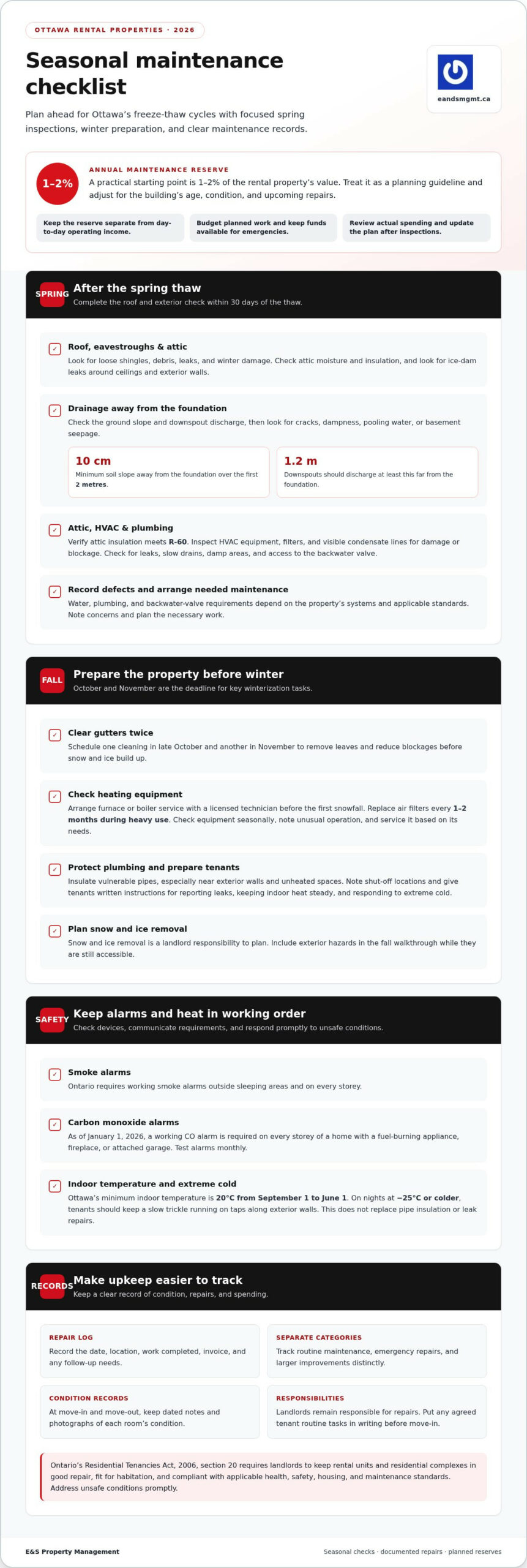
For fire safety, Ontario requires working smoke alarms outside sleeping areas and on every storey. As of January 1, 2026, the Fire Code also requires a working carbon monoxide alarm on every storey of a home with a fuel-burning appliance, fireplace, or attached garage; test alarms monthly.
Within 30 days of the spring thaw, inspect the roof and eavestroughs for loose shingles, debris, leaks, and winter damage. Check attic moisture and insulation, and look for signs of ice-dam leaks around ceilings and exterior walls.
- Confirm soil slopes away from the foundation at least 10 cm over the first 2 metres, reducing water pooling near the home.
- Ensure downspouts discharge at least 1.2 metres from the foundation, then check for cracks, dampness, and basement seepage.
- Verify attic insulation meets R-60 and inspect HVAC equipment, filters, and visible condensate lines for damage or blockage.
Ottawa requirements for water, plumbing, and backwater valves depend on the property’s systems and applicable standards. Check for leaks, slow drains, damp areas, and access to the valve. Record any defects and arrange the necessary maintenance.
Landlords remain responsible for repairs. Tenants can take on agreed routine tasks, such as changing light bulbs, mowing, and cleaning, and should report problems promptly. Put responsibilities in writing before move-in.
For local requirements, follow the City of Ottawa’s prescribed property standards and address unsafe conditions promptly. Permit requirements depend on the work, so distinguish routine maintenance from proposed alterations before scheduling a project.
There is no single inspection interval for furnaces, boilers, fireplaces, or air conditioners. Check equipment seasonally, note unusual operation, and arrange servicing based on the system’s needs.
At move-in and move-out, record each room’s condition with dated notes and photographs. Comparing these records can help identify damage and plan maintenance.
How Much Should You Budget for Maintenance?
A practical starting point is to reserve 1-2% of your Ottawa rental property’s value annually for maintenance. Treat this as a planning guideline, then adjust for the building’s age, condition, and upcoming repairs.
Keep a dedicated maintenance reserve separate from day-to-day operating income. Budget for planned work, such as spring inspections, while keeping funds available for emergencies like plumbing leaks. Regular contributions can make predictable major repairs easier to manage without depending on rent arriving at a particular time.
Base your estimate on the property’s condition, not just a general percentage. Review the roof, heating equipment, plumbing, and exterior, then list work by urgency and season. An older system or recurring leak may need more attention than recently completed work. Update the plan after each inspection and whenever a repair uncovers another concern.
- Record the details: Log each repair’s date, location, work completed, invoice, and follow-up needs.
- Separate categories: Track routine rental property maintenance, emergency repairs, and larger improvements distinctly.
- Review the reserve: Compare actual spending with the annual plan and adjust future contributions.
Good records also help with tax preparation. Current rental-property expenses are generally deductible in the year incurred, while capital expenses may be depreciated through Capital Cost Allowance. Keep invoices and notes describing the work, especially when a plumbing repair includes both a fix and a substantial upgrade.
Track concerns promptly and decide what to do before damage spreads.
For steadier budgeting, property management support can help keep maintenance records and repair coordination organized.
Winter snow removal, pipe insulation, and heating checks
Prepare Ottawa rentals before winter settles in. October and November are the deadline for key winterization tasks, including clearing gutters and arranging heating-system service with a licensed technician before the first snowfall. A fall walkthrough helps identify exposed pipes, drafty openings, and exterior hazards while they’re still accessible.
- Clear gutters twice: Schedule one cleaning in late October and another in November to remove leaves and reduce blockages before snow and ice build up.
- Service heating equipment: Arrange a pre-winter check for the furnace or boiler, and replace air filters every 1-2 months during heavy use.
- Protect plumbing: Insulate vulnerable pipes, especially near exterior walls and unheated spaces, and note shut-off locations for a quick response to leaks.
- Prepare tenants: Give written instructions on reporting leaks, keeping indoor heat steady, and responding to extreme cold.
Ottawa’s municipal standard sets a minimum indoor temperature of 20°C between September 1 and June 1. Check that heating equipment operates properly and that tenants know how to report a loss of heat. Ottawa winter average lows can reach −15°C, making reliable heat and freeze prevention important property-maintenance priorities.
On extreme cold nights at −25°C or colder, tenants should keep a slow trickle running on taps along exterior walls. This can help reduce freeze risk, but it doesn’t replace insulating exposed plumbing or repairing leaks. Include the instruction in winter communications, and make sure tenants know where to report a frozen or burst pipe.
Snow and ice removal is also a landlord responsibility to plan. The City of Ottawa requires property owners to clear snow and ice from abutting sidewalks within 24 hours of a snowfall. Arrange a dependable process, then check entrances, steps, and walking surfaces after storms. Clear access protects tenants and visitors from hazardous conditions.
Keep an emergency plan with heating and water shut-off details, tenant reporting instructions, and maintenance records. Review it before winter and update it after repairs or property changes. Summer upkeep can prepare exterior areas, while fall checks focus on risks specific to winter.
Seasonal maintenance in Canadian climates
A season-by-season plan should reflect changing weather, not just repeat the same tasks. Ottawa can reach 30°C or higher in July, so summer conditions can reveal cooling problems that aren’t obvious during spring checks. A preventative maintenance checklist for Ottawa landlords in 2026 works best when it links each task to the conditions that expose it.
- Spring: Review the year’s maintenance priorities and identify work that depends on outdoor access. Schedule suitable projects before summer demand makes coordination harder.
- Summer: Plan HVAC servicing and outdoor upkeep, then note any cooling concerns during hot weather. Ottawa has roughly 110-120 reliably dry days per year, so consider weather when scheduling exterior work.
- Fall: Review the age and condition of major components against their expected service life. This helps distinguish routine upkeep from replacements that need advance budget planning.
- Winter: Use tenant reports and maintenance records to spot recurring problems, such as a room that repeatedly feels uncomfortable. Record the location and circumstances to guide a focused follow-up.
Keep the seasonal calendar flexible. Shaded and exposed properties can face different maintenance pressures, even in the same Ottawa neighbourhood. Use inspection findings, tenant feedback, and repair history to set priorities instead of giving every property an identical schedule.
Review the calendar as each season changes, and carry unfinished work forward with a clear reason and next step. This makes the preventative maintenance checklist for Ottawa landlords in 2026 a practical planning tool instead of a static list. A structured seasonal maintenance cadence may reduce emergency repair costs by 20 to 30 percent. Get help organizing seasonal property care and connect recurring tasks with a clear maintenance plan.
E&S Property Management: Full-Service Property Management
E&S Property Management provides Full-Service Property Management for Ottawa landlords who want help coordinating the ongoing responsibilities of a rental home. Regular Property Inspections help document seasonal checks and maintenance needs, while Financial Reporting and Accounting supports clearer oversight of property finances.
For a rental home that needs a new tenant, the Tenant Placement Service supports that process. If inspections, records, and upkeep are difficult to coordinate, full-service management may be a better fit. It brings routine oversight together with the practical work of maintaining a rental, rather than leaving seasonal tasks scattered across notes and invoices.
Consider E&S Property Management for coordinated inspections, tenant placement, and financial administration. Visit eandsmgmt.ca to learn more or contact E&S Property Management.
Make your next maintenance decision easier
Turn your maintenance plan into a working calendar. Schedule each seasonal task, record when it is completed, and note any follow-up that may affect the next budget review. This routine keeps property care visible between urgent requests, rather than leaving you to rely on memory when the weather changes.
Use the preventative maintenance checklist for Ottawa landlords in 2026 as a starting point, then tailor the schedule to your building’s age, condition, and repair history. Consistent records can make it easier to spot recurring concerns and decide which work deserves attention first.
If coordinating rental responsibilities and tenant needs is taking more time than you can comfortably manage, E&S Property Management can provide structure through residential property management. Contact the team to discuss a more consistent approach to caring for your Ottawa rental.
Contact E&S Property Management to take the next step, at a pace that works for you.
Frequently Asked Questions
What preventive maintenance should Ottawa landlords include in an annual rental property checklist?
Check exterior drainage, roof condition, heating and cooling equipment, plumbing for leaks, alarms, and signs of pests. Review records too: confirm appliance details, warranty information, past repairs, and unresolved tenant reports are current. After each inspection, assign follow-up actions and note who will handle them. This makes the checklist a planning tool, not just a record of observations.
What are typical Ottawa prices for rental property preventive maintenance and inspections in 2026?
Costs depend on the property, work required, equipment condition, access, and whether a repair is urgent or planned. Exact pricing is provided after a quote request, with the scope and complexity of the work shaping the estimate. For budgeting, separate routine maintenance from larger repairs and emergency work, then track invoices against each category. This gives you a property-specific picture without relying on a general price range.
How can Ottawa landlords prevent mould, basement moisture, pests, and frozen pipes?
Start by finding and addressing sources of moisture, such as plumbing leaks, blocked drainage, or water collecting near the foundation. Keep basement areas clear enough to spot damp patches, and investigate musty odours or visible mould promptly. Reduce pest access by sealing food and removing waste regularly. Before cold weather, insulate vulnerable pipes and tell tenants how to report leaks or signs of freezing.
What maintenance records and tenant notices should Ontario landlords keep?
Keep dated inspection notes, photographs, repair requests, work orders, invoices, and follow-up records together in one property file. Document what tenants report and when you respond to help trace recurring issues. Give tenants proper notice before a non-emergency inspection and keep a copy with the inspection record. Clear written maintenance instructions also tell tenants which routine tasks they handle and how to report concerns.
What are Ottawa’s rules for rental property water, plumbing, and backwater valve maintenance?
Requirements for water, plumbing, and backwater valves depend on the property’s systems and applicable standards. Check for leaks, slow drains, damp areas, and access to the valve. Record defects and arrange necessary maintenance.