Lead-paint disclosure questions can depend on what the landlord knows and whether the paint may pose a hazard. Landlords should address lead-paint concerns as part of maintaining rental properties in good repair and reducing potential health hazards. Deteriorating or disturbed paint can create lead dust, and Health Canada says no level of lead exposure is considered safe.
It’s understandable to want clear answers before work begins or a tenancy changes. The rules can be confusing, especially when lease disclosures and exemptions from other jurisdictions are presented as though they apply in Ontario. This article explains what Ontario landlords must do, how the rules relate to leases and added occupants, and which exemptions may be relevant, so you can address lead-paint concerns with greater clarity.
Key Takeaways
- Ontario has no specific lead-paint disclosure requirement for landlords, but deteriorating paint can raise repair and tenant-safety concerns.
- Learn how to distinguish stable paint from damaged or disturbed coatings that may create hazardous dust.
- Lease renewals and added occupants don’t create a separate Ontario lead-disclosure rule; focus on addressing known hazards and relevant information.
- Property age can help flag possible lead paint, but the condition and location of the coating matter when considering next steps.
When deteriorating lead paint may pose a tenant hazard
Ontario landlords must address hazards in rental units and keep their properties in good repair. Peeling paint matters because disturbing lead-based coatings can release harmful dust.
Recognizing Deteriorating Paint Hazards
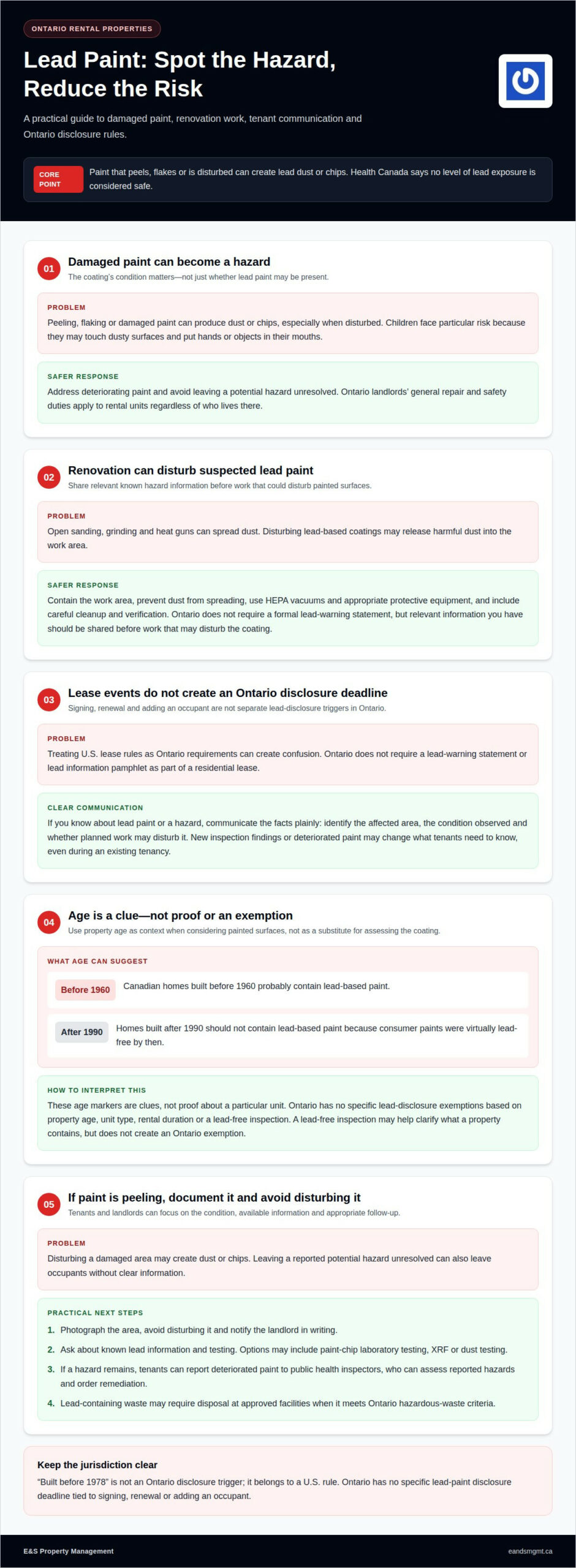
A lead-paint hazard can arise when paint peels, flakes, or becomes damaged, creating dust or chips. Lead paint is most dangerous when it breaks down or is disturbed. Health Canada states that no level of lead exposure is considered safe. Children face particular risk because they may touch dusty surfaces and put their hands or objects in their mouths. Ontario landlords should respond to deteriorating paint rather than leave a potential hazard unresolved.
Disclosing Hazards Before Renovations
Before renovation work disturbs suspected or known lead paint, landlords should share relevant hazard information they have with tenants. Ontario does not require a formal lead-warning statement, but information about known coatings can help occupants understand the work and its risks. Renovation methods matter: open sanding, grinding, or heat guns can spread dust. Work should contain the area, prevent dust from spreading, use HEPA vacuums and appropriate protective equipment, and include careful cleanup and verification.
Tenant Protections and Responses
Ontario’s general repair and safety duties apply to rental units regardless of who lives there. Children face particular risk from lead dust; the available Ontario facts identify no separate rule for pregnant tenants. If paint is peeling, tenants can photograph the area, avoid disturbing it, and notify the landlord in writing. Ask about known lead information and testing, which may include paint-chip laboratory testing, XRF, or dust testing. If a hazard remains, tenants can report deteriorated paint to public health inspectors, who can assess reported hazards and order remediation. Tenants can seek advice about their options if a landlord does not provide information about known lead hazards. Lead-containing waste may require disposal at approved facilities when it meets Ontario hazardous-waste criteria.
Disclosure timing for leases, renewals, and added occupants
Ontario has no specific lead-paint disclosure deadline tied to signing, renewal, or adding an occupant. Known hazard information still matters, particularly before renovations that could disturb painted surfaces.
Disclosure Before Signing or Renewing
Ontario does not require landlords to give a lead disclosure at lease signing or renewal. That differs from the United States, where federal rules cover certain rentals and require disclosure before a tenant becomes obligated under a lease. A home’s age alone does not create an Ontario disclosure deadline. For example, “built before 1978” is not an Ontario trigger; it belongs to the U.S. rule.
For Ontario tenancies, share relevant lead-based paint hazard information you have, especially if planned work could create exposure. A new inspection report or discovery of deteriorated paint can change what tenants need to know, even during an existing tenancy. Keep reports, tenant notices, and renovation communications together. Clear records help owners track what was identified and shared.
Lease Disclosures and Warning Statements
Ontario does not require a lead-warning statement or lead information pamphlet as part of a residential lease. The U.S. federal disclosure process includes a warning statement and lead information materials for covered housing, but that process is not Ontario’s rule. Avoid language suggesting Ontario mandates a form when it does not.
If you know about lead paint or a hazard, communicate the facts plainly rather than relying on a generic lease clause. Identify the affected area, the condition observed, and whether renovations may disturb it. If an added occupant joins the household, Ontario does not create a separate lead disclosure deadline for that change. However, sharing known hazard details helps occupants, including children, understand exposure risks and avoid damaged surfaces. Organized rental administration support can help keep tenancy records and notices in order.
Exemptions based on property age, unit type, rental duration, and lead-free inspections
Ontario does not require landlords to disclose lead-based paint, so it has no specific disclosure exemptions based on age, unit type, or rental duration. Do not confuse those distinctions with federal rules elsewhere.
Property age can still help owners assess whether painted surfaces may contain lead. In Canada, homes built before 1960 probably contain lead-based paint, while homes built after 1990 should not contain it because consumer paints were virtually lead-free by then. These age markers are clues, not Ontario disclosure exemptions or proof about a particular rental unit. A lead-free inspection may help clarify what a property contains, but it does not create a special Ontario exemption.
Federal Rules and Rental Exemptions
U.S. federal lead-disclosure requirements apply to covered rental housing and include a lease attachment or lease language with a Lead Warning Statement. Those requirements do not govern Ontario rentals. The available facts do not establish separate U.S. exemptions by unit type or rental duration, so those categories should not be presented as Ontario rules. Keep jurisdictions distinct when reviewing lease records.
For U.S. covered rentals, a lease renewal generally does not require repeat disclosure if the landlord disclosed at tenancy start and learned nothing new. New lead information, such as an inspection report, should be disclosed at renewal. That approach is not an Ontario exemption; Ontario’s disclosure rules differ.
What Property Owners Should Take From These Distinctions
For an Ontario rental, neither the building’s age nor a lead-free inspection changes the basic disclosure position. However, known lead information and deteriorated paint remain relevant to tenant safety and repair responsibilities. An inspector’s findings can help owners understand the condition of painted surfaces and plan appropriate work. Keep inspection reports and renovation records together, and distinguish findings about one unit from assumptions about an entire property. This supports informed maintenance decisions without importing another country’s exemption framework.
Ontario landlord lead-paint disclosure
Ontario doesn’t require landlords to disclose lead-based paint or provide a specific disclosure form. Landlords should address hazards in rental homes and keep properties in good repair.
Ontario Landlord Disclosure Duties
Ontario’s rules distinguish formal lead disclosure from responding to a known hazard. Landlords aren’t required to investigate for lead unless it presents a tenant hazard, but they must address relevant safety and repair concerns. Unlike certain federal rules in the United States, Ontario has no lease statement confirming lead notification.
Canada also has no single national lead disclosure form for older homes. An Ontario landlord shouldn’t treat a generic form as a substitute for managing known hazards. If records identify deteriorating paint, share relevant information with tenants and consider how the condition affects their housing. A written notice can clarify the affected area and planned repairs.
Safe Housing and Lead Hazard Duties
The Residential Tenancies Act and Ontario Environmental Protection Act are identified as requiring landlords to ensure rental units are safe and free from health hazards. The repair duty also applies when paint deteriorates or renovation work could create lead dust. A disclosure document alone doesn’t repair damaged surfaces or resolve a hazard.
For example, if a contractor’s assessment identifies a lead concern in a hallway, treat the finding as a maintenance issue, not simply a report to file. Ontario public health inspectors can assess reported deteriorated lead-paint hazards and order remediation. Keep inspection findings, tenant communications, and repair records together to create a clear account of how the concern was handled.
The practical takeaway is straightforward: Ontario has no prescribed lead-paint disclosure form, but safety and repair duties remain. For landlords balancing tenant communications, property upkeep, and records, organize your rental property oversight with professional management support.
E&S Property Management: Full-Service Property Management
E&S Property Management helps residential landlords coordinate the ongoing responsibilities of rental ownership through Full-Service Property Management. When tenant placement, property upkeep, and financial administration compete for attention, professional oversight can bring these tasks into a more organized routine.
Regular Property Inspections can help landlords monitor a home’s condition and identify maintenance concerns that need follow-up. Tenant Placement Service supports finding tenants, while Financial Reporting and Accounting helps keep property finances organized. These services support day-to-day management, but they don’t replace a qualified assessment or remediation when a lead hazard needs attention.
If you’d like support managing your rental property, contact E&S Property Management.
Build a steadier approach to rental oversight
Clear responsibilities are easier to manage when property decisions, tenant communication, and maintenance records stay connected. Understanding landlord obligations for lead paint disclosure in Ontario can prompt a broader review of how you track concerns and follow through on repairs. Make that process part of your regular rental oversight rather than treating each issue as an isolated task.
E&S Property Management supports landlords through Full-Service Property Management, Tenant Placement Service, and Regular Property Inspections. These services help bring tenant and property administration into a consistent routine while keeping the landlord’s role in safety decisions clear.
If you’re ready to discuss support for your rental property, contact E&S Property Management. A more organized management process can help you move forward with greater confidence.
Frequently Asked Questions
Are any lead disclosures required before a landlord renovates rental property?
Ontario has no specific lead-disclosure form or deadline triggered by renovation work. Landlords should share any lead hazard information they have with tenants before work that could disturb painted surfaces. For example, if a renovation plan includes sanding a wall with a known lead coating, tell occupants what is known and explain which area the work affects. This helps tenants understand the work and avoid the area.
Does Canada have a federal lead paint disclosure law?
No. Canada has no single federal law requiring landlords to disclose lead paint, and there is no national disclosure form for older homes. The federal Surface Coating Materials Regulations limit lead content in surface coatings, but that is not a rental disclosure requirement. For landlords, the practical distinction is between federal product limits and provincial duties concerning rental-unit safety and repairs.
What are a landlord’s legal responsibilities to new tenants regarding lead in rental property?
Ontario landlords aren’t required to investigate a home for lead unless it presents a tenant hazard. They must maintain rental properties in good repair and address safety concerns. If owners already have relevant lead information, sharing it with new tenants helps them understand known conditions. Keep a copy of any notice with the property’s records, especially if the information concerns a room or surface tenants will use.
Do landlords have to remove lead paint?
No, the presence of lead paint alone doesn’t mean it must be removed. Intact, stable paint may be safer left undisturbed, while deteriorating or damaged coatings need attention. Removal can generate dust and waste, so the paint’s condition and location matter. For example, damaged paint on a frequently touched surface calls for a different response than stable paint sealed beneath newer coatings.
Does Ontario require landlords to disclose lead paint to tenants?
No. Ontario does not require landlords to disclose lead-based paint as a separate lease obligation. However, that does not remove the responsibility to maintain safe, well-repaired housing. If a landlord knows paint is deteriorating or has information about a hazard, treat the condition as a safety and maintenance concern. A lease clause alone cannot resolve damaged paint or a hazard.
What lead paint disclosure rules apply to rental housing in Ontario?
Ontario has no prescribed lead disclosure form, warning statement, or special timing rule for signing or renewing a lease. Ontario landlords’ obligations for lead paint disclosure are distinct from U.S. federal rules, which don’t apply to Ontario rentals. In practice, keep relevant inspection findings and tenant communications together, then address known hazards through appropriate maintenance rather than relying on paperwork alone.