
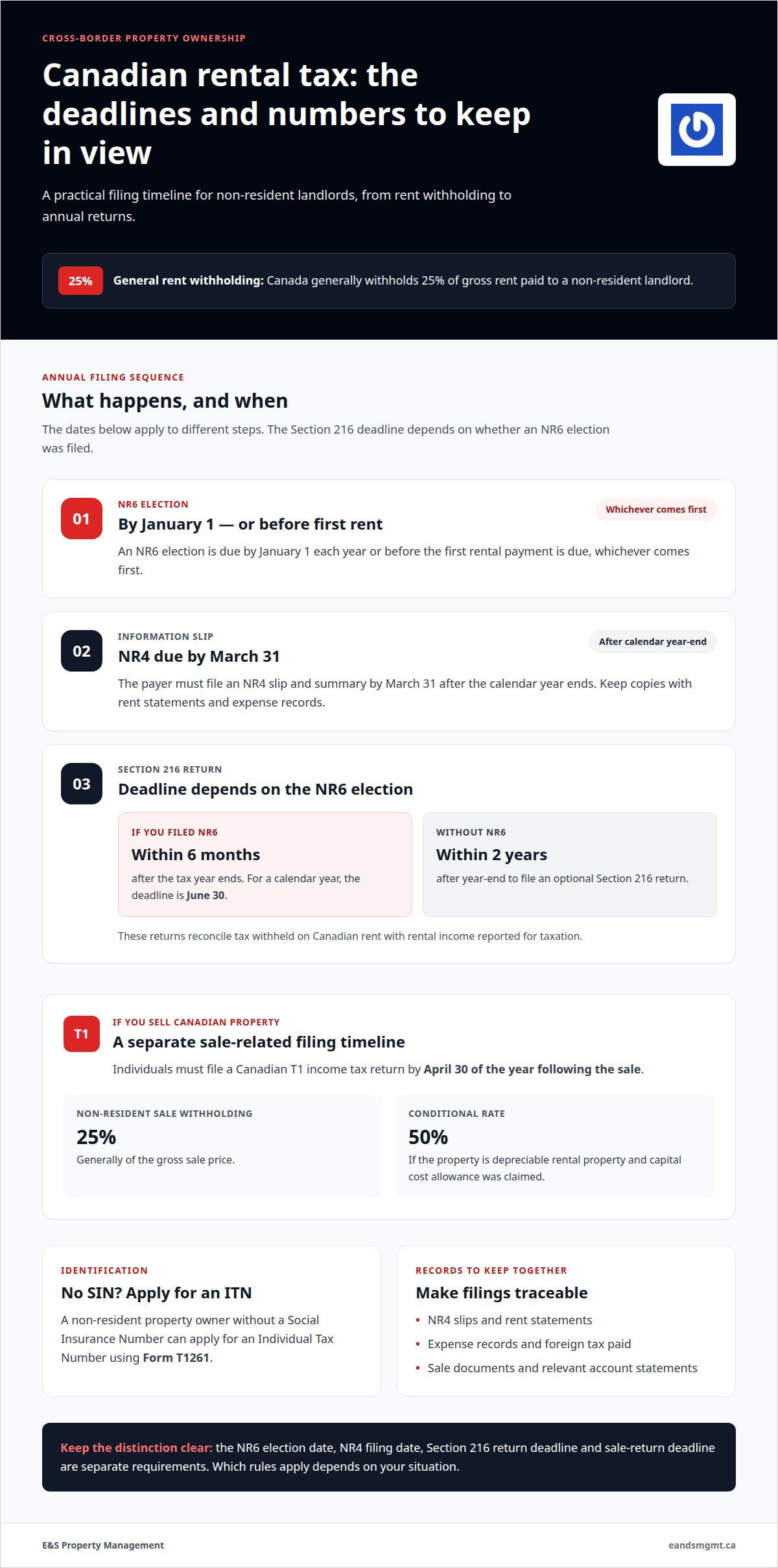
Distance makes local oversight and timely tax administration essential. Managing your Canadian property from Asia means arranging reliable local care while keeping rental income, filings and maintenance on track. For non-resident landlords, Canada generally withholds 25% of gross rent; an NR6 election is due by January 1 each year or before the first rental payment is due, whichever comes first.
It’s easy to focus on rent and routine upkeep, but the full picture also includes tax deadlines, exchange-rate changes and repair costs. Together, these can make ownership harder to manage from another time zone.
This guide explains how Canadian ownership rules and non-resident tax filings can affect you, what currency movements mean for income and expenses, and how management fees and maintenance fit into a practical budget. You’ll also see how local property oversight can help keep routine responsibilities organized while you’re abroad.
Key Takeaways
- Understand how Canadian ownership rules and your residency status may affect the property, so you can plan around the requirements that apply to your situation.
- Map out the relevant Canadian tax returns and identification requirements to keep rental-income reporting organized.
- Build currency movements into your budget for rent, repairs and other property expenses, since exchange-rate changes can affect their Canadian-dollar value.
- Plan for local inspections and maintenance as part of ongoing ownership, especially when you can’t respond to property issues in person.
Foreign property ownership and management considerations
Canada’s residential purchase prohibition for non-Canadians was extended to January 1, 2027. British Columbia may also impose foreign-buyer tax when a non-resident is added to a property title, alongside property transfer tax.
Foreign Property Taxes and Reporting
Foreign property taxes and Canadian reporting are the tax obligations attached to owning property across borders. Your Canadian tax residency matters: Canadian tax residents report worldwide income, including foreign rent and capital gains. Form T1135 is required when specified foreign property costs more than C$100,000 at any point in the year; foreign real estate used only personally is exempt. The federal Underused Housing Tax still applies to calendar years 2022, 2023 and 2024, but not 2025 or later.
Rental Income and Deductible Expenses
Rental income is money earned by letting property, while deductible expenses are eligible costs that may reduce reported rental income. Canadian tax residents must report gross rent from foreign property and may deduct maintenance, mortgage interest, property taxes and insurance. For a Canadian property rented by a non-resident, withholding is generally 25% of gross rent. An NR6 election is due by January 1 each year or before the first rent payment, whichever comes first. Keep records of expenses and foreign tax paid.
Capital gains also matter when property is sold. Canadian tax residents report foreign sales and calculate the gain using the adjusted cost base and selling price. For a Canadian property sale by a non-resident, withholding is generally 25% of the gross sale price, or 50% if it is depreciable rental property on which capital cost allowance was claimed.
Local Rental Rules and Property Insurance
Provincial laws govern Canadian real estate, while rental requirements can vary between provinces and municipalities. That means rules affecting a tenancy may differ between cities, including local requirements that apply to renting a home. Most Canadian insurance policies become void if a property is vacant for more than 30 days. For a rented or vacant home, coverage therefore depends on the property’s occupancy and the policy’s conditions; disclose rental use and extended vacancies to the insurer so the coverage reflects how the home is used.
Canadian tax returns and tax identification numbers
Canadian tax filings for non-resident landlords involve withholding records, information slips and, in some cases, a separate rental-income return. If you filed an NR6 election, you must file a Section 216 return within six months after the tax year ends. For a calendar year, the deadline is June 30. Without an NR6, a non-resident landlord generally has two years after year-end to file an optional Section 216 return.
These returns reconcile tax withheld on Canadian rent with the rental income reported for taxation. The payer must file an NR4 slip and summary by March 31 after the calendar year ends. Keep copies of annual slips with rent statements and expense records, so the figures can be traced from payment to filing. This is especially useful when international banking records show deposits in a different currency.
A non-resident property owner without a Social Insurance Number can apply for an Individual Tax Number using Form T1261. The ITN supports Canadian tax reporting when an SIN isn’t available. Keep the number with ownership documents and tax correspondence, and use it consistently on applicable filings. Citizenship, tax residency and real estate ownership are separate considerations, so living across a border does not, by itself, explain every reporting obligation.
A Canadian property sale creates another filing timeline: individuals must file a Canadian T1 income tax return by April 30 of the year following the sale. If tax was paid abroad, a foreign tax credit may reduce Canadian tax liability and help address double taxation. Retain sale documents, records of foreign tax paid, and relevant international account statements. Insurance records may also help distinguish property expenses in your files, but keep them organized separately from tax slips. A clear record of rent, withholding and expenses supports orderly reporting; organized property financial records can keep these details together as you manage an overseas investment.
Currency risk and exchange-rate changes
Managing your Canadian property from Asia means tracking income and expenses across currencies. Exchange-rate movements affect the Canadian-dollar value of rent, repairs and overseas transfers. Rent received in Canadian dollars may convert to less in your local currency when rates shift. Conversely, paying a Canadian repair bill from abroad may require more local currency. Budgeting in Canadian dollars makes the property’s operating costs and income easier to track.
For large international wires, Canadian banks may offer exchange rates 2% to 3% below the mid-market rate. The exchange rate applied to the transaction affects the amount received, not just any transfer charge. Compare the final Canadian-dollar amount that will arrive, rather than considering only a quoted rate or fee.
Time zones can complicate banking and payment coordination. A question raised during Asia’s business day may need attention during Canadian banking hours. Factor in that timing when planning rent-related transfers and repair payments. Before sending an international payment, confirm the recipient, bank and account details, SWIFT/BIC, reference, required currency, deadline and any intermediary bank details. Accurate instructions help reduce avoidable delays or misdirected funds.
Currency movements also change the real value of ownership over time. Track Canadian-dollar rent and expenses separately from amounts entering or leaving overseas accounts. For example, comparing monthly rent with maintenance invoices in Canadian dollars clarifies operating performance, even when you spend in another currency. Record transfer dates and amounts, as the exchange rate on the payment date determines the converted value.
Managing your Canadian property from Asia also means planning for Canadian-dollar obligations. If you own real estate in Canada while living overseas, consider how much local currency you’ll need to convert to cover each Canadian payment. Align transfers with payment deadlines and keep funds accessible for property needs. If you consult a tax professional about cross-border reporting, provide Canadian-dollar records alongside relevant international account statements.
Property management costs and maintenance
Remote ownership costs include management, maintenance, utilities, insurance, property taxes and mortgage payments. A clear budget separates predictable bills from repairs that may arise during the rental year.
Property Management Costs
Property management fees cover the agreed oversight, and the total depends on the services and responsibilities in the management agreement. A rental requiring tenant placement, rent collection, inspections and repair coordination has different needs from one requiring limited support.
Read the agreement as a scope of work: it should clarify which tasks are included, how maintenance is coordinated and how expenses are reported. This helps you understand what the management fee covers without assuming repair bills or other property expenses are included. For an owner abroad, financial reporting also makes rental income and spending easier to track.
Maintenance and Property Bills
Maintenance includes routine care and repairs, while property bills continue whether you live nearby or overseas. A local person can check the home every 48-72 hours, especially during winter, helping identify problems before they worsen. For a rental, regular inspections can also flag maintenance needs between tenancies.
You can pay Canadian property taxes, utilities, insurance and mortgage costs from Asia through a Canadian bank account, using available online bill-payment or pre-authorized payment arrangements. Keep each account funded and retain statements, as exchange-rate changes can affect how much local currency you need to transfer. Record payment dates and account details.
A vacant vacation home and an occupied rental may have different maintenance and insurance needs. Include seasonal upkeep, urgent repairs and utility charges in the budget, then document work completed after each maintenance visit or closing. A written agreement can clarify who is authorized to arrange repairs and how expenses are recorded. For a rental home that needs consistent local coordination, arrange property management support to help keep inspections, maintenance and reporting organized.
E&S Property Management
E&S Property Management provides local oversight for the practical demands of owning a Canadian rental while you live in Asia. Its Full-Service Property Management coordinates key responsibilities, while the Tenant Placement Service supports finding tenants. Regular Property Inspections help you keep track of the property’s condition from a distance, and Financial Reporting and Accounting help organize rental income and expenses.
This support can help when coordinating tenants, property care and records across time zones becomes difficult to manage personally. E&S provides a local point of coordination for everyday ownership responsibilities while you remain involved in decisions about your property. To discuss support for your Canadian rental, contact E&S Property Management.
Make distance part of the plan
The next step is to set an ownership routine that works across time zones. Managing your Canadian property from Asia is easier when expectations are clear: which decisions need your approval, how updates reach you and how property records stay organized. Establishing that rhythm early can make day-to-day responsibilities more manageable, even when you’re far from home.
Consider how involved you want to be and which tasks you’d prefer to have handled locally. A suitable arrangement should fit the property’s needs and your comfort with remote decision-making. You can stay connected to your home while creating a more orderly way to oversee it from abroad.
If you’re ready to discuss a practical approach for your property, start a conversation with E&S Property Management. A thoughtful next step can help you feel more prepared to care for your Canadian home from wherever life takes you.
Frequently Asked Questions
What are the legal and tax responsibilities of a Canadian property owner living in Asia?
Your responsibilities depend on your Canadian tax residency, the province where the property is located and whether you earn rent. Canadian tax residents report worldwide income, while non-resident owners of Canadian rentals have separate withholding and filing obligations. Provincial laws govern real estate, and municipal rules can affect rental arrangements. For an Ottawa property, keep tenancy documents and tax records organized separately so local property matters and Canadian income reporting remain clear.
How can you hire and choose a property manager in Canada, and what are typical fees?
Choose a manager by matching the responsibilities you want handled to the services in the management agreement. Tenant placement, ongoing oversight and repair coordination are distinct tasks, and the agreed scope should make clear which are included. Fees depend on the services arranged, so there is no single typical amount for every property. E&S Property Management serves Ottawa residential owners with tenant placement, inspections and property management.
What are the rules for renting out a Canadian property while living abroad?
Rental requirements depend on the province and municipality where the home is located, so an Ottawa tenancy and a rental in another Canadian city may follow different local rules. Use a written tenancy agreement suited to the property’s location, and keep records of rent, repairs and tenant communications. Make sure your insurance reflects whether the home is rented or vacant, since occupancy can affect coverage.
How do Canadian non-resident landlord tax withholding and filings work?
For a Canadian rental owned by a non-resident, withholding is generally 25% of gross rent. An NR6 election is due by January 1 each year or before the first rental payment is due, whichever comes first. The NR4 slip and summary deadline is March 31 after the calendar year. A landlord who filed NR6 must also file a Section 216 return within six months after the tax year ends.
How can you arrange repairs, inspections, and emergency maintenance remotely?
Set clear written instructions for who can coordinate repairs, which decisions need your approval, and how work and expenses are reported. Regular inspections can help identify maintenance needs while you’re abroad, and emergency response arrangements provide a local way to address urgent problems. E&S Property Management offers Regular Property Inspections and Emergency 24/7 Maintenance Response for residential properties. Agreeing on communication and approval expectations helps keep remote decisions orderly.


