
Renting out a secondary dwelling unit in Ottawa depends on whether the space qualifies as a separate dwelling and the property’s zoning permits it. A unit can be attached to the main house or detached as a coach house. New coach houses and backyard suites require a City of Ottawa building permit. A secondary unit has its own entrance and separate living and sleeping areas, kitchen and bathroom.
Before investing in a renovation or planning to rent part of your property, clarify what the rules allow. Ottawa’s zoning and building requirements depend on the home, its services and the proposed unit. This article explains what qualifies as a secondary dwelling unit, which property conditions affect eligibility and when a coach house needs a permit, helping you understand the steps from initial plans to a rental.
Key Takeaways
- Understand why a new coach house needs a building permit and how plans, code requirements and inspections fit into the process.
- Learn which zoning and property details can affect whether a secondary unit is allowed on your Ottawa lot.
- See what distinguishes a secondary dwelling unit from a basement apartment and what to consider for rental income reporting.
- Find out how City of Ottawa resources can clarify requirements, and how professional property management can help once you’re ready to rent.
Do I need a building permit for a coach house?
Yes. The City of Ottawa requires a building permit for every new coach house or backyard suite. Basement conversions also require building permit applications and must meet applicable construction requirements.
Building and Fire Code Standards
The Ontario Building Code and applicable zoning bylaws set construction and safety requirements for secondary dwelling units. The unit must meet these standards to be safe and compliant before occupancy.
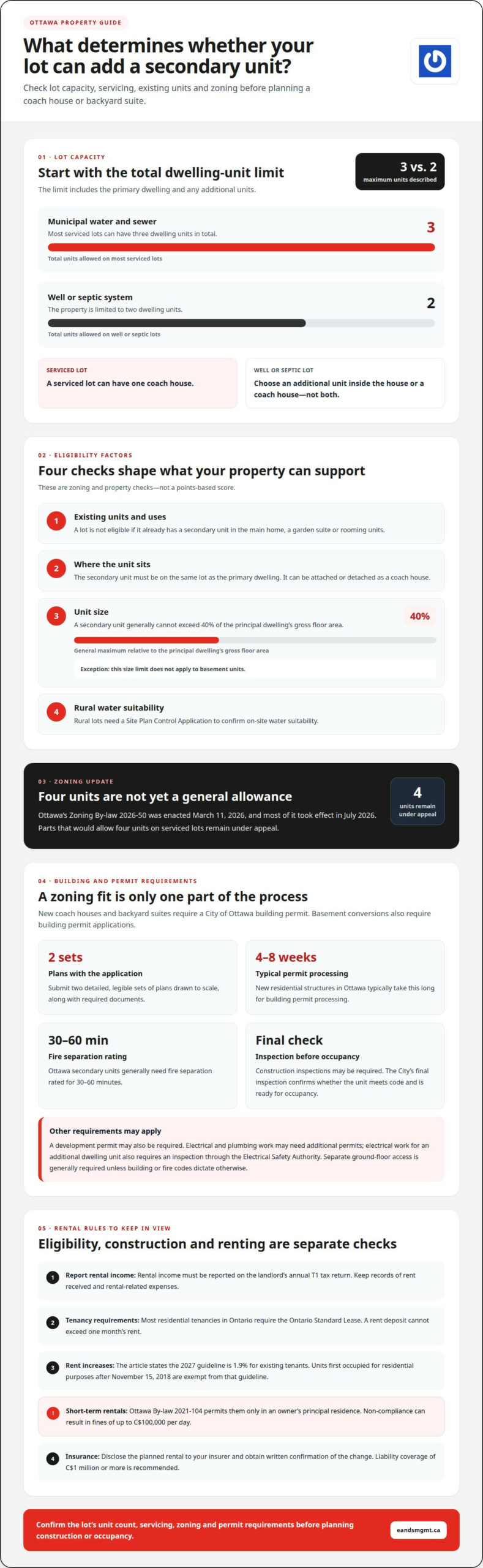
Ottawa secondary units generally need fire separation rated for 30-60 minutes. They also require separate ground-floor access from the primary dwelling unless building or fire codes dictate otherwise. These requirements affect how a coach house connects to the property and how a basement unit is separated from the main home.
Electrical and plumbing work may require additional permits. Electrical work for an additional dwelling unit also requires an inspection through the Electrical Safety Authority. These approvals cover different aspects of construction, so a building permit alone may not address every project requirement.
Permit Applications and Ottawa Regulations
A building permit application for a secondary dwelling unit or basement apartment should include detailed construction plans and required documents. Ottawa requires two detailed, legible sets of plans drawn to scale. Clear plans help show how the proposed work fits the property and applicable requirements.
Construction inspections may be required to confirm compliance with the building code and permit conditions. The City of Ottawa’s final inspection confirms whether the completed unit meets code and is ready for occupancy. Include these checkpoints in your construction timeline.
New residential structures in Ottawa typically take 4-8 weeks for building permit processing. A development permit may also be required, depending on the project. The City’s permit process therefore involves more than submitting plans: the proposed work, required approvals and inspections all matter before the unit can be occupied.
Ottawa property eligibility and zoning for coach houses
Yes. An Ottawa homeowner can generally rent a secondary unit while living in the primary dwelling, provided the property and unit comply with zoning and building requirements. The secondary unit must be on the same lot as the primary dwelling and can be attached or detached as a coach house.
Most lots with municipal water and sewer can have three dwelling units in total. A property with a well or septic system is limited to two. A serviced lot can have one coach house. On a well or septic lot, the additional unit can be inside the house or a coach house, but not both. A lot is not eligible if it already has a secondary unit in the main home, a garden suite or rooming units. Rural lots need a Site Plan Control Application to confirm on-site water suitability.
Ottawa’s Zoning By-law 2026-50 was enacted March 11, 2026, and most of it took effect in July 2026. Parts that would allow four units on serviced lots remain under appeal. Zoning also affects unit size and use; a secondary unit generally cannot exceed 40% of the principal dwelling’s gross floor area, except for basement units. Rental income can support household costs, but construction plans and zoning compliance shape feasibility, not an assumed increase in property value.
Rental income must be reported on the landlord’s annual T1 tax return. Most residential tenancies in Ontario require the Ontario Standard Lease. Landlords must follow the annual rent increase guideline for existing tenants; according to Government of Ontario, the 2027 guideline is 1.9%. Units first occupied for residential purposes after November 15, 2018 are exempt from that guideline. A rent deposit cannot exceed one month’s rent.
Once the unit is ready, tenant placement and ongoing oversight can help organize leasing and property responsibilities. Explore Ottawa rental property management as a next step after clarifying the property’s eligibility.
What are Secondary Dwelling Units and Basement Apartments?
An Ottawa secondary dwelling unit is a separate home within, attached to or detached from a primary residence, with its own living and sleeping areas, kitchen and bathroom. A basement apartment is one example. Basement units may have a separate entrance and full amenities, or share an entrance and facilities with the main dwelling.
For homeowners renting out a secondary dwelling unit in Ottawa, expected rent depends on the unit’s location, condition and amenities. These figures are ranges, not a single average that applies to every property.
Rental income from a backyard suite must be reported on the landlord’s annual T1 tax return. Keep a clear record of rent received and rental-related expenses, including receipts and the reason for each cost. This makes it easier to organize information for tax reporting and distinguish rental activity from personal household spending. The tax treatment of a cost depends on its purpose and supporting records.
Renting out a secondary dwelling unit in Ottawa also means considering the intended rental arrangement. Ottawa By-law 2021-104 permits short-term rentals only in an owner’s principal residence. Non-compliance can result in fines of up to C$100,000 per day, so a separate entrance does not remove a unit from those rules.
Before adding a unit or beginning construction, disclose the planned rental to your insurer and obtain written confirmation of the change. Liability coverage of C$1 million or more is recommended for a rental unit. For shared utilities, decide how access and usage will be handled in the tenancy arrangement, so expectations are clear for both the owner and tenant.
City of Ottawa resources for secondary dwelling units
Use Ottawa’s zoning and permit processes to determine whether a proposed suite suits the property and what approvals construction requires. First assess the permitted unit count, location and use under zoning rules. Then consider the building permit process before planning a tenant’s move-in.
For existing zoning provisions, Ottawa Zoning By-law 2008-250, Part 5, section 133, addresses secondary dwelling units. Most residential lots with municipal water and sewer can have three dwelling units in total; lots with a well or septic system are limited to two. A serviced lot may have one coach house. Rural properties require a Site Plan Control Application first to confirm on-site water suitability.
Ottawa enacted Zoning By-law 2026-50 on March 11, 2026, and most of it took effect in July 2026. Parts that would permit four units on serviced lots are under appeal to the Ontario Land Tribunal. This matters because proposed changes should not be treated as available permissions while those provisions remain under appeal.
Zoning information can reveal constraints beyond the permitted unit count. If secondary dwellings are prohibited in a property’s exception area, a Zoning By-law Amendment or rezoning may be required. Ottawa does not require additional parking for a secondary dwelling unit; any parking space provided should not be in the front yard. Ground-floor entrance requirements and the Ontario Building Code also affect construction and residential use.
For a new backyard suite, the City’s Occupancy Permit is a key milestone: the suite cannot legally be rented before it is issued. Aligning zoning, permits, construction inspections and occupancy approval helps avoid planning a tenant’s move before the unit is ready. After approvals, arrange tenant placement support to help move from a completed suite to a rental.
E&S Property Management
Once your secondary unit is approved and ready to rent, E&S Property Management can help manage the transition. Its Tenant Placement Service supports the process of finding a tenant, while Regular Property Inspections help monitor the unit’s condition. Full-Service Property Management brings ongoing rental responsibilities together under one service.
Clear financial records matter once rent begins. E&S Property Management’s Financial Reporting and Accounting service helps organize rental finances and track income and expenses. Choose the support that suits your needs, from tenant placement to ongoing property management.
Contact E&S Property Management to discuss managing your Ottawa rental property.
Move from planning to steady ownership
Renting out a secondary dwelling unit in Ottawa involves more than construction. It also changes how you manage your home, tenant relationships and time. Once the unit is ready, decide how involved you want to be in daily rental operations and how you’ll organize communication, decisions and property care.
E&S Property Management can support different stages of the transition. Its Tenant Placement Service helps move a vacant unit into a tenancy, and Regular Property Inspections provide ongoing insight into the home’s condition. If you prefer broader oversight, Full-Service Property Management covers day-to-day rental responsibilities, helping keep operations organized while you remain the property owner.
Choose the level of involvement that suits your plans and your home. Contact E&S Property Management to discuss support for your rental and take the next step with a clearer plan.
Frequently Asked Questions
What is an Accessory Dwelling Unit?
An Accessory Dwelling Unit (ADU) is a secondary home on the same property as a principal residence. In Ottawa, it can be created within the main house, attached as an addition or built separately as a coach house. For example, converting a suitable basement into an independent rental space can create an ADU, provided the property and unit meet applicable requirements.
Final Thoughts: Is an SDU Right for Your Ottawa Property?
An SDU may suit your Ottawa property if its zoning, services and existing dwelling arrangement allow another unit. Consider more than the construction: assess how the space will work for a tenant, how you’ll manage upkeep and whether rental income fits your plans. Understanding the property’s constraints and your responsibilities as a landlord can help you decide whether to proceed.
How does renting out the new unit work?
Once the unit is ready for occupancy, renting it means finding a tenant, setting out the tenancy terms, arranging move-in and managing the property during the tenancy. Tenant placement can help with the transition from vacancy to tenancy, while ongoing management can coordinate rent collection, maintenance and communication. Keep rental income and expense records organized for annual tax reporting.
How many units can you have on your lot?
Most Ottawa lots with municipal water and sewer can have three dwelling units in total. A lot with a well or septic system is limited to two. The total includes the primary home and any secondary units, so an existing basement apartment affects what else may be permitted. Property type and zoning restrictions also matter when considering a coach house.
Is a fourth unit legal in Ottawa now?
A fourth unit is not generally available as an as-of-right option under the provisions allowing three units on most serviced lots. Parts of Ottawa Zoning By-law 2026-50 that would permit four units on serviced lots are under appeal to the Ontario Land Tribunal. The appeal status matters: don’t treat the proposed four-unit permission as established zoning eligibility.
What qualifies as a secondary dwelling unit in Ottawa?
A secondary dwelling unit is a separate residential space on the same lot as the primary dwelling. It can be inside the house, such as a basement apartment, attached as an addition or detached as a coach house. A self-contained layout supports independent living, but eligibility depends on Ottawa’s zoning and applicable building requirements.


