A dependable local contact can handle tenant calls, coordinate rent collection and arrange repairs while you’re abroad. The practical answer to how to stop worrying about my rental property while abroad is to decide who will take responsibility for these tasks before you leave. You remain responsible for the property, but you don’t have to manage every day-to-day issue yourself.
It’s understandable to worry about late rent, an urgent repair or a tenant unsure whom to contact while you’re in another country. A clear plan can make those concerns easier to manage and help you decide whether to hire a property manager or arrange your own local support.
This article covers four practical steps: setting up tenant communication and emergency response, deciding whether a property manager suits your needs, building a reliable local team, and clarifying utility and maintenance responsibilities. You’ll have a more organized approach to protecting your rental and managing its day-to-day needs from abroad.
Key Takeaways
- Set clear tenant communication and emergency-response arrangements before you leave, so residents know who to contact and urgent issues can be addressed.
- Decide whether a property manager’s day-to-day oversight is worth delegating based on the time, distance and responsibilities involved.
- Build a dependable local network for repairs and property checks, with clear roles and communication for each person.
- Clarify who handles utilities, routine upkeep and repairs, and plan how maintenance concerns will be reported and resolved from abroad.
1. Handling tenant screening, rent collection and emergencies
Tenant screening starts before a lease is signed. Review the applicant’s rental history, references, identity and ability to pay rent. Ask previous landlords about payment patterns and how the applicant cared for the property. Keep written records of your checks and decisions. These steps help you choose a tenant whose track record suits your rental.
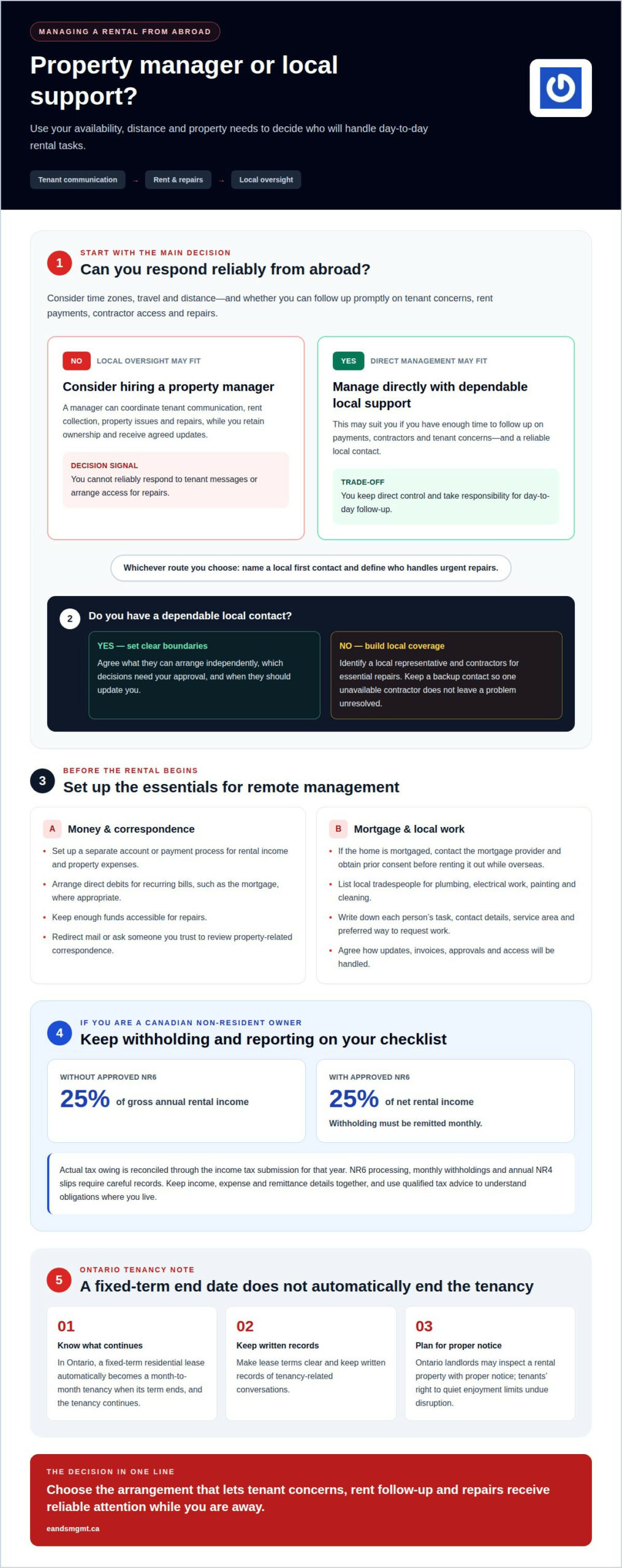
In Ontario, a fixed-term residential lease automatically becomes a month-to-month tenancy when its term ends, and the tenancy continues. To avoid confusion about a planned move-out, make the lease terms clear and keep written records of tenancy-related conversations. Don’t assume the original end date means the tenant must leave. Understanding the continuing tenancy helps you plan from abroad and communicate accurately.
Prepare for damage before move-in with a dated condition record and photos of rooms, appliances and existing wear. Ontario landlords cannot collect a damage deposit when a tenant signs a lease. Tenants are responsible for damage they cause through negligence or abuse, but ordinary wear is different. Clear records give both sides a shared reference if damage is reported.
Follow up on rent arrears promptly. Track payments against the agreed schedule, note missed or partial payments, and contact the tenant through the agreed channel. A local contact can pass along updates if time zones make direct conversations difficult. Keep payment records and written communications together so you can see what was paid and what still needs attention.
A landlord’s emergency plan should name the tenant’s first contact, a local person who can respond, and contractors for urgent repairs. Give tenants clear instructions for reporting problems, such as a leak, and explain how the contact will coordinate repairs. Identify who updates you, how photos or invoices are shared, and how urgent decisions reach you. This structure supports timely action and peace of mind, without leaving tenants unsure whom to call.
2. Should I hire a Property Manager?
Hire a property manager if time zones, travel or distance make it difficult to handle routine decisions promptly. A manager can coordinate tenant communication, rent collection, property issues and repairs, while you retain ownership and receive agreed updates. Managing directly may suit an owner with a dependable local contact and enough time to follow up on payments, contractors and tenant concerns. The trade-off is direct control versus local oversight of daily tasks.
Living abroad can make small issues harder to resolve: a contractor may need access, a tenant may report a problem, or rent may arrive late. Before leaving, set up a separate account or payment process for rental income and property expenses. Arrange direct debits for recurring bills, such as the mortgage, where appropriate, and keep enough funds accessible for repairs. Redirect mail or ask someone you trust to review property-related correspondence, so notices and invoices don’t sit unopened.
Canadian non-resident owners generally face withholding tax of 25% of gross annual rental income. With an approved NR6 Application, withholding is 25% of net rental income, and the tax must be remitted monthly; actual tax owing is reconciled through the income tax submission for that year. NR6 processing, monthly withholdings and annual NR4 slips require careful records. Keep income, expense and remittance details together, and use qualified tax advice to understand obligations where you live.
Before renting out a mortgaged home while overseas, contact the mortgage provider and obtain prior consent. Then compare the tasks you’ll handle personally with those a property manager would coordinate. If you can’t reliably respond to tenant messages or arrange access for repairs, local oversight may make day-to-day management more manageable. Base the decision on your availability, the property’s needs and how much direct control you want to retain.
For owners who want help coordinating rental responsibilities, local rental oversight can be a practical next step. Clear reporting and defined responsibilities help you follow rental income and property issues without managing every task yourself.
3. Building a trusted local team of contractors and vendors
Start with a short list of local tradespeople for plumbing, electrical work, painting and cleaning. Match each person to a clear task, such as responding to a leak or preparing the home between tenancies. Before renting the property, record their contact details, service area and preferred way to request work. Keep a backup contact for essential repairs, so one unavailable contractor doesn’t leave a problem unresolved.
Set expectations in writing. An agreement should identify the work requested, who approves it, how updates and invoices are shared, and who arranges access. For example, ask the local contact to send photos when a repair is complete. This gives you a record from abroad and helps you spot unfinished work. Clear instructions also reduce the risk of poor workmanship or a contractor taking advantage of your distance.
Research local rental values and the rules for letting in the province where the property is located. Compare similar homes by location, condition, size and included utilities, then use those details to set a realistic asking rent. Provincial rules affect how landlords manage a tenancy. In Ontario, landlords may inspect a rental property with proper notice, while tenants’ right to quiet enjoyment limits undue disruption. Include these requirements in your local contact’s instructions.
Choose one trusted local representative to coordinate routine visits, contractor access and property updates. Agree on when they should contact you, what they can arrange independently, and which decisions need your approval. If the property is empty between tenancies, schedule periodic checks and ask for a brief written update after each visit. Having one person handle access and maintenance can make follow-through easier.
Before leaving, test the arrangement with a realistic scenario: a tenant reports a plumbing leak while you’re asleep in another time zone. Confirm who receives the message, contacts the plumber, arranges access and sends you an update. This simple rehearsal can reveal gaps in the team or agreement before an urgent repair makes them harder to resolve.
4. Utility costs and maintenance responsibilities
Before renting out an Ontario home, decide which utilities stay in your name and which tenants arrange. List electricity, gas, water and internet separately in the lease or tenancy documents. For each service, record the account holder, payment method and contact details. If a utility stays in your name, arrange bill access and payment reminders before leaving. A local contact can flag an unexpected bill or service interruption while you’re away.
Put maintenance responsibilities in writing and share them with your local representative. In Ontario, landlords are responsible for preventative maintenance and repairs resulting from normal wear and tear. Tenants usually handle lawn maintenance and snow removal. Clarify how those tasks apply to the property, including who handles outdoor areas, and explain how tenants should report a concern. Clear expectations help avoid confusion when repairs are needed.
Set a simple process for reporting repairs. Ask tenants to describe the problem, its location and when it began, and to send photos when useful. A dripping tap, for example, may need a scheduled visit; an active leak needs faster attention. Give your local contact authority to coordinate access and update you, while keeping records of the request, completed work and invoice.
Plan preventative checks around the home’s actual needs. A local representative can look for signs of leaks, blocked drains, damaged weatherstripping or appliances that need attention. Record each visit and follow up on unresolved items. This makes maintenance easier to track from abroad and helps you distinguish routine upkeep from repairs that need prompt attention.
If coordinating urgent repairs remotely feels difficult, arrange emergency maintenance support so tenants have a clear route for reporting serious problems. A defined response process, utility plan and written responsibility breakdown help you manage the property with fewer surprises.
E&S Property Management: Full-Service Property Management
E&S Property Management can help when living abroad makes tenant communication, property oversight and financial administration difficult to coordinate. Its Full-Service Property Management brings key rental responsibilities under one arrangement, while its Tenant Placement Service supports finding a tenant. Regular Property Inspections provide scheduled oversight, and Financial Reporting and Accounting help you follow rental activity and keep records organized.
This support can help if you want fewer day-to-day tasks across time zones or need to keep property matters organized while away. You remain the owner, but can delegate defined responsibilities rather than coordinating each task yourself.
For a calm next step, contact E&S Property Management to discuss your rental property needs.
Make your next step a clear one
Distance doesn’t have to mean constant involvement. Turn your plans into a routine: decide who handles incoming questions, how updates reach you, and where property records are kept. A written process gives you a reference when you’re busy, travelling or working across time zones. It also helps everyone understand their role without waiting for you to resolve every detail.
If you’re still considering how to stop worrying about your rental property while abroad, focus on the responsibilities you most want to delegate. E&S Property Management can help you find an arrangement suited to your rental and the level of oversight you need. Contact the team to discuss whether professional support fits your plans.
Contact E&S Property Management to discuss your property management needs. With a clear plan and the right support, you can give your attention to life abroad while keeping your rental responsibilities organized.
Frequently Asked Questions
Should I hire a Property Manager?
Hire a property manager if distance or limited availability makes it difficult to oversee tenant concerns, payments and property decisions consistently. For owners wondering how to stop worrying about my rental property while abroad, the key is deciding which responsibilities need reliable local oversight. Managing the rental yourself may suit you if a trusted local person can help and you can stay on top of records and follow-ups.
What if the Tenants damage the property?
Document damage promptly and distinguish it from ordinary wear. In Ontario, tenants are responsible for damage they cause through negligence or abuse, while landlords cannot collect a damage deposit at lease signing. Keep dated move-in records, photos and repair invoices together. A broken fixture and a scuffed floor, for example, may need different assessments, so compare the condition evidence before deciding what action to take.
How can I manage a rental property remotely while living abroad?
A useful starting point for how to stop worrying about my rental property while abroad is to create a routine for reviewing records and unresolved issues. Keep rent receipts, contractor invoices, tenant correspondence and inspection notes in one secure digital folder. Set a recurring time to reconcile income and expenses, then flag outstanding items. During a vacancy, ask your local representative to record the home’s condition after each visit.
Should I hire a property manager in Canada, and what are typical fees?
Hiring a Canadian property manager can make sense when coordinating local tenants, contractors and records from abroad takes more time than you can reliably give. Management fees vary with the property, location and scope of responsibilities, so there isn’t one typical amount that applies to every rental. The price depends on the case and is given after a quote request; factors include the services required and the property’s management needs.
What tasks should a property manager handle for an overseas landlord?
Agree on responsibilities in writing so there’s no uncertainty about who handles each task. Depending on the arrangement, management can include tenant placement, rent collection, inspections, maintenance coordination and financial reporting. An overseas owner may also need support with NR6 and NR4 tax filing. Define how updates are delivered, which decisions need your approval, and how records are shared, so you can follow the work from abroad.
How do I choose and vet a reliable property manager in Canada?
Start by matching the manager’s written scope to your property’s needs. Check whether the arrangement explains tenant communication, inspections, maintenance coordination, financial reporting and non-resident tax support. Ask for a sample report or inspection record to see how updates are presented. Before signing, read the management agreement closely and clarify how approvals, contractor expenses and ending the arrangement are handled.