Damage to a rental unit doesn’t automatically qualify for an insurance payout. To understand how to make a landlord insurance claim for tenant damage, first check whether the cause is covered by your policy. Sudden, accidental damage may qualify, but ordinary wear and tear generally doesn’t. Coverage for intentional damage depends on the policy wording.
Repairs, tenant communication and insurance paperwork can all demand attention at once. Keep a clear record of what happened, when you discovered it and what was damaged. These details help support the claim and keep the process organized.
This article explains what landlord insurance may cover, how deductibles, claim payments and repairs can work, and what to document when reporting damage. You’ll also learn how to distinguish an insurance claim from ordinary maintenance, so you can take the next steps with greater confidence.
Key Takeaways
- Review your policy’s deductible, coverage limit and settlement basis to understand how they can affect a payout.
- Keep repair estimates, invoices and records of conversations together to support the claim as it moves through assessment.
- For suspected intentional damage, preserve evidence and report what happened clearly; coverage depends on the policy terms.
- Organized inspections and tenant placement can help you manage rental-property risks before damage becomes a claim.
Does Your Landlord Insurance Cover Tenant Damage?
Landlord insurance may cover damage caused by a sudden, accidental event insured under the policy. Coverage depends on the cause, exclusions, deductible and applicable limit.
Sudden and Accidental Tenant Damage
Dwelling coverage may help repair a rental property after sudden, accidental damage caused by a covered peril. Fire, lightning or hail may qualify under the policy, but tenant involvement alone doesn’t establish coverage. For example, a kitchen fire that damages walls or cabinets may be covered. The key question is whether an insured event caused the damage.
Deductibles, Limits, and Replacement Cost
A deductible is the amount you pay toward a covered loss before insurance benefits begin. The coverage limit caps the insurer’s payment, leaving you responsible for damage above that limit. A settlement may also depend on whether the policy uses replacement cost or actual cash value. Replacement cost reflects what it costs to replace an item today; actual cash value accounts for depreciation. These terms affect the potential payment.
Policy Exclusions and Claim Denials
Wear and tear isn’t covered, and maintenance problems or equipment breakdowns are typically excluded. Coverage for tenant damage depends on the policy’s terms. Claim details and the insurer’s renewal assessment can affect premiums or renewal decisions, but the damage alone doesn’t determine the outcome. If a claim is denied, review the written reason alongside the policy wording, then respond with relevant evidence and ask the insurer to explain its decision.
Covered property may include rental structures, fixtures and heating or cooling systems. Furnished rentals may also include furniture, subject to policy terms. If an insured loss makes a unit unfit to rent, landlord insurance may help replace lost rental income under the policy. A tenant’s additional living expenses, such as temporary accommodation, generally fall under the tenant’s own insurance, not the landlord’s dwelling coverage.
Claim payments, reimbursements, and repairs
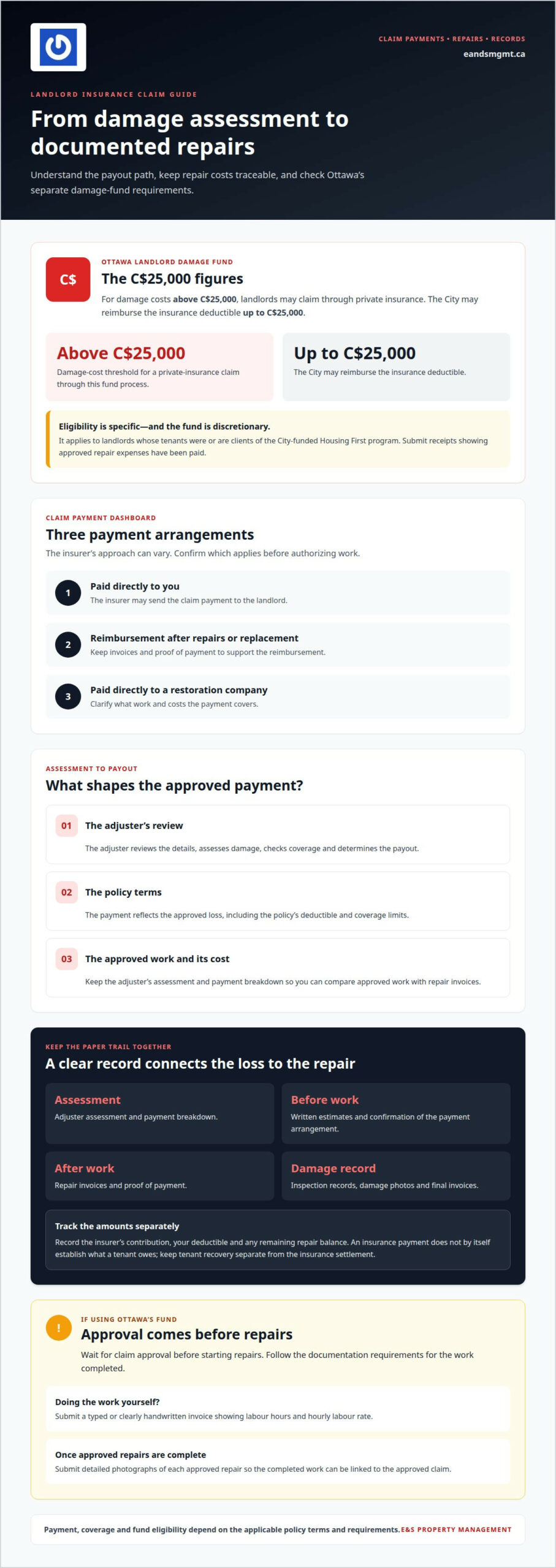
After you report a loss, a claims adjuster reviews the details, assesses the damage, checks coverage and determines the payout. The payment reflects the approved loss under your policy, including its deductible and limits. Keep the adjuster’s assessment and payment breakdown with your claim records so you can compare approved work with repair invoices.
Payment arrangements vary. The insurer may pay you directly, reimburse you after repairs or replacement, or pay a restoration company directly. Before authorizing work, clarify which approach applies to your claim. Keep written estimates, invoices and proof of payment to distinguish approved repairs from costs the policy doesn’t cover.
In Ottawa, the Landlord Damage Fund has separate requirements for eligible claims. For damage costs above C$25,000, landlords may claim through private insurance, and the City may reimburse the insurance deductible up to C$25,000. The fund is discretionary and applies to landlords whose tenants were or are clients of the City-funded Housing First program. Submit receipts showing approved repair expenses have been paid.
Keep tenant recovery separate from the insurance settlement. An insurer’s payment doesn’t automatically establish what a tenant owes. Preserve inspection records, damage photos, estimates and final invoices to support any separate recovery process. Track the insurer’s contribution, your deductible and any remaining repair balance individually.
If relying on the Ottawa fund, wait for claim approval before starting repairs. Landlords completing the work themselves must submit a typed or clearly handwritten invoice showing labour hours and hourly labour rate. Once approved repairs are complete, submit detailed photographs of each approved repair. The photos link the completed work to the approved claim.
For better-organized tenancy records from the outset, a tenant placement service can support the rental process before a tenancy begins.
Intentional tenant damage
Intentional damage means a tenant deliberately harms rental property; accidental damage happens unexpectedly. Negligent damage involves careless conduct, such as leaving a tap running and causing an overflow. The distinction matters because insurers assess the cause and policy wording, not just the repair required. A broken cabinet door from an accident, deliberate vandalism and gradual damage from neglected maintenance may receive different coverage decisions.
Coverage for intentional tenant damage depends on the policy. Some policies may cover it, while landlord insurance typically excludes intentional damage such as vandalism. Evidence of deliberate conduct doesn’t guarantee payment. The insurer considers the documented circumstances, exclusions, deductible and coverage limits. For example, a damaged door may be assessed differently depending on whether it resulted from a sudden incident or ongoing neglect.
Separate the physical damage from the question of who caused it. Record each affected area, the property’s condition before the tenancy and when you discovered the damage. A move-in inspection, dated photos and repair estimates can help show how the unit changed. If you suspect vandalism, preserve available evidence and record any police report or file number. Clear documentation helps the insurer assess the cause without confusing ordinary wear and tear with deliberate damage.
Negligence doesn’t automatically make a loss insured. If a tenant’s action causes sudden damage, the policy’s covered-peril wording remains central; maintenance-related problems are typically excluded. A sudden overflow, for example, may be assessed differently from damage caused by an unresolved leak. Report the facts accurately, avoid guessing about intent, and keep communications, photos and invoices together. An insurance claim also doesn’t determine by itself whether a tenant is responsible for repair costs. Keep that question separate from the insurer’s coverage decision.
Reporting a claim and providing supporting documents
Report the loss promptly to establish a clear starting point for assessing it. A concise account of when you discovered the damage and how it affects the rental helps keep the claim focused.
Reporting a Tenant Damage Claim
To understand how to make a landlord insurance claim for tenant damage, contact your insurer through the reporting channel provided for your policy. Explain what happened, when you became aware of it, which parts of the property are affected and whether urgent work is needed. Record the date of your report, the claim reference and each follow-up conversation. This creates a reliable timeline if the insurer requests clarification.
An adjuster may request more information or arrange an inspection of the unit. Respond with relevant records, and keep copies of everything you send. Claim timelines vary depending on the complexity of the damage and how quickly you provide requested documents.
Repair Estimates Before Filing
You can report damage before you have a complete repair estimate. An estimate helps describe the likely scope of work, but don’t let obtaining one delay your initial notification. If you’re considering how to make a landlord insurance claim for tenant damage, report the known facts first and provide cost details as they become available. Keep separate notes for each affected area so the insurer can match reported damage with proposed work.
Ottawa landlords seeking support through the City’s Landlord Damage Fund should initiate a claim within 28 days of becoming aware of the damage or the tenant’s move-out date, whichever occurs first. Record both dates, since the earlier one determines the filing window. This fund has its own process, distinct from reporting a private insurance claim.
For a clearer view of rental income and expenses alongside claim-related records, organize rental financial records with professional support.
E&S Property Management: Tenant Placement Service
E&S Property Management’s Tenant Placement Service helps landlords prepare for a new tenancy. An organized tenancy makes it easier to keep property records and responsibilities clear from the outset.
Regular Property Inspections help track a rental’s condition over time, while Full-Service Property Management brings tenancy responsibilities together. Financial Reporting and Accounting helps organize rental income and expenses, including repair records.
If you’re preparing for a new tenancy or need ongoing property support in Ottawa, contact E&S Property Management to discuss your needs.
Set Up Your Next Tenancy with Confidence
Knowing how to make a landlord insurance claim for tenant damage gives you a clearer plan if a loss occurs, but effective property oversight starts before a claim is needed. Consider what support would make your next tenancy easier to manage, from tenant placement to documenting the property’s condition over time.
E&S Property Management offers Tenant Placement Service, Regular Property Inspections and Full-Service Property Management in Ottawa. These services support landlords preparing for a new tenancy or managing ongoing rental responsibilities. Contact E&S Property Management to discuss the level of support that fits your needs.
Contact E&S Property Management today to discuss your property management needs and move forward with greater clarity.
Frequently Asked Questions
What Counts as “Tenant Damage”?
Tenant damage is a change or breakage beyond the ordinary condition of a rental property, such as a hole in a door or a cracked sink. Compare the affected area with move-in records to distinguish new damage from existing marks. Normal wear and tear, such as gradual paint fading, is different. Whether a loss is insured depends on its cause and the policy wording.
Does landlord insurance cover intentional tenant damage or only accidental damage?
Some landlord policies may cover intentional tenant damage, but coverage depends on the policy and circumstances. Accidental damage may also qualify if it results from an insured event. Deliberate wall damage and a sudden accidental break, for example, may be assessed differently. Report what you observed without assuming intent, and keep relevant communications or incident records available to explain the circumstances.
How soon must a landlord report tenant damage to their insurer in Canada?
Notify your insurer promptly after discovering damage, and follow the reporting terms in your policy. There isn’t one universal deadline for every Canadian landlord insurance claim; the policy and circumstances matter. Ottawa landlords considering the City’s Landlord Damage Fund face a separate timeline: start a claim within 28 days of learning about the damage or the tenant’s move-out date, whichever comes first.
What steps should a Canadian landlord take to document tenant damage before making a claim?
Record when you discovered the damage, identify each affected room and take clear photos from wide and close angles. Preserve the original image files without altering them. Compare the damage with move-in inspection records, then note any immediate steps taken to protect the property. For example, document a temporary measure to control a leak and keep related communications with the photos.
What evidence and documents are needed for a landlord insurance claim for tenant damage?
Prepare a concise claim file with photos, inspection records, a timeline, tenant communications and any police report or file number for suspected theft or vandalism. Add repair estimates, invoices and proof of payment as they become available. The insurer may request more information or arrange an inspection, so keep copies of submitted documents and note when you sent each item.
How do deductibles and claim limits affect landlord insurance claims for tenant damage in Canada?
The deductible reduces the amount payable on an approved claim, while the policy limit caps the insurer’s payment. Ask for an itemized settlement explanation showing the assessed damage, deductible and applicable limit. This clarifies how the proposed payment relates to repair documents. Also check whether the policy settles damaged property at replacement cost or actual cash value, since depreciation can affect the payment.