
Finding a tenant is only the beginning of rental ownership. For Canadian landlords, when to switch from a realtor to a property manager for rentals depends on whether you need one-time tenant placement or ongoing support throughout the tenancy. Realtors can market a rental and find a tenant; property managers can also handle those tasks, then manage rent collection, maintenance coordination, inspections, and financial reporting.
It’s understandable to wonder whether leasing help is enough, especially when you want to keep a rental organized without taking on more work than necessary. The right choice depends on who will manage the property after a tenant moves in and how much responsibility you want to retain.
This guide explains how Realtors and property managers differ, who can find tenants, and when leasing-only help may suit your plans. You’ll also find signs that ongoing management could bring more consistent support, helping you make a clear decision for your property.
Key Takeaways
- A property manager can find tenants and coordinate the handover of keys, leases, and tenant details when management changes.
- Ongoing rental oversight can include rent collection, maintenance coordination, inspections, and financial reporting, not just tenant placement.
- Leasing-only help can suit owners prepared to take over rent collection, repairs, and tenant matters once a tenant is placed.
- Choose support for the stage you’re in: transaction-focused help for a specific rental task, or ongoing management when you want continuing oversight.
Do property managers also find tenants?
Yes. Property managers can market a rental, respond to prospective tenants, and screen applicants. A Realtor may also handle tenant placement, but the assignment can end once the lease is signed. Before choosing, clarify who handles each step: advertising, applicant screening, lease preparation, rent collection, and follow-up after move-in.
Screening helps a landlord assess whether an applicant is a good fit for the tenancy. It may include background checks, income verification, and contacting previous landlords. Reviewing income alongside a prior landlord reference, for example, can help you assess an application. Effective marketing and timely responses to inquiries matter too: a long vacancy can affect rental income, while a rushed selection may lead to avoidable difficulties later.
For an existing tenancy, a smooth management transfer needs an orderly handover. Review the current management agreement for notice requirements, then arrange the transfer of leases, tenant contact details, keys, and relevant records. If the outgoing manager holds last month’s rent or interest on it, include those details in the financial handover. Tell tenants who will manage the property next and where to direct rent payments and maintenance requests.
| Option | Tenant search | After lease signing | Management transfer |
|---|---|---|---|
| Leasing-only agent | Markets the unit and places a tenant | Owner takes over ongoing tasks | Passes along placement records and keys |
| Property manager | Markets the unit and screens applicants | Can coordinate rent, maintenance, and inspections | Can collect keys, leases, and tenant details |
For Canadian rentals, landlord-tenant rules depend on the province or territory, so ongoing management must account for the requirements that apply to the property. That includes keeping tenancy records organized and handling tenant matters through the applicable process. Changing managers does not remove the landlord’s responsibilities.
Choose leasing-only help if you’ll manage the tenancy after placement; choose ongoing management if you want support throughout it. During a transfer, a written record of keys, documents, tenant contacts, and held funds helps maintain continuity.
What’s the difference between a property manager and a Realtor?
A Realtor generally handles real estate transactions, while a property manager oversees rental operations once a home is ready to rent. The practical difference is whether your need ends with a transaction or continues throughout the tenancy.
Rental Operations and Property Transactions
Property managers coordinate the work that keeps a rental operating: tenant screening, lease preparation, rent collection, maintenance, inspections, and financial reporting. If a tenant reports a repair, for example, the manager coordinates the response and follows the issue through. These responsibilities continue after the lease is signed.
Realtors are licensed to represent buyers and sellers in real estate transactions. Their work can include marketing a property for sale, arranging viewings, and supporting a purchase or sale through closing. A Realtor offering leasing-only help can market a rental and place a tenant, but the assignment may end once placement is complete. Unless separate management is arranged, the owner then takes on ongoing rental tasks.
Communication and Response Times
Communication matters most when a tenant needs a decision, reports a maintenance issue, or asks about rent. Property managers handle recurring tenant and owner communication as part of rental operations. A response standard of 24 hours on business days gives owners a practical benchmark for routine communication.
Slow replies can leave a tenant unsure where to direct a request and an owner uncertain about what happens next. If a maintenance message receives no follow-up, for instance, the repair may remain unresolved and the tenant may contact the landlord directly. A Realtor hired only for tenant placement typically isn’t responsible for that ongoing exchange, unless the service arrangement says otherwise.
Look for support that matches the work you want handled after a tenant moves in. If you want continuing oversight of rental operations, full-service property management covers a different need from help with a single transaction or tenant placement.
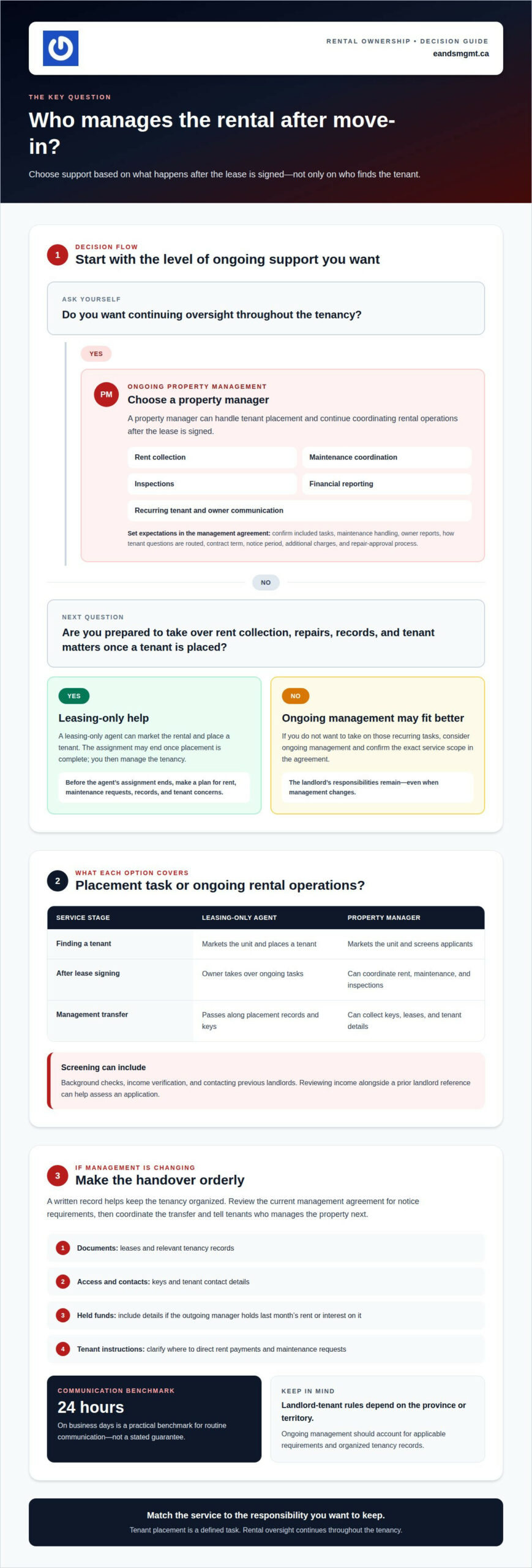
Transactional services versus ongoing management
A transactional service completes a defined task, such as marketing a rental and placing a tenant. Ongoing management continues throughout the tenancy, covering recurring work and tenant communication. When to switch from a realtor to a property manager for rentals depends on who will handle responsibilities after move-in, not just who finds the next renter.
A leasing-only arrangement can suit a landlord who wants help filling a vacancy but plans to manage the tenancy personally. Before the agent’s assignment ends, decide who will collect rent, respond to maintenance requests, keep records, and address tenant concerns. If a tenant reports a leak after moving in, for example, the owner needs a clear plan for coordinating the repair.
A property management company provides ongoing services according to its management agreement. Set expectations by identifying which tasks are included, how maintenance requests are handled, what reports the owner receives, and how tenant questions are routed. Regular inspections can document a unit’s condition and flag maintenance concerns that need attention.
Compare proposals by scope, not just by the management charge. Review the contract term, notice period, included services, additional charges, and process for approving repairs. A lower charge may cover fewer tasks; a broader arrangement may include regular inspections and financial reporting. Compare the total work and oversight each agreement provides.
Service quality also depends on follow-through. If repairs are delayed or inspection updates are missing, the management arrangement may not match expectations. Review recent property reports and unresolved requests, then identify which responsibilities need clearer ownership. A written record makes the discussion specific and helps establish what should change.
- Choose leasing-only help when you can take over rent collection, maintenance coordination, and tenant communication after placement.
- Choose ongoing management when you want continuing oversight, routine inspections, and a defined point of contact throughout the tenancy.
For landlords deciding when to switch from a realtor to a property manager for rentals, match the service to your stage of ownership: a defined leasing task may suit a hands-on owner, while recurring responsibilities call for ongoing management.
When is a leasing-only agent enough?
A Canadian landlord should hire a property manager when tenant communication, maintenance, and rent responsibilities need consistent oversight. There’s no fixed number of rental units that makes management worthwhile; the decision depends on workload, distance, time, and how much responsibility you want to retain.
Choosing Professionals by Ownership Stage
Different stages of ownership call for different support. During an acquisition, a Realtor can assist with buying the property; before a vacancy, a leasing-only agent can market the rental and place a tenant. Once the tenancy begins, a property manager can take on recurring operations instead of leaving those tasks to the owner.
For leasing-only help, define the handoff before the assignment ends. Decide who will collect rent, coordinate repairs, communicate with tenants, and maintain records. An owner who travels frequently may need ongoing management, while a nearby landlord with time to handle tenant requests may prefer placement support alone. These responsibilities help clarify when to switch from a realtor to a property manager for rentals.
Rental Units and Management Choice
Unit count matters because each rental can bring its own tenant communication, maintenance needs, records, and vacancy decisions. But workload also depends on property type, location, tenant needs, and the owner’s availability. One rental can require substantial attention; several well-maintained units may fit an owner’s routine.
Choose a new property manager based on experience with your type of property and the responsibilities you want covered. Review the service scope, reporting, inspection practices, and contract notice terms. During a transition, arrange a clear transfer of leases, keys, tenant contacts, and relevant records so ongoing responsibilities have an assigned point of contact.
A leasing-only agent is a good fit when you need help finding a tenant and are prepared to manage the tenancy afterward. A property manager is a stronger fit when coordinating ongoing responsibilities would take time away from work, travel, or other commitments. When to switch from a realtor to a property manager for rentals depends on the work you want handled, not a particular unit threshold.
If you’re ready to delegate ongoing rental responsibilities, arrange full-service rental management for continuing support through the tenancy.
E&S Property Management
E&S Property Management can help when your rental needs support beyond finding its next tenant. If you’re comfortable managing the tenancy yourself, Tenant Placement Service covers the leasing stage; if you want continuing oversight, Full-Service Property Management supports the ongoing work of managing a rental.
Regular Property Inspections and Financial Reporting and Accounting can help owners stay informed about property condition and rental finances. This support can be useful when tenant requests, maintenance coordination, or recordkeeping become difficult to manage alongside other responsibilities.
Whether you need tenant placement or ongoing management, contact E&S Property Management to discuss the support that fits your Ottawa rental.
Set Up Your Next Chapter as a Landlord
Deciding when to switch from a Realtor to a property manager for rentals is also an opportunity to decide how you want ownership to fit your life. Consider which responsibilities you want to keep, which you’re ready to delegate, and what a clear handoff should involve before the next tenancy begins. That boundary can help you choose support that matches your day-to-day needs, rather than waiting until a problem arises.
E&S Property Management offers Tenant Placement Service for landlords focused on filling a vacancy, and Full-Service Property Management for ongoing oversight. Regular Property Inspections provide another way to stay informed about a rental’s condition. Consider which level of support suits your plans and how involved you want to remain.
If you’re ready to discuss the right next step for your rental, contact E&S Property Management. You can move forward with a clearer plan and support aligned with your needs.
Frequently Asked Questions
How much does each option cost?
Costs depend on whether you need tenant placement or continuing rental oversight. Leasing-only help is a defined task, while property management covers recurring responsibilities under an ongoing agreement. The price depends on the case and is given after a quote request; scope, property needs, and included services affect the cost. Compare what each agreement covers, including inspections, reporting, and maintenance coordination, rather than comparing fee labels alone.
When Might You Need Both?
You might use both when buying an investment property and preparing it for tenants. A Realtor can represent you in the purchase, while a property manager can take over rental operations once the home is ready to lease. Agree in advance who will manage the transition from closing to tenant placement, so marketing, access, and operational records have clear ownership.
What does a realtor do versus a property manager for rental properties in Canada?
A Realtor represents buyers or sellers in real estate transactions, while a property manager focuses on rental operations. A leasing assignment may help secure a tenant, but it doesn’t automatically include ongoing management. In Canada, landlord-tenant rules vary by province or territory, so Ottawa landlords need rental processes suited to Ontario, rather than assuming one national procedure applies everywhere.
How do property manager costs compare with a realtor’s rental listing and tenant placement fees?
They may cover different timeframes and work. A rental listing or tenant placement charge relates to filling a vacancy, while a management fee relates to ongoing services described in an agreement. The amounts and billing arrangements depend on the provider and scope. Compare whether tenant communication, inspections, reporting, and maintenance coordination are included, and note any separate charges or contract terms.
What services should a Canadian landlord expect from a property manager?
Expect the agreement to define the work, rather than relying on the title alone. Rental management can include tenant screening, lease preparation, rent collection, maintenance coordination, inspections, and financial reporting. For a non-resident owner, tax filing support may also matter. In Ottawa, a clear agreement should identify which tasks the manager handles and which decisions remain with the landlord.


