A productive annual property review is more than a routine update. Knowing what to expect in an annual property review meeting means being ready to discuss the home’s condition, the age of major systems, maintenance priorities, financial records and any proposed changes, with clear information to support each decision.
It’s reasonable to expect an annual property review to be organized and manageable. A prepared review packet gives everyone a shared picture of the property and keeps the discussion focused on what needs attention, what can wait, and what a proposed change would mean for the home.
This guide explains what to include in the packet, how a property manager reviews a home’s condition and records, and what to expect during an in-person or virtual meeting. You’ll also learn how to assess proposed changes, ask for clarification, and decide whether to approve them or raise a concern.
Key Takeaways
- Prepare a property-specific review packet before scheduling the meeting so the discussion has a clear focus.
- Choose an in-person, Zoom, or phone meeting format that lets you review the information and ask questions comfortably.
- Use the age and condition of major systems to understand maintenance priorities and assess proposed changes.
- Ask for each proposed change and your decision to be clearly explained and recorded before the review concludes.
Reviewing the packet in person, by Zoom, or by phone
- Personalize the annual review letter with the owner’s name, property address, and details specific to that home. Prepare the packet before arranging the meeting, so the owner can consider the material and prepare questions. For owners asking what to expect in an annual property review meeting, a focused discussion usually covers the property’s records and the decisions ahead. These meetings are expected to take 15-30 minutes.
- Choose a format that makes it easy to review information together. An in-person meeting allows you to discuss documents side by side, while Zoom can work when meeting face to face isn’t practical. A phone call may suit a straightforward conversation if both participants have the packet in front of them. Whatever the format, you should be able to refer to specific pages and clarify details.
- Tailor the discussion to the property’s use. For a rental home, consider occupancy, rent, maintenance, and income records. For an owner-occupied home, focus on condition and household maintenance. Commercial properties involve different operating and tenancy considerations, so the review should reflect the property’s business use. This context helps explain what to expect in an annual property review meeting without relying on a one-size-fits-all agenda.
- Keep market value and tax assessment distinct. A market value estimate considers comparable sales and differences in location, condition, and features. A tax assessment is the value used in a municipality’s property-tax process. Owners can review the assessment notice and property details; the applicable review process depends on the municipality.
- Use the meeting to discuss risks such as vacancies, insurance concerns, maintenance needs, and compliance questions. For a condominium AGM, review the package and previous minutes; an auditor can use the package to confirm meeting details. A condominium corporation subject to the Condominium Act must hold its AGM within six months of year-end, with notice sent to owners 15 days before the meeting. RLB reports higher attendance at virtual condominium AGMs, while both virtual and in-person formats can support participation.
When possible, review the annual property packet with the owner in person. If meeting in person isn’t practical, a Zoom meeting offers a convenient way to discuss the documents together.
How a property manager presents proposed changes and records the client’s decision
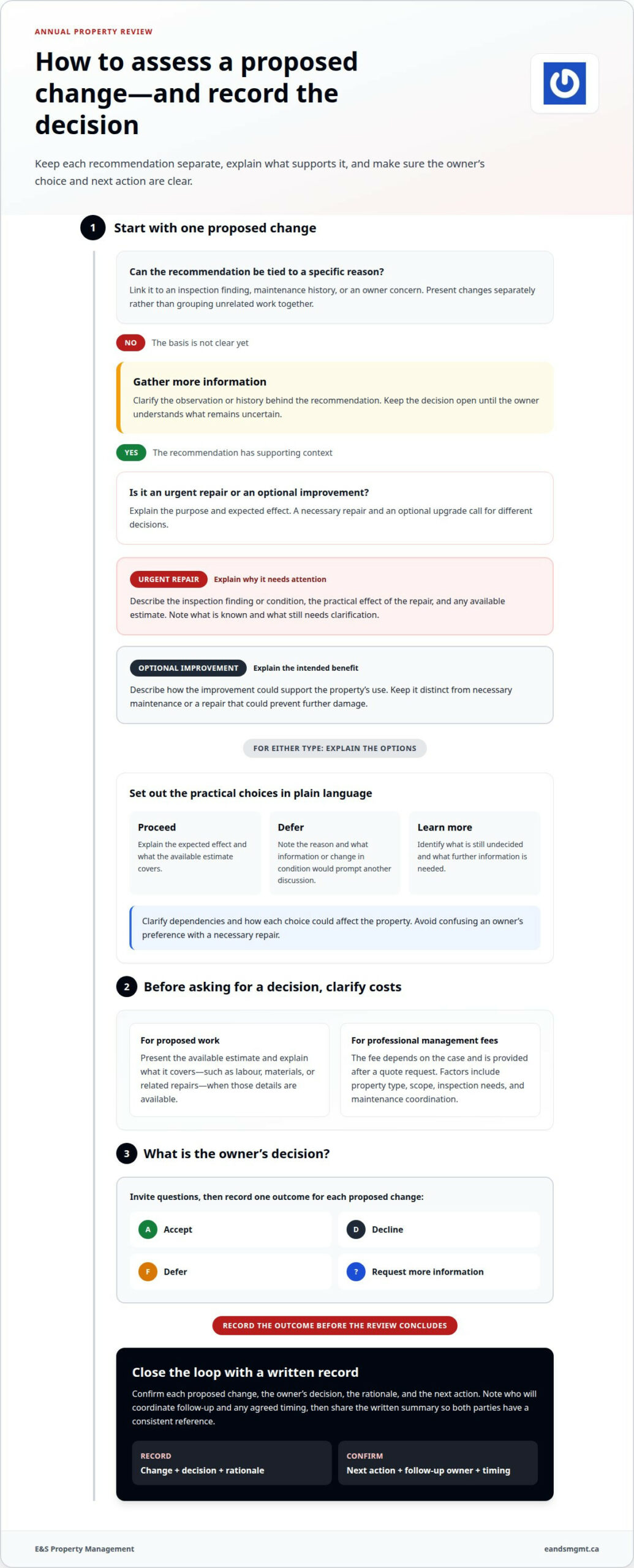
- Present each proposed change separately, explaining the reason, supporting observations, and expected effect on the property. For example, distinguish an urgent repair from an optional improvement, since they call for different decisions. Link each recommendation to an inspection finding, maintenance history, or owner concern rather than grouping unrelated work together.
- Explain the practical options in plain language. The next step might be to proceed, defer the work, or gather more information. Describe how each choice could affect the property, note any dependencies, and clarify what remains undecided. This helps the owner weigh the options without confusing a preference with a necessary repair.
- Clarify costs before asking for a decision. Any professional management fee depends on the case and is provided after a quote request; factors include property type, scope, inspection needs, and maintenance coordination. For proposed work, present the available estimate and explain what it covers, such as labour, materials, or related repairs, when those details are available.
- Invite the owner to ask questions and give a decision for each item. Record whether they accept, decline, defer, or want more information about a change. If the owner postpones a repair, for example, note the reason and what information or change in condition would prompt another discussion.
- Close by confirming the record: the proposed change, the owner’s decision, the rationale, and the next action. Note who will coordinate follow-up and any agreed timing, then share the written summary so both parties have a consistent reference. For continuing coordination, consider professional property management support.
How professionals assess the age and condition of major systems
- Build a system-by-system record from inspection notes, maintenance history, and owner-provided documents. Include installation or replacement dates when available, along with service visits and previous repairs. A record of a furnace repair last year, for example, provides useful context for discussing its current condition.
- Review visible condition and operation during the property inspection. For a heating system, note unusual sounds, inconsistent heat, or visible wear. For plumbing, record leaks, corrosion, or water-pressure concerns. These observations help identify routine maintenance and flag conditions that may need further assessment.
- Consider major components together rather than in isolation. A roof concern, for instance, may affect interior moisture, while an aging water heater may influence repair planning. Connect observed symptoms with the property’s maintenance history and identify which items need attention first.
- Discuss maintenance, repairs, and upgrades in practical terms. Cover recurring upkeep, unresolved inspection findings, repairs that could prevent further damage, and improvements that may support the property’s use. A necessary repair and an optional upgrade are different decisions, so explain their purposes separately.
- Summarize the findings for the owner, including each system’s recorded age, observed condition, previous work, and recommended next step. An annual property review checklist should include the age of major systems, helping owners see where records are complete and where future maintenance planning may be needed. Regular inspections add property-specific observations to that ongoing record.
How a property manager builds the real estate review packet and what the client may need to provide
A property manager can assemble the packet before scheduling the review, bringing property records together with practical decisions. The owner’s current documents help keep the discussion specific and useful.
-
Questions to discuss with the property manager or real estate agent
Bring forward questions about the property’s current value, tax assessment, mortgage considerations, maintenance priorities, and market conditions. A real estate review may include national and local market information, seasonality, and a comparative market analysis. Ask how each item relates to this property rather than treating broad market figures as a property-specific conclusion. For a rental home, clarify how rent and operating information will feature in the review.
-
How a property manager helps clients prepare for the meeting
Share relevant records with the property manager before the packet is finalized, such as recent repair invoices, inspection notes, property-tax notices, and mortgage information. These documents connect the property’s history to the review’s recommendations. If a record is missing, note the gap so the packet doesn’t present an incomplete history as settled information.
- Review the packet’s financial and market sections for clear context. A checklist may cover a rough current property valuation in relation to taxes and the mortgage, property-tax concerns such as protests or exemptions, and annual maintenance. Organizing these topics helps owners distinguish current costs from longer-term planning.
- Provide updates that could change the review’s picture of the home. Examples include completed upgrades, a new repair, a change in occupancy, or corrected property details. The manager can incorporate relevant records, explain how each update affects the packet, and note questions that need discussion. For ongoing coordination, arrange professional property management support to bring records, inspections, and financial reporting into one review process.
E&S Property Management
E&S Property Management helps residential property owners in Ottawa keep inspection findings, maintenance needs, and financial records organized. Regular Property Inspections provide property-specific observations, while Financial Reporting and Accounting helps owners follow the financial picture alongside property decisions. Full-Service Property Management brings these responsibilities together, including tenant placement when a rental property needs a new tenant.
This support can help when you’re balancing a review meeting with ongoing property responsibilities or want a consistent record to inform decisions. Clear, organized information makes proposed changes easier to understand and discuss.
Contact E&S Property Management to discuss property management support for your home.
Make your next property decision with clarity
Knowing what to expect in an annual property review meeting helps you plan for the coming year. Use the discussion to identify which decisions need attention now and which can be revisited as the property’s needs change. A considered plan also provides a practical reference for future conversations, rather than leaving important choices scattered across emails and notes.
If coordinating property records, tenant needs, and ongoing oversight is taking more time than you can comfortably give, professional support can make those responsibilities more manageable. E&S Property Management provides residential property management in Ottawa, including inspections and tenant placement, to help owners maintain continuity between reviews.
Contact E&S Property Management to discuss support for your property. A clear next step can make the year ahead feel more manageable.
Frequently Asked Questions
What is an annual property review meeting?
An annual property review meeting is a scheduled discussion about a property’s performance, condition, and priorities for the coming year. For a rental home, it helps the owner and manager align on responsibilities, identify decisions that need follow-up, and record agreed actions. It’s a management discussion, not the same process as a municipal property assessment review.
What documents should I bring to an annual property review meeting in Canada?
Bring records that add context to the manager’s existing property file. These might include current insurance documents, equipment warranties, lease updates, and receipts for work completed since the previous review. For a rental property, note any changes that affect how the home is used or maintained. Organizing documents by topic helps connect each one to the relevant discussion.
What topics are usually covered in a property review meeting?
Along with maintenance and financial matters, the meeting can cover changes in how the property is used, owner priorities, and decisions requiring follow-up. An owner planning to keep the property for several years may prioritize durability, while someone preparing for a change in tenancy may focus on readiness. Set the agenda around the property’s circumstances and the owner’s goals.