
A pet left behind can make a landlord feel responsible for acting quickly, but the animal and the tenant’s belongings raise separate questions. Knowing what to do if a tenant abandons their pet in a rental unit starts with determining whether the tenancy has actually been abandoned: in Ontario, that generally means the tenant owes rent and has moved out without an agreement or notice ending the tenancy. For belongings left in an abandoned unit, landlords must wait 30 days after giving notice or receiving a Board order before selling, keeping or disposing of them. That waiting period isn’t a reason to delay arranging help for an animal.
It also helps to distinguish pet abandonment from ordinary pet rules. A tenant can’t be evicted solely for having a pet, even if the lease prohibits pets. The Residential Tenancies Act allows eviction in certain circumstances, including substantial interference or wilful or undue damage. Municipal bylaws may also limit the types or number of pets allowed. This guide explains how Ottawa landlords can address an animal’s immediate care, enter a unit, handle belongings left behind, and follow the required procedures before disposing of property.
Key Takeaways
- Don’t treat a tenant’s absence alone as proof that the unit or pet has been abandoned; the tenancy’s status and the circumstances both matter.
- Prioritize the animal’s immediate safety, and avoid approaching a frightened or unfamiliar pet if doing so could put anyone at risk.
- Keep the steps for helping an animal separate from the rules for handling belongings, and document what was found and what action was taken.
- Understand how the notice process changes depending on whether the tenancy was abandoned or a Sheriff enforced an eviction.
Entering a unit and removing abandoned belongings
In Ottawa, treat lawful entry, an animal’s immediate safety, and the tenant’s belongings as separate matters. If you’re deciding what to do if a tenant abandons their pet in a rental unit, prioritize the animal’s welfare. A pet left inside may need help before you can address ordinary belongings. Don’t assume it’s calm or safe to approach: a frightened or stressed dog may guard the unit and see you as an intruder.
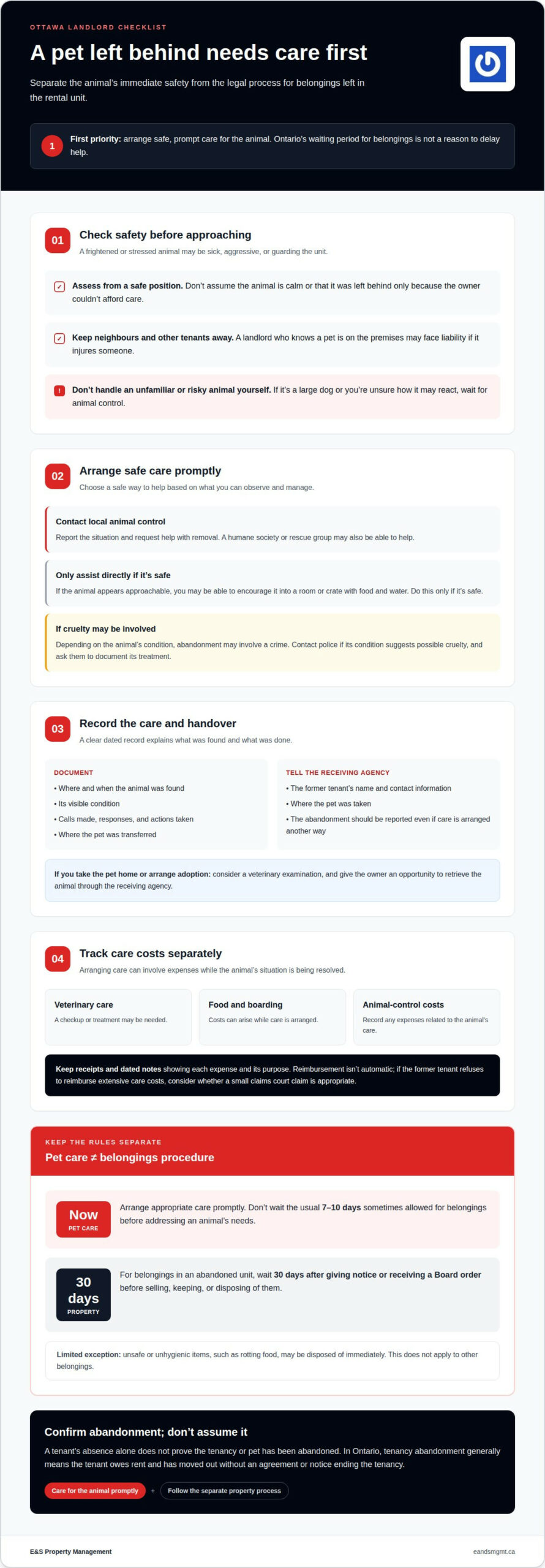
Before approaching, assess what you can see from a safe position. An animal may be sick or aggressive, so don’t assume it was left behind only because its owner couldn’t afford care. Keep neighbours and other tenants away from the animal. If it’s a large dog or you’re unsure how it may react, wait for animal control to collect it rather than trying to handle it yourself.
If the animal appears approachable, you may be able to encourage it into a room or crate with food and water, but only if it’s safe to do so. Contact local animal control to report the situation and request help with removal. A humane society or rescue group may also be able to help. Report the abandonment whether the pet goes to animal control, a humane society, or receives care another way.
Record the animal’s condition and the steps taken, including who was contacted and where the pet was transferred. These details can help show what to do if a tenant abandons their pet in a rental unit and clarify how the situation was handled. If you take the pet home or arrange an adoption, consider having a veterinarian examine it. Tell the receiving agency the former tenant’s name and contact information so the owner has a chance to retrieve the animal. Depending on the animal’s condition, abandonment may involve a crime; police can document its treatment. A landlord who knows a pet is on the premises may also face liability if it injures a neighbour, including another tenant.
Handle furniture, clothing, and other belongings separately from urgent animal care. In Ontario, unsafe or unhygienic items, such as rotting food, may be disposed of immediately. This exception doesn’t mean other belongings can be discarded right away; separate rules govern how they must be handled.
Landlord responsibility for abandoned property
A landlord must consider both the pet’s immediate welfare and the costs of arranging care. Keep these responsibilities distinct from the separate process for handling belongings left in the unit.
Taking immediate steps for a pet
Immediate action means assessing the animal’s condition, arranging safe care, and documenting what happens. This matters because a delay can leave a pet without food, water, or needed attention. Record when the animal was found, its visible condition, and each call or expense. Don’t wait seven to 10 days, the usual period sometimes allowed for belongings, before addressing the pet. If you take it home, consider a veterinary checkup.
Contacting animal services or police
For help removing the animal, contact local animal control. A humane society or rescue group may also assist, allowing you to arrange care without handling an unfamiliar pet. Report the abandonment whether the pet goes to one of these agencies or receives care another way. If its condition suggests possible cruelty, contact police and ask them to document the animal’s treatment. Give the receiving agency the tenant’s name and contact information.
Responsibility for care costs
If you take an abandoned pet home, you may have to pay out of pocket for treatment or a veterinary checkup. Food, boarding, and animal-control expenses can also arise while care is arranged. Keep receipts and a dated record of each expense and its purpose. If the former tenant refuses to reimburse extensive care costs, consider whether a small claims court claim is appropriate. Reimbursement isn’t automatic, so clear records help explain what you spent and why.
Don’t assume the tenant left the animal only because they couldn’t afford care; it may be sick or dangerous. If there’s a safety concern, keep neighbours away and tell the receiving agency where the pet is so the owner has an opportunity to retrieve it. A landlord who knows a pet is present may be liable for injuries to neighbours, including other tenants.
Notice and procedure before disposing of property
Keep the animal’s care separate from the legal process for tenant belongings. Ontario’s 30-day property rule doesn’t require delaying urgent care for a pet.
Waiting before arranging care or rehoming
There’s no reason to wait the usual seven to 10 days for belongings before addressing an abandoned pet. Arrange appropriate care promptly, because an animal may need food, water, or attention while the tenant is away. Contact animal control or a receiving agency to discuss safe care and retrieval. The 30-day period applies to property left in an abandoned rental unit, not to delaying the animal’s care.
Surrendering or rehoming the pet
To arrange care or possible rehoming, contact animal control, a humane society, or a rescue group. Give the agency the former tenant’s name and contact information so the owner has an opportunity to retrieve the animal. Share where the pet was taken, and report the abandonment whether the agency takes it or another care arrangement is made. Finding a willing adopter alone doesn’t settle the tenant’s opportunity to reclaim the pet.
Documenting the pet and contact attempts
Make a dated record of the pet’s visible condition, where it was found, and the steps taken to provide care. Photograph the scene if it’s safe, and note each call, message, and response. Try every available way to contact the tenant. Post a notice on the unit door and mail one to the tenant’s last known address, explaining where the pet was taken. A notice near the entrance may also help if the tenant returns.
Recovering a pet left behind
A tenant seeking to recover a pet should contact the landlord and the agency holding the animal promptly. Provide identifying details and arrange retrieval directly with the agency. If contact details have changed, a posted entrance notice or mailed notice may explain where the pet went. For belongings, Ontario requires a landlord to wait 30 days after giving notice or receiving a Board order before selling, keeping, or disposing of them. That property deadline is separate from arranging a pet’s return.
What legally counts as a tenant abandoning a pet in Canada?
For Ottawa landlords, the key question is whether the tenancy circumstances and the tenant’s actions show they have left the animal behind. A pet’s presence alone doesn’t establish that the tenant has abandoned the rental unit. Ontario’s rules about ending a tenancy and keeping pets are separate, so consider both before deciding what the circumstances mean.
In Ontario, a tenant has abandoned a rental unit when they owe rent and move out without an agreement to end the tenancy, a notice ending it, or receiving the landlord’s notice to end it. An expired lease with no indication the tenant will stay, a tenant’s notice that they have moved, or a completed eviction may also help establish that an animal was left behind. Treat these as relevant circumstances, not reasons to ignore the pet’s immediate needs.
The Residential Tenancies Act (RTA) generally prevents landlords from prohibiting pets in covered rental units. A landlord can seek eviction over a pet if it substantially interferes with others’ reasonable enjoyment or legal rights, causes wilful or undue damage, or involves an illegal act. Ottawa municipal bylaws may also limit the types or number of pets. A lease clause banning pets alone doesn’t allow eviction, and landlords shouldn’t charge extra rent for a pet or require a damage deposit.
Pet abandonment may fall under animal cruelty and can be punishable by fines and/or imprisonment. The animal’s condition and the circumstances matter, so don’t assume the owner’s motive or treat suspected cruelty as proof. Record what you observe and report concerns through the appropriate channels.
Once the tenancy’s status is clear, handle the animal’s care separately from property left behind. Ontario’s rules for belongings in an abandoned unit require a 30-day wait after notice or a Landlord and Tenant Board order before selling, keeping, or disposing of them. That property process doesn’t determine whether a pet has been abandoned. If a tenant returns, the animal’s location and the agency caring for it are practical details that can help reunite them.
E&S Property Management: Tenant Placement Service
E&S Property Management can help Ottawa landlords move from resolving a tenancy issue to preparing for a new one. Its Tenant Placement Service supports the process of finding a tenant, while Full-Service Property Management can coordinate ongoing rental oversight. Regular Property Inspections can help landlords stay informed about a home’s condition between tenancies and during occupancy.
If managing tenant transitions, property condition, and the administrative follow-through is becoming difficult to handle alone, consider whether professional support fits your needs. Contact E&S Property Management to discuss your rental property.
Set a steadier plan for your next tenancy
An unexpected animal-care situation can reveal gaps in how rental issues are handled. Use the experience to plan for future tenancy changes: identify who will respond, where records will be kept, and how urgent concerns will be separated from routine property matters. A consistent process can help you act thoughtfully when a difficult situation arises.
Knowing what to do if a tenant abandons their pet in a rental unit is only one part of protecting a rental home. Planning ahead for tenant transitions can also help keep communication and property oversight organized. If ongoing management is becoming difficult alongside your other responsibilities, professional support may be a practical next step.
Speak with E&S Property Management about support for your rental property. With a clearer plan in place, you can approach future changes with greater confidence.
Frequently Asked Questions
Are there other laws around pets renters should know?
Yes. In Ontario, the Residential Tenancies Act generally prevents landlords from banning pets in covered rental units, but tenants must still follow municipal bylaws and are responsible for their pet’s conduct. For example, Ottawa bylaws may limit the types or number of pets allowed. A pet that substantially interferes with others’ reasonable enjoyment, causes wilful or undue damage, or involves an illegal act can create grounds for seeking eviction.
What provincial or territorial laws govern abandoned pets and landlord duties in Canada?
Rules depend on the province or territory where the rental is located, and local bylaws can also apply. In Ontario, the Residential Tenancies Act governs key rental issues, including pet rules and property left in an abandoned unit. British Columbia has separate provisions for abandoned belongings in Part 5 of its Residential Tenancy Regulation. Don’t apply British Columbia’s property-storage rules to an Ottawa tenancy.
Can a landlord enter a rental unit to care for an abandoned pet, and what notice is required?
A pet left in a unit doesn’t, by itself, give a landlord unrestricted permission to enter. The required notice depends on the lawful reason for entry under Ontario’s rental rules; don’t assume there’s one special notice period for abandoned pets. Once entry is lawful, record the reason and the animal’s condition, then arrange care through animal control if needed.
What are the risks or penalties for leaving an animal unattended in a rental unit in Canada?
Pet abandonment may fall under animal cruelty and can be punishable by fines and/or imprisonment. The animal’s condition and the circumstances matter. A tenant may also face a landlord’s eviction application if the pet substantially interferes with others’ reasonable enjoyment or legal rights, causes wilful or undue damage, or involves an illegal act. Municipal bylaws may create additional concerns if pet limits are breached.


