
You’ve just accepted an exciting new career opportunity or a long-term relocation, and suddenly, your quiet home in the heart of the city has transformed into a business asset. As an accidental landlord what to do with my Ottawa condo is likely the question keeping you up at night, especially when you consider the complexities of managing a property from a distance. It’s natural to feel a sense of trepidation about handing over your keys to a stranger or worrying about the latest changes to Ontario’s Landlord and Tenant Board regulations.
You want the security of a steady rental income that covers your mortgage, but you don’t want the stress of midnight maintenance calls or the confusion of CRA tax filings for non-residents. This guide offers a comprehensive roadmap to help you manage your transition legally, financially, and without the typical headaches. We will walk you through the 2026 rental market trends, essential compliance steps for Bill 60 and Bill 97, and the professional systems you need to ensure your investment remains protected and profitable while you’re away.
Key Takeaways
- Learn how to transition from an emotional homeowner to a strategic asset manager, ensuring your property is treated as a high-value retirement investment.
- Discover the essential factors for an accidental landlord what to do with my Ottawa condo when weighing the long-term benefits of rental equity against a 2026 market sale.
- Identify the critical legal and insurance updates needed to comply with Ontario’s Residential Tenancies Act and protect yourself from liability.
- Master the “Rental-Ready” audit to identify small repairs that prevent costly emergency maintenance and attract reliable, long-term tenants.
- Understand the value of professional stewardship in navigating complex CRA tax filings and daily operations, allowing you to relocate with complete peace of mind.
The Accidental Landlord: Navigating the Unexpected Shift in Ottawa
Ottawa is a city of movement. For many residents, a sudden relocation for a DND posting or a Global Affairs assignment turns a cherished home into a rental property overnight. An accidental landlord is a homeowner forced into property management by life circumstances rather than investment intent. If you find yourself asking about an accidental landlord what to do with my Ottawa condo, you aren’t alone. This transition is often emotional, as you move from seeing your space as a sanctuary to viewing it as a critical retirement asset that requires professional oversight.
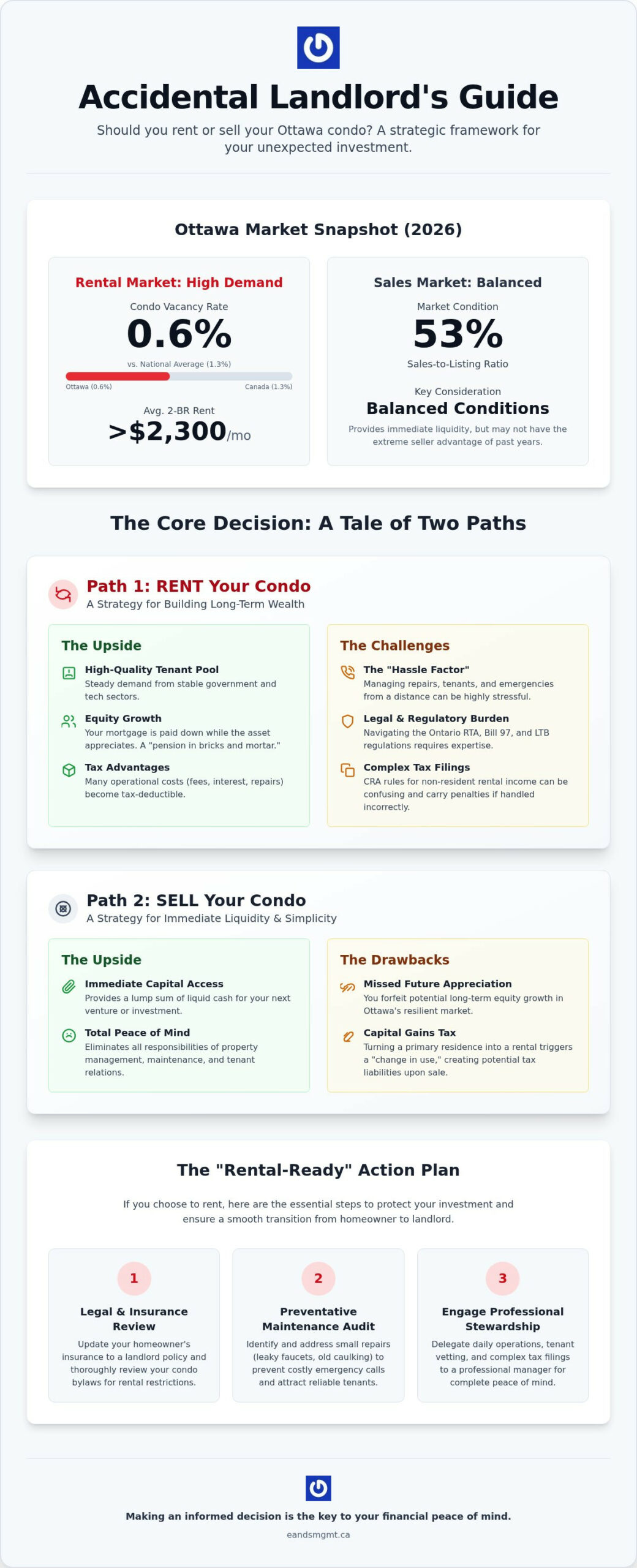
The 2026 rental market in Ottawa remains exceptionally tight. With a condo rental vacancy rate of just 0.6%, your property is a high-demand asset. However, this demand brings responsibility. Attempting to “wing it” without a proven system exposes you to significant risks, from choosing the wrong tenant to inadvertently violating Ontario’s Residential Tenancies Act. A single legal misstep or a botched repair can quickly erase your annual profit, making a structured approach essential for your peace of mind.
Why Ottawa is a Unique Market for Accidental Landlords
Our local economy provides a level of stability that Toronto or Vancouver often lacks. The constant cycle of federal relocations creates a consistent pool of high-quality professional tenants who value well-maintained condos. This steady demand acts as a stabilizing force for your investment. Because Ottawa’s growth is anchored by the public service, your condo isn’t just a building; it’s a reliable vehicle for long-term equity growth in one of Canada’s most resilient housing markets.
The “Sell vs. Rent” Decision Framework
Deciding whether to hold your property requires a clear-eyed look at the numbers and your personal capacity. Consider these three pillars before making your choice:
- Calculating Carry Cost: Total your monthly mortgage payment, condo fees, and property taxes. In 2026, average rents for two-bedroom units often exceed $2,300, which may cover these costs while building your equity.
- Capital Gains: Turning your primary residence into a rental triggers a change in use for tax purposes. You should consult a professional regarding the potential tax implications when you eventually sell.
- The Hassle Factor: Managing a property from another city or country is a heavy burden. If the thought of coordinating a plumbing repair at 2:00 AM from a different time zone causes anxiety, delegating to a dedicated steward is the logical remedy.
Choosing to keep your condo allows you to benefit from Ottawa’s projected population growth while someone else pays down your debt. It’s a path to financial freedom, provided you have the right protection in place.
Evaluating Your Options: Renting vs. Selling Your Ottawa Condo
The decision to sell or rent is rarely just about numbers; it’s about your future goals and personal comfort. In 2026, Ottawa has transitioned into a balanced real estate market with a sales-to-listing ratio of 53%. While selling provides immediate liquidity, the city’s condo vacancy rate sits at a staggering 0.6%, which is less than half the national average of 1.3%. This high demand creates a unique opportunity for an accidental landlord what to do with my Ottawa condo to build significant wealth through long-term equity growth.
Location plays a decisive role in this choice. If your unit is in a high-growth hub like Westboro or the Downtown core, the rental demand from young professionals and government employees is nearly guaranteed. In contrast, units in Kanata benefit from the stability of the tech sector. However, you must consider your exit strategy. Under the Ontario Residential Tenancies Act, ending a tenancy to sell a property requires specific notice periods and strict compliance. Recent legislative changes, such as Bill 97, have increased scrutiny on “own-use” evictions, meaning your long-term plans must be carefully documented to avoid legal pitfalls.
The Benefits of Keeping Your Ottawa Condo
Holding onto your property often serves as a “pension in bricks and mortar.” This strategy is particularly effective for those who plan to return to the city after a few years. By renting, you create a powerful hedge against future inflation in the Ottawa market. Additionally, many of your operational costs become tax-deductible. According to the CRA’s Rental Income Guide, expenses like mortgage interest, property taxes, and professional management fees can be used to offset your rental income. This allows you to build equity while minimizing the immediate tax burden on your profits.
When Selling Might Be the Better Path
Sometimes, letting go is the most responsible financial move. If your condo is in an older building facing rising special assessments or if the monthly carry costs significantly exceed the market rent, selling might protect your capital. Negative cash flow can become a heavy burden if you don’t have the liquidity to cover the shortfall. Personal liquidity needs, such as funding a new home elsewhere, may also outweigh the benefits of long-term appreciation. If you’re feeling overwhelmed by these calculations, reaching out for a professional property assessment can provide the clarity you need to move forward with confidence.
The Essential Compliance Checklist: Insurance, Taxes, and Condo Bylaws
Moving from a resident to a landlord requires a shift toward administrative precision. Your first step isn’t finding a tenant, but calling your insurance broker. A standard homeowner policy won’t protect you once you move out; you need a specific landlord policy that includes liability coverage and protection against lost rental income. Without this update, you risk having a claim denied during a critical moment, leaving your investment vulnerable.
Beyond insurance, you must master the local legal landscape to avoid costly mistakes. The Landlord and Tenant Board (LTB) is strict, and simple errors in a lease can lead to months of delays. Consulting the official Guide to the Residential Tenancies Act helps you understand that certain common requests, like “no pet” clauses or damage deposits, are often unenforceable in Ontario. For an accidental landlord what to do with my Ottawa condo begins with ensuring every agreement is fully compliant with these provincial standards.
CRA Compliance for Non-Resident Landlords
If your transition involves moving outside of Canada, the CRA classifies you as a non-resident landlord, which brings specific financial duties. By default, you’re required to withhold 25% of the gross rent and remit it to the government monthly. This can be a significant cash flow burden. However, filing an NR6 form allows you to remit 25% of your net income instead, keeping more money in your pocket for mortgage payments. You’ll also need to provide annual NR4 slips to report this income accurately and avoid heavy penalties.
Condo-Specific Legal Hurdles
Your condo board acts as a silent partner in your rental business, and keeping them informed is essential. Most Ottawa condo corporations have implemented strict bans on short-term rentals like Airbnb, so you must ensure your plans align with the building’s bylaws. Review your status certificate for any rental registration requirements or move-in fees that your tenant must pay. It’s also vital to remember that you remain responsible for any damage your tenant causes to common areas, such as the elevator or hallways. Proper registration and clear communication with the board act as a stabilizing force, protecting your reputation and your asset.
Preparing Your Condo for Ottawa’s Rental Market
Your condo is no longer just a home; it’s a high-performing asset in a competitive market. For an accidental landlord what to do with my Ottawa condo starts with a shift in perspective toward durability and presentation. While you might love your custom wallpaper or delicate fixtures, a tenant sees a maintenance burden. Preparing your unit correctly now prevents the emotional and financial drain of emergency repairs later.
A “Rental-Ready” audit is your first line of defense. This isn’t just about aesthetics; it’s about system reliability. Check every faucet, test the dishwasher’s seal, and ensure the HVAC filters are fresh. These small steps prevent the dreaded midnight call about a leak or a broken furnace during a cold January night. It’s about creating a stable environment where your tenant can thrive without constant interruptions.
Maintenance and Upgrades That Pay Off
Invest in high-durability luxury vinyl plank flooring and a fresh coat of neutral, scuff-resistant paint. These choices withstand the wear and tear of move-ins and pets, which are common in Ontario rentals. Before the lease begins, you must conduct a thorough move-in inspection report with high-resolution photos. This document serves as your baseline for the property’s condition, protecting your interest if disputes arise later.
Marketing your property requires professional photography. In 2026, smartphone shots simply don’t cut it when tenants are browsing listings in high-demand areas like Centretown, the Glebe, or Orleans. Setting the right price is equally critical. Current data for 2026 shows average rents for new leases in Ottawa are approximately $1,850 for a one-bedroom and $2,300 or more for a two-bedroom unit. If your unit is in a prime area, you can command a premium, but overpricing leads to costly vacancy.
The Art of Tenant Screening in Ontario
Screening is the most vital step in protecting your investment. While a credit check is a good starting point, it only tells 20% of the story. You need to verify employment and speak directly with previous landlords to understand a candidate’s history. In the Ontario legal system, a vacant unit is always cheaper than a “bad” tenant who stops paying rent or damages the property. If the process feels overwhelming, our tenant placement service can handle the heavy lifting to ensure your property is in safe hands.
Delegating the Burden: Professional Management for Peace of Mind
Managing a rental property on your own can quickly transform into a second full-time job that you never applied for. While the DIY path might seem like a way to save on costs, the reality often involves lost weekends, legal risks, and a level of emotional stress that follows you home. If you are an accidental landlord what to do with my Ottawa condo is a question that deserves a systemic answer rather than a series of reactive choices. At E&S Property Management, we act as a stabilizing force for owners who need to focus on their own relocations while knowing their investment is under meticulous care.
Our 24/7 emergency response shields you from the burden of a midnight furnace failure or a sudden plumbing leak. You shouldn’t have to coordinate repairs from a different time zone or worry about finding a reliable contractor on short notice during an Ottawa winter. For Foreign Service and DND members, this transition is particularly seamless. We understand the unique pressures of government relocations and provide a steady hand to ensure your property remains a protected asset while you serve abroad.
Our Approach to Stewardship
With over 40 years of experience navigating the local rental landscape since our founding in 1981, we’ve developed a system that prioritizes reliability and peace of mind. We handle the difficult conversations with tenants, from rent negotiations to policy enforcement, acting as a professional buffer. Our financial reporting and accounting services are designed to make tax season effortless. We provide specialized NR6 and NR4 tax filing support, ensuring you remain fully compliant with CRA regulations without the stress of mastering administrative duties on your own.
Why Experience Matters in 2026
The current legal environment in Ontario requires an authoritative expert to navigate the nuances of the Landlord and Tenant Board. We use our wisdom to shield you from common pitfalls that lead to costly delays or disputes. By leveraging a trusted network of Ottawa contractors, we ensure repairs are handled promptly and at a fair cost. This professional oversight turns a potentially overwhelming responsibility into a predictable, well-managed asset. Let us protect your Ottawa condo while you are away.
Protecting Your Future While You Focus on the Journey Ahead
Transitioning from a homeowner to an investor is a significant milestone that requires a shift in perspective. By now, you understand that being an accidental landlord what to do with my Ottawa condo involves more than just finding a tenant; it’s about navigating complex legal frameworks and ensuring meticulous financial compliance. Whether you’re relocating for a DND posting or a Global Affairs assignment, your property remains a valuable asset that deserves the highest level of care and professional oversight.
Since 1981, we’ve acted as a stabilizing force for owners by providing end-to-end support, from 24/7 emergency maintenance coordination to specialized NR6 and NR4 tax administration. You don’t have to carry the burden of property management alone while you’re thousands of miles away. We invite you to Request a Free Rental Assessment for Your Ottawa Condo today. Let us serve as the dedicated steward for your home, giving you the freedom to embrace your next chapter with complete peace of mind. Your investment is in safe, seasoned hands.
Frequently Asked Questions
What happens if my Ottawa condo tenant stops paying rent?
If your tenant stops paying rent, you must serve an N4 notice immediately to start the legal recovery process. For an accidental landlord what to do with my Ottawa condo often involves managing these stressful financial disruptions while living elsewhere. In 2026, the notice period is just 7 days under Bill 60. Having a professional steward ensures these documents are filed correctly, reducing the impact on your mortgage coverage while the LTB reviews your case.
Do I need to tell my condo board that I am renting out my unit?
Yes, you are legally required to notify your condo board when you lease your unit to a tenant. Most Ottawa condo corporations require a copy of the signed lease and a completed tenant information form for their records. This ensures your tenant can book elevators for move-in and receives access to common areas. Failing to register can result in fines or restricted building access for your tenant, creating unnecessary friction in your rental relationship.
How much does property management typically cost in Ottawa?
Property management fees in Ottawa typically consist of a monthly percentage of the gross rent and a one-time fee for tenant placement. These costs cover essential services like rent collection, 24/7 maintenance response, and administrative oversight. While DIY management seems cheaper, professional stewardship often pays for itself by reducing vacancy periods and preventing costly legal errors. Every property is unique, so most owners start with a customized assessment to understand the specific value provided.
What is an NR6 form and do I need one if I move to the US?
An NR6 form is a CRA document that allows non-resident landlords to pay tax on net rental income rather than the default 25% gross withholding. If you move to the US, you are classified as a non-resident and should file this form annually before your first rent payment is due. This is a core part of an accidental landlord what to do with my Ottawa condo strategy, as it significantly improves your monthly cash flow and financial stability.
Can I refuse pets in my Ottawa rental condo?
In Ontario, you cannot legally refuse pets in your rental agreement, as “no-pet” clauses are void under the Residential Tenancies Act. However, if your specific Ottawa condo corporation has a registered bylaw prohibiting pets in the building, that rule takes precedence over the provincial act. We recommend reviewing your status certificate to confirm the building’s specific rules before listing the property, as this protects you from potential legal conflicts with the condo board.
How often should I inspect my rental property?
We recommend conducting regular property inspections at least twice a year to ensure your asset is being properly maintained. These visits allow you to spot small issues, like slow leaks or HVAC filters needing replacement, before they become major expenses. For owners living outside Ottawa, delegating these inspections to a local expert provides visual proof that the property is being respected and helps maintain a positive, professional relationship with your tenant while you are away.
What are the most common repairs for Ottawa condos?
The most common repairs in Ottawa condos involve plumbing leaks under sinks, malfunctioning kitchen appliances, and HVAC system maintenance. Because of our extreme temperature swings, ensuring your heating and cooling systems are serviced annually is vital for tenant comfort. Addressing these issues through a 24/7 emergency maintenance response system prevents minor drips from causing extensive water damage to your unit or common areas, preserving your long-term equity and your reputation with the board.
Can I move back into my condo after the lease expires?
You can move back into your condo, but you must follow the strict legal process outlined by the Landlord and Tenant Board. This typically requires serving an N12 notice with at least 60 days’ notice and providing mandatory compensation. Under 2026 regulations like Bill 60, you must act in good faith and intend to live there for at least one year. Failing to follow these rules can lead to significant compensation claims from the displaced tenant.


