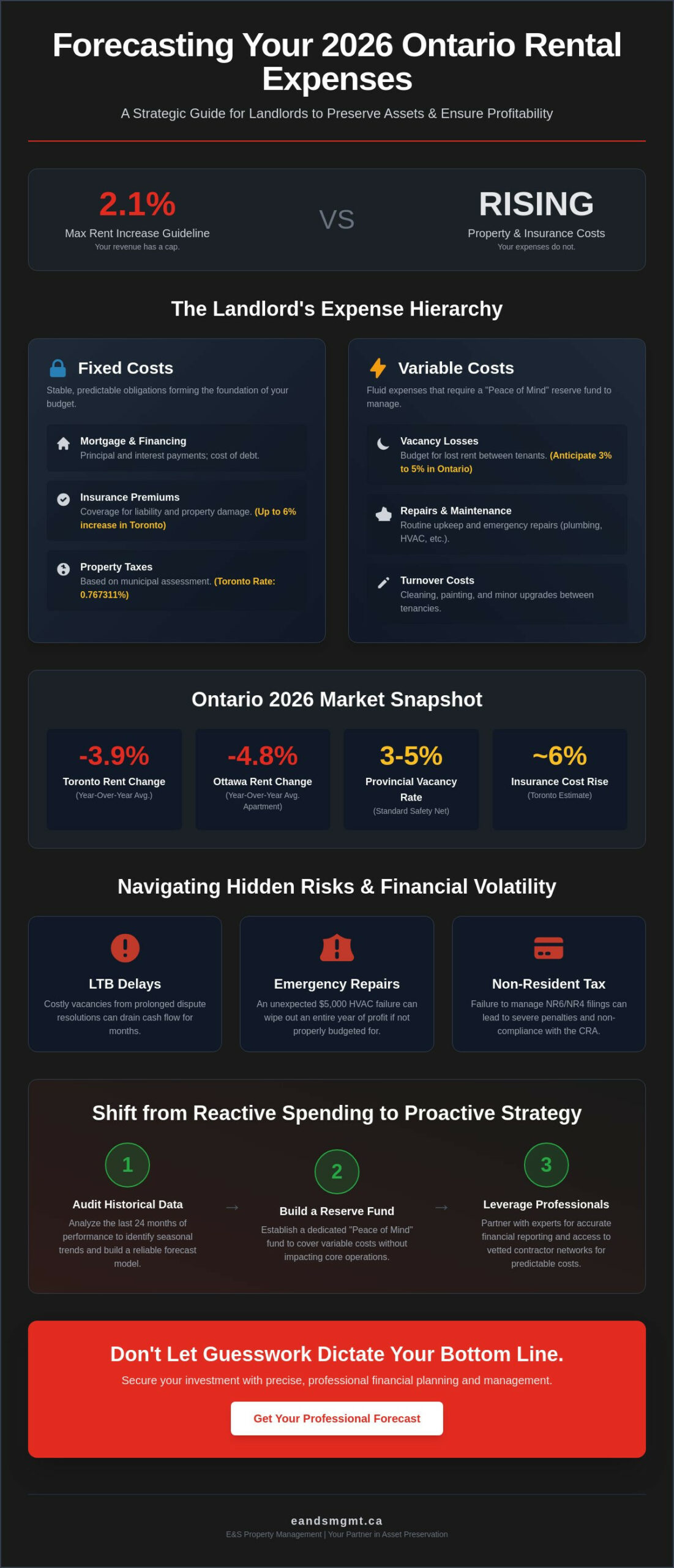
What if the 2.1% rent increase guideline for 2026 fails to keep pace with your rising property taxes and insurance premiums? It’s a question many Ontario landlords face as Toronto insurance costs rise by up to 6% and average rents in the city drop by 3.9%. You likely feel the pressure of maintaining a profitable investment while managing complex NR6 tax filings and unexpected emergency repairs that can quickly wipe out a year of gains. Relying on last year’s numbers is no longer a viable strategy for professional asset preservation.
Predicting your bottom line shouldn’t feel like guesswork. Mastering the art of forecasting rental property expenses Ontario requires a disciplined, life-cycle approach that separates stable operations from volatile capital events. This guide provides a step-by-step framework to help you project maintenance costs, property taxes, and operational expenses with precision. We’ll examine the specific data points for 2026, from the 0.767311% Toronto residential tax rate to vacancy trends, ensuring your cash flow remains secure and your portfolio stays compliant with CRA and provincial regulations.
Key Takeaways
- Learn how to categorize your budget into fixed and variable frameworks to ensure your investment remains a strategic asset.
- Discover how to audit historical performance data to build a reliable model for forecasting rental property expenses Ontario in 2026.
- Identify the financial impact of LTB delays and learn how professional tenant placement reduces the risk of costly vacancies.
- Understand the critical tax withholding requirements for non-resident landlords to maintain CRA compliance through NR6 and NR4 filings.
- Shift your maintenance strategy from reactive to proactive by leveraging a vetted contractor network for predictable repair costs.
The Foundation of Forecasting Rental Property Expenses in Ontario
Effective property management begins with a shift in perspective. You shouldn’t view financial planning as a simple administrative task or a year-end bookkeeping exercise. Instead, forecasting rental property expenses Ontario serves as a strategic framework for asset preservation. In a market where the 2026 rent increase guideline is capped at 2.1%, your ability to maintain a healthy margin depends entirely on your foresight. Relying on the traditional “1% Rule” for maintenance, which suggests setting aside 1% of the property’s value annually, is often insufficient in high-value markets like Toronto or Ottawa. This rule fails because it doesn’t account for the rising costs of specialized labor and materials that have outpaced general inflation.
The legal landscape also dictates your financial predictability. The Residential Tenancies Act, 2006 governs everything from maintenance standards to rent control, creating a ceiling on your revenue while your obligations remain firm. If you don’t account for these statutory requirements, a single Landlord and Tenant Board (LTB) delay or an emergency repair can turn a profitable year into a significant deficit. Professional forecasting allows you to transition from reactive spending to proactive investment management.
Why Accurate Forecasting is Critical in 2026
Interest rates and carrying costs remain the primary drivers of financial volatility for Ontario investors. While rates may show signs of stabilization, the cost of debt remains significantly higher than the previous decade, leaving less room for error in your monthly budget. Forecasting protects you against the “lumpy” nature of rental cash flow, where months of steady income are suddenly interrupted by a $5,000 HVAC failure or a 4% increase in insurance premiums. A residential Pro Forma is a forward-looking financial statement that utilizes these projections to estimate a property’s future performance and net operating income.
Fixed vs. Variable: The Landlord’s Expense Hierarchy
To build a resilient budget, you must categorize your outlays into two distinct buckets. Fixed costs are your non-negotiable obligations that remain relatively stable, such as your mortgage interest, insurance premiums, and municipal property taxes. For instance, Toronto’s 2026 residential property tax rate of 0.767311% provides a clear, fixed data point for your calculations. Variable costs are more fluid and require a “Peace of Mind” reserve fund to manage effectively. These include:
- Repairs and Maintenance: Routine plumbing, electrical, and structural upkeep.
- Turnover Costs: Cleaning, painting, and minor upgrades between tenancies.
- Vacancy Losses: Budgeting for the 3% to 5% vacancy rate expected across Ontario in 2026.
By establishing a baseline reserve fund that accounts for these variables, you ensure that operational efficiency isn’t compromised when the unexpected occurs. This methodical approach is the hallmark of a disciplined steward of real estate.
Step-by-Step: Building Your Annual Rental Expense Forecast
Constructing a reliable budget requires moving beyond simple estimates. To begin forecasting rental property expenses Ontario, you need a solid data foundation. Start by auditing the previous 24 months of property performance. This timeline reveals seasonal trends, such as increased utility costs in winter or recurring landscaping fees in summer. Next, calculate your fixed obligations. For 2026, ensure you use the updated municipal assessments. For example, Toronto’s residential rate is set at 0.767311%. Consult Ontario’s official rental guide to ensure your revenue projections align with the 2.1% rent increase guideline for units occupied before November 2018.
Managing variable costs requires looking at regional trends. In Ottawa, apartment rents fell by 4.8% year-over-year to $2,107 in January 2026. This shift suggests you should budget for potentially longer turnover periods or slight adjustments in asking prices to remain competitive. Accounting for the provincial vacancy rate of 3% to 5% is a standard safety net. If you find the complexity of these calculations overwhelming, utilizing financial reporting and accounting solutions can streamline your annual planning and provide the clarity needed for serious investment growth.
Calculating the “Maintenance Bucket” with Precision
Differentiate between routine upkeep and reactive repairs. Routine tasks like HVAC filter changes or lawn care are predictable and recurring. Reactive repairs, like a burst pipe or a broken appliance, are not. For 2026, consider the “Square Footage” method, budgeting $1.00 to $2.00 per square foot, or the “Percentage of Rent” method, setting aside 10% to 15% of gross rent. Many seasoned investors apply the “50% Rule.” This estimates that total operating expenses, excluding the mortgage, will consume half of the gross income over the long term.
Forecasting for Capital Expenditures (CapEx)
CapEx represents major investments that extend the life of your property. These include roofs, furnaces, or appliance packages. Unlike routine maintenance, these are infrequent but high-cost events. To avoid financial shocks, create a 10-year replacement schedule. If a roof replacement is estimated to cost $12,000 and has a 15-year lifespan, amortize this by setting aside $66.67 per month in your forecast. This disciplined approach ensures you have the capital ready when major systems reach their end-of-life, protecting your property’s value without draining your monthly cash flow.
Navigating Ontario-Specific Variable Costs and Hidden Risks
While fixed costs provide a baseline, variable expenses often dictate the success of your investment. One of the most significant hidden risks in forecasting rental property expenses Ontario is the financial impact of Landlord and Tenant Board (LTB) delays. If a dispute arises, the time between filing an application and receiving a hearing can span several months. During this period, rental income may be entirely frozen. You must budget for these potential “legal vacancies” by maintaining a robust contingency fund. Additionally, insurance premiums for older Ottawa homes are trending upward in 2026. This is driven by climate risks and the increased cost of replacing aging infrastructure such as plumbing and electrical systems.
Utility management is another area where costs are shifting. Many landlords are moving toward sub-metering solutions to transfer the burden of rising electricity and water rates to tenants. This strategy improves predictability but requires an initial capital outlay for equipment and installation. By accounting for these regional variables, you move beyond generic estimates and toward a precise financial model that reflects the 2026 market reality.
The “Turnover Trap”: Forecasting Between Tenancies
Turnover is more than just a gap in rent; it’s a period of intense capital outlay. “Make-ready” work, including professional cleaning, fresh paint, and minor hardware updates, is essential to attract high-quality tenants. In Ottawa, where average apartment rents fell by 4.8% to $2,107 as of January 2026, your property must stand out to minimize “days on market” loss. While DIY placement might seem cost-effective, a professional Tenant Placement Service often reduces vacancy duration by several weeks. This speed, combined with rigorous screening, protects your cash flow from the high cost of a poorly vetted tenant.
Regulatory and Compliance Costs
Compliance is a non-negotiable expense that requires meticulous planning. You must allocate funds for mandatory inspections, including smoke and carbon monoxide alarm testing and backflow preventer certifications. These proactive steps are part of a broader strategy for asset preservation and risk mitigation. Legal fees or paralegal costs for LTB filings should also be factored into your annual projections. Understanding your Guide to Landlord Tax Deductions helps offset these costs by ensuring every eligible compliance expense is properly recorded for tax season. Staying current with Ontario Standard Lease updates is another vital step in maintaining operational efficiency and legal stability.
Forecasting for Foreign Service and Absentee Landlords
Managing an Ontario rental property while serving abroad or living as an expat requires a specialized financial strategy. You cannot rely on DIY management when you’re in a different time zone or thousands of miles away from your investment. A “Full-Service” management fee is a core component of forecasting rental property expenses Ontario for absentee owners. This fee isn’t just an overhead cost; it’s a necessary investment in operational efficiency. It covers the logistical complexity of asset preservation and ensures your property remains a performing asset rather than a source of international stress. For landlords posted abroad, this oversight is the only way to maintain a predictable monthly cash flow without the burden of day-to-day administration.
CRA Compliance: Forecasting NR6 and NR4 Obligations
Non-resident tax obligations represent a significant line item in your financial forecast. The Canada Revenue Agency (CRA) requires non-resident landlords to withhold 25% of their gross rental income by default. This high withholding rate can severely restrict your liquidity. By filing an NR6 election, you can instead base your tax withholding on net rental income, which significantly improves your monthly margins. Foreign Service members and expats require a designated Canadian agent to act on their behalf for these tax filings. You must factor in the cost of professional tax administration services for issuing NR4 slips and managing these elections. Accurate forecasting rental property expenses Ontario must include these compliance costs to avoid the heavy penalties associated with late or incorrect CRA submissions.
The Cost of Remote Peace of Mind
Remote oversight demands a proactive approach to maintenance and emergency response. You cannot physically verify if a tenant is maintaining the property or check for damage after a severe weather event. This makes regular property inspections a mandatory, non-negotiable expense in your annual budget. You should also account for an “Emergency Oversight” premium, which involves dedicating a portion of your reserve fund specifically for 24/7 maintenance response. You need the security of knowing that if a major system fails, a vetted professional is dispatched immediately without requiring your direct intervention. E&S Property Management provides transparent financial reporting and accounting for distant owners, ensuring every repair and inspection is documented and managed. If you’re preparing for a posting abroad, explore our NR6 and NR4 tax filing support solutions to ensure your investment remains compliant and profitable from any distance.
Leveraging Professional Management for Accurate Financial Planning
Success in the 2026 rental market depends on your ability to shift expenses from unpredictable to managed. While the previous sections detailed the technical aspects of forecasting rental property expenses Ontario, the practical implementation of that forecast requires a disciplined, professional approach. E&S Property Management serves as the steady hand for Ottawa landlords, providing the operational efficiency needed to navigate rising insurance premiums and tight regulatory guidelines. By utilizing a vetted contractor network, we eliminate the price volatility often found in the open market. This network ensures that repairs are completed at fair, pre-negotiated rates, providing a level of cost certainty that DIY management simply can’t match.
Financial clarity is the cornerstone of any successful investment strategy. Monthly financial reporting and comprehensive year-end statements provide the historical data necessary for future planning. These reports allow you to track every dollar, from routine maintenance to municipal tax payments. This transparent communication style reflects our core values of integrity and reliability, ensuring you always have an accurate pulse on your property’s performance and net operating income without the administrative burden.
Automating the Forecast with E&S Property Management
Modern digital systems have transformed how landlords track and project their finances. We utilize advanced real-time expense tracking to provide immediate visibility into your portfolio’s health. Our 40+ years of specialized Ottawa market data allows us to predict the specific needs of your property with high precision. We don’t guess; we use decades of historical performance metrics to anticipate system failures and turnover costs before they disrupt your cash flow. Get a Free Rental Assessment for Your Ottawa Property to see how data-driven management can stabilize your investment.
Asset Preservation as a Core Strategy
Proactive maintenance forecasting is the most effective tool for long-term asset preservation. By identifying and addressing minor issues during regular property inspections, we prevent them from escalating into the expensive capital expenditures that drain reserves. This disciplined stewardship increases the long-term value of your property while ensuring a stable environment for tenants. Expert oversight provides the peace of mind that your investment is protected by seasoned professionals who value order and foresight. Contact E&S Property Management to secure your investment and ensure your 2026 forecast remains a reality.
Securing Your Investment for 2026 and Beyond
Mastering your financial future requires moving beyond estimation and into disciplined projection. You’ve seen how a life-cycle approach separates routine maintenance from volatile capital events, ensuring your cash flow remains predictable despite regulatory caps. For absentee landlords and Foreign Service members, navigating the complexities of NR6 filings and withholding rules is essential for maintaining liquidity. These steps form the bedrock of a resilient investment strategy.
Successful forecasting rental property expenses Ontario relies on the steady hand of a partner who understands the local landscape. With 40+ years of experience in the Ottawa residential market, E&S Property Management provides the specialized expertise needed for asset preservation and non-resident tax compliance. Our comprehensive 24/7 maintenance coordination and repair oversight transform unpredictable emergencies into managed outcomes, protecting your bottom line from unexpected shocks.
Don’t leave your portfolio’s performance to chance. Request a Professional Financial Consultation for Your Ottawa Rental today to build a resilient budget for the year ahead. We’re here to provide the reliability and peace of mind your investment deserves.
Frequently Asked Questions
What is the most common hidden expense for Ontario landlords?
The most common hidden expense is the “legal vacancy” caused by Landlord and Tenant Board (LTB) delays. When a dispute occurs, you may face six to eight months without rental income while waiting for a hearing and resolution. Professional forecasting rental property expenses Ontario must account for this risk by maintaining a reserve that covers at least three months of total carrying costs to ensure your investment remains stable during legal proceedings.
How much should I set aside for a rental property emergency fund in Ottawa?
You should set aside a minimum of 3% to 5% of your gross annual income as a dedicated emergency fund for Ottawa properties. This reserve acts as a critical buffer against the “lumpy” costs of emergency plumbing or electrical failures that occur outside of routine maintenance schedules. For older homes in neighborhoods like Westboro or the Glebe, increasing this reserve to 10% provides a more realistic safety net for aging infrastructure and unexpected system failures.
Can I deduct property management fees from my taxes in Ontario?
Yes, you can fully deduct professional property management fees from your rental income for tax purposes in Ontario. The CRA considers these fees a legitimate business expense, which helps lower your net taxable income and improves your overall return. This deduction applies to full-service management, tenant placement fees, and specialized tax support like NR6 and NR4 filing services, making professional oversight a tax-efficient choice for serious investors.
What happens if I don’t file an NR6 form as a non-resident landlord?
If you don’t file an NR6 form, you are legally required to withhold and remit 25% of your gross rental income to the CRA every month. This significantly reduces your monthly cash flow because you cannot deduct expenses like mortgage interest or insurance before calculating the tax. Filing the NR6 allows you to remit tax based on your net income instead, which preserves your liquidity and ensures you have capital available for property operations.
How often should I update my rental property expense forecast?
You should update your rental property expense forecast annually, ideally in the fourth quarter of the preceding year. This timing allows you to incorporate the provincial rent increase guideline, which is 2.1% for 2026, and the latest municipal property tax assessments for your specific region. Reviewing your performance quarterly helps you adjust for variable costs like utility fluctuations or shifting vacancy rates to ensure your financial model remains accurate throughout the year.
Does the Ontario Landlord and Tenant Board affect my expense forecasting?
The LTB significantly impacts forecasting rental property expenses Ontario due to the costs associated with dispute resolution and eviction delays. You must factor in potential paralegal fees and the administrative costs of filing applications, such as the L1 or N12 forms, which are necessary for legal compliance. A disciplined forecast includes a contingency line item for these regulatory hurdles to prevent a single tenant issue from destabilizing your entire annual budget and cash flow.
What is the difference between maintenance and capital expenditures (CapEx)?
Maintenance refers to routine repairs that keep a property in its current state, while capital expenditures (CapEx) are major investments that extend its useful life or increase its value. For example, fixing a leaky faucet or changing HVAC filters is maintenance and should be budgeted as a monthly operational cost. Replacing a furnace or installing a new roof are CapEx events that require a long-term reserve based on a 10-year or 15-year replacement schedule.
Is it cheaper to manage my own property or hire an Ottawa property manager?
While DIY management avoids a monthly fee, hiring a professional manager is often more cost-effective when you account for vacancy reduction and lower repair costs. Professional managers utilize vetted contractor networks to secure lower labor rates and use rigorous screening to prevent the high cost of bad tenants. For many Ottawa landlords, the time saved and the reduction in expensive legal errors provide a higher net return than managing the property independently.