
What if handing over your Ottawa home didn’t mean giving up visibility? You may worry that a maintenance issue could go unnoticed, a decision could be made without your input, or rent and expenses could become harder to track while you’re away. Learning how to trust a property manager with your home starts with clear responsibilities and reliable systems, not simply a reassuring promise.
Confidence comes from knowing who can access the property, how repairs are handled, when your approval is needed, and what information you’ll receive. With those expectations documented, you can delegate day-to-day responsibilities while staying informed about your home’s condition and finances.
This guide explains what to review before signing a management agreement and how inspections, written records, financial reporting, and consistent communication help keep a manager accountable. You’ll also learn how local oversight can support owners managing an Ottawa property from elsewhere in Canada or abroad. E&S Property Management manages Ottawa residential properties for local landlords and Canadian Foreign Service members serving abroad.
Key Takeaways
- Learn how to trust a property manager with your home by defining responsibilities, decision-making authority, and communication expectations in writing.
- Know what to review before handover, including who manages tenant placement, rent collection, inspections, and maintenance coordination.
- Use financial reports, inspection records, and written updates to stay informed about your property from a distance.
- Prepare a smoother handover by documenting keys, access instructions, appliances, and known maintenance needs.
- See how E&S Property Management’s Ottawa experience supports owners who need local oversight.
Trusting a Property Manager: Protecting Your Home
Handing someone the keys to your home can feel personal as well as practical. You’re giving them access to the property, responsibility for coordinating repairs, and a role in conversations with tenants, while you remain accountable for the home from a distance. Those concerns are reasonable. Trust shouldn’t depend on a warm introduction or a promise that everything will be handled. It should grow from clear expectations and evidence of follow-through.
Trust in a property manager is reassurance backed by verifiable oversight: clear authority, timely communication, recorded actions, and accountable follow-through. A manager can take on daily responsibilities without taking ownership of your home or every decision connected to it. Your management arrangement should explain which tasks are delegated, what requires your approval, and how you’ll be kept informed. The broad Property management role can include varied responsibilities, so understanding the agreed scope turns a general promise of care into a practical working relationship.
For an Ottawa owner living elsewhere in Canada or abroad, confidence may mean knowing that a tenant’s repair request has been received, the next step is clear, and the outcome will be recorded. You don’t need to direct every routine task to remain involved. You do need a reliable way to see what is happening and raise questions when something falls outside the agreed plan.
What does it mean to trust someone with a rental home?
Trust means your interests remain visible while everyday work is handled consistently. You still care about the home’s condition, rental income, and how tenants are treated. Delegated tasks should fit within agreed responsibilities, with a clear route for decisions that need your input. For example, an Ottawa owner might authorize routine maintenance coordination while expecting to hear about a larger repair before it proceeds.
Which worries should you resolve before delegating?
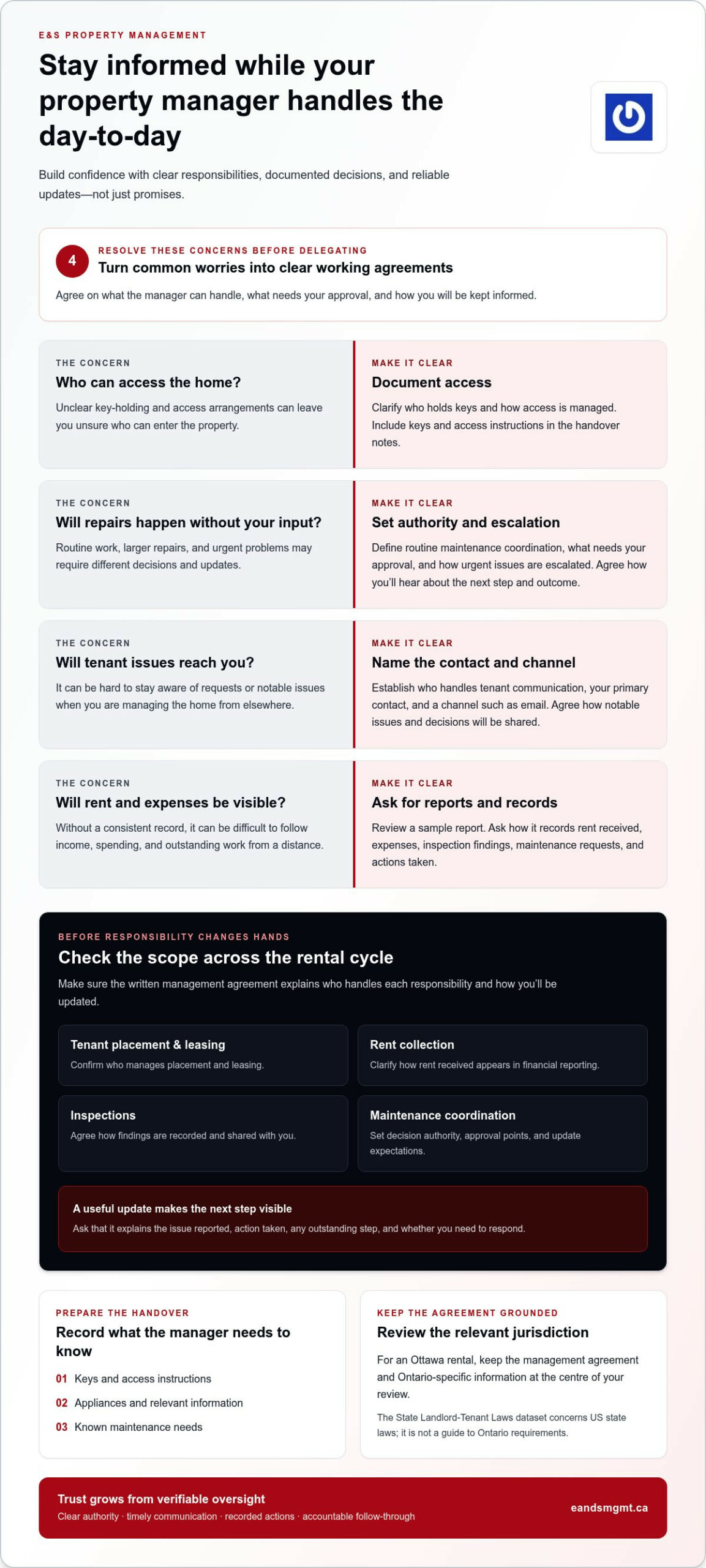
Start with the situations most likely to leave you feeling out of the loop: who can access the home, how repair decisions are made, who communicates with tenants, and how you’ll see rent and expenses. Then distinguish routine matters from urgent problems that require prompt attention. Agreeing on escalation and updates in advance makes it easier to respond calmly when an issue arises.
- Access: Clarify who holds keys and how access is managed.
- Repairs: Set out the decision-making process and when you’ll be consulted.
- Tenant communication: Establish who handles requests and how notable issues reach you.
- Financial visibility: Decide what income and expense information you need, and how often.
Be specific about what helps you feel informed. You might want a written update after an inspection, a record of completed repairs, or a clear explanation when a decision needs your approval. Naming those needs early creates a shared standard for communication and gives trust something concrete to grow from.
How to Build Trust Before a Property Manager Takes Responsibility
Map responsibilities across the rental cycle. Who handles tenant placement and leasing? Who collects rent, arranges regular inspections, and coordinates maintenance? How are repair updates shared, and what happens if a concern needs your decision? The answers should align with the management agreement. Read its terms carefully so you understand the responsibilities, authority, and communication process it describes.
What should clear responsibilities and communication look like?
Clarity means knowing what happens routinely, which decisions need your approval, and how urgent situations are escalated. Agree on a named contact and a primary communication channel, such as email, so requests and decisions are easy to follow later. Ask what an update includes: the issue reported, action taken, any outstanding step, and whether you need to respond. Review the agreement itself rather than relying on assumptions or verbal summaries.
Legal information also needs the right jurisdiction. The Center for Public Health Law Research’s State Landlord-Tenant Laws dataset concerns US state laws, so it isn’t a guide to Ontario requirements. For an Ottawa rental, keep the agreement and relevant Ontario-specific information at the centre of your review.
How can records and reporting demonstrate reliability?
Ask to see an example of the reporting you can expect and how property activity is documented. Useful records may include lease information, rent received, expenses, inspection findings, maintenance requests, and the steps taken to address them. Financial reporting helps you follow income and spending without coordinating each transaction yourself. Organized records also make it easier to understand what changed, when it changed, and what still needs attention.
Consistent records turn property management from a promise of care into an accountable history of actions and decisions. For example, a maintenance note that records the reported concern, the response, and the outcome gives you more useful visibility than a brief message saying the issue was handled.
- Scope: Identify who manages leasing, rent collection, inspections, and maintenance coordination.
- Communication: Agree on routine updates, the main contact route, and how urgent issues are escalated.
- Reporting: Review a sample format for financial and property updates.
- Agreement: Read the written terms and clarify any responsibilities or approval boundaries you don’t understand.
Compare management responsibilities and reporting with your priorities as you consider the right level of local oversight for your Ottawa home. Learn more about Ottawa residential property management from E&S Property Management.
How to Know Your Home Is Being Cared for After Management Begins
Delegating day-to-day work shouldn’t leave you guessing about your home. Whether you live across Ottawa or outside Canada, useful updates and organized records help you follow property condition, maintenance, rent, and expenses without managing every task yourself. The goal isn’t a constant stream of messages. It’s having enough relevant information to understand what’s happening and what needs your attention.
What evidence helps you follow property condition and repairs?
Inspection notes make a property’s condition easier to understand by recording observations, areas that need attention, and suggested next steps. For a repair, look for a clear trail from the original concern to the action taken and its outcome. If a tenant reports a leak, for example, an update might identify the issue, explain how maintenance is being coordinated, and note whether follow-up is needed. You can explore the detailed process in an Ottawa rental inspection guide. Inspection frequency and timing should reflect the management arrangement, not assumptions.
Use evidence that fits the situation. An inspection summary may help you understand general condition, while a repair update can answer a specific question. If an issue is unresolved, a useful follow-up clarifies what is pending and when you can expect another update, without implying a fixed response time.
| Owner concern | Useful evidence | Reasonable follow-up |
|---|---|---|
| Has the home’s condition changed? | Inspection notes and relevant observations | Ask what needs attention and what action is proposed. |
| Is a repair progressing? | A record of the concern, coordination, and outcome | Clarify what remains outstanding and how it will be tracked. |
| Was rent received and recorded? | Rent records and a financial statement | Ask about any entry you can’t reconcile. |
| Will I hear about an urgent issue? | A documented escalation and update process | Confirm who will notify you and how decisions will be handled. |
How can financial visibility support confidence?
Clear rent and expense records help you understand what has happened financially, rather than relying on a general assurance that the account is in order. Financial reporting can show rental income, property expenses, and management activity in an organized form. If an entry is unclear, ask a focused question and discuss the record with the manager.
For owners abroad, property reporting helps monitor rental activity, but it isn’t a substitute for tax advice or a promise of a particular tax outcome. Non-resident owners may have additional reporting considerations, so keep property records organized and use appropriate tax support for your circumstances. With this visibility, how to trust a property manager with your home becomes less about hoping everything is fine and more about following the evidence, asking informed questions, and seeing issues through to resolution.
How to Hand Over Responsibility Gradually Without Losing Peace of Mind
A thoughtful handover gives your property manager the information needed to act and gives you a clear way to stay connected. You don’t have to remember every detail from a conversation or send documents in scattered messages. Prepare a shared record, confirm how access and urgent issues will be handled, then agree on check-in points that fit your needs and the management arrangement.
What should you organize before the handover?
Gather the details that help someone understand the home as it is today. Include available property records, appliance information and warranties, utility details, access instructions, and notes about the current condition. Add relevant tenant history and past or ongoing maintenance concerns, such as a completed repair or an issue that still needs monitoring. An organized handover helps prevent important context from getting lost.
Record keys and other access arrangements clearly, including what each key opens and who is expected to hold it. Note appliance makes or models when available, where manuals or warranty information are stored, and any practical instructions for the home. Share emergency contacts and agree on how urgent issues will be communicated, including how the manager can reach you if a decision is needed. Keep the information in a format both you and the manager can refer back to.
How should you review the relationship over time?
Set a manageable routine for reviewing financial reports, open repairs, inspection findings, and questions that need your attention. The timing should suit your preferences and the management arrangement rather than follow an assumed schedule. For example, you might review reports when they arrive and keep a short list of unresolved items for an agreed check-in.
Use written follow-ups to confirm decisions and clarify anything that feels incomplete. If the same question or issue keeps resurfacing, describe what information would help you feel confident and agree on a practical way to address the gap. This isn’t about second-guessing every task. It’s about making sure both sides understand what’s been done and what remains open.
- Prepare the property file. Collect records, utility details, appliance information, warranties, condition notes, and relevant tenant or maintenance history.
- Document access. List keys and instructions, and record the agreed arrangements for property access.
- Set communication expectations. Confirm how routine updates, urgent concerns, and decisions requiring your input will reach you.
- Choose check-in points. Agree when you’ll review reports, open work, and outstanding questions.
- Keep a written trail. Save important updates and decisions so you can refer to them as the management relationship develops.
A clear handover can help you delegate with a steadier sense of control, especially if you’re managing an Ottawa home from elsewhere. To explore local support for overseeing your property, explore E&S property management in Ottawa.
How E&S Property Management Helps Ottawa Owners Entrust Their Homes
Trust is easier to sustain when local oversight connects the practical parts of rental ownership. E&S Property Management focuses on residential property management in Ottawa and supports local landlords as well as Canadian Foreign Service members whose work takes them abroad. For owners, a local management partner can coordinate the moving pieces while keeping the property and its financial activity within view.
The question of how to trust a property manager with your home comes down to whether responsibilities work together in a clear, accountable way. Tenant placement, rent collection, inspections, financial reporting, and maintenance coordination aren’t isolated tasks. Together, they help owners follow the rental relationship, understand property activity, and keep track of care needs without managing every interaction themselves.
What does full-service oversight cover for an Ottawa home?
E&S’s full-service management brings key responsibilities into one coordinated arrangement. Tenant placement supports the transition to a new tenancy, while ongoing rent collection and financial reporting help owners keep track of rental activity. Regular property inspections provide information about condition, and maintenance coordination connects reported needs with a network of contractors. Emergency maintenance response is also part of the service offering.
That coordination matters because a property issue can touch several parts of management. When maintenance is needed, the owner can follow how the concern is recognized, how action is coordinated, and what information is recorded as part of ongoing oversight. Inspections and reporting add context, helping an owner see more than a single repair or transaction in isolation. The management arrangement sets out the specific responsibilities and communication expectations.
How can owners abroad stay informed about an Ottawa property?
Distance can make it harder to respond to tenant needs or follow a repair in person. Local management gives owners a point of coordination in Ottawa, while financial reporting and property oversight help them remain connected to activity at home. For Canadian Foreign Service members serving abroad, this support can make it more practical to retain an Ottawa rental property while work takes them elsewhere.
Non-resident landlords may also need support with NR6 and NR4 tax filing administration. E&S provides NR6 and NR4 tax filing support, including administration related to these filings. This support complements property management; it doesn’t replace individualized tax advice or guarantee a particular tax result.
Entrusting a home doesn’t require stepping away from it. With local coordination across tenants, property condition, maintenance, and financial reporting, owners can delegate daily responsibilities while staying informed about the areas that matter to them. If you’re considering a more supported approach to managing an Ottawa rental, talk with E&S about managing your Ottawa home.
Take the Next Step With Confidence
Trust doesn’t have to be an all-or-nothing decision. It can grow as you and your property manager establish a working rhythm, understand how decisions are handled, and see that communication matches your expectations. You can stay engaged in the areas that matter most while allowing day-to-day responsibilities to be managed with care.
If you’re still weighing how to trust a property manager with your home, begin with a conversation about what you want to delegate and what helps you feel informed. A thoughtful discussion can help you consider whether full-service management is the right fit for your Ottawa property and how the working relationship can reflect your priorities.
E&S Property Management provides local support for Ottawa residential property owners. Discuss full-service management for your Ottawa home and take the next step with a clear understanding of what you want to delegate.
Frequently Asked Questions
Is it safe to give a property manager keys to my home?
It can be appropriate when the manager needs access to carry out agreed responsibilities and the access process is clear. Before handing over keys, record how many are provided, what each key opens, and who is authorized to use them. Keep a copy of the relevant agreement and clarify how visits or entry will be documented or communicated. These steps help protect your privacy while allowing necessary management work at your Ottawa property.
What should a property management agreement say about my home?
It should explain the manager’s and owner’s responsibilities, fees, communication methods, and how decisions and urgent issues are handled. Read the full agreement before signing, including any schedules or attachments that describe the scope of work. Check that you understand how the written terms apply to your property, rather than relying on a verbal explanation alone. If a clause is unclear or could have important consequences, seek advice from a qualified professional.
Can I still make decisions about my home after hiring a property manager?
Yes. Your agreement can distinguish between routine tasks the manager handles and decisions where you want to be consulted. For example, you might agree on how ordinary maintenance is coordinated while setting a separate process for a major repair or a change in tenancy. If you’re unsure how to trust a property manager with your home, review the authority you’ve assigned and make sure it reflects the level of involvement you want.
How often should a rental property be inspected?
There isn’t one inspection schedule that fits every Ottawa rental. Timing can depend on the property’s condition, tenancy, management arrangement, and applicable requirements. Ask how the manager records observations, shares concerns, and tracks follow-up so an inspection leads to useful action. For example, a note about a developing maintenance concern should make clear what was observed and whether further attention is needed. See the separate guide to property maintenance and inspections for more detail.
What happens if I am unhappy with my property manager?
Start by identifying the specific issue, such as an unclear expense entry or an update you expected but didn’t receive. Review the relevant agreement and records, then raise the concern through the agreed communication channel and ask for an explanation or next step. Keep a written record of the discussion and any resolution. If the concern affects your contractual or legal rights, seek qualified advice in Ontario rather than relying on general information.
How can I oversee my Ottawa rental home while living abroad?
Set up a practical communication routine before you leave: confirm how you’ll receive property updates, review rent and expense information, and discuss how maintenance concerns will be raised. Keep important property and tenant records accessible, and ensure your manager has a reliable way to reach you about decisions. Non-resident owners may also need Canadian tax administration support. E&S Property Management provides NR6 and NR4 filing support for relevant non-resident landlords.


