What if serving the right notice is only the beginning of an Ontario eviction? If you’re searching for “ltb eviction process ontario,” you’re likely looking for a clear, lawful path forward, especially when paperwork, deadlines, and a tenant who doesn’t leave make the next step uncertain.
An eviction isn’t completed by giving notice alone. Landlords must follow the process that fits the situation and obtain an LTB order before enforcement. A mistake or missed deadline can add delays, so careful preparation matters.
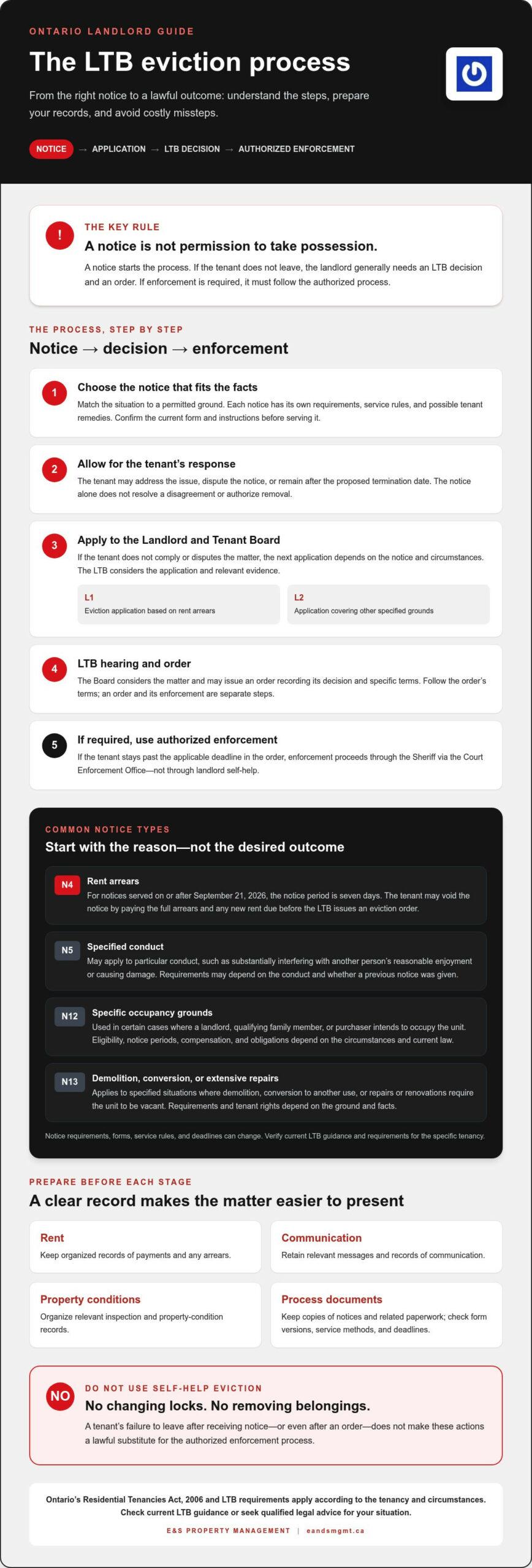
This guide follows the process from notice to application, hearing, order, and, if necessary, enforcement by the Sheriff. It covers records to organize, what to expect at each stage, and why a tenant’s failure to leave after receiving notice doesn’t authorize a landlord to change the locks or remove belongings. Forms and legal requirements can change, so check current Landlord and Tenant Board guidance or seek qualified legal advice for your circumstances. Clear records, inspections, and tenant communication can also help keep property oversight organized.
Key Takeaways
- The ltb eviction process ontario follows a formal sequence. The right starting point depends on the situation.
- Notice types and LTB applications have different requirements. Check current forms, service rules, and deadlines before acting.
- Organized records of rent, communication, and property conditions can help you prepare for each stage.
- An order and its enforcement are separate steps. Follow the order’s terms and don’t take action outside the legal process.
- Ottawa landlords can start by clarifying the issue, checking current guidance, and deciding when to seek legal advice or ongoing property-management support.
What the LTB eviction process in Ontario actually means
An eviction in Ontario is a formal legal process, not simply a landlord asking a tenant to leave. A notice may start the process, but it doesn’t by itself authorize the landlord to take possession of the unit. Each stage has a different purpose, and the next step depends on the tenant’s response and the applicable rules.
In brief: A notice tells the tenant the landlord’s legal reason for seeking to end the tenancy and the proposed termination date. An application asks the LTB to decide the matter. An order records the Board’s decision and any terms. Enforcement is the authorized step to carry out an eviction if the tenant doesn’t leave as required.
The LTB’s role under Ontario’s Residential Tenancies Act
The Landlord and Tenant Board (LTB) is Ontario’s tribunal for disputes covered by the province’s residential tenancy rules, including many applications to end a tenancy. The main statute is the Residential Tenancies Act, 2006. Requirements depend on the tenancy and circumstances, and some arrangements may fall outside the Act or have different rules. Check current legislation and LTB guidance before acting.
Why an eviction notice does not immediately end a tenancy
A notice identifies a legal basis for seeking to end the tenancy and gives a proposed termination date. Depending on the notice, it may also give the tenant an opportunity to address the issue. The tenant may dispute the notice or remain in the unit after the stated date. The notice alone doesn’t resolve a disagreement or give the landlord permission to remove the tenant.
If the tenant doesn’t leave, the landlord generally needs to apply to the LTB for a decision. The Board considers the application and relevant evidence, then may issue an order with specific terms. The process and available remedies vary by application, so the notice, forms, service method, and deadlines must fit the situation. A procedural error can delay the matter or require steps to be repeated.
Even an eviction order doesn’t mean the landlord should change the locks or remove belongings. If the tenant stays past the applicable deadline in the order, enforcement must proceed through the authorized channel, the Sheriff through the Court Enforcement Office. Self-help eviction tactics are not a lawful substitute. Keep clear records of notices, communication, payments, and relevant property conditions so you can present an organized account if a dispute reaches the LTB. The ltb eviction process ontario is a sequence of decisions and lawful steps, not a shortcut from notice to possession.
Which Ontario eviction notice or LTB application may apply?
The right notice depends on why you’re seeking to end a tenancy. Choosing a form because it seems close to the situation can cause delays. Each notice has its own grounds, information requirements, service rules, and possible remedies. These summaries are a starting point, not a substitute for checking the current form and instructions before serving anything.
Common notices landlords may encounter
- N4, rent arrears: Used when rent is unpaid. For notices served on or after September 21, 2026, the notice period is seven days. A tenant may void the notice by paying the full arrears and any new rent due before the LTB issues an eviction order. Check the current N4 form and requirements carefully.
- N5, specified conduct: May apply to particular conduct, such as substantially interfering with another person’s reasonable enjoyment or causing damage. Requirements can depend on the conduct and whether a previous notice has been given, so confirm the current form and applicable steps.
- N12, specific occupancy grounds: Used in certain cases where a landlord, qualifying family member, or purchaser intends to occupy the unit. Eligibility, notice periods, compensation, and obligations depend on the circumstances and current law.
- N13, demolition, conversion, or extensive repairs: Applies to specified situations involving demolition, conversion to another use, or repairs or renovations that require the unit to be vacant. Requirements and tenant rights depend on the ground and facts.
How to decide whether to apply to the LTB
Start by matching the facts to a permitted ground, rather than choosing a notice based on the outcome you want. Then verify the notice period, form version, service method, and any tenant rights or remedies that apply. If the tenant doesn’t comply or disputes the matter, the next application depends on the notice and circumstances. For example, an L1 is used for an eviction application based on rent arrears, while an L2 covers other specified grounds. Neither application guarantees that the LTB will grant an eviction order.
Before filing, review Tribunals Ontario’s LTB Application and Hearing Process, including its current forms, filing directions, and service instructions. Keep relevant dates, communications, payment details, and other evidence together. If the facts are disputed, the correct ground is uncertain, or the matter involves a purchaser or major renovation, consider getting advice from an Ontario legal professional. Routine property oversight, including organized records and tenant communication, can support day-to-day decision-making. Ottawa landlords seeking ongoing support can explore full-service property management. Requirements for the ltb eviction process ontario depend on the details, so verify them before taking the next step.
What happens after an LTB application is filed?
Filing an application moves a landlord’s case to the next stage, but it doesn’t decide the dispute. An LTB application is a request for a decision, not an eviction order. The process can include providing documents to the other party, responding to directions or evidence, attending a hearing, and receiving a written decision. Specific steps depend on the application and the LTB’s current instructions.
There’s no guaranteed hearing date or outcome. Scheduling and procedure can change, so check the latest Tribunals Ontario directions rather than relying on another landlord’s experience or an old checklist.
Preparing the application and serving documents
Before filing, confirm that you have the right application for the notice and grounds. Review current requirements for forms, filing methods, fees, and service. As of September 2026, the listed fee for an L1 application is C$186 when filed online or C$201 when filed by mail, courier, or in person. An L2 application fee is C$201. Check the current Tribunals Ontario fee schedule before submitting, as fees and procedures may change.
Gather the records that support the facts in your application. Depending on the issue, these may include:
- The signed tenancy agreement and relevant amendments
- A copy of the notice and records showing when and how it was served
- A rent ledger or payment history, if rent is at issue
- Dated messages, letters, photographs, or other relevant records
- A timeline of key events, with proof of service for required documents
Keep copies together and label them by date or issue. Follow the LTB’s instructions for serving documents, and retain evidence showing how and when service took place.
Preparing for the hearing and understanding the order
Organize evidence so each item supports a specific point. For example, place the rent ledger beside the dates and amounts claimed, or arrange relevant correspondence in chronological order. Clear records make it easier to explain what happened without asking the Board to piece together a scattered file.
Review Tribunals Ontario’s LTB application and hearing process for current guidance on filing, hearings, and what follows a decision. The LTB considers the application and evidence, then issues a written decision or order with its ruling and any applicable terms. Read it carefully, including deadlines and directions, before deciding what to do next. In the ltb eviction process ontario, preparation helps you present a clear account, but only the Board can decide the application.
If the tenant does not leave: enforcement, timing, and common mistakes
An order, its deadline, and enforcement are separate parts of the process. The order states the LTB’s decision and any conditions or dates that apply. If the tenant remains after the relevant deadline, the landlord must follow the authorized enforcement process. The date on an earlier notice does not give the landlord permission to remove the tenant personally.
How an eviction order is enforced in Ontario
In Ontario, an eviction under an LTB order is enforced by the Sheriff through the Court Enforcement Office, not by the landlord. Read the order and current official instructions to confirm the appropriate next step. Processing time can vary. As of September 2026, enforcement may take an additional one to six weeks after an order, depending on the region, but this is not a guaranteed timeline.
Do not change the locks, remove the tenant’s belongings, or try to take possession yourself, even if the notice date has passed or you believe the order is clear. Wait for the authorized enforcement process. If you’re unsure whether a deadline has passed or what the order permits, get advice before acting.
Mistakes that can delay or undermine a landlord’s case
Small errors can have lasting consequences. Check that the notice and application match the facts, dates are accurate, required documents were served properly, and records are complete. Keep communications, payment records, proof of service, and a dated chronology together. If the tenant disputes the application, review the response and order carefully instead of assuming what comes next.
- Avoid self-help eviction: Don’t change locks, remove belongings, interrupt utilities, harass, or retaliate against a tenant.
- Verify before proceeding: Confirm the order’s conditions, deadlines, and enforcement instructions using current official guidance.
- Get legal advice when needed: Consult an Ontario legal professional if the order is unclear, facts are contested, or you’re unsure about the lawful next step.
Following the proper sequence helps protect your position and keeps the process orderly. For Ottawa landlords, full-service property management can support rental records, property oversight, and ongoing responsibilities. Property management isn’t legal representation, but organized records can make day-to-day oversight clearer while you seek legal guidance for an LTB matter.
A practical next-step plan for Ottawa landlords facing an LTB matter
An LTB matter is easier to organize when you separate what needs a legal decision from the everyday work of overseeing a rental property. The legal process is province-wide, so Ottawa landlords follow the same applicable Ontario rules as landlords elsewhere in the province. The details still depend on the tenancy and issue, so verify current requirements before acting.
Use this checklist to get organized:
- Identify the issue. Write down what happened and why you believe it may support a step under Ontario tenancy law. Check that a notice or application fits the facts before choosing one.
- Verify current rules. Review current LTB forms, instructions, deadlines, and service requirements. If you’re unsure which process applies, pause and seek qualified Ontario legal advice.
- Document the facts. Gather the lease, rent ledger, notices, proof of service, inspection notes, and relevant tenant communications. Record dates promptly and keep original documents where possible.
- Act lawfully. Follow the applicable process and any LTB directions or order. Don’t try to resolve the matter through lock changes, property removal, or other self-help measures.
A document and communication checklist for landlords
Keep records in one secure, organized location. A simple timeline can connect the documents: note when an event occurred, what communication followed, and which record supports each detail. Use neutral, factual language rather than assumptions about a tenant’s intent. Protect personal information and share relevant records only through appropriate channels, such as with your legal representative or as directed in the LTB process.
When property management or legal advice can help
Seek advice from an Ontario legal professional if the grounds are disputed, the facts are complex, you’re uncertain about procedure, or you need help understanding an LTB order. Property management is different from legal representation. A property manager may help with routine records, tenant communication, inspections, and coordinating ongoing property responsibilities, but shouldn’t be treated as a substitute for legal counsel or assumed to file LTB applications or serve notices.
For Ottawa landlords who want support with residential property oversight, E&S Property Management’s Ottawa services include tenant placement, rent collection, inspections, and maintenance coordination. Keeping the administrative side organized can help you focus on the next step while qualified legal guidance addresses the LTB matter itself.
Take the next step with clarity and care
The ltb eviction process ontario is a sequence of legal steps, not a notice followed by immediate removal. Choose the notice and application that fit the circumstances, verify current LTB requirements, and keep clear records from the outset. If the tenant remains, follow the order and authorized enforcement process rather than attempting to regain possession yourself.
For disputed facts, uncertainty about procedure, or questions about an LTB order, consult an Ontario legal professional. Property management can support the ongoing work around a rental, but it isn’t a substitute for legal advice.
E&S Property Management is an Ottawa residential property management firm founded in 1981, with more than four decades of experience. Its services include tenant placement, rent collection, inspections, and maintenance coordination, helping landlords keep routine property responsibilities organized.
Frequently Asked Questions
Can a landlord evict a tenant in Ontario without an LTB order?
For most tenancies covered by Ontario’s Residential Tenancies Act, a landlord can’t use a notice alone to remove a tenant. If the tenant doesn’t leave, the landlord generally needs to apply to the Landlord and Tenant Board (LTB), then follow the resulting order and authorized enforcement process. Some rules depend on the tenancy and circumstances, so check current official guidance or seek legal advice before acting.
How long does the LTB eviction process take in Ontario?
The ltb eviction process ontario has no single timeline that applies to every case. Timing can depend on the reason for the notice, whether the tenant disputes the application, how documents are served, hearing availability, the LTB’s decision, and any enforcement steps. Don’t treat a general online estimate as a deadline or guarantee. Check current Tribunals Ontario information, and get advice if timing is important to your situation.
What happens if a tenant does not leave after receiving an eviction notice?
An eviction notice doesn’t authorize a landlord to remove a tenant or change the locks. If the tenant stays, the landlord may need to file the appropriate LTB application, serve documents as required, attend a hearing, and obtain an order. If the tenant remains after the order’s terms apply, follow the authorized enforcement process and the order’s instructions. Don’t try to take possession personally.
What is an N4 notice in Ontario?
An N4 is a notice used when a tenant owes rent. It isn’t an eviction order by itself. The landlord must use the current form and follow the applicable service and timing rules, then take the required next step if the matter isn’t resolved. Requirements can change, so check current LTB forms and instructions before serving an N4. Keep a clear rent ledger and records of relevant communications.
Can a tenant challenge an eviction notice in Ontario?
Yes. Depending on the notice and circumstances, a tenant may dispute an eviction application or raise relevant issues before the LTB. A notice doesn’t automatically result in an order, so landlords should preserve accurate records and follow the correct procedure rather than assume the matter is settled. Both parties should review current LTB information and seek legal advice if rights, deadlines, or evidence are unclear.
What happens after the LTB issues an eviction order?
Read the order carefully and follow its terms, including any dates and directions. If the tenant doesn’t leave when required, the landlord must use the authorized enforcement process instead of acting personally, such as changing the locks or removing belongings. The next steps and timing depend on the order and current procedures. Confirm instructions through official Ontario sources or consult a legal professional before arranging enforcement.
Can an Ottawa property manager handle an LTB eviction for a landlord?
An Ottawa property manager may support routine rental administration, such as maintaining records, communicating with tenants, coordinating inspections, and organizing property matters, depending on the management agreement. That doesn’t automatically include legal representation or legal advice. Confirm the manager’s specific role, and consult an Ontario legal professional about notices, applications, hearings, or enforcement. Property-management support can help keep routine records organized, but it doesn’t replace legal guidance.
To organize the ongoing responsibilities of your Ottawa rental property, contact E&S Property Management to explore its services.