
In Ontario, the “no-pet” clause in your carefully drafted lease might actually be worth less than the paper it’s printed on. It’s a common source of frustration for Ottawa property owners who find themselves wondering what happens if a tenant gets a pet without permission Ontario laws notwithstanding. You likely spent time vetting your tenant and outlining clear expectations to protect your investment, so discovering an unannounced four-legged resident can feel like a breach of trust. It’s natural to worry about potential floor damage, lingering odors, or noise complaints from neighbors that could disrupt the peace of your rental community.
The good news is that while the Residential Tenancies Act (RTA) offers significant protections for pet owners, it doesn’t leave landlords without recourse. This guide will help you discover the legal realities of pet ownership in Ontario rentals and how the RTA protects both your property and your peace of mind. We’ll explore the specific conditions where a pet can be legally removed, the role of regular inspections in documenting damage, and the steady path forward to ensure your asset remains secure. By understanding these nuances, you can move from a place of uncertainty to a position of confident, professional oversight.
Key Takeaways
- Understand why Section 14 of the Residential Tenancies Act (RTA) typically renders “no-pet” clauses void in standard Ontario lease agreements.
- Learn exactly what happens if a tenant gets a pet without permission Ontario regulations allow, and the specific exceptions that still protect your property.
- Identify the legal grounds for objecting to a pet, including documented health risks, safety concerns, or significant interference with other tenants.
- Master the process of using Landlord and Tenant Board notices to address issues like property damage or noise complaints effectively.
- Discover how routine inspections and thorough tenant screening provide a stabilizing force for your rental investment in Ottawa.
The Legal Reality: Are ‘No-Pet’ Clauses Enforceable in Ontario?
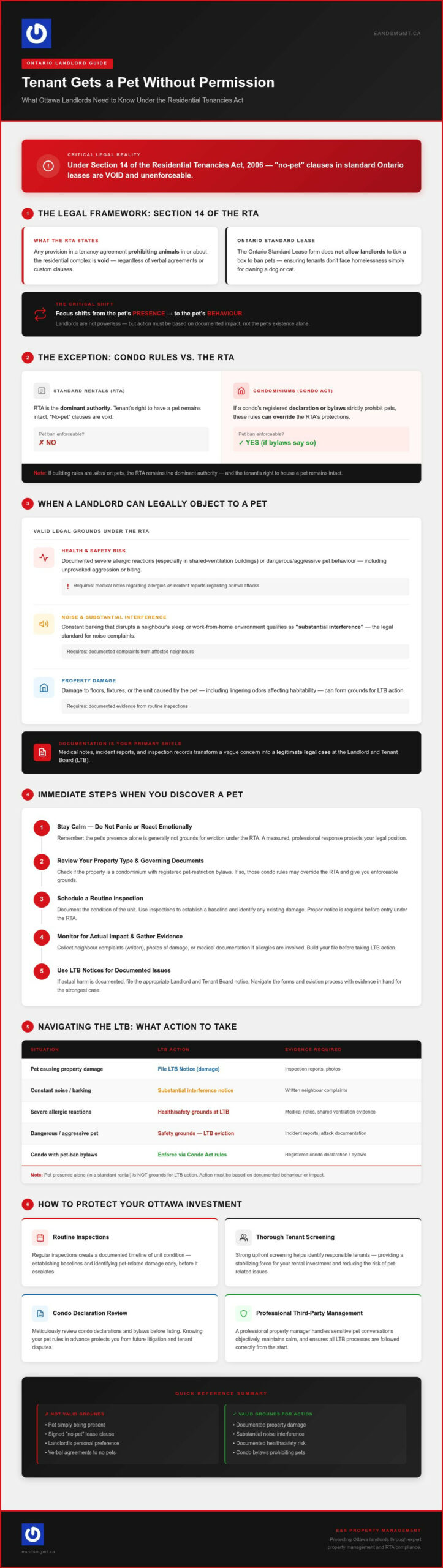
Many Ottawa landlords are surprised to learn that their “no-pets” lease provision is largely unenforceable under provincial law. This realization often comes at a moment of stress, perhaps after a neighbor mentions hearing a bark or seeing a cat in a window. Section 14 is the rule that prevents landlords from prohibiting pets in most residential tenancies. This means that even if a tenant signs a lease agreeing not to have animals, they can generally bring a pet into their home without facing eviction solely for that reason. When you are wondering what happens if a tenant gets a pet without permission, Ontario law provides a framework that prioritizes the tenant’s right to animal companionship over a landlord’s preference for a pet-free property.
Section 14 of the Residential Tenancies Act Explained
The Residential Tenancies Act, 2006 explicitly states that a provision in a tenancy agreement prohibiting the presence of animals in or about the residential complex is void. This protection is robust and applies regardless of any verbal agreements or custom clauses added to a contract. Since the introduction of the Ontario Standard Lease, the province has moved toward greater transparency, yet the standard form itself does not allow landlords to tick a box to ban pets. It’s a stabilizing piece of legislation that ensures tenants don’t face homelessness simply for owning a dog or cat. This legal reality often creates a sense of vulnerability for owners who worry about their hardwood floors or high-end finishes. We understand that your property is a significant investment, and the inability to enforce a simple “no-pet” rule can feel like a loss of control. However, this doesn’t mean a landlord is powerless; it simply shifts the focus from the pet’s presence to the pet’s behavior.
The Exception: Condominium Bylaws vs. The RTA
While the RTA governs the relationship between a landlord and a tenant, condominium corporations operate under the Condominium Act. If a condo’s registered declaration or bylaws strictly prohibit pets, these rules can override the RTA’s protections. In these specific Ottawa properties, a tenant could indeed be forced to remove a pet because the landlord doesn’t have the authority to grant permission that violates the condo’s governing documents. This is a critical distinction when evaluating what happens if a tenant gets a pet without permission, Ontario condo rules create a unique legal boundary that landlords must respect. A seasoned property manager acts as a guardian in these scenarios, meticulously reviewing condo declarations to protect you from future litigation. If the building rules are silent on pets, the RTA remains the dominant authority, and the tenant’s right to house a pet remains intact.
When a Landlord Can Legally Object to a Pet
While provincial law generally protects pet owners, it doesn’t grant a tenant total immunity if the animal causes genuine harm to your property or other residents. Understanding what happens if a tenant gets a pet without permission Ontario law specifies requires looking beyond the mere presence of the animal to its actual impact on the living environment. Ontario’s Residential Tenancies Act provides clear grounds where a landlord can seek the removal of a pet or even the eviction of the tenant. These exceptions are designed to balance the rights of pet owners with your right to protect your investment and the safety of your community.
Health and Safety Exceptions
Landlords have a fundamental duty to ensure a safe environment for everyone in the building. If a pet causes a documented severe allergic reaction for the landlord or another tenant in a property with shared ventilation, the Landlord and Tenant Board (LTB) may intervene. Similarly, “dangerous” behavior is a high bar but a necessary one for protection. This includes unprovoked aggression, biting, or credible threats to the safety of others. Documentation is your primary shield in these cases. Medical notes regarding allergies or incident reports regarding animal attacks transform a vague concern into a legitimate legal case. We often find that having a professional third party handle these sensitive conversations helps maintain a calm, objective atmosphere during a stressful time.
Noise and Disturbance Issues
The term “substantial interference” is the legal standard for addressing noise complaints. Constant barking that disrupts a neighbor’s sleep or work-from-home environment qualifies as interference with the “reasonable enjoyment” of the premises. To succeed at the LTB, you’ll need more than a single frustrated phone call. It’s vital to keep a detailed noise log and gather witness statements from other affected neighbors. This systematic approach clarifies the situation for the board and moves the conversation from a personal dispute to a matter of community standards. When you’re managing what happens if a tenant gets a pet without permission Ontario regulations require this level of meticulous record-keeping to reach a resolution.
Beyond noise, physical damage is a major source of anxiety for property owners. Scratched hardwood baseboards or deep carpet stains caused by pets go far beyond the definition of normal wear and tear. Identifying these issues early through regular property inspections allows you to document the damage and address the problem before it escalates into a costly renovation. This proactive oversight ensures that your property remains a high-quality asset while providing a clear, documented path for remediation if a pet’s behavior threatens the integrity of your home.
Immediate Steps for Landlords Upon Discovering a Pet
Discovering an unannounced pet in your rental unit can be unsettling, but your first reaction shouldn’t be a confrontational phone call. Instead, take a breath and focus on verification. If you suspect an animal has moved in, schedule a formal inspection with the required 24-hour written notice. This isn’t just about catching someone in the act; it’s about observing how the pet actually affects your property. While you’re there, look for signs of scratching on door frames or fresh stains on carpets. Understanding what happens if a tenant gets a pet without permission Ontario guidelines suggest starts with a clear-eyed assessment of the situation on the ground.
Once you’ve confirmed the pet’s presence, take a moment to review your lease agreement and any applicable condominium bylaws. While we’ve established that most “no-pet” clauses are void, the lease still contains vital obligations regarding property maintenance and noise. If the property is a condo, those building-specific rules remain a powerful tool for oversight. Having these documents ready allows you to speak from a place of authority and clarity rather than emotion.
The Power of Professional Communication
When you speak with your tenant, aim for a neighborly yet firm tone. A supportive conversation often yields better results than an immediate legal threat. Ask for specific details about the pet, such as its breed, size, and vaccination status, explaining that this information is necessary for your insurance and property records. This is also the perfect time to gently remind the tenant that while they have a right to the pet, they remain fully responsible for any damage or noise that disturbs the peace of the building. Positioning yourself as a stabilizing force rather than an adversary helps preserve the landlord-tenant relationship while protecting your asset.
Documenting the Situation for the LTB
Precise documentation is your most valuable asset if the situation eventually requires intervention from the Landlord and Tenant Board (LTB). During your inspection, take date-stamped photos of the pet’s living area and any areas where you suspect wear and tear might escalate. Keep a meticulous log of all correspondence, including emails, text messages, and phone call summaries. Acting fast to establish this trail is far better than waiting for a minor annoyance to become a major financial burden. If you’re wondering what happens if a tenant gets a pet without permission Ontario property owners often find that early, professional documentation is the key to a swift and fair resolution. We’ve seen how a well-maintained record can turn a complex dispute into a straightforward administrative matter.
Navigating the LTB: Forms and Eviction Processes
The Landlord and Tenant Board (LTB) process can feel like a daunting maze, but it follows a logical sequence designed to provide a fair hearing for both parties. Understanding what happens if a tenant gets a pet without permission Ontario requires a clear grasp of the specific forms used to address lease violations. The most common tool is the N5 Notice, which addresses interference with reasonable enjoyment or damage to the property. For more urgent or dangerous situations, landlords may turn to the N7 Notice. These documents are more than just paperwork; they are the foundation of your legal case and must be completed with meticulous precision.
The N5 Notice Framework
The N5 notice provides a “right to remedy,” giving the tenant seven days to correct the problematic behavior. If the dog stops barking or the tenant repairs the scratched door frames within this window, the notice becomes void. However, if the behavior repeats within six months, a second N5 can be issued without a remedy period, leading directly to an application for an LTB hearing. Common errors, such as missing the specific date of an incident or failing to provide enough detail about how the pet interferes with others, can lead to a case being dismissed. Accuracy is your best protection against administrative delays.
Proving Your Case at a Hearing
Proving a case at an LTB hearing requires a high burden of proof. The board rarely orders the removal of a pet or the eviction of a tenant based on hearsay or a single, undocumented complaint. This is where your history of regular property inspections becomes vital evidence. Date-stamped photos and detailed maintenance logs show a pattern of behavior that the board can verify. As we look toward the LTB landscape in 2026, industry professionals report that hearing wait times remain a significant factor, making it even more important to get your filing right the first time. Errors in documentation can result in months of lost time and continued property stress.
Professional oversight acts as a stabilizing force during these long wait times. We handle the administrative burden of filing notices and gathering evidence, ensuring your property is protected while you focus on your own life. If you find the legal process overwhelming, delegating these duties to a seasoned hand can provide the relief you need. Our Full-Service Property Management team manages these complexities on your behalf, from the first notice to the final hearing.
How E&S Property Management Protects Your Ottawa Investment
Since 1981, we’ve acted as a stabilizing force for Ottawa landlords, turning the stress of property ownership into a predictable, professional experience. We understand that your rental property is more than just a building; it’s a vital financial asset and often a former home. When you are navigating what happens if a tenant gets a pet without permission Ontario regulations can feel like they favor the tenant at every turn. Our role is to provide the meticulous care and authoritative oversight needed to ensure your investment remains protected, regardless of who moves in on four legs.
Our approach begins with a rigorous Tenant Placement Service. While we respect provincial laws regarding pet ownership, we focus on finding responsible, high-quality tenants who value transparency and property maintenance. By vetting candidates thoroughly from the start, we significantly reduce the likelihood of the “surprise pet” scenario. We act as the professional buffer, handling all tenant communications so you don’t have to manage the emotional weight of a conflict yourself.
Proactive Inspection Strategies
Regular Property Inspections are the cornerstone of our asset protection strategy. We don’t wait for a problem to arise; we actively look for the early signs of unauthorized pets or escalating wear and tear. Our team conducts methodical move-in, move-out, and periodic inspections that document the exact condition of your property with date-stamped evidence. This thoroughness is essential if you ever need to prove substantial interference or damage at the LTB. By identifying “hidden” pets early, we can address the situation through calm, professional dialogue before significant damage occurs. This steady rhythm of oversight builds trust with tenants while keeping your interests as the primary focus.
Stress-Free Management for Foreign Service Members
Ottawa is home to many Foreign Service members and professionals who must relocate abroad for years at a time. Managing a pet-related dispute from a different time zone is nearly impossible and incredibly stressful. We specialize in providing end-to-end support for these owners, ensuring your home complies with all Ottawa-specific bylaws and provincial regulations while you are away. From managing Emergency 24/7 Maintenance Response to coordinating complex LTB filings, we handle every logistical detail with a seasoned hand. You can serve abroad with peace of mind, knowing your property is under the care of a dedicated steward who has seen and solved every possible challenge. Protect your property with E&S Property Management and experience the relief of true professional oversight.
Securing Your Rental Investment for the Future
Understanding what happens if a tenant gets a pet without permission Ontario law specifies is the first step toward regaining your peace of mind. While the Residential Tenancies Act generally protects the rights of pet owners, it doesn’t leave your property vulnerable to neglect or disruption. The key to a successful tenancy lies in shifting the focus from the animal’s presence to its actual impact on your home and neighbors. By prioritizing documented behavior and maintaining clear, professional boundaries, you can ensure that your investment remains a high-quality asset for years to come.
With over 40 years of experience in the Ottawa market, we understand the unique anxieties of local landlords and Foreign Service members posted abroad. Our comprehensive routine inspection program and expert tenant screening provide the protective shield your property deserves. You don’t have to navigate the complexities of the LTB or pet-related disputes alone. Let E&S Property Management handle your tenant relations and pet policies so you can focus on what matters most. We are here to act as your dedicated steward, ensuring your property is managed with the meticulous care it requires.
Frequently Asked Questions
Can a landlord charge a pet deposit in Ontario?
Landlords cannot legally charge a pet deposit in Ontario. The Residential Tenancies Act only permits a rent deposit for the final month and a refundable key deposit. Any additional fee specifically for a pet is considered illegal and unenforceable. If you’ve already collected such a payment, the tenant has the right to ask for it back or apply to the Landlord and Tenant Board for a refund. Maintaining legal compliance protects your reputation.
What if my tenant’s pet is a service animal?
Service animals are legally distinct from pets and are protected under the Ontario Human Rights Code. You cannot refuse a tenant or evict them because they require a service animal for a disability. These animals provide essential support, and landlords have a legal duty to accommodate them. Requesting medical documentation that confirms the need for the animal is generally acceptable, but you cannot charge extra fees for their presence in your home.
Can I refuse to rent to someone who has a pet?
You can legally refuse to rent to an applicant who owns a pet during the initial screening process. However, once the lease is signed and the tenancy begins, the situation changes significantly. Many owners ask what happens if a tenant gets a pet without permission Ontario laws protect the tenant’s right to have an animal even if they didn’t disclose it earlier. Professional screening in Ottawa is your only window to choose a pet-free household.
Does a ‘no-pet’ clause in a lease mean anything at all?
A “no-pet” clause in an Ontario residential lease is typically considered void and unenforceable. Section 14 of the RTA ensures that these provisions have no legal weight in most standard tenancies. Unless your property is a condominium with specific bylaws that prohibit animals, the tenant can ignore this clause without facing immediate eviction. This is why professional tenant screening is a much more effective tool for protection than relying on unenforceable lease clauses alone.
How much damage does a pet have to cause for an eviction?
To justify an eviction, a pet must cause “undue” damage that goes beyond normal wear and tear. This typically involves structural issues like deeply chewed baseboards, extensive flooring damage from urine, or destroyed cabinetry. Minor scratches often won’t suffice for a successful board application. We recommend conducting regular property inspections to document these issues early. This evidence is crucial if you need to prove to the board that the property’s integrity is at risk.
What happens if a tenant’s pet bites someone on my property?
If a tenant’s pet bites someone, it’s classified as a serious safety issue or “dangerous behavior.” You have the right to issue an N7 notice, which is used for the most severe lease violations in Ottawa. Protecting the safety of other residents and visitors is a primary landlord responsibility. You’ll need documented proof of the incident, such as a police report or a witness statement, to support your case during a hearing at the board.
Can I limit the size or breed of a pet a tenant brings in?
You cannot limit the size or breed of a pet under the Residential Tenancies Act. As long as the animal isn’t causing damage, safety issues, or allergic reactions for others, the tenant’s choice of breed is protected. The only exception occurs in condominiums where the building’s own declaration or bylaws have specific restrictions. In those cases, the condo rules take precedence over the tenant’s usual rights under provincial law. Professional management ensures you stay compliant.
How do I prove a pet is causing a ‘substantial interference’?
Proving “substantial interference” requires a meticulous record of how the pet disrupts the community. This usually involves persistent noise, such as constant barking, or foul odors that permeate shared spaces. You should gather written complaints from neighbors, maintain a detailed noise log with dates and times, and take photos of any waste issues. This organized evidence shows the board that the pet’s presence is truly preventing others from enjoying their homes and living spaces.


