
Imagine waking up at 3:00 a.m. to a frantic call from your tenant because a pipe burst during a -30°C cold snap. It’s the kind of emergency that every property owner dreads, especially when the solution involves expensive repairs and a race against the clock. Effectively winterizing a rental property in Ottawa requires more than just a quick check of the windows. It’s about building a fortress against one of the harshest climates in the country.
You likely already know that keeping up with maintenance is a year-round job, but the stakes feel much higher when the snow starts to pile up and the wind begins to howl. We’ve created this expert-led guide to help you navigate these challenges with confidence, ensuring your investment remains protected and your tenants stay safe and warm. We’ll walk you through a clear maintenance roadmap that covers everything from mandatory heating bylaws to snow removal liability, giving you the peace of mind that your asset is ready for whatever the season brings.
Key Takeaways
- Schedule professional HVAC and plumbing inspections early to prevent mid-winter furnace failures and the high cost of emergency repairs.
- Learn why winterizing a rental property in Ottawa requires proactive gutter and roof maintenance to stop destructive ice dams before they form.
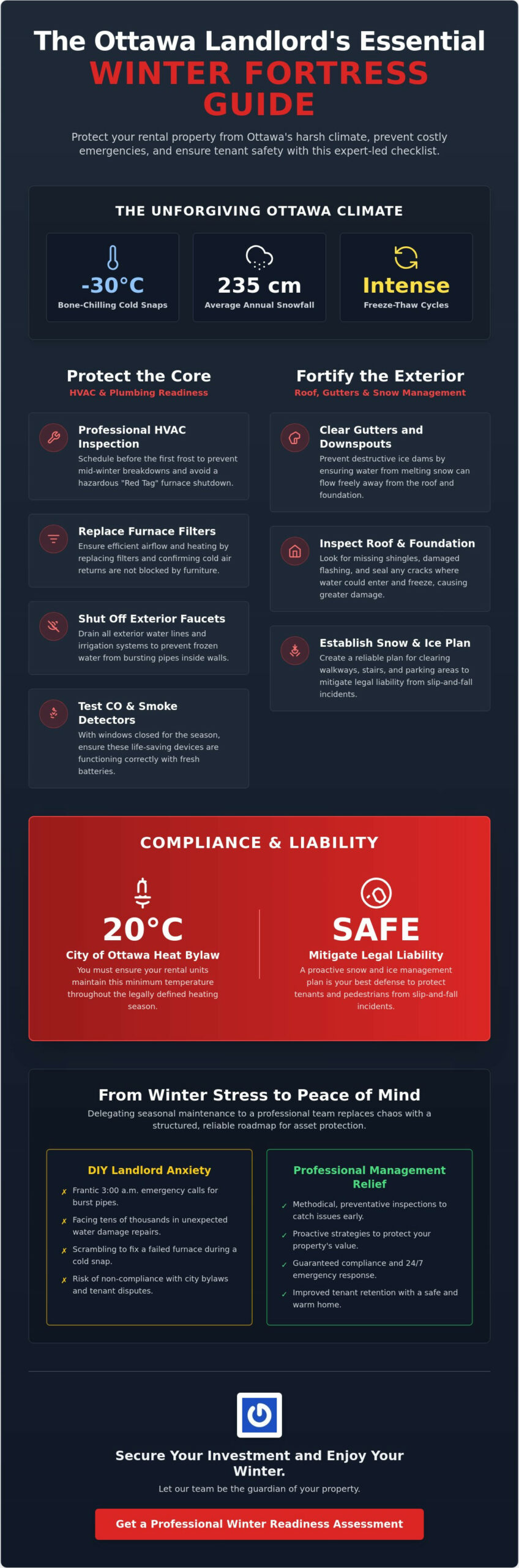
- Stay compliant with the City of Ottawa Heat Bylaw by ensuring your rental units maintain a minimum temperature of 20°C throughout the heating season.
- Mitigate your legal liability by establishing a reliable snow and ice management plan that protects tenants and pedestrians from slip-and-fall incidents.
- Discover how delegating seasonal maintenance to a professional team can replace your winter stress with a structured, reliable roadmap for asset protection.
Why Winterizing a Rental Property in Ottawa is a Critical Investment
In a city where the temperature can plummet from a mild thaw to a bone-chilling -30°C overnight, winter isn’t just a season; it’s a rigorous test of your property’s resilience. For local landlords, the process of preparing for winter is the single most important act of stewardship you can perform. It represents the difference between a profitable, quiet season and one defined by midnight emergency calls and dwindling capital. While some might take a “fix-it-later” approach, seasoned investors know that preventative care is the only way to shield an asset from the physical and financial toll of an Ottawa winter.
When you prioritize winterizing a rental property in Ottawa, you’re actively defending against the three most common financial drains: burst pipes, ice dams, and total furnace failure. A single burst pipe can cause tens of thousands of dollars in water damage, while a failed furnace in January creates an immediate habitability crisis. Beyond the physical structure, thorough preparation is a key driver of tenant retention. A tenant who feels warm, safe, and heard is far more likely to renew their lease than one left shivering because of a preventable draft or a heating system that wasn’t ready for the first frost.
The Ottawa Context: Beyond Just Cold Weather
Ottawa’s climate is uniquely challenging because of our intense freeze-thaw cycles. With an average annual snowfall of nearly 235 centimeters, the weight on your roof is significant, but the real danger lies in the fluctuating temperatures that cause snow to melt and refreeze. This cycle can expand existing cracks in foundations or push water under shingles, leading to leaks that aren’t discovered until the spring thaw. Additionally, the “Polar Vortex” events we frequently experience place an immense strain on residential heating systems. Standard maintenance isn’t enough; your property needs a localized strategy that accounts for these extreme shifts.
The Stabilizing Force of Professional Preparation
The transition from the anxiety of “what if” to the relief of “it’s handled” is what we provide at E&S Property Management. We understand that the weight of managing these complex cycles can feel overwhelming for a property owner. Our role is to act as a protective guardian for your investment, stepping in with a seasoned hand to navigate the pitfalls of the season. By implementing a methodical roadmap for every property, we replace chaos with order. We manage the intricate details of winter readiness so that you can enjoy the peace of mind that comes from knowing your asset is under the care of a dedicated steward who has seen, and solved, every winter challenge Ottawa has to offer.
Protecting the Core: HVAC and Plumbing Readiness
The internal systems of your building are its lifeblood, and they’re under the most pressure when the mercury drops. Scheduling a professional HVAC inspection before the first frost is the most effective way to identify wear and tear that could lead to a mid-winter breakdown. Following a comprehensive expert’s checklist helps ensure no small detail, like a dirty filter or a blocked vent, is overlooked. Beyond the furnace, you must address the plumbing. Shutting off and draining all exterior water faucets and irrigation systems is a non-negotiable step in winterizing a rental property in Ottawa. If water remains in these lines, it will freeze and expand, often causing pipes to burst inside the heated walls of the home.
Older Ottawa homes in neighborhoods like the Glebe, Centretown, or Westboro often rely on boiler systems with cast-iron radiators. These require you to bleed the radiators to remove trapped air, which ensures even heat distribution throughout the unit. While you’re performing these checks, replace all furnace filters and verify that tenants haven’t blocked cold air returns with furniture. Maintaining these core systems is a significant responsibility, but you don’t have to carry it alone. Our team provides regular property inspections to catch these technical issues before they escalate into costly repairs.
Furnace Maintenance: The Heart of the Home
In Ontario, a “Red Tag” is a safety notice issued by a licensed technician that legally requires the gas supply to be shut off if a furnace is found to be hazardous to the occupants. Because a heating failure in January is a true emergency, having a 24/7 response plan is critical for tenant safety. This is also the safest time to test every carbon monoxide detector in the property. Since windows stay closed for months, ensuring these sensors are functional provides an essential layer of protection for your residents.
Preventing Frozen Pipes in Vacant or Low-Occupancy Units
Vacant units are particularly vulnerable to the cold. You should insulate any exposed pipes in unheated basements or crawlspaces using foam sleeves. During extreme cold snaps, you might advise tenants to use the “slow drip” technique on faucets located against exterior walls to keep water moving. It’s also vital to monitor humidity levels within the property. If the air is too moist, you’ll face condensation on windows which can lead to mold growth; if it’s too dry, it can damage hardwood floors and millwork.
The Exterior Shield: Gutters, Roofs, and Snow Management
While the interior systems keep your tenants warm, the exterior of your building acts as a vital shield against the weight and moisture of a Canadian winter. A critical part of winterizing a rental property in Ottawa involves securing the roof and drainage systems before the first major accumulation. Clogged gutters are the primary cause of ice dams, a common and destructive phenomenon where melting snow refreezes at the roof’s edge. This creates a block that forces water upward and under your shingles, eventually leaking into the attic and walls. Clearing debris in late autumn ensures that meltwater flows freely away from the structure, protecting your masonry and roofing materials from water damage.
Beyond the gutters, you should inspect the roof for loose shingles or damaged flashing that could fail under a heavy snow load. It’s also wise to trim any overhanging branches. These limbs can easily snap under the weight of freezing rain or heavy snow, potentially damaging the roof or power lines. On the ground, a small but effective step is marking driveway and walkway edges with reflective posts. These markers guide snowplow operators, preventing them from accidentally tearing up your lawn or damaging expensive hardscaping when the property is buried under deep drifts.
Navigating Ottawa Snow Removal Bylaws
In Ottawa, the responsibility for maintaining safe passage on the property rests firmly with the landlord. Recent legal decisions, such as Crete v. Ottawa Community Housing Corporation (2024), have reinforced that landlords are liable for clearing snow and ice from common areas, walkways, and fire exits. If you fail to meet these requirements, you could face minimum fines of $500 per day under the Property Maintenance By-law. When vetting snow removal contractors, ensure they’re licensed by the city; as of March 1, 2026, hardscaping and driveway contractors must hold a valid municipal license. Clearly communicate with your tenants about which areas, such as a private balcony, might be their responsibility, while you handle the essential common paths.
Preventing Water Ingress During the Thaw
The danger doesn’t end when the temperature rises; the thaw presents its own set of challenges. Ensure your downspouts are extended at least 6 feet away from the foundation to prevent meltwater from flooding the basement. It’s also the right time to test your sump pump to ensure it’s ready for the spring melt. Ice dams are particularly dangerous because they don’t just cause leaks; they can soak and compress your attic insulation, significantly reducing its R-value and leading to higher heating costs. By maintaining a clear path for water to exit the property, you shield the building’s core from the slow, quiet damage of moisture ingress.
Tenant Safety and Landlord Liability in Winter
Ensuring your tenants remain safe and warm isn’t just a matter of good stewardship; it’s a legal requirement with significant implications for your investment. In our climate, the margin for error is slim. Providing a secure environment requires a proactive approach to both physical maintenance and legal compliance. By understanding your obligations early, you can transition from the stress of potential liability to the relief of knowing your property meets every municipal standard. A key part of winterizing a rental property in Ottawa involves documenting your efforts to provide a habitable and hazard-free home before the first ice storm arrives.
Clear communication is your best defense against misunderstandings. We recommend outlining specific winter responsibilities in the lease agreement, ensuring tenants know how to report heating issues or where to find salt for their private entrances. However, even with clear lease terms, the ultimate responsibility for the property’s safety remains with you. Conducting Regular Property Inspections during the autumn months allows you to document the condition of walkways, railings, and heating vents, creating a vital paper trail that protects you in the event of a dispute or insurance claim.
The Legal Minimum: Heating Requirements in Ottawa
The City of Ottawa Heat By-law (2010-210) mandates that landlords maintain a minimum temperature of 20°C between 6:00 a.m. and 11:00 p.m. from September 1 to June 15. Overnight, the temperature must not drop below 16.67°C. Failing to provide adequate heat is a serious violation of the Residential Tenancies Act (RTA) and can lead to rent abatements or heavy fines. If a tenant requests a space heater because of a draft, it’s often a sign that the building’s envelope needs attention. Always document your furnace service records to prove that you’ve exercised due diligence in maintaining the primary heating system, shielding you from claims of neglect.
Slip and Fall Prevention: A Stewardship Approach
Liability for “slip and fall” incidents is a significant concern for Ottawa property owners. Under the law, you’re responsible for ensuring that common areas, including shared walkways and fire exits, are clear of snow and ice. Providing containers of salt or sand for tenant use on shared paths is a supportive, neighborly gesture that encourages immediate action between professional clearings. To protect your legal standing, maintain a detailed snow removal log that records the date and time of every clearing. This level of professional maintenance coordination significantly reduces your liability and demonstrates that you are a dedicated guardian of tenant safety.
Professional Winter Oversight for Ottawa Landlords
The transition from the constant worry of winter maintenance to the relief of professional oversight is a journey many Ottawa landlords find essential. Managing the complex cycle of seasonal tasks requires a steady hand and a deep understanding of our local environment. When you choose to delegate winterizing a rental property in Ottawa to a seasoned partner, you aren’t just hiring a service; you’re securing a protective guardian for your investment. We manage the intricate details, from coordinating licensed contractors to ensuring that your property remains a safe, warm environment for your tenants throughout the coldest months of the year.
Our established network of licensed professionals is one of the most significant advantages we offer. When a heating emergency occurs at 2:00 a.m. on a holiday weekend, you shouldn’t have to scramble for a solution. Our Emergency 24/7 Maintenance Response team is already in place to handle the situation with technical proficiency and speed. This level of reliability ensures that small issues don’t escalate into catastrophic failures, protecting both your financial interests and your reputation as a responsible landlord. By simplifying the maintenance process, we provide a sense of order and clarity that allows you to focus on your life while we focus on your asset.
Managing from Afar: Our 40-Year Experience
For Foreign Service members and non-resident landlords, the distance can amplify the anxieties of an Ottawa winter. We specialize in bridging that gap with over 40 years of experience as a stabilizing force on the ground. Our Regular Property Inspections are particularly vital during the winter, as we look for the subtle signs of trouble that a tenant might overlook. Beyond physical care, we provide essential administrative support, including NR6 and NR4 tax filing support, ensuring you remain in full compliance with Canadian tax laws while living abroad. This comprehensive approach offers the peace of mind that comes from knowing your home is being watched by someone who understands its personal and financial value.
Ready to Delegate Your Winter Maintenance?
If the thought of another Ottawa winter brings more stress than relief, it may be time to transition to a more supportive model of ownership. Our Full-Service Property Management is designed to take the weight of these responsibilities off your shoulders, replacing uncertainty with a methodical, professional roadmap. We invite you to experience the difference that meticulous care and a supportive, neighborly approach can make for your investment. Protect your Ottawa rental property this winter—contact us today.
Securing Your Property’s Future This Winter
Navigating the transition into a harsh Canadian winter doesn’t have to be a source of constant anxiety. By prioritizing HVAC readiness and securing your building’s exterior shield, you’ve already taken the most important steps toward protecting your investment. Successfully winterizing a rental property in Ottawa is a continuous cycle of care that ensures tenant safety while shielding you from the high costs of emergency repairs and the legal risks of non-compliance. These proactive measures build a foundation of reliability that lasts long after the first snow melt.
We understand the unique burdens faced by property owners, particularly those serving in the Foreign Service or living abroad. With over 40 years of local property management experience, our team acts as a stabilizing force on the ground. We provide the peace of mind that comes from regular inspections and 24/7 emergency maintenance coordination. You can rest easy knowing a seasoned hand is watching over your home. Let us handle your Ottawa property maintenance; get a management quote today. We’re here to help you move from stress to total relief, ensuring your asset thrives through every season.
Frequently Asked Questions
What is the legal minimum temperature for rental properties in Ottawa?
Under the City of Ottawa Heat By-law, you must maintain a minimum temperature of 20°C between 6:00 a.m. and 11:00 p.m. from September 1 to June 15. During the overnight hours, the required temperature is at least 16.67°C. These regulations are strictly enforced to ensure tenant safety, and failing to meet these standards can lead to significant municipal fines or rent abatements.
Who is responsible for snow removal at a rental property in Ontario?
Landlords are legally responsible for clearing snow and ice from common areas, walkways, and fire exits to ensure a safe environment. While a lease may attempt to shift this duty to a tenant, recent court decisions have clarified that the ultimate liability rests with the property owner. Part of winterizing a rental property in Ottawa involves securing a reliable, licensed contractor to manage these risks professionally.
What happens if a pipe bursts in my rental property while I am away?
A burst pipe can cause extensive water damage to the building’s structure and the tenant’s belongings within a matter of hours. If you aren’t locally available to intervene, the cost of repairs and mold remediation can escalate quickly. Having a seasoned property manager on the ground ensures that such emergencies are identified immediately and handled by a professional 24/7 response team.
How often should a furnace be serviced in an Ottawa rental?
You should have your furnace professionally inspected and serviced once every year, ideally before the first frost. This annual check is a critical component of winterizing a rental property in Ottawa, as it identifies worn components that could fail during a cold snap. Regular maintenance not only prevents emergency heating failures but also extends the operational life of your HVAC system.
Can I charge my tenant for snow removal services?
Maintenance is a landlord’s legal obligation, so you cannot simply add a snow removal fee to the monthly rent. However, you can enter into a separate, independent service contract where the tenant is compensated for clearing snow. It’s important that this agreement remains distinct from the residential lease to ensure that your legal responsibilities for property safety are clearly documented and met.
What are the most common winter insurance claims for Ottawa landlords?
The majority of winter-related insurance claims involve water damage from burst pipes and ice dams, alongside liability claims from slip-and-fall accidents on icy walkways. Ice dams are particularly common in Ottawa’s older housing stock and can lead to significant attic and ceiling damage. Proactive maintenance, such as clearing gutters and documenting snow removal logs, provides the protective shield your investment needs.
Does E&S Property Management handle emergency heating repairs 24/7?
Yes, we provide an Emergency 24/7 Maintenance Response service to ensure your property and tenants are never left vulnerable during a heating crisis. Our team understands the urgency of a furnace failure in sub-zero temperatures and acts as a stabilizing force to coordinate repairs immediately. We use our established network of trusted contractors to restore warmth and safety to your property without delay.
How do I protect my vacant Ottawa rental property from freezing?
To protect a vacant unit, you must keep the thermostat set to at least 15°C and ensure all interior doors and cabinet doors are open to allow heat to reach plumbing. You should also consider shutting off the main water valve and draining the lines to eliminate the risk of freezing. Our regular property inspections provide the meticulous care needed to verify these systems are functioning while the unit is unoccupied.


