Renting out your Ottawa home can make your existing insurance the wrong fit. Landlords generally aren’t required to carry landlord insurance, but you should update your homeowner’s policy when you begin renting out the property. Converting home insurance to landlord insurance in Ottawa means matching coverage to how the home is used, rather than assuming your current policy still protects you.
It’s understandable to want to keep familiar coverage and avoid paying for protection you don’t need. But a standard homeowner’s policy typically doesn’t cover a tenant’s belongings or personal liability, and failing to disclose a rental could put your coverage at risk. Your tenant should arrange their own insurance for their possessions and liability.
This article explains what landlords are generally responsible for insuring, when a homeowner’s policy may still apply, and how property use affects your decision. You’ll also learn what landlord insurance commonly covers, how its cost can depend on the property and coverage, and how liability fits into a more secure rental arrangement.
Key Takeaways
- Match your coverage to how the property is occupied, including protection for the building and any furnishings or appliances you provide.
- Renting out a home can change which policy fits; understand when a homeowner’s policy may no longer be appropriate for the property.
- Premiums depend on factors such as the property and selected coverage, while going uninsured can leave you exposed to repair costs and lost rental income.
- Clarify how landlord and tenant liability coverage work together to help protect both parties when accidental damage or an injury occurs.
What insurance is a landlord responsible to have?
Ottawa landlords aren’t typically required to have insurance, but coverage is strongly advised. The right policy depends on whether you rent a room, a basement, or an entire property.
Building and Landlord-Owned Contents
Landlord insurance typically protects the rental building, the owner’s liability related to property ownership, and lost rental income after a covered loss. It can also cover landlord-owned contents kept in the unit, such as appliances, fixtures, or furniture supplied for tenants. The policy’s terms and limits determine what’s covered and how much protection applies.
Consider what you provide with the rental. A furnished unit needs coverage for the landlord’s furniture, while an unfurnished property may have fewer contents to insure. Review building features too, including walls, floors, and heating or cooling systems, because coverage depends on the policy.
Belongings, Fire, Water Damage, and Theft
A landlord policy doesn’t generally insure tenants’ belongings. Instead, it may cover the building and landlord-owned contents when fire, water damage, or theft results from a covered peril. The specific cause matters: a sudden accidental event may be covered, while gradual wear and tear typically isn’t.
For example, sudden accidental tenant damage caused by a covered peril may be eligible for coverage, subject to policy terms. Intentional tenant damage typically isn’t covered. Check how the policy defines covered water damage and theft, and note any limits that apply to property kept at the rental.
Tenant Belongings and Liability
Tenants should arrange their own insurance for personal belongings and personal liability. A landlord’s policy generally protects the owner’s interests, not a tenant’s clothing, electronics, or furniture. Tenant coverage may also help if the tenant accidentally damages someone else’s property, subject to that policy’s terms.
Keeping the distinction clear helps prevent gaps. For example, the landlord’s policy may respond to covered damage to the building, while the tenant’s policy addresses the tenant’s possessions. Tenants aren’t legally required to have insurance in Canada, but it can protect their belongings and finances.
A different arrangement may apply when you rent a room or basement to a boarder while continuing to live in the home. In Canada, home insurance may cover that setup; a separate rental property policy isn’t automatically the only option.
Ontario Works or Ontario Disability Support Program recipients might be able to include tenant insurance fees in their shelter allowance. This concerns tenant insurance costs, not the landlord’s building policy.
Do I need homeowners insurance if I have a rental property?
If you rent a property you don’t occupy full-time, landlord insurance is typically more suitable than a standard home insurance policy. To change coverage in Ottawa, disclose the rental to your insurer and arrange a policy that reflects the property’s use. Landlord insurance may cover tenant-caused damage from a covered peril, lost rental income after a covered loss, and landlord liability, subject to policy terms.
Landlord Insurance Versus Homeowners Insurance
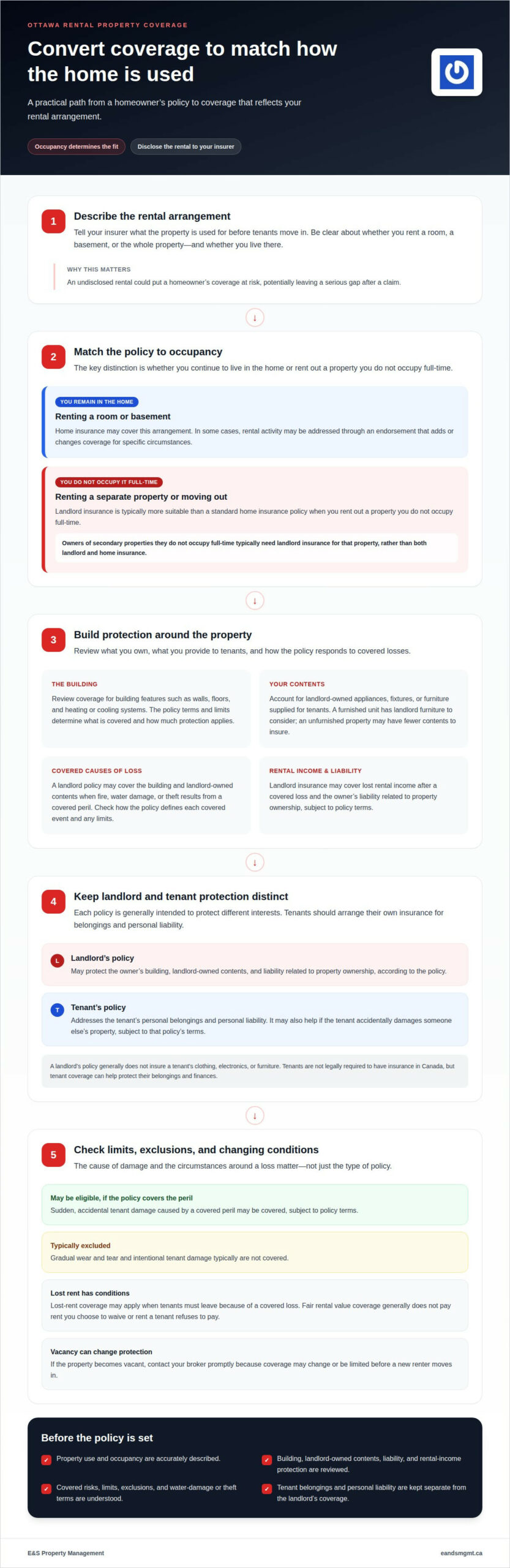
Home insurance is generally designed for a dwelling where the policyholder lives. If you rent a separate property, or move out and rent your former home, the insurer needs to know its new use. Owners of secondary properties they don’t occupy full-time typically need landlord insurance for that property, rather than both landlord and home insurance.
If you rent a room or basement while continuing to live in the home, home insurance may cover the arrangement. The occupancy pattern matters.
Home Insurance Endorsements for Rental Activity
Some rental arrangements may be covered through an endorsement to a home insurance policy, particularly when the owner remains in the home. An endorsement changes or adds coverage for specific circumstances. Tell the insurer whether you rent a room, basement, or the whole property, and whether you live there.
Disclose the rental before tenants move in. Undisclosed rental occupancy could void a homeowner’s policy entirely, leaving a serious gap after a claim.
Changing Home Insurance to Landlord Insurance
Start by describing the rental arrangement to your insurer: the property’s use, whether you live there, and whether it’s currently occupied. Then arrange coverage designed for that occupancy and review its limits, covered risks, landlord contents, liability, and rental-income protection. These details determine how the policy responds to a loss.
For help coordinating rental responsibilities, explore rental property support.
Tenant Damage, Lost Rent, and Liability
Landlord insurance may cover sudden, accidental tenant damage caused by a covered peril. It typically excludes wear and tear and intentional tenant damage. Coverage for lost rent may apply when tenants must leave because of a covered loss, but fair rental value coverage generally doesn’t pay rent you choose to waive or a renter refuses to pay.
If the property becomes vacant, contact your broker promptly because coverage may change or be limited. Vacancy can affect protection before a new renter moves in.
Costs and risks of going uninsured
For Ottawa owners, converting home insurance to landlord insurance in Ottawa helps align coverage with rental use. The premium is one cost to weigh against the financial exposure of an uninsured loss.
Costs of Landlord Insurance
These figures reflect different pricing points, not a quote for every Ottawa rental. Property value, location, selected coverage, and claims history all affect the premium.
Compare the policy’s protections, limits, and exclusions alongside its price. A furnished rental may need protection for landlord-owned contents, while a property’s value affects its building coverage needs. The decision about converting home insurance to landlord insurance in Ottawa should account for the property’s actual use and the losses you need protection against.
Risks of Going Uninsured
Without suitable coverage, you may have to pay for repairs after fire or water damage. Replacing a damaged heating system or repairing floors can also make a rental temporarily unlivable. The resulting repair costs and lost rental income can affect your investment at the same time.
An uninsured landlord may also face liability costs if someone is injured and the owner is held responsible. Tenant insurance protects the tenant’s belongings and liability, but doesn’t replace coverage for the landlord’s building or responsibilities as owner.
Consider whether you could absorb a major repair while rental income stops. Policy limits, exclusions, and covered causes of damage determine how much financial exposure remains. Those details matter as much as the premium when weighing coverage for an Ottawa rental.
Landlord liability
Liability coverage protects a landlord’s financial interests when a claim arises from owning or renting out a property. For an Ottawa rental, consider how the policy addresses injuries or property damage connected to the building. A tenant’s policy serves a different purpose: it protects the tenant’s belongings and personal liability, not the landlord’s responsibility as property owner.
Keep the distinction clear. If a tenant accidentally damages a neighbour’s property, the tenant’s liability coverage may help protect them financially. If a claim concerns the landlord’s ownership or maintenance of the rental, the landlord’s liability coverage may apply, depending on the policy. Neither policy automatically replaces the other, so both parties need to understand their separate protections.
Landlords should require tenants to carry tenant insurance and provide proof of coverage. This gives the landlord a clearer record that the renter has arranged protection for personal belongings and liability. Tenant insurance isn’t a substitute for a landlord policy, and it doesn’t guarantee payment for every incident. Policy terms, exclusions, and limits determine what each insurer may cover.
For your investment, make liability review part of the rental setup. Confirm that the landlord policy reflects the property’s use, and keep tenant insurance documentation with the tenancy records. If the property includes shared areas or landlord-provided appliances, consider how a claim involving those features could affect the owner. Clear records can help distinguish tenant and landlord responsibilities after an incident.
Strong day-to-day management also helps keep responsibilities visible. A consistent process for tenant placement and reporting property concerns can support clearer communication before problems grow. Arrange tenant placement support to put that process in place for your rental.
E&S Property Management
E&S Property Management helps Ottawa landlords manage the practical responsibilities that continue after insurance is arranged. If you’re preparing a rental or overseeing it from a distance, tenant placement, regular property inspections, and financial reporting and accounting can help bring structure to the ongoing work.
Full-Service Property Management brings these responsibilities together, including tenant placement and property oversight. That support can be useful as you organize your rental operations alongside decisions about suitable insurance coverage. Property management doesn’t replace an insurance policy, but it can help keep tenancy and property matters in order.
If you’d like support managing your Ottawa rental, contact E&S Property Management to discuss your needs.
Prepare Your Rental for Its Next Chapter
Use the change in occupancy as a planning point, not just a policy update. The process of converting home insurance to landlord insurance in Ottawa can sit alongside decisions about how you’ll oversee the property, communicate with tenants, and keep important rental records organized. A clear plan helps you move into the landlord role with fewer loose ends and a better understanding of who handles each responsibility.
If managing those details alongside your own commitments feels like too much, bringing in property management support can help create a steadier routine. E&S Property Management can help organize the ongoing work of managing a rental, so you can focus on decisions that matter to your investment. Contact E&S Property Management to discuss support for your Ottawa rental. A thoughtful next step can make the transition feel more manageable.
Frequently Asked Questions
What is rented dwelling insurance?
Rented dwelling insurance is coverage for a property its owner rents to tenants rather than occupies as a primary home. It’s also commonly called landlord or rental property insurance. For example, an Ottawa owner renting out a separate house would look for coverage designed around rental use, including protection for the building and the owner’s interests as landlord.
What coverage does landlord insurance provide compared with homeowner insurance in Ontario?
Landlord insurance is designed for rental properties, while homeowner insurance generally suits a home occupied by its policyholder. A landlord policy may protect the building, owner-provided contents, liability related to ownership, and rental income after a covered loss. Homeowner insurance is designed around the resident’s household and personal contents. In either case, the policy wording determines covered events, limits, and exclusions.
How much does landlord insurance cost in Ottawa, Ontario?
There isn’t one fixed Ottawa price; the premium depends on the property and chosen coverage. Insurers may consider the building’s value, location, occupancy, landlord-owned contents, selected limits, and claims history. A policy for a furnished multi-unit rental may be priced differently from coverage for a single unfurnished home. Compare the protections and exclusions alongside the premium, not just the final amount.
Do Ontario insurers require notice before renting out an owner-occupied home?
You should tell your insurer before renting any part of an owner-occupied home. The policy may need an endorsement or other change to reflect a renter’s presence, and undisclosed rental activity could jeopardize coverage. Explain whether you’ll rent a room, basement, or separate portion, and whether you’ll remain living there. That detail helps the insurer assess the arrangement accurately.
How does renting a room or basement differ from renting out an entire Ottawa home for insurance?
Renting a room or basement while continuing to live in the home may fit an arrangement covered by home insurance. Renting the entire Ottawa property, especially after moving elsewhere, changes its occupancy and typically calls for landlord insurance. For example, a homeowner living upstairs while renting a basement has a different setup from an owner leasing the whole house to tenants.
What risks can void or limit coverage when converting a home to a rental property?
Undisclosed rental activity can put a homeowner’s coverage at risk, and vacancy may change or limit protection. Policy terms can also exclude gradual wear and tear or intentional tenant damage, even when other sudden accidental damage is covered. Before a tenant moves in or a rental becomes vacant, update the insurer about occupancy and review applicable exclusions, limits, and conditions.