Selling a rental doesn’t necessarily mean the tenant moves out. In Ontario, a sale doesn’t end the tenancy, so the lease generally continues with the new owner. That’s why selling a tenanted property vs hiring a manager isn’t simply a choice between an easy sale and an easy rental. Each path changes your ownership, workload, and next steps in a different way.
If you’re weighing the decision, start by separating the work of owning a rental from the decision to keep or sell it. Managing a property involves rent collection, maintenance coordination, inspections, and tenant communication. Selling with a tenant in place involves planning around the lease, property access, and the likely buyer. Neither option is automatically right for every Ottawa landlord.
This guide compares what selling and professional management mean in practical terms, including what happens to the tenancy, which responsibilities you keep or delegate, and what may shape your decision. You’ll come away with a clearer view of the trade-offs and a practical next step, whether your priority is to exit ownership or make day-to-day rental responsibilities more manageable.
Key Takeaways
- Compare selling a tenanted property vs hiring a manager by deciding whether you want to exit ownership or keep the rental and delegate recurring work.
- Plan tenant communication, property access, and lease considerations before preparing an occupied Ottawa rental for sale.
- Weigh a potential sale against ongoing rental income as different financial paths, without assuming either will deliver a particular result.
- Use your ownership goals, available time, property condition, and preferred timing to guide your next step.
- If you retain the property, professional management can coordinate tenant placement, rent collection, inspections, and repairs.
Selling a Tenanted Property vs. Hiring a Manager: What Decision Are You Making?
Deciding what to do with an Ottawa rental can carry more weight than a simple business choice. The property may represent a source of income or a long-term investment, while the work of managing it can be difficult to balance with other responsibilities. Comparing selling a tenanted property vs hiring a manager starts with one question: do you want to exit ownership, or keep the asset and delegate its operations?
Selling transfers ownership through a real estate transaction. Hiring a manager doesn’t sell the property or remove your financial stake in it. You remain the owner and continue to hold the benefits and risks of the rental, while delegating agreed operational tasks. Management can reduce your involvement in routine work, but it doesn’t make rental ownership a passive or guaranteed source of income.
What does selling a tenanted property mean?
You can sell a rental property while it’s occupied, subject to Ontario tenancy rules. The key distinction is that selling the property is not the same as ending the tenancy. A sale alone doesn’t automatically require the tenant to leave. The existing lease generally continues with the new owner, who becomes the landlord. A buyer may therefore be acquiring both the property and an ongoing landlord-tenant relationship.
For the seller, the transaction involves planning around the tenant’s occupancy and the lease status. Communication and access need careful attention, and the sale timeline may depend on the property’s circumstances and the intended buyer. These are transaction-planning considerations, separate from ongoing work like collecting rent, coordinating repairs, or responding to tenant concerns. Selling changes who owns the property; it doesn’t erase the tenancy.
What changes when you hire a property manager?
With a manager, you keep the Ottawa rental and delegate recurring operational responsibilities. Depending on the management arrangement, these can include rent collection, tenant relations, regular inspections, and maintenance coordination. Professional oversight organizes this work, while ownership and the associated financial decisions remain yours.
This distinction matters if the rental still fits your longer-term plans but the workload has become difficult to manage. A manager can coordinate the practical cycle of tenancy and property care, but you shouldn’t assume that delegation guarantees a particular tenant, return, or result. The property management field covers a range of administrative and operational functions. When considering management, focus on the responsibilities you want handled, not just the label of hiring a manager.
These are different paths, not two versions of the same solution. A sale moves you toward ending ownership, with timing and tenancy considerations to plan around. Management lets you retain the asset while handing off day-to-day responsibilities. The right choice depends on whether you want to exit owning the rental or continue ownership with a more manageable operating role.
Selling an Occupied Ottawa Rental: Tenancy, Timing, and Owner Responsibilities
Selling an occupied rental takes planning around two connected but separate matters: transferring the property and respecting the tenancy. In Ontario, the sale itself doesn’t end a tenant’s lease. Ownership can transfer to a buyer without terminating the tenancy. The existing lease generally continues, and the new owner becomes the landlord.
How can an active tenancy affect a sale?
Any sale-related notice or request for vacant possession depends on the circumstances and Ontario’s current tenancy rules. The Landlord and Tenant Board (LTB) handles landlord-tenant disputes and eviction applications, but a buyer’s interest in moving into a property doesn’t, by itself, end a tenancy. Avoid promising a move-out date until you understand the applicable process and requirements.
What should an owner plan before listing?
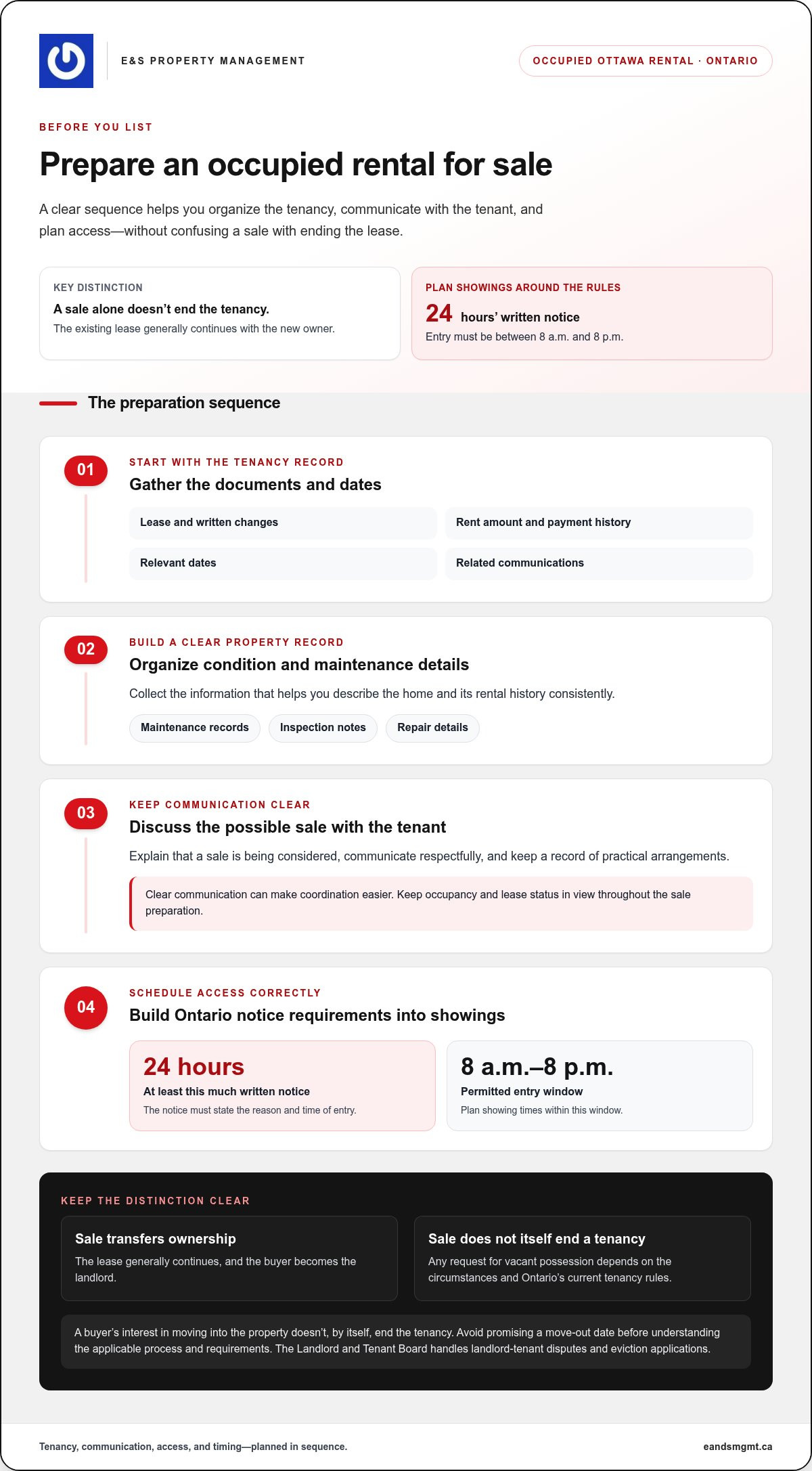
A careful preparation sequence helps keep details organized and conversations clear:
- Review the tenancy record. Gather the lease and any written changes, confirm the rent amount and payment history, and note relevant dates or communications.
- Organize property information. Collect maintenance records, inspection notes, and repair details. A clear record helps you describe the home and its rental history consistently.
- Discuss the process with the tenant. Explain that a sale is being considered, communicate respectfully, and keep a record of practical arrangements. Clear communication can make coordination easier.
- Plan access and timing. For showings to prospective buyers in Ontario, landlords must provide at least 24 hours’ written notice stating the reason and time of entry. Entry must be between 8 a.m. and 8 p.m. Build this requirement into scheduling rather than treating access as open-ended.
Keep the tenant’s occupancy and lease status in view throughout. Sale preparation shouldn’t be confused with ending the tenancy, and specific rights or notices depend on the facts and current rules. For broader context on the ongoing responsibilities involved in owning a rental, Forbes outlines best practices for managing rental properties.
If preparing for a sale has made you reconsider keeping the rental, professional oversight can help organize recurring tasks without transferring ownership. E&S Property Management supports Ottawa residential owners with Ottawa rental management support, including rent collection, inspections, and maintenance coordination.
Selling vs. Hiring a Property Manager: Compare the Trade-Offs
To compare selling a tenanted property vs hiring a manager, focus on what changes in your ownership, workload, and financial position. A sale may provide proceeds from a completed transaction, but the amount and timing depend on the property and sale. Keeping the rental means potential ongoing rental income, along with operating costs, management fees if you hire a manager, and responsibilities that remain yours. Neither path guarantees a particular financial outcome.
| Consideration | Sell the property | Hire a property manager |
|---|---|---|
| Ownership | You transfer ownership when the sale closes. | You retain the property and your financial stake in it. |
| Workload | You handle the steps involved in preparing and completing the sale. | You delegate agreed operational tasks, while retaining owner responsibilities. |
| Income continuity | Rental income from the property ends for you after the sale. | Rental income may continue, subject to occupancy, expenses, and other circumstances. |
| Timing | Depends on transaction planning, the buyer, and tenancy circumstances. | Management can begin without selling the asset; rental ownership continues. |
| Decision control | You make decisions through the sale process, then no longer control the property. | You remain the owner and delegate defined operating decisions and tasks. |
A sale changes who owns the property; management changes who handles agreed operations, while ownership stays with you. This distinction helps you weigh immediate priorities against longer-term plans. Management fees are part of the keep-and-delegate option, so consider them alongside rental income and other property expenses. Gross rent isn’t the same as what you retain.
When does selling better match an owner’s goals?
When can hiring a manager fit better?
Compare both paths using your goals and practical capacity, not an assumption that a sale will produce a particular price or that rental ownership will deliver a specific return. The better fit is the one that aligns with the role you want this property to play in your life.
Use This Decision Framework Before You Sell or Delegate
There’s no universal answer to selling a tenanted property vs hiring a manager. Start with your priorities, then test them against the property’s condition, records, and obligations. Work through these questions to separate what you want from assumptions about Ottawa’s market or what the rental might earn in the future.
Five questions to clarify your next move
- Do you want to keep the property as a long-term asset? If ownership still fits your plans, explore delegation before treating a sale as the only way to reduce your workload.
- Are recurring landlord tasks manageable? Consider the time and attention involved in tenant communication, rent administration, inspections, and maintenance. Identify which responsibilities create the most strain.
- What does the property need? Review its condition and upcoming maintenance needs. A realistic picture of the work ahead can help you assess whether continued ownership feels practical.
- How does your location affect ownership? Living outside Ottawa can make in-person oversight harder. If you’re abroad, distance and time zones may make coordinated local management especially relevant, though you remain the owner.
- Are your plans changing? A move, Canadian Foreign Service posting abroad, or shift in personal priorities may affect how much time you can give the rental and whether you want to retain it.
Which financial and practical details need review?
Put the property’s records beside a realistic outline of each path. For continued ownership, gather rental income records, operating expenses, maintenance history, and information about ongoing obligations. If considering management, include management fees as an expense and clarify which responsibilities you’d delegate and which decisions would remain yours. Rent collected isn’t the same as income retained.
Before acting, identify questions that need professional advice. Ontario tenancy requirements can affect a sale plan, notices, and any intention to obtain vacant possession, so verify how current rules apply to your circumstances. Ask an accountant about tax implications using your property-specific information. This is especially relevant for non-resident owners, whose Canadian rental income and filing responsibilities may involve NR6 or NR4 considerations. Don’t rely on a general estimate as personal tax advice.
If keeping the rental feels right but recurring work is difficult to manage from your current location, explore Ottawa property management to understand how professional oversight can support continued ownership.
Keep Your Ottawa Rental and Delegate the Work with E&S
If you’ve decided that continued ownership fits your plans, the next question is how to make the rental manageable. E&S Property Management works with Ottawa residential property owners who want to retain their property while delegating recurring responsibilities. Founded in 1981, E&S brings more than four decades of residential property management experience to the practical work of supporting a rental.
This can be a useful middle path in the selling a tenanted property vs hiring a manager decision. You don’t have to choose between personally handling every operational task and giving up the property. Management provides organized support while you remain the owner and continue to make decisions about your asset.
What ongoing support can cover
Support can begin with placing a tenant and continue through the day-to-day responsibilities of an occupied rental. E&S’s services address common ownership needs, including:
- Tenant placement: Support with finding a tenant for your residential rental.
- Rent collection: Coordination of recurring rent administration for an active tenancy.
- Inspections: Regular property inspections to keep the condition of the home under review.
- Maintenance: Maintenance coordination, including an emergency 24/7 maintenance response.
- Financial administration: Financial reporting and accounting to help you follow rental activity.
For owners who live outside Canada, tax administration can also be a consideration. E&S provides NR6 and NR4 tax filing support for relevant non-resident landlord situations. This support can assist with filing needs, but it isn’t a substitute for advice about your individual tax circumstances.
E&S supports Canadian Foreign Service members serving abroad, as well as local landlords. For an owner living at a distance, coordinated rent collection, inspections, reporting, and maintenance can make it easier to stay informed about an Ottawa property without managing every task personally. Delegation can reduce the operational load, though ownership decisions and responsibilities remain yours.
A straightforward next step for Ottawa rental owners
Start by outlining the property, its current tenant situation, and the tasks you’d most like to delegate. You may need help with one part of ownership or broader oversight of recurring operations. Being clear about your preferred level of involvement gives the management conversation a practical starting point.
Choosing management doesn’t mean selling or stepping away from the asset. It means retaining ownership while arranging professional support for agreed operations. Selling may still be right if you’re ready to exit, but keeping the rental can be a considered alternative when the property remains part of your plans and the workload needs to change.
If continued ownership feels like the better fit, explore residential property management with E&S and outline the support that would help make your Ottawa rental easier to oversee.
Choose a Next Step That Fits Your Plans
You don’t have to settle every detail today. Start by writing down what you want the property to make possible and what you’re ready to take on. If you’re leaning toward selling, clarify what needs to happen before you proceed. If keeping the rental feels more suitable, identify which responsibilities you’d like to hand off and which decisions you want to continue making yourself.
That distinction can bring focus to selling a tenanted property vs hiring a manager. It shifts the question from “Which option is better?” to “Which option supports the life and ownership goals I have now?” Your circumstances may change, and choosing management doesn’t prevent you from reassessing your plans later.
If retaining your Ottawa rental is the direction you’re considering, discuss the property, tenant situation, and level of involvement that would work for you. Talk with E&S about managing your Ottawa rental. A clear conversation can help you take the next step with greater confidence, grounded in what matters to you.
Frequently Asked Questions
Can you sell a rental property in Ontario while a tenant is living there?
Yes, you can sell an Ontario rental while it’s occupied. The property may appeal to an investor interested in an existing tenancy, while an owner-occupier may have different expectations. As you weigh selling a tenanted property vs hiring a manager, consider whether you’re ready to sell while the tenant remains or prefer to retain the rental and delegate its operations. The right approach depends on your goals and the specific tenancy circumstances.
Does selling a tenanted property automatically end the lease in Ontario?
No. A sale by itself doesn’t terminate the tenancy or require the tenant to move out. If the property changes hands, the buyer generally becomes the new landlord and must respect the continuing tenancy. For example, an existing fixed-term lease doesn’t disappear because the owner sells. If vacant possession is part of the plan, the relevant rules and circumstances matter. Don’t treat the sale agreement alone as notice to the tenant.
Can a landlord show a tenanted property to prospective buyers in Ontario?
Yes, but entry for buyer showings must follow Ontario’s notice requirements. A landlord must give at least 24 hours’ written notice stating the reason for entry and the time, which must fall between 8 a.m. and 8 p.m. For example, a planned afternoon viewing should be communicated in writing at least a day ahead. Showing arrangements should respect the tenant’s rights and don’t allow unrestricted access to the home.
What happens to the tenant’s lease and rent after a rental property is sold?
Generally, the lease continues and the buyer takes over as landlord. The tenant remains responsible for rent under the tenancy, but the seller and buyer should make the change in ownership and rent-payment instructions clear to avoid confusion. For example, the tenant needs to know who will receive rent after the sale completes. The new owner must follow the existing tenancy terms and Ontario requirements rather than treating the property as a new, vacant rental.
Can a non-resident landlord hire an Ottawa property manager?
Yes. A landlord living elsewhere in Canada or outside the country can hire an Ottawa residential property manager to coordinate local rental operations. This can be useful during an overseas posting, when arranging inspections or responding to maintenance needs from a distance is challenging. E&S Property Management supports Canadian Foreign Service members serving abroad, as well as local landlords. The owner remains responsible for ownership decisions but can delegate agreed operational tasks.
What are NR6 and NR4 forms for a non-resident landlord?
NR6 is an application a non-resident landlord may use to request that Canadian rental income tax be withheld on estimated net rental income instead of gross rent, subject to CRA rules and approval. NR4 is an information slip reporting amounts paid or credited to a non-resident and any tax withheld. Requirements depend on the landlord’s circumstances. E&S provides NR6 and NR4 filing support, but an accountant or the CRA can advise on your tax obligations.
Is rental income taxable while a property is listed for sale in Canada?
Listing a rental property for sale doesn’t, by itself, make its rental income tax-free. If you continue to receive rent while it’s listed, Canadian tax obligations may still apply. A non-resident owner may also have withholding and reporting requirements, while a resident owner’s situation can differ. Keep records of rent and expenses during the listing period, and ask an accountant about your circumstances. Tax treatment depends on individual facts and current CRA rules.