Imagine discovering that a property manager has been signing leases and handling thousands in deposits without a valid registration, leaving you personally liable for provincial fines. It is a stressful scenario that no investor should ever have to face. You have worked hard to build your real estate portfolio, and the thought of a regulatory oversight jeopardizing that legacy is a heavy burden. We understand that verifying a property manager’s license in Ontario is not just a administrative checkbox; it is about protecting your financial future from unnecessary risk.
This guide will show you exactly how to confirm your manager’s credentials so you can breathe easier. You will gain absolute clarity on the distinct roles of the Real Estate Council of Ontario (RECO) and the Condominium Management Regulatory Authority of Ontario (CMRAO). We will walk you through a steady, step by step verification process and explain the 2026 compliance standards, giving you the peace of mind that your investment is being shielded by a seasoned expert who understands the weight of their responsibility.
Key Takeaways
- Understand why license verification is your first line of defense against legal liability and the mismanagement of your rental income.
- Master the step-by-step process for verifying a property manager’s license in Ontario using the RECO and CMRAO public registries.
- Learn to distinguish between the specific licenses required for residential rentals versus condominium management to ensure your manager is correctly qualified.
- Identify common red flags and excuses used by unlicensed operators so you can protect your investment from unprofessional practices.
- Discover how partnering with a seasoned, licensed expert in Ottawa provides the stabilizing oversight needed for long-term peace of mind.
Why License Verification is Crucial for Ontario Landlords
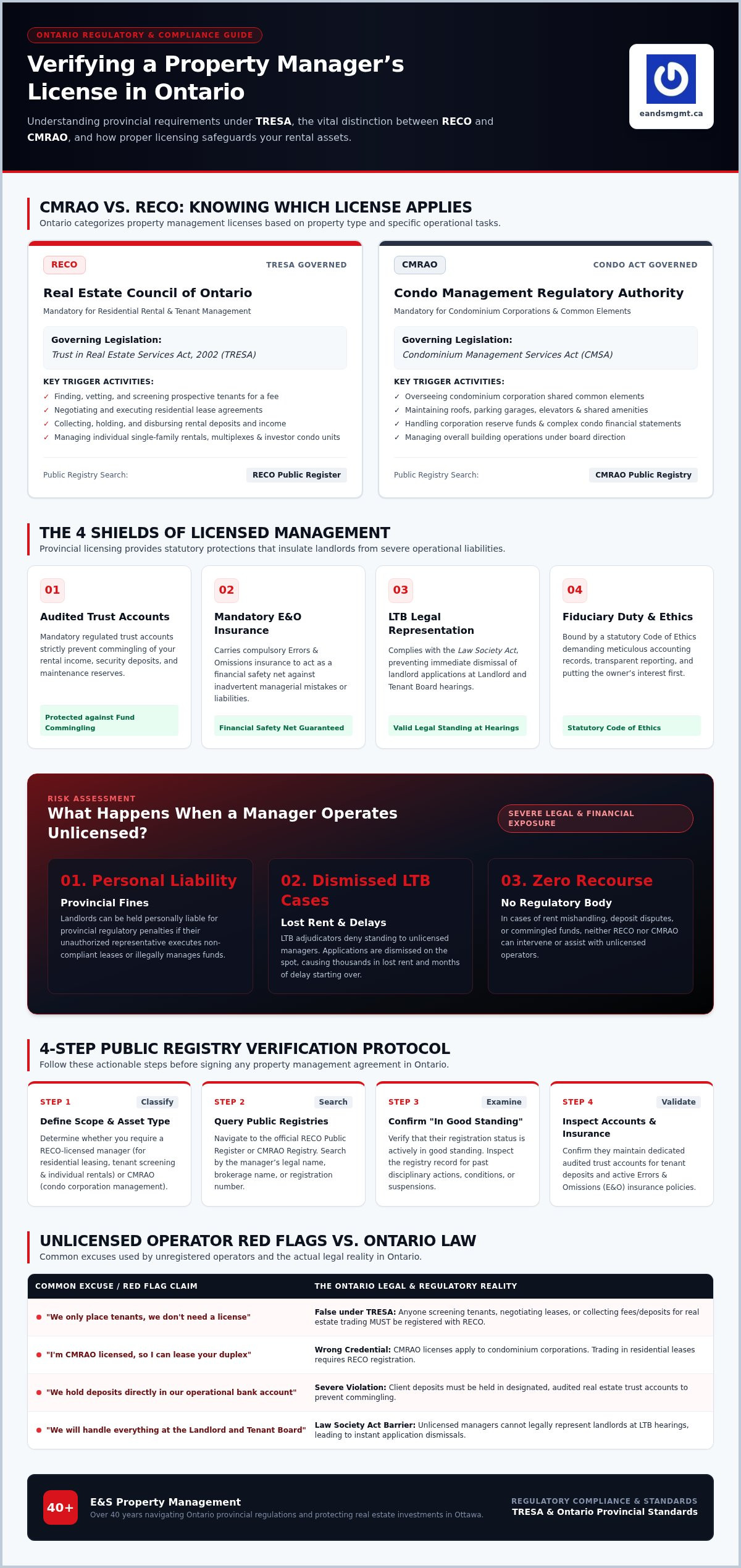
Owning a rental property in Ottawa represents years of hard work and significant financial commitment. It is natural to feel a sense of weight when delegating the care of that asset to someone else. Verifying a property manager’s license in Ontario is the most effective way to ensure that the person holding your keys and your rental income is legally authorized to do so. In Ontario, the regulatory landscape shifted significantly with the Trust in Real Estate Services Act, 2002 (TRESA), which mandates that anyone trading in real estate, including those who lease property or screen tenants for compensation, must be registered with the Real Estate Council of Ontario (RECO).
A license acts as a professional shield for you. It ensures that the firm you hire carries mandatory errors and omissions insurance, providing a safety net if a mistake occurs. When you work with a licensed professional, you are not just hiring a contractor; you are engaging a partner who is bound by provincial law to handle your money through regulated, audited trust accounts. This structure prevents the commingling of funds, ensuring your rental deposits and maintenance reserves remain secure and transparent.
The Risks of Unlicensed Property Management
Choosing an unlicensed operator introduces unnecessary variables into your investment strategy. Without a license, there is no regulatory body to oversee how your money is handled. If a dispute arises over a security deposit or rent disbursement, you have no recourse through RECO or the CMRAO. This lack of oversight often leads to financial mismanagement that can take months to untangle.
Legal complications at the Landlord and Tenant Board (LTB) are another major concern. Under the Law Society Act, unlicensed property managers cannot legally represent you in LTB hearings. If you hire someone who lacks the proper credentials, an adjudicator may deny them standing, leading to the immediate dismissal of your application. This can result in thousands of dollars in lost rent and months of delays while you start the process over with a licensed paralegal or lawyer.
Fiduciary Duty and Professional Standards
A licensed manager operates under a strict Code of Ethics. This means they have a fiduciary duty to act in your best interests, maintaining high standards for property management services and administrative transparency. They are required to keep meticulous records and provide regular financial reporting, which is essential for your annual tax filings.
At E&S Property Management, we have spent over 40 years navigating these provincial regulations for our clients. We understand that professional oversight is about more than just following rules; it is about providing the stabilizing force you need to transition from the stress of DIY management to the relief of expert care. When verifying a property manager’s license in Ontario, you are confirming that your asset is in the hands of a dedicated steward who values your investment as much as you do.
CMRAO vs. RECO: Knowing Which License Your Manager Needs
Understanding the difference between CMRAO and RECO is the first step toward clarity. Many landlords assume a single property management license covers every scenario, but Ontario separates these roles based on the type of property and the specific tasks being performed. If you own a single-family home or a small apartment building, you are looking for a different set of credentials than a condo board member would. Identifying these differences helps you avoid the common trap of hiring someone who is licensed for the wrong type of work.
Verifying a property manager’s license in Ontario requires knowing which registry to check first. If your manager’s duties involve finding tenants, negotiating leases, or collecting deposits for a fee, they are trading in real estate under the Trust in Real Estate Services Act, 2002 (TRESA). This means they must be registered with the Real Estate Council of Ontario. You can quickly check their status and any disciplinary history on the RECO public register to ensure they are in good standing before you sign a management agreement.
When is a CMRAO License Mandatory?
A license from the Condominium Management Regulatory Authority of Ontario (CMRAO) is strictly for those managing a condominium corporation. These managers oversee the common elements of a building, such as the roof, parking garage, and shared amenities. They also handle the corporation’s reserve fund and complex financial statements. If you are an individual investor who owns a condo unit as a rental, your tenant manager does not necessarily need a CMRAO license unless they are also managing the entire building’s operations for the board of directors.
When is a RECO/REBBA License Required?
Most residential landlords in Ottawa need a manager who is registered with RECO. This is because the process of marketing a unit, screening applicants, and executing a lease falls under regulated real estate activity. Professional firms that handle these tasks must operate under a licensed brokerage. This oversight ensures that your rental deposits are held in audited trust accounts, protecting you from the financial mismanagement risks we discussed earlier. It is the gold standard for anyone managing individual tenancies in the Ottawa market.
Navigating these distinctions can feel like a full-time job. If you are feeling the weight of these regulations, delegating your full-service property management to a seasoned hand can provide the relief you deserve. At E&S Property Management, we have spent decades ensuring our clients’ assets are managed with the highest level of professional and regulatory care, allowing you to focus on your long-term goals while we handle the details.
How to Search the Ontario Public Registries (Step-by-Step)
Confirming the credentials of your management partner is a straightforward process that offers immense relief. To begin verifying a property manager’s license in Ontario, you first need the correct legal name. Many professionals use trade names or “Doing Business As” (DBA) titles for marketing, but the registries require the name registered with the province. Ask your manager for the legal name of their corporation or their full individual name as it appears on their provincial registration. Once you have this information, you can follow these steps to find the clarity you need.
Searching the CMRAO Registry
When you visit the CMRAO public registry, you will find information regarding managers who oversee condominium corporations. It is important to distinguish between the types of licenses you might see:
- General Licence: This indicates a seasoned professional who has completed five mandatory certificate courses and has at least 2,920 hours (two years) of supervised experience.
- Limited Licence: This is an entry-level practitioner who must be supervised by a General Licensee and cannot enter into certain agreements without prior approval.
Check that both the individual manager and the management firm itself hold active licenses. The registry will also list any specific conditions or restrictions placed on their ability to practice, ensuring you have a complete picture of their professional standing.
Searching the RECO Registry
For residential rental and leasing professionals, the RECO public register is your primary tool. You can search by the individual’s name or the name of the brokerage they work under. A key indicator of reliability is the “In Good Standing” status, which confirms they are currently authorized to trade in real estate.
When reviewing a profile, look specifically at the disciplinary history. RECO publishes regulatory actions taken within the preceding 60 months. This transparency allows you to see if the firm has faced sanctions for trust account infractions or other compliance issues, giving you the confidence that your funds are being handled with integrity.
Interpreting the Status
As you review the results, the “Status” column is the most critical field. An “Active” status means the manager is fully authorized to perform their duties. If you see “Suspended,” “Terminated,” or “Revoked,” the individual or firm cannot legally perform property management tasks that require a license. Taking five minutes to perform this check is a small investment of time that provides long-term protection for your Ottawa rental property.
Red Flags: What to Do if a Manager Isn’t Licensed
Realizing that the person managing your investment might not be properly credentialed is a deeply unsettling experience. You have placed your trust and your capital in their hands, expecting a level of professional stewardship that keeps you safe from legal harm. If you hit a dead end while verifying a property manager’s license in Ontario, it is vital to act quickly. Unlicensed operators often rely on a landlord’s lack of regulatory knowledge to bypass the law, but these shortcuts eventually lead to significant financial and legal burdens for the property owner.
Warning Signs During the Interview
A professional manager should be open and transparent about their credentials from the very first conversation. If you ask for a license number or brokerage affiliation and receive a vague answer, consider it a major warning sign. Licensed firms are proud of their standing and will readily discuss their mandatory trust account audits and financial reporting standards. Be wary of anyone who suggests that a formal management agreement is unnecessary or who seems unfamiliar with the standard Ontario residential lease. These documents are not just paperwork; they are the legal framework that protects your rights as a landlord.
Protecting Yourself from “Grey Market” Managers
The “grey market” of property management is filled with individuals who claim they are exempt from licensing because they only act as a consultant or a handyman. However, if they are placing tenants or negotiating lease terms for a fee, they are legally required to be registered. Hiring an unlicensed operator can lead to severe consequences:
- Insurance Voids: Many landlord insurance policies require that professional tasks be handled by licensed entities. An unlicensed manager’s error could lead to a denied claim.
- Personal Liability: You may be held personally responsible for a manager’s failure to comply with the Residential Tenancies Act or municipal bylaws.
- Financial Loss: Without regulated trust accounts, your rental deposits have no provincial protection if the manager disappears or mismanages the funds.
If you discover your current manager is unlicensed, your first step should be to pause all financial disbursements. Request immediate proof of their registration with RECO or the CMRAO. If they cannot provide this, it is time to transition your asset to a firm that values regulatory compliance as much as you do. You don’t have to carry the weight of this uncertainty alone. Secure your investment today by partnering with an Ottawa firm that has spent 40 years upholding the highest professional standards. We can help you navigate the transition and restore the peace of mind you deserve.
Navigating Ontario Regulations with a Trusted Ottawa Partner
Managing a rental property in the nation’s capital involves more than just finding a tenant; it requires a deep understanding of a shifting regulatory landscape. Since 1981, E&S Property Management has served as a stabilizing force for Ottawa landlords, providing the seasoned expertise needed to navigate provincial laws with confidence. While verifying a property manager’s license in Ontario is an essential first step, it is the depth of local experience that truly secures your investment over the long term. We have spent over 40 years refining our processes to ensure every home we manage remains compliant, profitable, and well maintained.
We understand the unique pressures of managing a home while stationed thousands of kilometres away. For our clients in the Foreign Service or the Department of National Defence (DND), the transition from the stress of long distance oversight to the relief of professional stewardship is life changing. We act as your protective guardian on the ground, handling the administrative burdens that go far beyond verifying a property manager’s license in Ontario, such as ensuring your property meets all local Ottawa bylaws and provincial safety standards.
Beyond the License: The E&S Standard
A license is a baseline, but true professional management is defined by meticulous care and proactive protection. Our approach includes a comprehensive suite of services designed to give you total peace of mind:
- Maintenance Coordination: We oversee every repair using a network of trusted, licensed professionals, ensuring work is done correctly the first time.
- Regular Property Inspections: We conduct thorough, scheduled inspections to catch minor issues before they become expensive liabilities, protecting the physical value of your asset.
- CRA Tax Compliance: We specialize in NR6 and NR4 tax administration, providing essential support for non-resident landlords to ensure they remain in good standing with the Canada Revenue Agency.
Your Next Steps for Secure Management in Ottawa
Choosing a seasoned firm is the best protection for your financial future. It allows you to delegate the complex cycle of rent collection, tenant relations, and legal compliance to a partner who has navigated every possible challenge. We invite you to reach out for a professional consultation and a detailed rental assessment of your property. This is the first step toward a more organized, stress free investment experience. You don’t have to carry the burden of provincial regulations alone; let a dedicated steward handle the details so you can focus on your next posting or project. Delegate your property management with confidence to E&S and experience the clarity that comes with 40 years of local expertise.
Build a Legacy on Professional Trust
Ensuring your rental property remains a source of stability requires more than just finding the right tenant; it requires a manager who respects the legal framework of our province. By understanding the distinction between RECO and CMRAO and identifying the warning signs of unlicensed operators, you’ve taken a significant step toward protecting your asset. Verifying a property manager’s license in Ontario is the foundation of a professional relationship that prioritizes your financial safety and regulatory compliance.
With over 40 years of experience in the Ottawa market, E&S Property Management acts as a seasoned guardian for your home. We specialize in the complex needs of Foreign Service members and non-resident landlords, providing comprehensive maintenance oversight and specialized NR6 tax administration. You don’t have to carry the burden of these administrative cycles alone. Secure your investment with Ottawa’s seasoned property management experts and experience the relief that comes with meticulous, professional care. Your peace of mind is within reach.
Frequently Asked Questions
Is a license required for all property managers in Ontario?
A license is required if the manager performs “trading” activities like tenant placement or lease negotiation for compensation. While routine maintenance and rent collection for freehold homes are technically exempt, most professional firms in Ottawa maintain RECO registration to provide comprehensive care. Verifying a property manager’s license in Ontario ensures your representative is legally authorized to sign leases on your behalf and handle your rental deposits with integrity.
What is the difference between a condo manager and a rental property manager?
The difference lies in the scope of authority and the governing body. A condo manager is licensed by the CMRAO to oversee building operations, common elements, and board level finances. Conversely, a rental property manager handles individual tenancies, marketing, and leasing under RECO oversight. It’s common for Ottawa investors to hire a rental manager to care for their specific unit while the condo corporation employs a separate building manager.
Can I check a property manager’s license online for free?
Yes, you can access the official public registries for RECO and CMRAO at no cost to you. These databases allow you to search by an individual’s name or a firm’s legal title to confirm their current status. This is a vital step in verifying a property manager’s license in Ontario before signing any management agreements. It provides immediate transparency regarding their registration history and any past disciplinary actions taken by the province.
What happens if I hire an unlicensed property manager in Ontario?
Hiring an unlicensed operator exposes you to personal liability and potential insurance denials. Most landlord insurance policies require professional tasks to be handled by licensed entities. Additionally, unlicensed managers aren’t permitted to represent you at the Landlord and Tenant Board. This means an adjudicator could dismiss your eviction or rent increase application, resulting in thousands of dollars in lost income and prolonged legal stress for your Ottawa investment.
Do individual staff members at a management firm need their own licenses?
Yes, both the management firm and the specific individuals handling your account must hold valid credentials. In the RECO system, the company operates as a licensed brokerage while the staff members are registered as brokers or salespersons. For condominium management, the firm must hold a Provider Licence and the manager must have a General or Limited Licence. This dual layer of oversight ensures that every person touching your investment is professionally accountable.
How often do Ontario property management licenses need to be renewed?
Registration cycles vary depending on the regulatory body overseeing the professional. RECO registrations generally require renewal every two years, accompanied by mandatory continuing education to stay current with provincial laws. CMRAO licenses for condo managers are typically renewed on an annual basis. These regular check ins ensure that your Ottawa manager is up to date with the latest standards in maintenance, financial reporting, and tenant rights.
Does a real estate agent license allow someone to manage property in Ontario?
A real estate license through RECO does allow an agent to manage property, but they must do so through their registered brokerage. The brokerage is responsible for holding all rent and deposits in audited trust accounts. If an agent tries to manage your property “on the side” without their brokerage’s involvement, they are operating illegally. This creates a massive risk for you, as your funds would lack provincial trust protection.
What should I do if my manager’s license is suspended?
If you discover a suspension, you must act quickly to protect your rental income and asset. A suspended license means the manager can no longer legally negotiate leases or handle your funds. You should pause all payments to the manager and contact a seasoned, licensed firm like E&S Property Management. We’ve helped many Ottawa landlords transition from unstable situations to the relief of professional, fully compliant stewardship since 1981.