
Treating municipal compliance as an emergency reaction to a sudden 3-1-1 complaint is the fastest way to erode the value of your rental investment. If you feel caught between provincial regulations under the Residential Tenancies Act and the City of Ottawa’s local rules, you aren’t alone. It’s completely natural to worry about surprise municipal inspections, escalating repair orders, or coordinating seasonal maintenance while living outside the city or abroad. That’s why this Ottawa landlord guide to property standards bylaws reframes municipal enforcement from an unpredictable hazard into a reliable blueprint for proactive asset preservation.
You’ll gain complete clarity on your legal obligations under Ottawa’s Property Standards By-law (No. 2013-416), seasonal heating rules, and rental maintenance codes to protect your long-term equity. We detail how to handle city notices calmly without escalating to formal hearings, preserving both your capital and positive tenant relationships. Ahead, you’ll find a clear breakdown of every essential property standard and step-by-step inspection protocol needed to keep your rental assets fully compliant year-round.
Key Takeaways
- Understand how Ottawa’s Property Standards By-law operates alongside provincial rules with this actionable Ottawa landlord guide to property standards bylaws.
- Fulfill non-negotiable rental standards, including Ottawa’s specific heating thresholds and essential life-safety detector requirements.
- Learn how city officers handle 3-1-1 tenant service requests and how calm, documented communication resolves concerns before orders are issued.
- Implement a proactive biannual maintenance routine designed to protect your building envelope against severe Ottawa seasonal shifts.
- Discover the peace of mind that comes from delegating routine property standards oversight to experienced local managers, especially when living outside the city.
Decoding Ottawa’s Property Standards By-law: Municipal Rules vs. Provincial Law
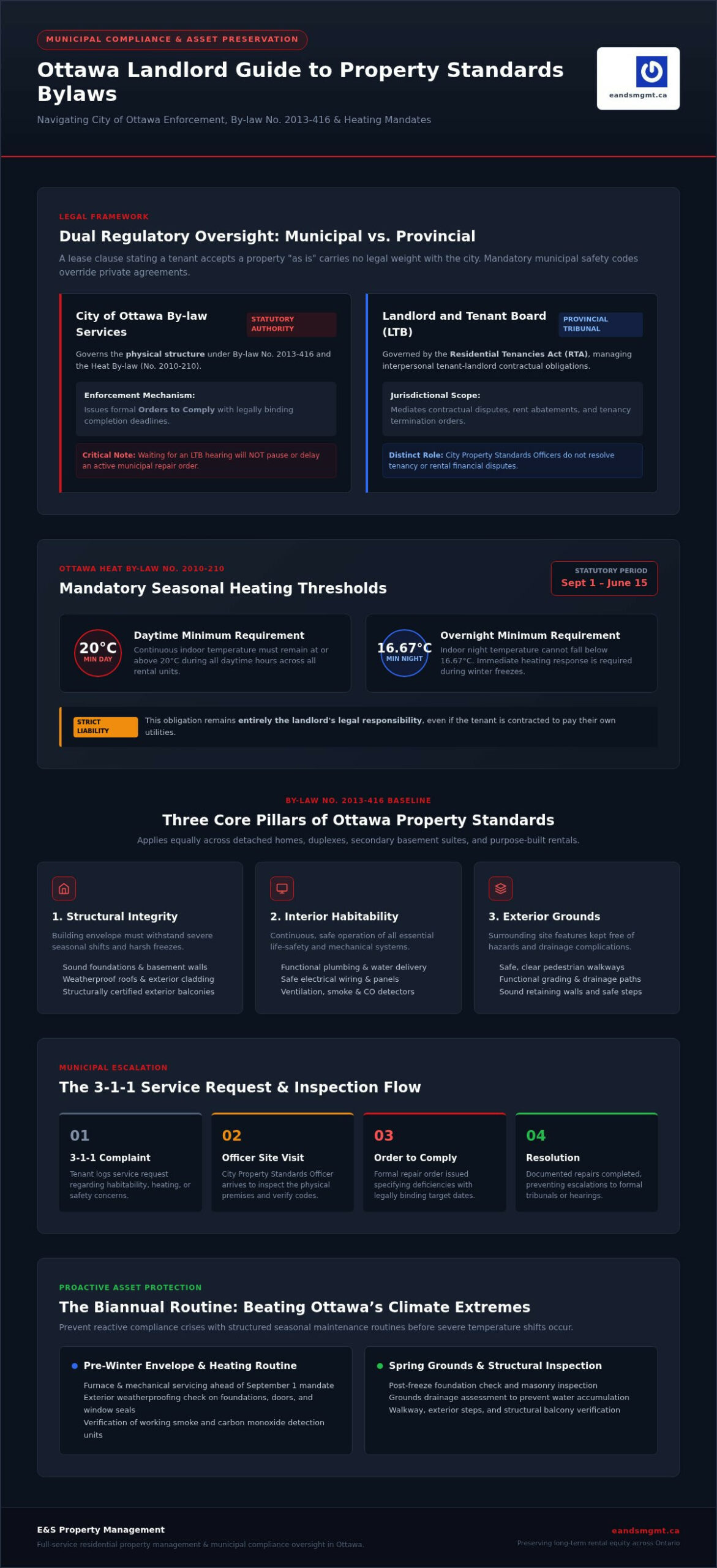
Owning rental real estate in the nation’s capital involves a dual layer of regulatory oversight that often catches housing providers off guard. While the provincial Residential Tenancies Act (RTA) governs contractual relationships and tenant rights, Ottawa By-law and Regulatory Services exercises distinct statutory authority over physical structures. A custom clause in your lease stating that a tenant accepts a property “as is” carries no legal weight with the city. Mandatory municipal safety codes always override private agreements. Following this Ottawa landlord guide to property standards bylaws helps you view compliance not as administrative red tape, but as a reliable method to preserve equity and prevent tenant friction.
The Role of By-law No. 2013-416 in Ottawa Rentals
By-law No. 2013-416 serves as Ottawa’s definitive benchmark for residential safety and maintenance. Within Canadian municipal governance, municipal by-laws give cities the legal power to enact local health and safety rules that can exceed provincial baselines. This standard applies equally across detached homes, converted duplexes, purpose-built rentals, and secondary basement suites. It establishes clear requirements across several core areas:
- Structural integrity: Foundations, roofs, exterior walls, and balconies must remain weatherproof and structurally sound.
- Interior habitability: Plumbing, electrical systems, heating apparatus, and ventilation must function safely without interruption.
- Exterior grounds: Walkways, drainage paths, retaining walls, and steps must be kept safe and free from hazardous conditions.
Under this bylaw, City of Ottawa Property Standards Officers are legally authorized to inspect properties whenever habitability concerns arise.
Municipal Enforcement vs. Landlord and Tenant Board Jurisdiction
A common point of confusion for property owners is separating municipal enforcement from provincial tribunals. City officers do not mediate interpersonal conflicts, approve rent abatements, or terminate tenancies; those legal remedies fall under the exclusive purview of the Landlord and Tenant Board (LTB). By-law officers focus strictly on the physical building itself.
When an inspector discovers a deficiency, they issue a formal Order to Comply with a legally binding completion date. Waiting for a scheduled LTB hearing to address an unhappy tenant won’t pause a city order. Landlords must resolve municipal repair orders and manage provincial tenancy matters at the same time. Treating this Ottawa landlord guide to property standards bylaws as an ongoing operational standard ensures your property remains protected across both regulatory jurisdictions.
Mandatory Rental Standards: Heating, Structural, and Safety Rules in Ottawa
Ottawa’s climate creates real physical challenges for rental housing. Deep winter freezes give way to humid summers, putting steady stress on building foundations, heating plants, and exterior finishes. A thorough Ottawa landlord guide to property standards bylaws must treat these physical realities as ongoing maintenance priorities rather than unexpected surprises. Under Ottawa’s Property Standards By-law, property owners carry strict liability for maintaining safe, habitable environments across all key building systems.
Ottawa Heating Bylaw Requirements and Seasonal Thresholds
Under the city’s Heat By-law (No. 2010-210), landlords must provide continuous, adequate heat from September 1 to June 15. The municipal standard requires an indoor temperature of at least 20°C during the day and 16.67°C at night. This obligation remains entirely the landlord’s responsibility, even if the tenant pays their own utilities. If a furnace quits during a January freeze, repairs cannot wait. Owners living abroad or posted elsewhere often partner with E&S Property Management to coordinate immediate emergency response and furnace servicing before temperatures drop below statutory limits.
Life Safety, Smoke Detectors, and Carbon Monoxide Systems
Life-safety compliance leaves zero room for oversight. Ottawa inspectors verify smoke and carbon monoxide detection systems during standard site visits:
- Smoke alarms: Working devices are required on every occupied level and directly outside all sleeping areas.
- Carbon monoxide detectors: Units must sit adjacent to sleeping quarters in buildings containing fuel-burning appliances, fireplaces, or attached garages.
- Log maintenance: Landlords must test all alarms at tenancy commencement, verify operational batteries annually, and preserve signed service logs.
Missing or expired detectors trigger immediate compliance orders from city inspectors.
Exterior Property Maintenance, Snow Removal, and Waste Disposal
Building safety extends beyond the front door. Landlords must keep private walkways, outdoor stairwells, and entry paths clear of snow, ice, and trip hazards. Accessory garages, perimeter fencing, and structural retaining walls must stay intact and upright. Under this Ottawa landlord guide to property standards bylaws, waste management also demands steady oversight. Uncollected garbage attracts wildlife and brings pest complaints. Landlords must supply covered, rodent-proof bins and ensure clear disposal schedules, preserving curb appeal while avoiding municipal penalties.
The 3-1-1 Complaint and Inspection Process: What Landlords Must Expect
Receiving notice of a municipal inspection can feel overwhelming, especially if you take pride in providing a quality home. Most city investigations begin when a resident contacts 3-1-1 after maintenance communication stalls. While Ontario’s Residential Tenancies Act expects parties to resolve day-to-day repair issues directly, the city intervenes whenever life safety or habitability standards are questioned. Understanding the steps of this process removes the fear factor. As this Ottawa landlord guide to property standards bylaws demonstrates, viewing city interactions through an objective lens turns regulatory friction into clear, manageable tasks.
From 3-1-1 Report to Officer Site Visit
When a tenant calls 3-1-1, intake staff confirm whether the landlord received prior written notice of the issue. If the matter remains unaddressed, a Property Standards Officer is assigned to investigate. Officers provide reasonable notice to arrange access, then conduct a targeted physical review. They assess the specific complaint, check adjacent building elements, and examine life-safety devices. For minor or borderline infractions, officers often issue an informal verbal caution or written inspection report, granting a brief courtesy window to correct the issue before taking formal enforcement steps.
Understanding Orders to Comply, Fines, and Escalations
If an officer confirms a clear violation, the city issues a binding Order to Comply. This legal document identifies the exact municipal code violated, outlines the necessary remediation work, and sets a strict deadline. Ignoring these notices leads to severe penalties. Under Ottawa’s Rental Housing Property Management By-law (#2020-255), landlords who fail to comply can face fines ranging from $500 to $100,000 for each day an offence continues. The city also possesses statutory authority to hire third-party contractors to complete required work, placing the entire cost directly onto your municipal property tax bill.
Appealing an Order to the Property Standards Committee
If you dispute the officer’s findings or face legitimate material delays, you have formal appeal rights. Landlords can appeal an order by filing paperwork with the Ottawa Property Standards Committee within the statutory deadline specified on the notice, usually within 14 to 21 calendar days. The committee evaluates written evidence, contractor schedules, and physical proof to confirm, modify, or extend the compliance timeline. Staying courteous and transparent with your assigned officer often secures practical extensions without needing a committee hearing.
Proactive Compliance Blueprint: Seasonal Checklists for Ottawa Rentals
Preventative property care shields landlords against bylaw violations far more effectively than reacting after an inspector knocks. Ottawa’s climate demands a disciplined approach. Freezing winter thaws, heavy spring runoffs, and summer heat cycles quickly exploit tiny exterior weak spots. Building a structured biannual inspection schedule protects both your capital investment and tenant goodwill. This Ottawa landlord guide to property standards bylaws translates local housing standards into practical seasonal workflows you can execute without stress.
Fall and Winter Preparation Checklist
Ottawa winters are notoriously unforgiving. Preparing mechanical systems and the building envelope before freezing temperatures arrive avoids emergency calls and statutory heating violations:
- Furnace servicing: Book licensed HVAC technicians for furnace tune-ups, heat exchanger inspections, and clean filter installations every August.
- Draft and seal checks: Inspect caulking around window frames, adjust weatherstripping on entry doors, and close foundation vents.
- Exterior drainage: Disconnect garden hoses, shut off interior water shutoff valves for outside bibs, and clear fallen leaves from eavestroughs.
- Snow clearance agreements: Secure written contracts with reliable local snow removal providers to maintain safe pedestrian paths and driveway access.
Spring and Summer Exterior Inspections
Once snow melts, shift focus to exterior drainage and structural movement caused by frost heave:
- Foundation surfaces: Walk the perimeter to inspect foundation walls, brick mortar, and parging for hairline fractures or water seepage.
- Sump systems: Test basement sump pumps, check float valves, and ensure exterior discharge pipes channel meltwater safely away from foundation footings.
- Walkways and railings: Confirm exterior step handrails, deck balusters, and walkway pavers remain level, firmly anchored, and free from trip hazards.
Catching foundation grading flaws early prevents catastrophic basement moisture damage when heavy spring rains arrive.
Documentation Protocols and Tenant Maintenance Logs
Clear documentation turns your daily diligence into indisputable evidence. Maintain high-resolution, dated photo logs of seasonal walkthroughs alongside written move-in inspection reports. When tenants submit repair tickets, track your response timelines and preserve invoice copies from certified trades. Having an organized paper trail proves reasonable care if a city officer ever requests maintenance verification.
Managing ongoing seasonal checklists demands steady local presence and trusted trade networks. If keeping up with routine property checkups feels overwhelming while balancing personal obligations, you can schedule Regular Property Inspections with E&S Property Management to protect your investment year-round.
Delegating Compliance: How Full-Service Management Protects Your Investment
Meeting municipal standards while balancing a busy career or living outside the National Capital Region is a demanding task. Keeping up with local enforcement requires time, rapid communication, and reliable trade connections. As outlined throughout this Ottawa landlord guide to property standards bylaws, compliance isn’t merely about avoiding fines; it’s about actively stewarding your physical asset. Delegating these operational burdens to seasoned professionals transforms property ownership from a constant source of friction into a secure, predictable investment.
The Challenge for Non-Resident and Busy Rental Owners
Managing rental maintenance across different time zones presents steep logistical hurdles. For Canadian Foreign Service personnel on diplomatic postings or expatriate property owners, a missed email or delayed furnace repair can prompt a frustrated resident to dial 3-1-1. Municipal officers work on tight timelines. Without a trusted local representative in Ottawa to accept notices, meet inspectors, and oversee repairs, small oversights quickly escalate into formal legal orders. Having dedicated local representation ensures your property interests stay protected no matter where your career takes you.
How Professional Inspections and Maintenance Preserve Asset Value
Professional property management replaces guesswork with structured, predictable care. Rather than scrambling after an enforcement notice arrives, routine oversight keeps your property ahead of municipal requirements:
- Proactive site reviews: Regular Property Inspections catch minor water intrusion, settling walkways, or ventilation defects before they evolve into bylaw breaches.
- Trusted local trades: Established networks of insured, licensed contractors resolve repairs promptly using approved materials, avoiding substandard work.
- Emergency response: An Emergency 24/7 Maintenance Response ensures sudden furnace failures or plumbing leaks are handled before freezing temperatures trigger municipal habitability penalties.
- Clear accountability: Detailed inspection logs and transparent maintenance tracking provide an auditable record proving ongoing statutory diligence.
Take the stress out of bylaw compliance by contacting E&S Property Management today. Over four decades of dedicated residential management experience ensures your rental home remains compliant, protected, and profitable.
Safeguard Your Rental Asset with Proactive Compliance
A successful rental strategy isn’t built on scrambling through midnight heating failures or reacting defensively to sudden municipal visits. As this Ottawa landlord guide to property standards bylaws has shown, real security comes from mastering local bylaws, establishing seasonal maintenance routines, and keeping lines of communication open. When you treat compliance as regular asset stewardship rather than administrative red tape, you preserve your property value and foster lasting tenant goodwill.
You don’t have to shoulder the logistical burdens of property standards alone. Backed by over 40 years of residential management experience across the Ottawa rental market, E&S Property Management delivers dedicated stewardship for local landlords and Canadian Foreign Service members posted abroad. Through structured preventative property inspections and an Emergency 24/7 Maintenance Response, our team resolves issues before they ever become city violations. Protect your Ottawa rental investment with professional property oversight from E&S Property Management today, and turn property ownership into a calm, truly predictable experience.
Frequently Asked Questions
What is the minimum temperature an Ottawa landlord must provide during winter?
Ottawa landlords must supply a minimum indoor temperature of 20°C during the day and 16.67°C overnight between September 1 and June 15 under the municipal Heat By-law (No. 2010-210). This statutory obligation remains the property owner’s legal responsibility year-round, even if the residential lease stipulates that tenants pay for their own heating utilities. Space heaters do not satisfy this municipal requirement.
Can an Ottawa tenant call 3-1-1 without notifying the landlord first?
While tenants can physically call 3-1-1 at any time, city intake operators instruct residents to notify their landlord in writing before dispatching an officer. If the issue is an urgent life-safety hazard or the housing provider fails to respond within a reasonable window, the city initiates a service request. Following this Ottawa landlord guide to property standards bylaws helps owners establish clear communication channels, resolving repairs before municipal inspectors get involved.
What is the difference between an Ottawa bylaw violation and an LTB dispute?
Municipal bylaw enforcement focuses exclusively on physical building conditions, structural safety, and property maintenance under local codes like By-law No. 2013-416. In contrast, the Landlord and Tenant Board (LTB) is a provincial tribunal governing contractual rights, rent abatements, lease agreements, and formal evictions under the Residential Tenancies Act. City officers issue orders to correct physical structures, while the LTB adjudicates legal disputes and financial remedies between parties.
Who is responsible for snow removal at an Ottawa rental property?
Under municipal standards and provincial law, landlords bear the ultimate legal responsibility for clearing snow and ice from common exterior walkways, driveways, steps, and parking areas. Even if a lease clause tasks a tenant with exterior maintenance, the Landlord and Tenant Board and municipal bylaw officers hold the property owner accountable if an injury or infraction occurs. Hiring an insured, professional contractor is the safest way to maintain compliance.
What happens if a landlord ignores an Ottawa Order to Comply?
Ignoring an Order to Comply triggers significant financial and administrative consequences under Ottawa’s Rental Housing Property Management By-law (#2020-255). The city can levy daily fines ranging from $500 to $100,000 until the violation is resolved. Additionally, By-law Services can dispatch municipal contractors to complete the necessary remediation work directly, adding the entire repair invoice and administrative processing charges straight onto the owner’s property tax bill.
Are smoke and carbon monoxide detectors mandatory in all Ottawa rental units?
Yes, working smoke alarms are legally required on every occupied level of a rental property and directly outside all sleeping quarters. In addition, carbon monoxide detectors are mandatory outside sleeping rooms in any building with fuel-burning appliances, fireplaces, or an attached garage. In this Ottawa landlord guide to property standards bylaws, maintaining verified annual testing records and signed tenant handover logs protects owners against severe liability.
Can a landlord appeal an Order to Comply issued by the City of Ottawa?
Yes, landlords have the legal right to appeal an Order to Comply by submitting written notice to the Ottawa Property Standards Committee. This appeal must be filed within the statutory deadline printed on the order, typically within 14 to 21 calendar days of receipt. The committee can confirm, alter, or extend compliance timelines if you demonstrate active contractor scheduling, material delivery delays, or genuine procedural disputes.


