
A rental inspection report is a record of the property’s condition, not just a quick walk-through. Knowing what to look for in a rental inspection report means checking each room, noting existing damage and missing items, and keeping clear records. For landlords, inspections help track the home’s condition and identify repairs that need attention.
It’s understandable to feel uneasy about an inspection, especially when you’re moving in or preparing to move out. A dated, detailed record can show which issues were already present and provide a useful point of comparison later.
This guide explains why landlords inspect rental properties, how to work through a checklist, and how to document damage with notes and photos. You’ll also find practical ways to prepare so you can approach the inspection with greater clarity and confidence.
Key Takeaways
- Understand how a signed, dated move-in report can establish a clear record of the property’s condition.
- Use a room-by-room approach to make inspection findings more complete and easier to review.
- Learn how to support written notes with photos and keep a useful record of damage or needed repairs.
- Recognize that inspection requirements differ across Canada, so the relevant provincial or territorial rules matter.
1. What is a Residential Rental Inspection Report?
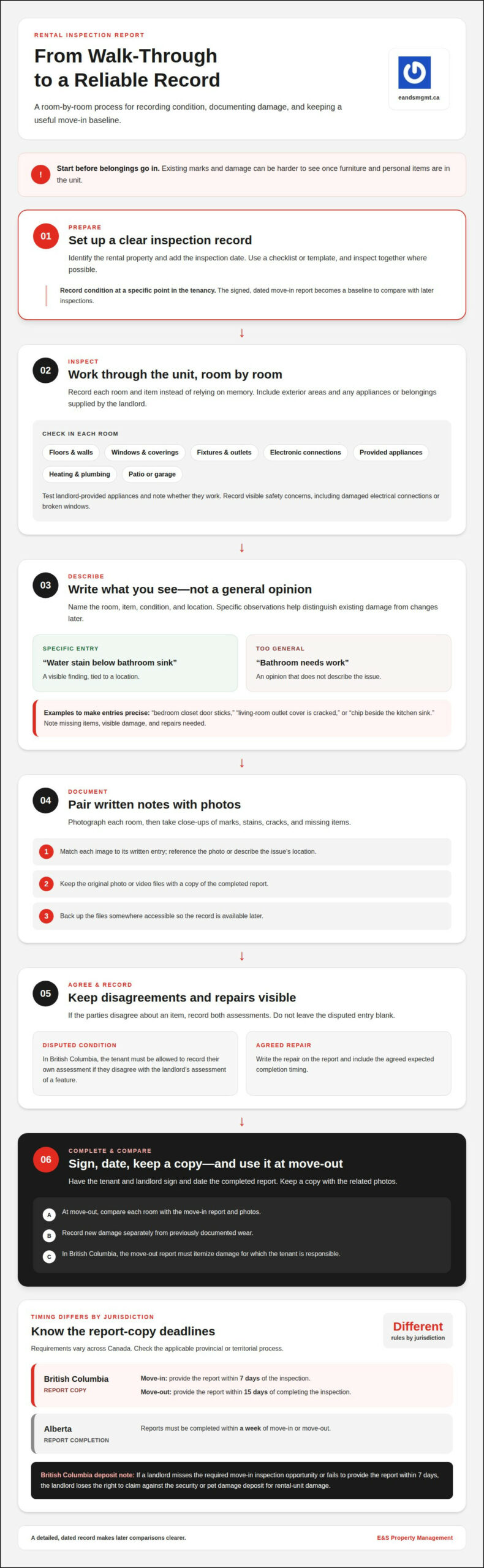
A residential rental inspection report records a unit’s condition at a specific point in the tenancy. The rules vary across Canada. For example, British Columbia and Yukon require a Condition Inspection Report. At move-in, the tenant and landlord should inspect the property together, record existing damage, then sign and date the report.
Use the inspection form to describe what you see rather than simply marking an item “good” or “poor.” For example, note a carpet stain near the living-room doorway or a cracked tile beside the kitchen sink. Add the inspection date and identify the rental property clearly. Specific details help distinguish existing damage from changes that occur during the tenancy.
Should tenants take photos or videos during a rental inspection? Yes. Capture each room and close-ups of specific damage, then keep the files with a copy of the report. Photos and videos can support the written record, especially if the tenant and landlord disagree about an item’s condition.
If a landlord won’t complete or sign the report, the tenant can still document the unit’s condition, date the notes, and keep photos or videos. In British Columbia, if the landlord disagrees with the tenant’s assessment of a feature, the tenant must be allowed to record their own assessment in the report.
Can a rental inspection report affect a tenant’s security deposit or damage claims? It can provide evidence of the unit’s condition, but deposit rules vary by jurisdiction. In British Columbia, a landlord who misses the required move-in inspection opportunity or fails to provide the report within seven days loses the right to claim against the security or pet damage deposit for rental-unit damage.
At move-out, compare each room with the move-in report and photos. Record new damage separately from previously documented wear, and have both parties sign and date the completed report. In British Columbia, the move-out report must itemize damage for which the tenant is responsible.
2. How do I complete a rental inspection checklist?
To understand what to look for in a rental inspection report, work through the unit room by room. Record each item’s condition instead of relying on memory. Note the room, item, and finding, such as “bedroom closet door sticks” or “living-room outlet cover is cracked.” Include the exterior and any appliances or belongings provided by the landlord.
In each room, inspect floors, walls, windows, coverings, fixtures, electrical outlets, and electronic connections. Test landlord-provided appliances and note whether they work. Record visible safety concerns, such as damaged electrical connections, broken windows, or problems with heating and plumbing fixtures.
A useful checklist separates observations from opinions. Write “water stain below bathroom sink” instead of “bathroom needs work.” Add a photo reference or describe the location so both parties can identify the same issue later. This makes it easier to apply what to look for in a rental inspection report to a specific room or fixture.
- Record the room and item, such as “kitchen, oven,” then describe its condition.
- Note missing items, visible damage, and repairs needed, including their locations.
- Check exterior areas included with the rental unit, such as a patio or garage.
If the tenant and landlord disagree about an item, record both assessments on the report. In British Columbia, the landlord must allow the tenant to record their own assessment when they disagree about a feature’s condition. Don’t leave a disputed entry blank.
Record any agreed repair on the report, along with the expected completion timing. For example, note that a loose kitchen cupboard handle needs repair and include the agreed timing. A written entry gives both parties a clear record to follow up on.
Before finishing, have the tenant and landlord sign and date the completed report, then keep a copy with related photos. A consistent process supports regular property inspections and keeps findings organized for future reference.
3. Documenting damage during a move-in inspection
Record existing damage before furniture and belongings make walls, floors, and corners harder to see. During the walk-through, the tenant and landlord can use a checklist or template to note each issue, its location, and its apparent condition. For example, describe a chip beside the kitchen sink rather than writing only “damaged counter.”
Photograph each room, then take close-ups of marks, stains, cracks, and missing items. Keep the original files with the completed report and back them up somewhere accessible. When the landlord and tenant inspect together, they can match each image to its written entry while the details are easy to see.
Move-in records provide a baseline, while routine inspections document changes during the tenancy. At move-out, compare each room with the original report and photos. A joint inspection gives both parties a chance to discuss differences and record new damage accurately.
What are the deadlines for completing and sharing a rental inspection report in Canada? Deadlines vary by province. In British Columbia, the landlord must provide the tenant with a move-in report copy within seven days of the inspection, and a move-out report within 15 days of completing that inspection. In Alberta, reports must be completed within a week of move-in or move-out.
Deadlines and procedures differ by jurisdiction. Check the applicable provincial or territorial process when scheduling an inspection and providing copies. Both parties can complete, sign, and date the inspection report at move-in and move-out.
Timing also affects how useful the record will be. Complete the move-in inspection before the tenant moves belongings into the rental unit, where practical, and keep the signed report with its photos. Landlords are advised to conduct a pre-move-out inspection about 30 days before the lease ends, giving time to identify issues and discuss repairs before the final walk-through.
4. What should a rental inspection report include in Canada?
Inspection requirements vary across Canada, so follow the rules for the applicable province or territory. British Columbia and Yukon require a Condition Inspection Report. In British Columbia, the report must identify the landlord and tenant by their full legal names, the rental unit’s address, and the inspection date. It must also record when the tenant receives the keys and the landlord’s address for service.
Beyond those identifying details, the report should describe the unit clearly enough for someone to understand each entry later. In British Columbia, it covers every room and hallway, including these features:
- Floors and window coverings
- Appliances, landlord-provided furniture, and fixtures
- Electrical outlets and electronic connections
- The exterior and spaces for the tenant’s sole use, such as balconies, patios, yards, garages, storage areas, and parking spaces
Write a separate, specific note for each feature. “Bedroom floor has a dark stain beside the closet” is clearer than “floor damaged.” Include missing items and needed repairs. In British Columbia, if the parties disagree about a feature’s condition, the tenant can record their own assessment on the report.
At move-in and move-out, the report should capture the property’s condition at the time of each inspection. Comparing entries helps distinguish previously recorded issues from changes during the tenancy. A British Columbia move-out report must itemize damage for which the tenant is responsible. Keep the completed report with related photos so the records can be reviewed together.
For a rental inspection in Ottawa, an organized record can make property condition and repair needs easier to follow. Arrange regular property inspections to keep inspection findings documented consistently.
E&S Property Management: Regular Property Inspections
E&S Property Management conducts regular property inspections to help landlords monitor a rental home’s condition and identify maintenance needs. This service is useful when you want consistent oversight while managing tenant communication, inspection records, and repair coordination.
Inspection findings are most useful when they’re clearly recorded and acted on. E&S Property Management coordinates necessary maintenance and repairs, connecting observed issues with practical next steps. Full-Service Property Management brings inspection oversight together with other day-to-day rental responsibilities.
When preparing to rent out a property, E&S Property Management’s Tenant Placement Service supports the leasing process. For ongoing oversight of a residential rental, regular inspections provide a structured way to monitor the property and document its condition.
Contact E&S Property Management to discuss regular property inspections for your rental.
Make your next inspection part of a clear plan
A well-kept inspection record supports sound decisions throughout a tenancy, not just at move-in or move-out. Use it to plan maintenance, communicate with tenants, and keep property records organized. Knowing what to look for in a rental inspection report is a practical first step; consistent oversight helps maintain that clarity over time.
If coordinating inspections alongside other landlord responsibilities is becoming difficult, professional property management can help. E&S Property Management provides residential property oversight, including inspections and tenant placement.
Contact E&S Property Management to discuss support for your rental property. A considered plan can make the next stage of managing your property feel more orderly and manageable.
E&S Property Management and Rental Inspection Reports
E&S Property Management offers Regular Property Inspections and Full-Service Property Management to help arrange inspections and manage your rental property. Its Tenant Placement Service can support you when preparing to find a tenant.
For financial administration, E&S Property Management offers Financial Reporting and Accounting, plus NR6 and NR4 Tax Filing Support. This includes processing NR6 forms, monthly tax withholdings, and issuing annual NR4 slips.
Frequently Asked Questions
Why do landlords perform rental property inspections?
Landlords inspect rental properties to monitor their condition, identify maintenance needs, and follow up on reported issues. An inspection, for example, may reveal a slow leak beneath a sink before it causes further damage. Visits also create a record of changes over time. Routine inspections are not required by residential tenancy laws, but landlords may use them as part of property oversight.
How do I complete a rental inspection checklist?
Move through the unit in a consistent order, such as entry, kitchen, bedrooms, then shared areas. For each item, note its location, condition, and any action needed. Instead of writing “window problem,” describe “bedroom window does not close smoothly.” If an issue needs follow-up, note when to revisit it and record the outcome after the repair.
What counts as normal wear and tear?
Normal wear and tear generally refers to gradual changes from ordinary use over time, rather than damage caused by an accident or careless action. A carpet may flatten along a regular walking path, while a burn mark points to a specific incident. Consider the item’s age, use, and documented starting condition. These details help distinguish expected deterioration from damage.
What is a Residential Rental Inspection Report?
A Residential Rental Inspection Report is a written record of a rental unit’s condition during an inspection. It gives the tenant and landlord a shared reference for discussing maintenance or comparing the property at different stages of the tenancy. For example, noting a loose bathroom towel bar makes it easier to track whether the issue was already present.
What should tenants check during a move-in inspection?
Check that supplied keys and access devices work, and record which ones you receive. Open and close doors and windows, run taps, and look for leaks around fixtures. Confirm that any furniture or equipment listed as included is present. These practical checks can reveal issues a visual walk-through might miss and give both parties specific items to discuss.
How should existing damage and wear be documented in a rental inspection report?
Describe each issue’s location and visible details, then take a photo showing both the wider area and the close-up. For example, photograph a wall scuff beside a doorway, not just the mark itself. Keep the images with the dated report, using clear file names such as “hallway wall” so each image matches its written entry.


