What if the simple desire to check on your investment property accidentally led to a costly dispute with the Landlord and Tenant Board? It’s a common anxiety for property owners, particularly those living abroad or managing busy lives, who worry about undetected water damage or lease violations while trying to respect their tenant’s right to privacy. You want to be a diligent steward of your asset, but the fear of overstepping can often lead to a paralysis that leaves your home vulnerable.
Finding the right balance for how often should a landlord inspect a property in Ontario is essential for your peace of mind and your legal protection. With RTA fines for individuals and corporations having doubled as of July 2026, the stakes for getting your entry notice and frequency right have never been higher. This guide will provide you with a clear, compliant roadmap for property oversight. We’ll explore the legal standards of “reasonable” entry, the new 2026 regulations regarding air conditioning inspections, and a practical schedule that transforms property maintenance from a source of stress into a foundation of long-term relief.
Key Takeaways
- Understand the specific legal requirements of the Residential Tenancies Act so you can enter your property with confidence and compliance.
- Learn exactly how often should a landlord inspect a property in Ontario to strike the perfect balance between asset protection and tenant privacy.
- Use our specialized checklist to spot early signs of water damage and ensure mandatory life safety systems are functioning correctly.
- Adopt a professional protocol that positions you as a protective guardian of the home, fostering a positive relationship with your tenants.
- Discover how to maintain your property’s value and your own peace of mind even if you’re managing the home from a different country.
Understanding the Legal Framework: The RTA and Your Right to Enter
The Residential Tenancies Act, 2006 serves as the essential rulebook for every rental relationship in our province. It provides the legal structure that protects both your investment and your tenant’s sense of security. As a property owner, you have a legitimate right to ensure your asset is being maintained, but this right exists alongside the tenant’s right to “quiet enjoyment.” This legal concept means that while you own the bricks and mortar, the tenant has the right to live there without unnecessary interference or the feeling of being watched.
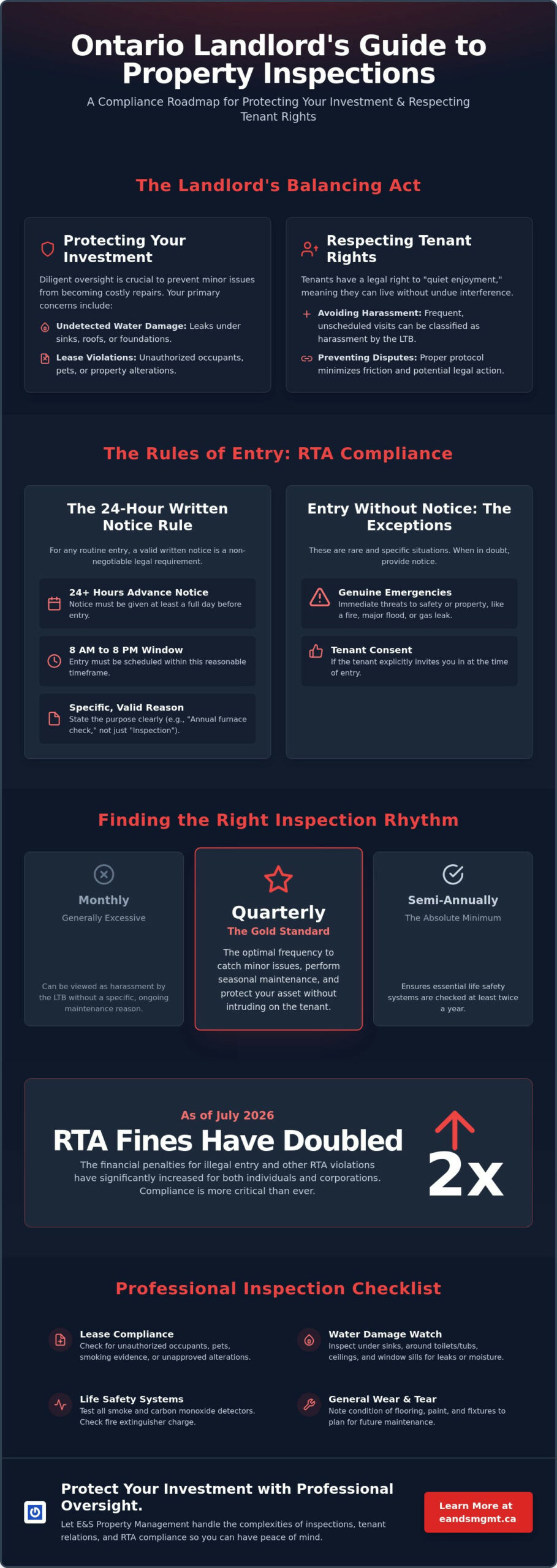
When you’re trying to determine how often should a landlord inspect a property in Ontario, it’s helpful to understand that the law doesn’t provide a specific tally of permitted visits. Instead, the Landlord and Tenant Board (LTB) relies on the standard of what is “reasonable.” Random or monthly “pop-ins” are generally viewed with skepticism by the LTB. Such frequent visits can feel intrusive to a tenant and may even be classified as harassment. If a landlord is found to have entered illegally or excessively, they face significant risks. These include rent abatements, where you’re ordered to return a portion of the rent to the tenant, and potential fines. Following the legislative updates on July 1, 2026, these fines have doubled for both individuals and corporations, making compliance more critical than ever.
The 24-Hour Written Notice Rule
To enter a unit legally for a routine inspection, you must provide a valid written notice at least 24 hours in advance. This document isn’t just a courtesy; it’s a legal requirement that must include the date of entry, a specific time window between 8 a.m. and 8 p.m., and a valid reason for the visit. Simply stating “inspection” is often too vague; specifying “annual maintenance check” or “furnace filter replacement” is much safer. You can deliver this notice by hand, by slipping it under the door, or via email if your lease agreement explicitly allows for electronic communication. Providing a narrow window of time shows that you respect the tenant’s schedule and their right to privacy.
Entry Without Notice: The Rare Exceptions
There are very few scenarios where you can enter a tenant’s home without prior notice. The most common is a genuine emergency, such as a fire, a major flood, or a reported gas leak. In these moments, your role as a protective guardian is to act quickly to prevent further damage or injury. You may also enter without notice if the tenant invites you in at that moment or if your lease agreement includes a specific schedule for regular cleaning or repairs. Outside of these narrow exceptions, always lean on the 24-hour notice to maintain a professional and respectful relationship with your residents. This approach ensures that you are seen as a reliable partner rather than an intruder.
How Often Should You Inspect? Finding the Professional Balance
Establishing a consistent rhythm for property visits is about more than just checking boxes. It’s about creating a proactive cycle of care that protects your investment while maintaining a respectful distance from your tenant’s daily life. While the legislation provides the boundaries, your specific schedule should reflect the unique needs of your property. For most high-value assets, a quarterly inspection schedule; four times per year; is the gold standard. This frequency allows you to identify minor issues, such as a slow faucet drip or a worn weather strip, before they evolve into costly emergencies.
When you are weighing how often should a landlord inspect a property in Ontario, it’s helpful to remember that “more” isn’t always “better.” Semi-annual visits are the absolute minimum we recommend for any residential unit. This ensures you’re seeing the home at least twice a year to verify that safety systems are operational. On the other hand, monthly visits are almost always excessive. According to the Landlord’s Right of Entry guidelines provided by Tribunals Ontario, entry must be for a valid, reasonable purpose. If a landlord enters every thirty days without a specific maintenance reason, the LTB may view this as a breach of the tenant’s rights. If the logistical burden of these visits feels overwhelming, professional regular property inspections can provide the thorough oversight you need without the emotional friction of doing it yourself.
The Quarterly ‘Stewardship’ Model
A quarterly approach works best when it’s aligned with the changing seasons. A spring visit allows you to assess any winter wear and tear, while a fall inspection ensures the furnace and pipes are ready for the freeze. We view these visits as “stewardship” rather than “policing.” Use this time to build rapport with your tenants. Simply asking, “Is there anything small that’s been bothering you lately?” can uncover a sticking window or a loose door handle that a tenant might otherwise ignore. This collaborative approach prevents the “deferred maintenance” cycle that can quietly erode your property’s value over time.
Trigger-Based Inspections
Sometimes the calendar isn’t the only guide for a visit. Certain events act as natural triggers for an additional check-in. For instance, after a significant wind or ice storm, a quick exterior and attic inspection is a wise move for a protective guardian. You should also schedule a follow-up visit after a major repair has been completed by a third-party contractor to ensure the work meets your standards. Finally, never overlook the “bookend” inspections. Comprehensive move-in and move-out inspections are your primary defense against liability and are essential for documenting the property’s condition at the start and end of every tenancy.
The Professional Inspection Protocol: Conduct and Ethics
Deciding how often should a landlord inspect a property in Ontario is only the first step; the second is mastering the etiquette of the visit itself. When you step into a rental unit, you are entering someone’s private sanctuary. Approaching this task as a “Protective Guardian” rather than a suspicious investigator completely changes the tone of the interaction. Your goal isn’t to find reasons to criticize the tenant’s lifestyle, but to ensure the structural integrity and safety of the home you both value. This mindset fosters a collaborative relationship where tenants feel supported rather than policed.
One of the most common points of friction during an inspection is the distinction between a “messy” unit and a “damaged” one. It is vital to understand the legal difference to avoid unnecessary conflict or LTB disputes. A tenant has the right to live in a way that suits them, even if their standards of tidiness differ from your own. Clutter on the floor or unwashed dishes are lifestyle choices that do not typically violate a lease. However, damage is different. You are looking for holes in the drywall, unauthorized alterations, or signs of hoarding that create fire hazards or attract pests. Focus your energy on these tangible risks to the asset, and remain neutral regarding personal decor or organization.
Privacy and Photography
Documentation is a cornerstone of professional property management, yet it must be handled with extreme care. When taking photos, your lens should remain focused strictly on the property’s condition, structural elements, and appliances. Avoid capturing a tenant’s personal belongings, family photographs, or sensitive items like prescription bottles. If you need to document a leak under a sink, clear the area first or ask the tenant to do so. Once the inspection is complete, sharing a summary of your findings with the tenant demonstrates transparency. It proves that your visit was a genuine safety check and provides them with a record that the home they live in is being properly maintained.
The ‘Neighborly’ Approach to Compliance
The language you use to schedule and conduct your visit can significantly reduce tenant anxiety. Instead of calling it a “mandatory inspection,” try phrasing it as a “Safety and Maintenance Review.” This subtle shift emphasizes that the visit is for their benefit as much as yours. While the law allows for a 12-hour window, offering a more precise 2-4 hour block shows respect for their time and daily routine. If you find the social and legal nuances of these interactions stressful, Learn more about our Tenant Relations approach to see how professional oversight can maintain these boundaries for you. A steady, methodical approach to these visits builds long-term trust and ensures your property remains a well-cared-for home.
The Ontario Landlord’s Inspection Checklist: What to Look For
Once you have established how often should a landlord inspect a property in Ontario, the focus shifts to the specific details of the walkthrough. A professional checklist ensures that no corner of your investment is overlooked, transforming a routine visit into a comprehensive shield against future repair costs. While it’s easy to focus on surface-level cleanliness, your priority should always be the systems that keep the home safe, dry, and efficient. A methodical approach doesn’t just protect your wallet; it provides your tenants with the reassurance that they are living in a well-maintained and secure environment.
Life safety is the non-negotiable starting point of every visit. Testing smoke alarms and carbon monoxide detectors is a mandatory legal requirement that must be documented. During every inspection, verify that these devices are within their expiry dates and have fresh batteries. Next, pivot to water intrusion, which is the silent destroyer of property equity. Check the cabinetry under every sink, the seal around the base of toilets, and the dark corners of the basement for any sign of dampness or efflorescence. Don’t forget the HVAC system; changing furnace filters every three months is a simple way to extend the life of the blower motor while improving air quality for your residents. Listen for unusual furnace noises during the cycle, as these often signal an impending part failure before a total breakdown occurs.
The ‘Ottawa Winter’ Special Audit
Living in the capital requires a specialized approach to maintenance because the extreme temperature swings of our local climate put unique pressure on building envelopes. Before the first deep freeze, ensure that pipes in unheated areas or near exterior walls are properly insulated. Inspecting the sump pump and backwater valve is equally crucial, as these systems are your primary defense against the heavy spring melt. You should also verify that window seals are intact. Failed seals lead to significant heat loss and the subsequent mold growth that often follows persistent condensation during our coldest months. Checking the health of your gutters and looking for foundation cracks are essential steps to ensure water is being directed away from the home.
Appliance and Fixture Longevity
Appliances are significant capital expenses that deserve careful monitoring to prevent premature replacement. Check the age and condition of the water heater; most units begin to pose a significant leak risk after ten years of service. Test the dishwasher seal and look for signs of wear or cracking on laundry machine hoses, as a burst hose can cause thousands of dollars in damage in mere minutes. Finally, keep a keen eye out for any unauthorized modifications to the electrical or plumbing systems that a tenant might have attempted. If managing these technical details feels like a heavy burden alongside your other responsibilities, our team can provide regular property inspections to keep your investment in peak condition. By following this structured approach, you’ll never have to wonder how often should a landlord inspect a property in Ontario to keep the asset secure; the results will speak for themselves.
The Absentee Landlord: Managing from Abroad with Confidence
For many property owners, the question of how often should a landlord inspect a property in Ontario takes on a sharper, more urgent edge when they’re living thousands of miles away. We often work with Foreign Service officers and expats who are posted in different time zones, leaving their most significant retirement asset behind in Ottawa. This distance naturally breeds a unique kind of anxiety. You find yourself wondering if a small leak has turned into a flood or if the furnace has finally given up during a January cold snap. Without a physical presence, it’s easy to fall into an “out of sight, out of mind” trap that can quietly erode the value of your home.
Relying on luck isn’t a strategy for high-value asset protection. When you’re managing from abroad, routine oversight becomes your primary defensive tool. Beyond physical maintenance, there’s the critical matter of CRA compliance. For non-resident owners, keeping meticulous records of regular property inspections is vital. These documents serve as evidence of your active participation in the management of your rental business, supporting your non-resident tax filings and potential deductions. Having a professional hand to execute these visits ensures that your legal obligations are met while you focus on your career elsewhere.
The Value of Professional Oversight
With over 40 years of experience navigating the complexities of the Residential Tenancies Act, our team understands exactly how to maintain the delicate balance between oversight and tenant privacy. We act as your eyes and ears on the ground, conducting visits with the steady, methodical approach of a seasoned guardian. For our clients serving overseas, we provide detailed digital reporting that bridges the gap between continents. You’ll receive clear documentation and high-quality photos that focus strictly on structural and maintenance needs, giving you a transparent view of your property’s health without you ever having to board a plane. Explore our Full-Service Management for Expats to see how we can stabilize your investment from afar.
Peace of Mind Through Delegation
One of the greatest burdens for an absentee landlord is the logistical nightmare of coordinating notices and visits across multiple time zones. Trying to manage an LTB-compliant 24-hour notice while you’re in a different part of the world is a recipe for stress and potential legal errors. By delegating these duties, you ensure that every interaction with your tenant is professional, neighborly, and legally sound. When a repair is identified during an inspection, we ensure it’s supervised by licensed professionals, protecting the long-term integrity of the home. Full-Service Management is a comprehensive shield for your investment that covers everything from tenant relations to physical maintenance, ensuring your property remains a source of wealth rather than a source of worry. You don’t have to carry the weight of property management alone; let a seasoned hand provide the relief and security you deserve.
Securing Your Investment with Professional Stewardship
Protecting a rental property requires more than just a periodic walkthrough; it demands a deep understanding of the Residential Tenancies Act and a commitment to proactive maintenance. By mastering the balance of how often should a landlord inspect a property in Ontario, you transform potential liabilities into a well-preserved legacy. Whether you’re navigating the seasonal challenges of the Ottawa climate or ensuring your smoke alarms are legally compliant, a steady rhythm of oversight is your best defense against the unexpected. For those serving our country abroad, this consistency is the bridge between distant anxiety and total relief.
With over 40 years of experience in the Ottawa market, our team provides specialized support for Foreign Service and DND members who need a reliable guardian on the ground. We handle everything from 24/7 emergency maintenance coordination to the meticulous documentation required for your records. Let E&S Property Management handle your inspections and protect your Ottawa home while you’re away. You deserve the security that comes from knowing your investment is in seasoned, capable hands. Your property is more than just an asset; it’s your future, and we’re here to help you protect it every step of the way.
Frequently Asked Questions
Can a tenant refuse an inspection in Ontario if I gave 24 hours’ notice?
A tenant cannot legally refuse entry if you’ve provided a valid 24-hour written notice for a reasonable purpose. While they might prefer to be present, their absence doesn’t invalidate your right to enter between 8 a.m. and 8 p.m. If a tenant consistently blocks access, it’s a serious matter that may require an application to the Landlord and Tenant Board to enforce your rights as a property owner.
Does the landlord have to be present during the inspection?
You aren’t required to be physically present during the walkthrough. The Residential Tenancies Act allows a landlord’s agent, such as a professional property manager or a licensed contractor, to conduct the inspection on your behalf. This is often a relief for owners who live out of town or prefer to maintain a professional distance. It ensures the task is completed by a seasoned expert who knows exactly what to look for.
Can I take pictures of the rental unit during an inspection?
You have the right to take photographs specifically to document the condition of the property or the need for repairs. However, you must be careful to respect the tenant’s privacy by not photographing their personal belongings, family photos, or sensitive information. Focus your lens on the structural elements, appliances, and any damage found. These images are vital for your records and help clarify how often should a landlord inspect a property in Ontario to maintain its value.
What happens if I find a lease violation during a routine check?
If you discover a violation, such as an unauthorized pet or structural changes, your first step should be calm documentation. Take photos and notes, then have a professional conversation with the tenant to seek a remedy. If the issue persists, you may need to issue a formal notice, such as an N5, which outlines the problem and provides a deadline for correction. Handling these moments with a steady, neighborly approach often leads to a faster resolution.
How many times a year is considered ‘harassment’ by the LTB?
There isn’t a specific number of visits defined as harassment, but entering too frequently without a clear maintenance reason can lead to trouble. While determining how often should a landlord inspect a property in Ontario, the LTB looks for “reasonable” behavior. Monthly visits without a specific repair in progress are often viewed as intrusive. Sticking to a quarterly or semi-annual schedule is the safest way to provide oversight while respecting your tenant’s right to quiet enjoyment.
Is a text message or email considered valid written notice in Ontario?
Text messages are generally not considered valid notice under the RTA. Emails are only acceptable if your lease agreement explicitly states that email is a valid method for service of documents, or if you have a documented history of communicating this way. To ensure you’re fully protected, we recommend delivering a physical paper notice to the unit. This traditional method removes any ambiguity if the matter ever reaches the Landlord and Tenant Board.
Do I need to inspect the property if I have a ‘perfect’ tenant?
Even the most responsible tenant can’t prevent every maintenance issue. You should still conduct regular inspections because structural problems like slow leaks, furnace wear, or foundation cracks often go unnoticed by residents. These visits aren’t about checking up on the person; they’re about being a diligent steward of the building itself. Catching a small plumbing drip early can save you from a major renovation later, regardless of how well the tenant treats the home.
What should I do if the tenant has changed the locks and I can’t enter?
It’s illegal for a tenant to change the locks without your consent and without providing you with a replacement key immediately. If you find yourself locked out, start by requesting the new key in writing and reminding them of their obligations under the RTA. If they refuse to comply, you’ll need to file an application with the LTB. This situation requires a patient, legal approach to restore your access without escalating the conflict and damaging the relationship.