
After a rental fire, the first priority is protecting people, not planning repairs. When a tenant’s home is damaged, it’s natural to worry about their safety, who pays for what, and whether a misstep could lead to a dispute. This guide explains how to handle a fire in a tenanted property Ottawa landlords may suddenly face, with practical steps for the immediate response and the recovery that follows.
You’ll learn what to do first, how to communicate with tenants, and what to consider if the unit may no longer be safe to live in. We’ll also cover Ontario landlord duties and tenant rights that may apply, including how habitability, rent, insurance, and responsibility for damage can affect recovery. Every fire is different, so confirm legal and insurance questions with the appropriate professionals.
From documenting damage and coordinating repairs to preparing for a safe return, a clear process can make a confusing crisis more manageable. If you’re a Foreign Service member managing an Ottawa rental from abroad, local oversight can help keep urgent issues moving while you’re away.
Key Takeaways
- Prioritize tenant safety, wait for the official all-clear, and make prompt contact before arranging access or repairs.
- Assess whether the unit is habitable and understand that a fire may affect the tenancy, rent, and repair obligations.
- Check how landlord and tenant insurance may apply, and keep a clear record of damage, communications, and repair decisions.
- If you’re posted abroad, decide who can respond locally and what they’re authorized to do in an emergency.
- E&S Property Management offers full-service Ottawa property management and a 24/7 emergency maintenance response.
How to Handle a Fire in a Tenanted Property Ottawa: Immediate Response
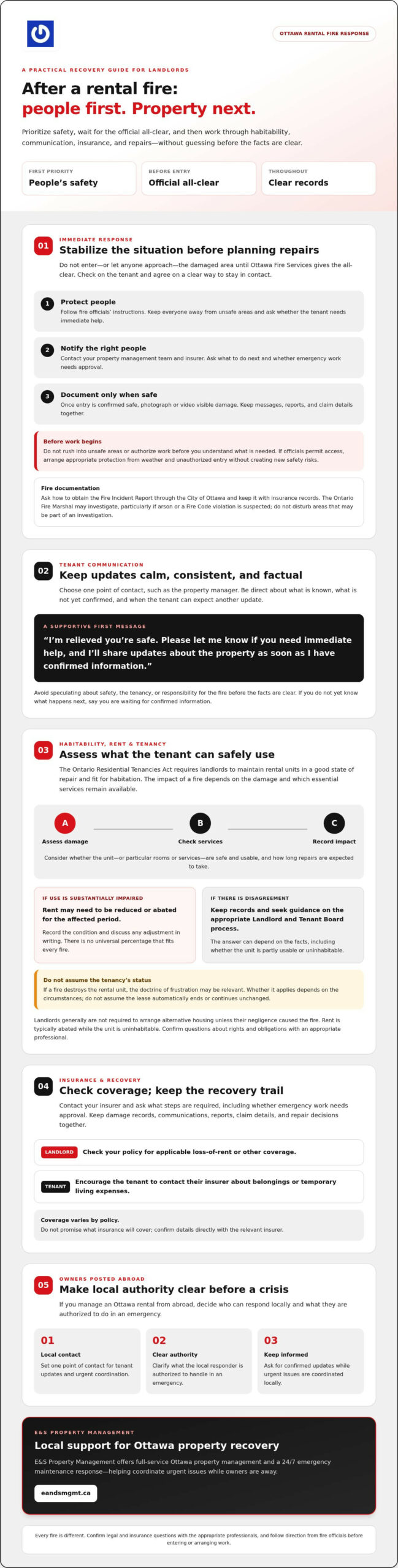
In the first hours after a fire, focus on people before the building. Don’t enter or let anyone approach the damaged area until Ottawa Fire Services has given the all-clear. Then confirm the tenant is safe, ask whether they need immediate help, and agree on how you’ll stay in contact. For Ottawa landlords, a practical response is to check on the tenant, notify your property manager and insurer, and record the situation only when it’s safe to do so.
Act promptly, but don’t rush into unsafe areas or authorize work before you understand what’s needed. A clear record of your actions and communications can help keep the recovery organized.
- Check safety: Follow instructions from fire officials and keep people away from unsafe areas.
- Notify: Contact your property management team and insurance provider. Ask what to do next and whether emergency work needs approval.
- Record: Once entry is confirmed safe, photograph or video visible damage. Save messages, reports, and claim details in one place.
Coordinating with Ottawa Fire Services
After the all-clear, ask how to obtain the Fire Incident Report through the City of Ottawa. Keep the incident details and any available report with your insurance records. The Ontario Fire Marshal may investigate the cause, particularly where arson or a Fire Code violation is suspected, so don’t disturb areas that may be part of an investigation. Once officials permit access, arrange appropriate measures to protect the property from weather and unauthorized entry without creating new safety risks.
The Landlord’s Initial Communication Strategy
Keep your first message calm, supportive, and focused on safety: “I’m relieved you’re safe. Please let me know if you need immediate help, and I’ll share updates about the property as soon as I have confirmed information.” Set one point of contact, such as the property manager, so the tenant knows whom to reach and receives consistent updates. The Residential Tenancies Act, 2006 provides context for the landlord tenant relationship, but avoid making assumptions about the tenancy or responsibility before the facts are clear.
Be direct about what you know and when you’ll provide the next update. If you don’t yet know whether the unit is safe or what happens next, say you’re waiting for confirmed information rather than speculating. For owners abroad, a property management team with emergency maintenance response can help coordinate local communication and urgent repairs while keeping you informed.
Legal Obligations and Tenant Rights Under the Ontario RTA
After the immediate safety response, assess whether the rental unit remains fit to live in. The Residential Tenancies Act (RTA) requires landlords to maintain rental units in a good state of repair and fit for habitation. How a fire affects that duty depends on the damage and which essential services remain available. A burned kitchen or loss of heat and electricity may make some or all of a unit unusable. For general local recovery steps, consult the City of Ottawa’s post-fire guide.
Habitability and Rent Abatement
Where fire damage substantially impairs a tenant’s use of the unit, rent may need to be reduced or abated for the affected period. If only part of the property is damaged and the tenant can safely remain, consider which rooms or services are unavailable and how long repairs are expected to take. Record the condition and discuss any adjustment in writing. There’s no universal percentage that fits every fire, so avoid guessing or treating an informal agreement as a substitute for understanding the tenant’s rights.
A tenant shouldn’t simply stop paying rent without addressing the situation through the proper process. If you and the tenant disagree about rent, habitability, or repairs, keep communications and records, and seek guidance on the appropriate Landlord and Tenant Board (LTB) process. The answer can depend on the facts, including whether the unit is partly usable or uninhabitable.
Tenancy, Relocation, and Insurance
If the fire destroys the rental unit, the doctrine of frustration may become relevant because the tenancy may no longer be capable of continuing as agreed. Whether it applies depends on the circumstances, so don’t assume the lease automatically ends or continues unchanged. Landlords generally aren’t required to arrange alternative housing unless their negligence caused the fire, but rent is typically abated while the unit is uninhabitable. Check your policy for applicable loss-of-rent or other coverage, and encourage the tenant to contact their own insurer about belongings or temporary living expenses. Coverage varies by policy.
Terminating the Tenancy vs. Repairing
For major work, Form N13 may be relevant when a landlord seeks to end a tenancy for demolition, conversion, or repairs that require vacant possession. Eligible tenants may have a right of first refusal to return after repairs, and rules apply to notice and the offer. Don’t use a fire as a pretext to remove a tenant or re-rent at a higher amount. Confirm current requirements with the LTB or a qualified legal professional before serving a notice, and keep repair plans and communications documented.
For owners managing recovery from abroad, Ottawa property management support can help keep tenant communication and repair coordination organized while you remain informed.
Navigating Insurance and Restoration in the Capital
Once the property is safe to assess, contact your insurer promptly. Ask how to open a claim, what records they need, and which emergency work is authorized. The City of Ottawa’s First 24 Hours After the Fire guide can help owners review immediate post-fire steps. Ottawa landlords handling a rental fire should also understand that the building claim and a tenant’s belongings are generally handled under separate insurance policies.
Landlord vs. Tenant Insurance Responsibilities
Landlord insurance may cover damage to the building and, depending on the policy, loss of rental income while repairs are underway. Tenant insurance generally addresses the renter’s personal belongings and may include coverage for additional living expenses. Don’t assume either policy covers a particular loss. Coverage, exclusions, and limits vary. Ask your insurer specifically about lost rent, mitigation work, deductibles, and what must be approved before repairs begin.
The adjuster assesses the claim and helps establish the covered damage and repair scope. Keep estimates, photographs, invoices, and written approvals together. Before work starts, review the scope carefully. Does it address smoke and water damage as well as visible fire damage? Does it include the work needed to restore the property safely? If estimates differ, ask the adjuster to explain the gap rather than authorizing changes based on assumptions.
Choose contractors carefully. Check that the people doing the work have the credentials required for their trade and appropriate insurance, and ask who will obtain any permits needed for the job. Local experience can help contractors understand Ottawa’s permit process, but confirm project-specific requirements with the City rather than assuming a permit is or isn’t necessary.
The Restoration Timeline
Recovery often moves through mitigation, reconstruction, and final checks, though the order and duration depend on the damage and approvals. During mitigation, professionals may address water from firefighting, remove damaged materials, and treat smoke and soot. Prompt, properly documented work can limit further damage, but coordinate emergency steps with your insurer where possible.
Reconstruction may involve structural, electrical, or other trade work. Ask the contractor or City of Ottawa whether permits and inspections apply to the planned repairs, and keep copies of approvals and inspection records. Don’t assume a “Certificate of Occupancy” is required or issued for every restoration project. Confirm the applicable close-out requirements with the City. Before tenants return, verify that the unit is safe, essential services are functioning, and required work and inspections are complete. E&S Property Management’s experience overseeing complex repairs can help owners keep this process organized, including when they’re managing from abroad.
Managing Fire Recovery While Posted Abroad
A fire is difficult to manage from another time zone. You may be asleep when Ottawa contractors need a decision or unable to inspect damage before the insurer asks for details. A clear local response plan can help prevent delays and clarify who is responsible for each decision. Decide in advance who can authorize urgent work, what spending requires your approval, and how updates will reach you.
The Role of a Professional Representative
Choose an Ottawa-based representative who can coordinate access, communicate with the tenant, and keep contractors, the insurer, and you working from the same information. A property manager can support operational coordination, but don’t assume they can act as your legal representative in every Landlord and Tenant Board matter. Confirm who is authorized to sign documents, receive notices, or attend proceedings, and get qualified guidance about any formal appointment or power of attorney required for your circumstances.
Set practical access and communication protocols. Keep a record of who holds keys and when they’re provided, and agree on secure ways to share inspection reports, photos, and video walk-throughs. Ask for dated updates that separate confirmed facts from estimates. For Foreign Service officers, a written summary and a designated urgent-contact method can make decisions easier across working hours and time zones.
Financial and Tax Considerations for Non-Residents
Don’t assume an insurance settlement is treated like rent or that every payment receives the same tax treatment. The result can depend on what the payment covers and your circumstances as a non-resident owner. Keep the insurer’s settlement documents, repair invoices, and rental records together, then ask a tax professional how to report the proceeds. If rental income stops during restoration, contact your tax adviser or the Canada Revenue Agency about how that affects your NR6 arrangement and any ongoing filing or withholding obligations. A local representative can help receive and organize CRA correspondence and bring notices or document requests to your attention.
E&S Property Management specializes in supporting Foreign Service and non-resident landlords in Ottawa. Its 24/7 emergency maintenance response can help owners posted abroad address urgent property issues while receiving updates from a local team. For support managing an Ottawa rental remotely, explore property management support.
How E&S Property Management Protects Your Ottawa Investment
A fire can leave an owner abroad juggling tenant concerns, insurance questions, and urgent repair decisions from a different time zone. E&S Property Management’s 24/7 emergency maintenance response offers a local point of coordination when a property issue can’t wait for you to wake up or return to Ottawa. The company has more than 40 years of Ottawa experience and supports local landlords and Foreign Service members through complex property repairs.
Coordinating the Immediate Response
Safety comes first. Once emergency officials confirm it’s safe to proceed, next steps may include arranging appropriate measures to secure the property, coordinating urgent maintenance, and keeping the owner and tenant informed. Agree on who can authorize work and how costs or changes to the scope should be escalated. Clear updates help everyone distinguish confirmed information from decisions that still need the owner’s approval.
For example, if a major repair begins while the owner is overseas, a local property management team can help coordinate maintenance and share progress reports, photos, and questions that need a decision. This illustrates how local coordination may work and isn’t a description of a specific client case. E&S oversees complex repairs and can help owners stay informed without managing every local detail themselves.
Protecting the Property Through Recovery
Restoration should be guided by documented damage, insurer requirements, and the work needed to return the rental to a safe, habitable condition. Keep repair records and tenant communications organized, and handle questions about notices, rent, or access carefully. E&S can help landlords keep property management tasks and communication organized during recovery. No management approach can guarantee that a dispute won’t arise.
Once the home is ready for occupancy, the next step may be preparing to place a tenant. E&S offers a Tenant Placement Service, which owners can consider as they work toward putting the property back into use. For Foreign Service members, local support can also help coordinate the transition from repairs to the next tenancy while they’re serving abroad.
If you’re weighing how to handle a fire in a tenanted property Ottawa owners may face, you don’t have to coordinate every local task alone. Learn about E&S Property Management’s full-service property management and emergency maintenance response.
Take the Next Step Toward a Safe Recovery
A fire can leave you balancing tenant well-being, property damage, insurance questions, and repair decisions. A steady response starts with confirming safety, documenting damage when it’s safe, and communicating clearly with your tenant. Then assess habitability, understand how the tenancy may be affected, and coordinate restoration with your insurer and qualified professionals.
Knowing how to handle a fire in a tenanted property Ottawa landlords may face can be especially challenging from another country or time zone. Local support can help keep urgent property matters moving while you stay informed. E&S Property Management offers Ottawa property management, support for Foreign Service members, and a 24/7 emergency maintenance response.
For local oversight of your Ottawa rental, contact E&S Property Management to discuss full-service property management.
Frequently Asked Questions
Is a landlord responsible for a tenant’s housing after a fire in Ottawa?
Generally, an Ottawa landlord isn’t required to arrange alternative housing when a fire makes the rental unit uninhabitable, unless the landlord’s negligence caused the fire. The lease, insurance coverage, and circumstances may affect the situation, so confirm what applies before making commitments. Contact the tenant promptly, explain what’s known, and discuss practical next steps. The tenant should also contact their insurer to ask about coverage for temporary accommodation and personal belongings.
Can I evict a tenant after a fire in my rental property?
A fire doesn’t automatically give a landlord the right to evict a tenant. If the unit can be repaired, follow the applicable tenancy rules and don’t use the fire as a pretext to remove the tenant. Form N13 may apply to certain extensive repairs requiring vacant possession, and eligible tenants may have a right to return. Confirm current requirements with the Landlord and Tenant Board or a qualified legal professional before serving notice.
What happens to the security deposit or last month’s rent if the house burns down?
In Ontario, a landlord generally can’t collect a damage deposit. A rent deposit is different: it’s held for the last rental period, not to pay for fire damage. If the tenancy ends and some or all of that deposit isn’t owed for rent, address its return according to the applicable rules. Keep a written record of the tenancy’s status and any rent adjustments, and don’t deduct repair costs from the deposit without confirming your rights.
Who pays the deductible for a fire in a tenanted property?
The person responsible for the insurance deductible depends on the policy, the cause of the fire, and any agreement or legal responsibility that applies. The landlord’s insurer may apply a deductible to a building claim, but that doesn’t automatically mean the tenant must pay it. Notify your insurer, review your policy, and preserve relevant reports and evidence. Don’t bill the tenant or withhold a rent deposit for the deductible without confirming the basis for doing so.
Does the tenant have to keep paying rent if they can’t live in the unit?
If fire damage makes the unit uninhabitable, rent is typically abated for the period it can’t be lived in. If only part of the unit is affected, the appropriate reduction depends on how the damage limits the tenant’s use and which services remain available. Discuss the situation in writing and keep records of the damage and repairs. If you can’t agree on rent, seek guidance about the appropriate Landlord and Tenant Board process.
What if the fire was caused by the tenant’s negligence?
Don’t assume the tenant is responsible based on suspicion alone. Fire officials or investigators may help establish the cause, and insurers may assess the circumstances under their policies. Preserve reports, photographs, and communications, then notify your insurer and follow its instructions. A tenant’s alleged negligence doesn’t automatically authorize eviction or determine who pays every loss. Get qualified guidance before seeking compensation or taking steps that could affect the tenancy.
How long does a landlord have to repair fire damage in Ontario?
There isn’t one standard repair deadline that applies to every fire-damaged rental. The landlord remains responsible for maintaining the property in a good state of repair and fit for habitation, while the work required depends on safety, damage, permits, and restoration needs. Address urgent hazards promptly, keep the tenant informed, and document repair progress. If the unit can’t be occupied, clarify the tenancy and rent arrangements rather than promising a return date you can’t confirm.
Do I need a new lease if the tenant moves back in after repairs?
Not necessarily. If the tenancy continued during repairs, the existing agreement may remain in effect, so a new lease may not be needed. If the tenancy ended or the tenant vacated under a process that gives them a right to return, different requirements may apply. Confirm the tenant’s status and any applicable return rights before setting new terms. Put agreed changes, access arrangements, and the expected return date in writing.


