A rental property can earn income and still take too much from you. If tenant messages follow you into the evening, maintenance issues keep you on alert, and paperwork never seems finished, it may be time to consider landlord burnout signs and solutions. The strain isn’t a personal failing. Managing a home can become an always-on job when every decision lands with you.
You may know something needs to change but find it hard to tell whether better routines would help or whether it’s time to delegate. Burnout can show up as persistent exhaustion, irritability, difficulty switching off, or a growing sense of dread about routine property tasks. These signs aren’t a diagnosis, but they can be a prompt to review your workload and wellbeing.
This guide will help you recognize those signals, compare practical ways to reduce the burden, and choose a manageable next step without losing sight of your property. We’ll look at systems for recurring tasks, the work professional management can take off your plate, and how Ottawa-focused support can help local owners and those living abroad. E&S Property Management has supported residential landlords since 1981, helping owners create clearer boundaries around property work.
Key Takeaways
- Notice when ongoing exhaustion, interruptions, or dread around routine property tasks may be signals to reassess your workload, not reasons to blame yourself.
- Understand how repeated messages, maintenance concerns, and unfinished administration can build into a cycle that leaves less room to recover.
- Compare practical landlord burnout signs and solutions, from improving your systems to delegating selected tasks or using full-service management.
- Use a simple reset plan to sort urgent responsibilities from recurring administration and tasks that can be scheduled or handed off.
- Learn how Ottawa residential property management can coordinate tenant placement, rent collection, inspections, and maintenance while keeping you informed.
Landlord Burnout Signs: When Rental Ownership Starts Taking Over
Managing a rental can be demanding even when owning the property still feels worthwhile. Tenant questions, maintenance decisions, paperwork, and the responsibility to protect an important investment can stretch into evenings and weekends. Feeling worn down doesn’t mean you’re unsuited to being a landlord. It may mean the way the work is organized needs attention.
“Landlord burnout” is a useful description of sustained overload, not a clinical diagnosis. It can help name a pattern: property responsibilities keep demanding attention while rest and personal time are repeatedly pushed aside. The broader concept of Occupational Burnout can offer context, but this article isn’t a tool for diagnosing a health condition.
Persistent rental stress can disrupt sleep, weaken focus, and make routine decisions feel harder than they should. One difficult week, a demanding repair, or a vacancy doesn’t prove you’re experiencing burnout. Pay attention to whether strain keeps returning and begins to affect your wellbeing or everyday responsibilities.
Which landlord burnout signs deserve attention?
Look for repeated changes in how you feel and respond, rather than judging yourself for one frustrated moment. Possible warning signs include:
- Dreading routine tenant messages or feeling unable to switch off from property concerns.
- Persistent worry, irritability, or reduced patience during ordinary conversations.
- Putting off administrative tasks because the paperwork feels unmanageable.
- Losing interest in ownership or feeling resentment toward recurring responsibilities.
A single sign may have many explanations. Ask whether several signs appear together or return often enough to affect your daily life.
When does landlord stress become a pattern?
A burst pipe or a challenging vacancy can create a genuinely stressful stretch, but the pressure may ease once the issue is resolved. A recurring pattern is different: concern about the next message or task continues during quieter periods, or rental responsibilities repeatedly interfere with sleep, relationships, or personal commitments.
Try keeping a simple record for a few weeks. Note what triggered stress, how often it happened, whether it interrupted rest or plans, and what work remained unfinished afterward. For example, record whether tenant communications regularly pull you away from family time or whether account reviews are delayed month after month. This isn’t a score or a test. It’s a way to see where the workload is creating the most strain.
Use what you notice as practical information, not a reason for self-criticism. If the same responsibilities keep intruding, consider changing how those tasks are handled. The full picture can help you distinguish a temporary challenge from an ongoing burden and prepare for a more sustainable approach to ownership.
If distress feels persistent, severe, or difficult to manage alone, consider seeking support from a qualified health professional. Changes to your property workload may reduce practical pressure, but they aren’t a substitute for care when your health needs attention.
Why Rental Management Work Can Build Into Burnout
A rental rarely creates pressure through one task alone. Rent tracking, tenant communication, maintenance follow-ups, recordkeeping, and decision-making can make ownership feel like a second job, especially when the same person handles every step. These demands affect landlords differently; a busy period doesn’t automatically mean burnout.
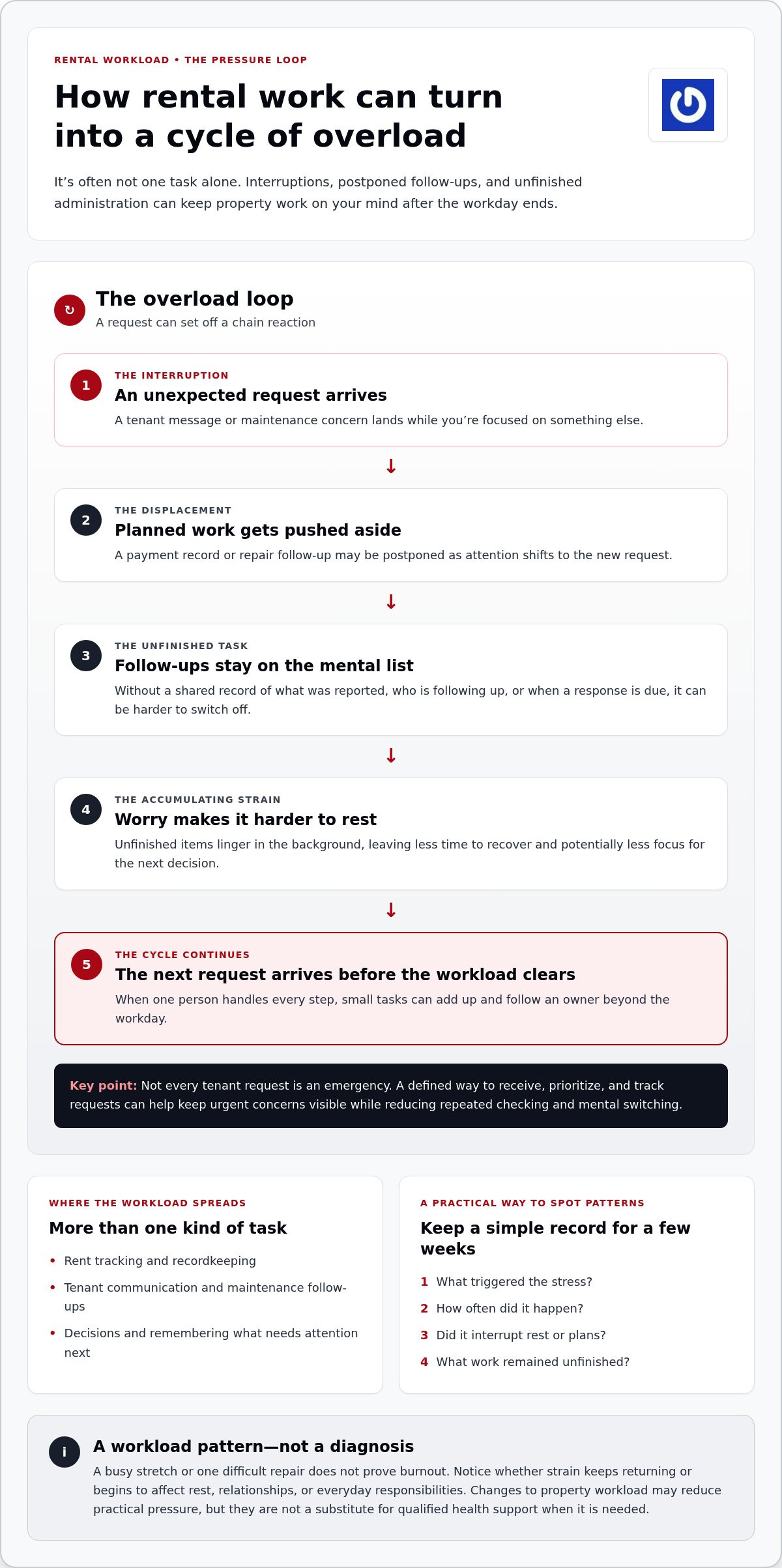
The strain can build in a loop. An unexpected message interrupts planned work, so a payment record or repair follow-up gets postponed. The unfinished item stays in the back of your mind, adding worry and making it harder to rest. With less time to recover, you may have less focus for the next decision. Unpredictable requests and administration scattered across channels can turn small tasks into a workload that follows an owner long after the workday ends.
How interruptions and unclear boundaries compound the workload
A tenant might report a dripping tap while you’re finishing another task or ask a question that needs a considered response. Not every request is an emergency, but if you’re the only contact, each notification can feel as though it needs immediate attention. That expectation can displace work, family time, and planned rest, even when the issue could be handled later through a clear process.
Boundaries are harder to maintain when there’s no shared record of what’s been reported, who is following up, or when a response is due. You may repeatedly check messages to make sure nothing is missed, then spend extra time piecing together earlier conversations. A defined way to receive, prioritize, and track requests can reduce that mental switching while keeping urgent property concerns visible.
Why administrative and emotional tasks can feel inseparable
Rental administration involves more than completing forms. Owners may need to track rent, save records, remember follow-ups, and make decisions using information spread across emails, messages, and documents. Each task also carries responsibility: a missed detail may raise concerns about the property, the tenant relationship, or the appropriate next step.
Emotional effort can add another layer. Responding to a complaint, addressing a disagreement, or deciding how to handle a costly repair may require patience and careful judgment, even while routine records still need attention. This overlap can make it difficult to tell whether you’re tired from the volume of work, the decisions themselves, or both.
For Ottawa landlords, rental requirements can also change, so verify current Ontario rules using authoritative sources such as the Ontario government and the Landlord and Tenant Board. Keeping reliable guidance accessible can reduce repeated uncertainty and give you a clearer reference point. It won’t remove every difficult decision, but it can make administration more manageable.
When recurring coordination is the pressure point, structured Ottawa residential property management can help owners establish clearer boundaries around day-to-day responsibilities. Start by identifying which tasks consume the most attention and whether better systems or delegated support would address the cause.
Landlord Burnout Solutions: Compare Systems, Delegation, and Management
The most useful landlord burnout signs and solutions depend on which parts of ownership create the greatest strain. If records are hard to find, a more organized system may help. If tenant communication or follow-ups repeatedly consume your time, handing off specific tasks could make a difference. When several responsibilities compete for attention, full-service residential management may be a better fit. You can stay informed and retain oversight without personally coordinating every routine step.
Use this comparison to connect a pressure point with a practical response. Each option involves a trade-off: systems need upkeep, selective delegation leaves some coordination with you, and full-service management shifts more recurring work to professional oversight.
| Pressure point | Possible intervention | Likely trade-off |
|---|---|---|
| Tasks and follow-ups are easy to lose track of | Create one central task log and schedule regular administration blocks | You remain responsible for maintaining the system and completing the work |
| Leasing or finding a new tenant is taking time | Delegate tenant placement | You hand off a defined process while retaining broader ownership decisions |
| Rent tracking, inspections, and maintenance coordination recur | Consider full-service residential management | You give up direct handling of routine coordination in exchange for a more consolidated process |
| You want to stay involved but need consistent follow-through | Clarify which decisions remain yours and which tasks are assigned | Shared responsibilities depend on clear communication and reporting |
When better systems may be enough
Start with one place to record requests, due dates, payments, and next steps. Set recurring blocks for administration, and establish response windows so non-urgent messages don’t interrupt the day. These measures are most useful when the workload is manageable and responsibilities are already clear. Automation can support reminders and recordkeeping, but it can’t replace judgment about urgent situations or professional support for persistent distress.
When delegation or full-service management may fit
Selective delegation can help when one responsibility causes most of the pressure. Tenant placement, for instance, is a defined process you can hand off while retaining other decisions. If several connected duties are difficult to keep on top of, such as rent collection, inspections, and maintenance coordination, full-service management can consolidate that recurring work under professional oversight.
Consider your preferred level of involvement, the time pressure you face, and whether you can maintain consistent follow-through. An owner who enjoys direct tenant contact may choose a narrower handoff, while someone with a demanding schedule may prefer broader support. The goal of these landlord burnout signs and solutions isn’t to step away from your investment, but to shape ownership around a workload you can sustain.
For Ottawa landlords considering a broader handoff, E&S residential property management coordinates recurring ownership responsibilities. A considered management approach can help you maintain oversight while making more room for life beyond the rental.
A Practical Plan to Reduce Landlord Stress and Reclaim Time
Once you’ve identified what’s weighing on you, make changes in a deliberate order. You don’t need to rebuild your entire rental operation overnight. Start by bringing the work into view, then decide what needs your attention, what can be scheduled, and what may be better handled by someone else.
- List the pressure points. For a week or two, note recurring duties, interruptions, pending decisions, and tasks you keep postponing. Include what happened and how it affected your day. This turns a general feeling of being overwhelmed into a clearer picture of which responsibilities take the most energy.
- Sort tasks by urgency and ownership. Separate issues that need a prompt response from routine administration, such as organizing records or reviewing rent information. Then identify decisions that must stay with you as the owner and tasks that could follow a set process or be delegated. Not every tenant request needs the same response time.
- Set a workable communication rhythm. Choose regular times to review non-urgent messages and property administration, and make the process for reporting urgent concerns clear. A routine can reduce constant checking without delaying appropriate attention to serious property issues.
- Centralize records and follow-ups. Keep relevant property documents and communications in one organized place. For maintenance, record the reported issue, next action, and any follow-up needed. A simple log helps prevent a repair from disappearing into an inbox and makes it easier to see what still needs attention.
- Assign responsibilities and schedule recovery. Decide who handles each agreed operational task, and block time away from routine property messages. Boundaries work best when there’s a clear process for urgent matters and a known person responsible for follow-through. Clear responsibility boundaries let owners choose when to be involved instead of being pulled into every routine task.
- Review and adjust. After a few weeks, check whether interruptions have eased, fewer tasks remain unfinished, and you’re getting more time away from rental work. If the same pressure points persist, consider whether a system needs improvement or responsibilities need to shift. If distress remains significant, seek support from a qualified health professional alongside operational changes.
This plan doesn’t require you to give up oversight. It helps make your involvement intentional, with better visibility into the property and fewer routine tasks competing for your attention. If coordination across tenant placement, rent collection, inspections, or maintenance is the persistent strain, support from a residential manager may be a practical next step.
For Ottawa landlords ready to delegate recurring responsibilities while staying informed, explore E&S property management support.
How Ottawa Property Management Can Ease Landlord Burnout
Delegating property work doesn’t mean giving up your role as an owner. It can mean having a residential manager coordinate recurring tasks, keep you informed, and make the workload more predictable. For Ottawa landlords, that support can be especially useful when tenant, maintenance, and administrative responsibilities compete for the same limited time.
The value isn’t simply fewer messages. It’s having clear responsibility for follow-ups and a consistent point of coordination while you remain aware of important property matters and decisions. The right division of work depends on how involved you want to be and which responsibilities create the most strain.
What responsibilities can a residential property manager handle?
Professional support can cover connected tasks that otherwise require the owner to keep switching roles. E&S Property Management coordinates residential property responsibilities including:
- Tenant placement: coordinating the process of finding and placing a tenant.
- Rent collection: managing a recurring part of rental administration.
- Regular inspections: helping maintain oversight of the property’s condition.
- Maintenance coordination: organizing repair follow-ups and responding to property needs, including emergency maintenance response.
- Financial reporting and accounting: providing owners with information to support ongoing oversight.
Bringing these responsibilities together can reduce the number of separate tasks an owner needs to remember and track. It also gives you a clearer view of what is happening without requiring you to personally coordinate every routine follow-up. You can retain key decisions and oversight while assigning recurring operational work to professional management.
How to move from overload to supported oversight
Before changing how your property is managed, identify what you want to keep handling and what you’d like someone else to coordinate. You may prefer to remain closely involved in major decisions while delegating rent collection, inspections, maintenance coordination, or tenant placement. Naming those boundaries makes support practical rather than all-or-nothing.
E&S Property Management focuses on Ottawa residential properties. The firm also supports Canadian Foreign Service members managing homes while serving abroad, for whom distance can make reliable local coordination especially valuable. For non-resident owners, financial reporting and NR6 and NR4 tax filing support can help organize ongoing responsibilities.
Considering the landlord burnout signs and solutions that fit your situation can start with identifying where the workload is most difficult. If you’re ready to explore a more supported approach, discuss residential property management with E&S. A more sustainable arrangement can keep you informed and help you stay on top of your investment.
Choose a More Sustainable Way to Own
Your next step doesn’t have to be a major decision. Start by choosing one recurring responsibility you’d like to make more manageable, then consider what would give you greater confidence: a clearer routine, help with a specific task, or broader support. The most useful landlord burnout signs and solutions fit your actual workload and help you stay engaged with ownership without letting it take over your personal time.
You can remain an informed owner while changing who handles day-to-day coordination. A conversation with E&S Property Management can help you understand how its Ottawa residential property management services fit your property, priorities, and preferred level of involvement.
Explore how E&S Property Management can support your Ottawa rental. A more sustainable approach can start with one thoughtful change, giving you more room to make ownership work for you.
Frequently Asked Questions
What are the most common signs of landlord burnout?
Common signs include ongoing dread about rental responsibilities, irritability, persistent worry, and trouble disengaging from property matters. You might also notice routine records piling up, tenant conversations requiring more patience than you can manage, or losing interest in an investment you once valued. Look for changes that recur and affect daily life, rather than treating one stressful interaction as proof of burnout.
Can you experience landlord burnout with just one rental property?
Yes. The number of properties doesn’t determine how demanding ownership feels. One rental can involve a vacancy, a repair, tenant communication, and financial administration at the same time, particularly if you’re handling every task alongside a job or family responsibilities. Consider how the work fits into your overall life, not just the size of your portfolio. Even a small property workload can feel difficult if it has no clear boundaries.
Is landlord burnout a mental health diagnosis?
No. “Landlord burnout” is a descriptive phrase for sustained strain related to managing rental responsibilities, not a formal diagnosis. It can help you explain what feels difficult, but it can’t determine the cause of symptoms or what care you may need. If changes in mood, sleep, concentration, or wellbeing persist or concern you, speak with a qualified health professional. They can help assess your circumstances and discuss appropriate support.
How can I set boundaries with tenants without neglecting my responsibilities?
Set expectations for routine contact by explaining how tenants should submit requests, when you generally review them, and what information to include, such as the issue’s location and a description. Keep a separate process for urgent concerns so they aren’t left waiting in a routine inbox. Apply your communication approach consistently, and continue responding to property matters in line with your responsibilities and applicable Ontario requirements.
Can better systems prevent landlord burnout?
Better systems can reduce avoidable confusion, but they can’t guarantee burnout won’t happen. For example, one shared calendar for inspections and lease dates, paired with a record of maintenance requests and next steps, can reduce repeated searching and forgotten follow-ups. Review the system when responsibilities change or tasks keep slipping. If the workload itself remains too heavy, adding tools alone may not address the underlying pressure.
Does hiring a property manager mean giving up control of my rental?
No. Property management can shift agreed operational tasks without removing you from ownership decisions. You can clarify which matters you want updates about, which tasks a manager coordinates, and how you’ll handle decisions that require your input. For example, an owner might delegate routine tenant communication but remain involved in major property choices. Clear expectations and regular reporting help you retain oversight while reducing day-to-day coordination.
When should a landlord seek professional support for stress?
Consider speaking with a qualified health professional if stress feels persistent, severe, or increasingly difficult to manage, or if it’s affecting your wellbeing and everyday responsibilities. You don’t need to wait until you feel completely overwhelmed to ask for help. Operational support may reduce rental-related demands, but it isn’t a substitute for health care. In Ottawa, you can address workload changes separately from seeking personal support.