
How to manage a rental property during a divorce often comes down to separating day-to-day operations from decisions about ownership. When a marriage is ending, it’s understandable to worry about who will communicate with tenants, approve repairs, collect rent, and pay the mortgage. Unclear responsibilities can affect both the property and the people living there.
You don’t need to resolve every ownership question before setting up a steady process for the rental. Clear responsibilities, shared records, and consistent tenant communication can help keep income, expenses, and maintenance organized while divorce arrangements are being worked out.
This article covers practical steps for managing a rental in the meantime, from agreeing on responsibilities and documenting financial activity to choosing between shared, individual, or professional management. It also explains how to consider longer-term options such as continued co-ownership, a buyout, or a sale. For Ottawa owners, professional residential property management can provide neutral day-to-day oversight during a demanding transition, without replacing legal or financial advice.
Key Takeaways
- Learn how to manage a rental property during a divorce while keeping tenant service and essential operations steady.
- Use shared, dated records to track rental income, expenses, maintenance, and decisions.
- Compare co-management, one owner handling operations, and professional management to choose a workable interim arrangement.
- Follow a practical sequence to organize responsibilities, communicate with tenants, track finances, and review the plan.
- See how delegating routine property tasks can add structure during a demanding transition.
How to manage a rental property during a divorce without disrupting tenants
Separation can make ordinary landlord decisions unexpectedly difficult. Rent still comes due, repair requests still need attention, and tenants still need a reliable point of contact. Keep day-to-day rental operations moving while treating ownership, settlement, and any future sale as separate matters to resolve.
An interim operating plan can specify who handles rent, bills, tenant communication, repairs, and access to records while longer-term arrangements are unresolved. Put the plan in writing, share updates, and record changes so both owners can refer to the same instructions. Who owns the property and who has authority to make particular decisions depends on individual circumstances. This general guide is not legal advice, and it can’t determine your rights under Ontario law. For general background on the concept, see Division of property in divorce.
What needs attention first when separation begins?
Start by listing current obligations and deadlines. Gather the lease and related correspondence, then note rent due dates, recurring bills, known maintenance issues, and upcoming tenancy or payment deadlines. Record who currently receives rent and who has access to the lease, bank and expense records, invoices, and maintenance history.
Then agree on a temporary process for essential tasks. Specify who records incoming rent, who pays each recurring bill, and how repair requests will be shared and approved. Keep tenant-facing messages factual and focused on the tenancy. Tenants need to know how to report an issue and where to direct routine questions, not the details of an ownership dispute.
How can co-owners reduce disruption for tenants?
When possible, choose one agreed contact for routine tenant communication. A single point of contact helps prevent conflicting instructions, while both owners can stay informed through a shared record. If one person handles communication, set a clear process for passing along requests, decisions, and updates.
A shared log can capture the date, issue, decision, payment, and status of each task. For example, record when a tenant reports a leaking tap, who arranges the repair, the cost, and when the work is completed. This creates a transparent history and avoids having to piece together events from separate conversations.
Keep tenants out of disagreements between owners. Don’t ask them to take sides, deliver messages, or mediate decisions. If communication becomes difficult or inconsistent, a neutral operational process, including professional property management, can help organize tenant contact, rent collection, and maintenance while ownership questions are addressed separately.
How to organize rental finances, records, and decisions during divorce
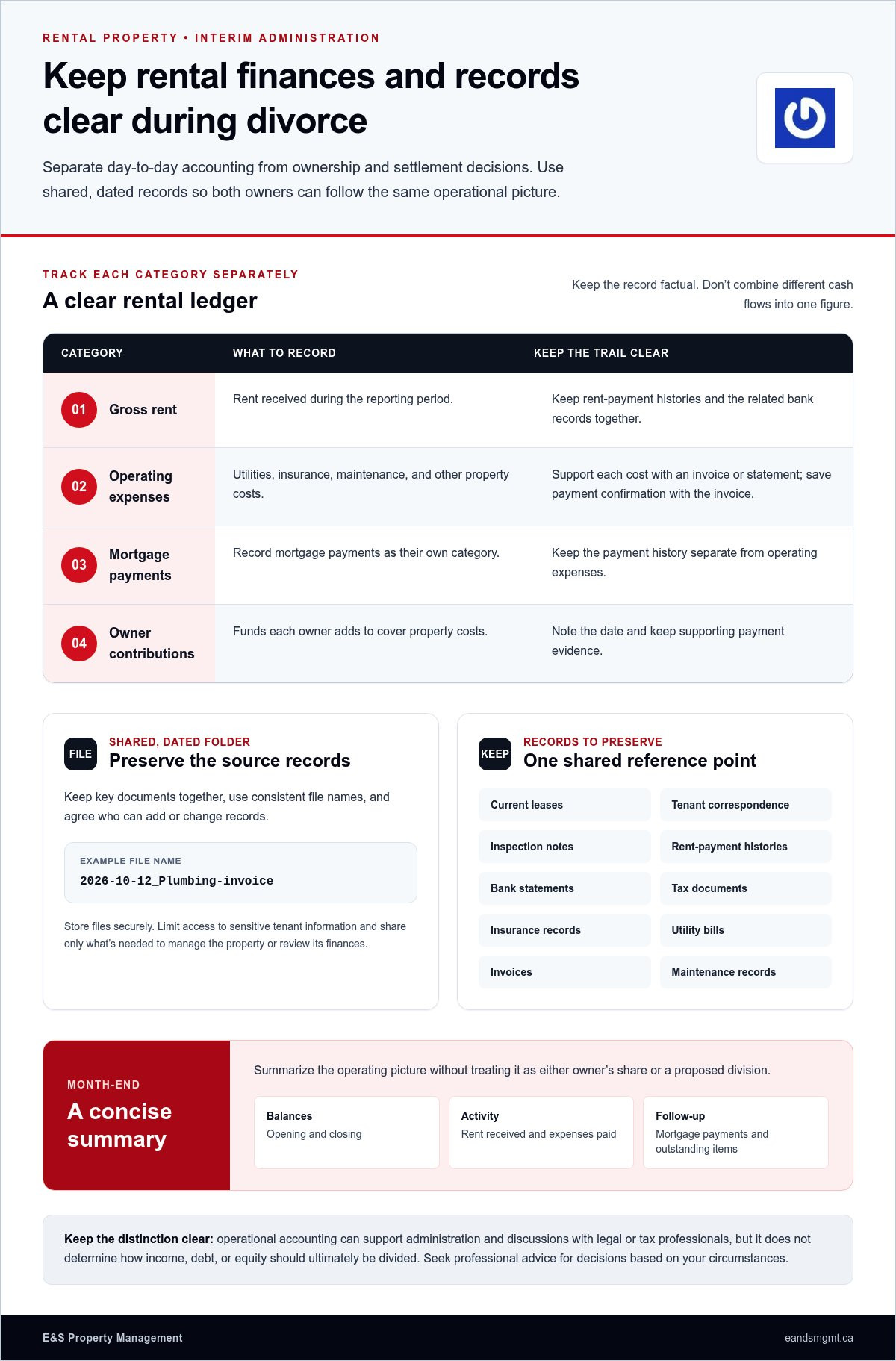
Clear records provide a reliable picture of how the rental is operating. They support day-to-day administration and discussions with legal or tax professionals, but they don’t determine how rental income, debt, or equity should ultimately be divided. Keep operational accounting factual and separate from ownership or settlement decisions.
Create a shared, dated folder with consistent file names, such as “2026-10-12_Plumbing-invoice.” Store documents securely, limit access to sensitive tenant information, and agree on who can add or change records. A dated trail makes it easier to see what was received, paid, approved, or completed.
Which rental-property records should both owners preserve?
Keep the key documents together so both owners can refer to the same information. Include current leases, tenant correspondence, inspection notes, rent-payment histories, bank statements, tax documents, insurance records, utility bills, invoices, and maintenance records. Save payment confirmations alongside invoices, and note who authorized each expense and why.
Organize access rather than sharing files indiscriminately. Tenant records may contain private information, so store them securely and share only what’s needed to manage the property or review its finances.
How should co-owners handle rent and property expenses?
Before changing accounts or payment arrangements, document how rent is currently collected and how bills are paid. Then agree in writing on a temporary process for routine costs and urgent repairs, including how owners will be notified and how decisions will be recorded. This helps prevent missed payments and confusion about who approved a charge.
Track financial categories separately instead of combining them into one figure:
- Gross rent: Rent received during the reporting period.
- Operating expenses: Utilities, insurance, maintenance, and other property costs, supported by invoices or statements.
- Mortgage payments: Recorded separately from operating expenses so the payment history remains clear.
- Owner contributions: Funds each owner adds to cover costs, with dates and supporting payment evidence.
At month-end, prepare a concise summary of opening and closing balances, rent received, expenses paid, mortgage payments, and outstanding items. Don’t label a balance as either owner’s share or treat it as a proposed division. Ask legal and tax professionals how your circumstances affect reporting and financial decisions. For broader background on housing and mortgage considerations during divorce, see Divorce Housing Strategy and Certified Divorce Lending Professionals.
Consistent reporting can make rental administration easier to maintain. Ottawa owners who want help organizing rent collection and property records can explore residential property management support.
Which rental-property management arrangement works during a divorce?
The right arrangement depends on whether you can communicate reliably, how much time the rental requires, and how clearly decisions can be made. Aim to keep operations stable without confusing management responsibilities with decisions about ownership, sale, or settlement. A property manager can handle operational tasks, but hiring one doesn’t determine who owns the property or what happens to it. Those questions call for separate legal and financial guidance.
As you consider how to manage a rental property during a divorce, compare the practical trade-offs:
- Co-management: Both owners share tasks and approvals. It can work when communication is dependable, but unclear authority or ongoing disagreement may delay decisions and affect tenants.
- One owner handles operations: A designated owner can simplify communication for tenants. Document that person’s responsibilities, spending authority, reporting process, and how the other owner stays informed.
- Professional management: Delegating routine tasks can reduce the time owners spend coordinating rent, inspections, and repairs. Regular reporting creates an operational record, while ownership and settlement decisions stay with the owners and their advisers.
- Longer-term disposition discussions: Selling, a buyout, or continuing to co-own are ownership decisions, not day-to-day management arrangements. These decisions may take time, so plan how the property will operate in the meantime.
When might co-management or one designated contact work?
Co-management may suit owners who can agree on routine spending, approvals, and responses to unexpected issues. If direct coordination is difficult, one designated contact can reduce mixed messages to tenants while both owners receive updates. Put the arrangement in writing, including how records will be shared and when you’ll review the plan. Revisit it if communication, responsibilities, or circumstances change.
When might professional rental management help?
Consider delegating when coordinating tenant needs, inspections, rent collection, and maintenance adds strain or leaves tasks unattended. E&S Property Management supports Ottawa rental operations with rent collection, inspections, financial reporting, and maintenance coordination. These services can provide continuity and clearer reporting without deciding how the property’s ownership or value should be treated in a divorce.
Divorce can involve legal, financial, housing, and personal considerations. The National Association of Divorce Professionals reflects this multidisciplinary context. A property manager provides operational support, not a substitute for legal or financial advice. Choose the arrangement that gives tenants a reliable process, owners clear information, and everyone a realistic level of involvement while longer-term decisions are considered.
A practical step-by-step plan for managing the rental property
A short written plan turns a difficult transition into a set of manageable tasks. For Ottawa landlords, the priority is to keep tenancy and property operations consistent while noting decisions that remain unresolved between owners. Use this sequence as a working plan and update it when circumstances change.
- Inventory the essentials. Gather current leases, tenant contact details, rent status, service contracts, upcoming deadlines, and outstanding maintenance requests. Note which items need immediate attention.
- Agree on interim responsibilities. Put temporary procedures for rent, bills, repair approvals, record-sharing, and tenant contact in writing. State who can authorize routine costs and how the other owner will be informed.
- Communicate with tenants. Share practical information they need, such as where to direct questions or repair requests. Keep messages consistent and focused on the tenancy.
- Track activity and decisions. Record rent received, bills paid, repair approvals, and completed work. Keep supporting documents with each entry so the record is easy to follow.
- Set a review date. Revisit the interim plan at an agreed time, or sooner if a change affects tenant service or property operations. Keep unresolved ownership and settlement questions separate, and document them for discussion with the appropriate professional.
What should the first month’s action plan include?
During the first month, confirm that rent, bills, and repair requests are being handled. Make sure both owners know where essential records are stored and how to report a new issue. Schedule a review so a temporary arrangement doesn’t continue by default. Use that review to update responsibilities and identify decisions that need legal or financial advice suited to your circumstances.
How can Ottawa landlords keep tenancy operations steady?
Use a consistent, documented process for tenant requests, routine inspections, and repair coordination. For example, log when an issue is reported, who is arranging the next step, and when the work is completed. Keep tenant information private and share it only with people who need it to handle the tenancy. This supports continuity without making tenants responsible for communication between owners.
Separate urgent maintenance from discretionary upgrades. Handle a repair needed to address an active problem through the agreed maintenance process. A cosmetic renovation or major capital decision may require a different discussion and documented approval. Don’t let disagreement about improvements delay attention to an immediate property issue. Ontario tenancy obligations can depend on the circumstances, so verify current requirements through authoritative guidance before making decisions that affect tenants. If a legal question remains unresolved, record it and seek advice suited to the situation.
If coordinating rental operations is adding strain, explore E&S rental-management support in Ottawa for help with day-to-day property management.
How professional property management can support rental owners during divorce
During a divorce, even routine rental tasks can become harder to coordinate. A professional property manager can provide a consistent operating process, helping keep tenant communication, rent collection, inspections, and maintenance moving while owners focus on personal and longer-term decisions. For Ottawa owners deciding how to manage a rental property during a divorce, delegation can reduce the day-to-day details they need to coordinate directly.
What can a property manager handle day to day?
Day-to-day support can include coordinating tenant communication, collecting rent, arranging routine inspections, and responding to maintenance requests. E&S Property Management provides financial reporting and coordinates repairs, giving owners organized operational information to review. Its emergency 24/7 maintenance response helps address urgent property issues, with relevant updates shared with owners.
This structure makes it easier to see what has happened at the property without relying on informal updates between co-owners. A manager can maintain operational records and report on rental activity, but owners should agree separately on spending limits, approval requirements, and how information will be shared. Decisions requiring owner approval remain with the owners under their arrangement.
How to decide whether delegated management fits your situation
Consider the time and coordination involved in self-management. If tenant requests, inspections, rent administration, and repair follow-up are adding strain, delegating those tasks can provide a steadier process. It can also help when owners want a defined tenant contact and consistent reporting instead of coordinating every operational detail with one another.
Professional management is an operational choice, not a decision about ownership. It doesn’t resolve disagreements about a property’s value, a potential sale, a buyout, or how assets may be divided. Owners retain decisions requiring their approval, and legal or financial questions should be addressed with qualified advisers who understand their circumstances.
E&S Property Management has supported Ottawa residential property owners since 1981. Its services include tenant placement, rent collection, inspections, financial reporting, and maintenance coordination. Owners can discuss professional management for an Ottawa rental property to establish a clearer routine for day-to-day operations.
Keep rental operations steady as you plan what comes next
Knowing how to manage a rental property during a divorce starts with separating daily tasks from decisions about ownership and settlement. A written interim plan, clear tenant communication, and organized financial records help maintain continuity while longer-term arrangements are resolved. Choose a management approach that fits your ability to coordinate tasks and make decisions together.
If rent collection, inspections, financial reporting, and maintenance coordination feel like too much to manage during this transition, professional support can bring structure to the operational side. E&S Property Management supports Ottawa residential property owners with essential property management tasks. Management won’t resolve ownership questions, but it can make day-to-day responsibilities clearer.
Discuss professional management for your Ottawa rental property and take a practical step toward steadier operations.
Frequently Asked Questions
Can one spouse manage a jointly owned rental property during a divorce?
One spouse can handle day-to-day tasks if the owners agree on the arrangement and document each person’s responsibilities. Set out who communicates with tenants, collects rent, pays bills, approves repairs, and shares records. The person managing operations shouldn’t assume this changes ownership rights or gives them authority over every decision. What each spouse can legally do depends on the property and individual circumstances, so get advice specific to your situation.
Should we sell or keep a rental property during a divorce?
There’s no single right answer. Compare the practical implications of selling, having one owner buy out the other, or continuing to co-own the rental. Consider the property’s finances, ongoing management demands, and whether you can make decisions together. A valuation and advice from legal and financial professionals can help you assess the options. In the meantime, keep the rental operating through a written interim plan without treating that plan as a decision about its eventual ownership.
How do we divide rental income and expenses during separation?
Start by recording gross rent, operating expenses, mortgage payments, and each owner’s contributions separately. Keep invoices and payment evidence, and note who authorized expenses. A monthly summary can show what came in, what went out, and any outstanding bills. This creates a clear operational record, but it doesn’t determine how income, debt, or equity should be divided. Ask legal and tax professionals how your ownership circumstances affect reporting and financial decisions.
Can a tenant’s lease change because the landlords are divorcing?
Don’t assume a separation automatically changes a tenant’s lease or day-to-day rental arrangements. Keep communication focused on tenancy matters, and avoid giving conflicting instructions about rent payments, repairs, or contacts. Before changing payment details, landlord contacts, or lease terms, review the tenancy documents and verify current Ontario requirements for your circumstances. If tenants need an operational update, provide clear, consistent information without involving them in disagreements between owners.
What happens if divorcing co-owners disagree about repairs?
Use a written process that distinguishes urgent maintenance from discretionary improvements. Address active property or tenant issues through the agreed repair process, recording the request, decision, work completed, and supporting invoice. For upgrades or major capital work, document the disagreement and avoid presenting an unresolved choice as jointly approved. If you’re unsure what Ontario tenancy requirements call for, check current authoritative guidance and seek advice suited to the situation.
Is hiring a property manager helpful during a divorce?
It can help when coordinating tenants, rent, inspections, and maintenance adds strain or makes communication difficult. A manager can provide a consistent operational contact and organized reporting, while owners retain decisions that require their approval. E&S Property Management serves residential property owners in Ottawa, with services including rent collection, inspections, financial reporting, and maintenance coordination. Management supports operations; it doesn’t decide ownership, settle disputes, or replace legal and financial advice.
What records should I keep for a rental property during divorce?
Keep current leases, tenant correspondence, inspection notes, rent-payment history, bank statements, tax documents, insurance records, utility bills, invoices, and maintenance records. Save payment confirmations with related expenses and note who approved each cost. Store documents in a secure shared system with dates and consistent file names, while limiting access to sensitive tenant information. An organized record helps both owners understand the rental’s activity without assuming how its finances should ultimately be divided.


