
Did you know that a single administrative error on an L1 application can extend your vacancy loss by another six to ten months? It’s a sobering reality for many property owners currently navigating the Landlord and Tenant Board Ontario who find themselves stalled by the LTB backlog. You’ve likely felt the pressure of managing rental income while dealing with complex digital filing systems and the recent shifts introduced by Bill 60. It’s understandable to feel that the current system prioritizes procedural perfection over practical resolutions.
This guide provides the professional strategic insights required to manage these challenges with confidence. We’ll show you how to master the LTB process, from initial filing to winning hearings, while ensuring your assets remain protected. You’ll gain a clear roadmap of the updated 2026 regulations, including shortened notice periods and mandatory forms, so you can resolve tenant issues faster and with fewer technical setbacks. By focusing on administrative resolution and rigorous preparation, you can move past the uncertainty and restore order to your property oversight.
Key Takeaways
- Understand how the 2026 Bill 60 updates, including shortened notice periods and mandatory Board-approved forms, impact your legal strategy and timeline.
- Master the procedural requirements for navigating the Landlord and Tenant Board Ontario to prevent administrative errors that lead to costly case dismissals.
- Learn the strict evidence disclosure deadlines and conduct standards required to present a professional, successful case during virtual LTB hearings.
- Evaluate the strategic advantages of LTB mediation versus formal orders to achieve faster, enforceable resolutions for rent arrears and tenant conduct issues.
- Discover how proactive oversight, such as professional tenant placement and regular property inspections, serves as the most effective defense against future LTB disputes.
Understanding the LTB Landscape in 2026: Rules and Regulations
The Landlord and Tenant Board Overview establishes the LTB as the sole adjudicative body responsible for enforcing the Residential Tenancies Act (RTA). In 2026, the Ontario rental market demands a high level of administrative discipline from property owners. Successfully navigating the Landlord and Tenant Board Ontario requires more than just a valid grievance; it requires strict compliance with every procedural detail. With average wait times for hearings currently spanning six to ten months, a single technical error can result in a dismissed application and thousands of dollars in unrecoverable rent. The board functions as a quasi-judicial tribunal, meaning its decisions carry the weight of law, and its processes are increasingly rigid.
The Impact of the Fighting Delays Act
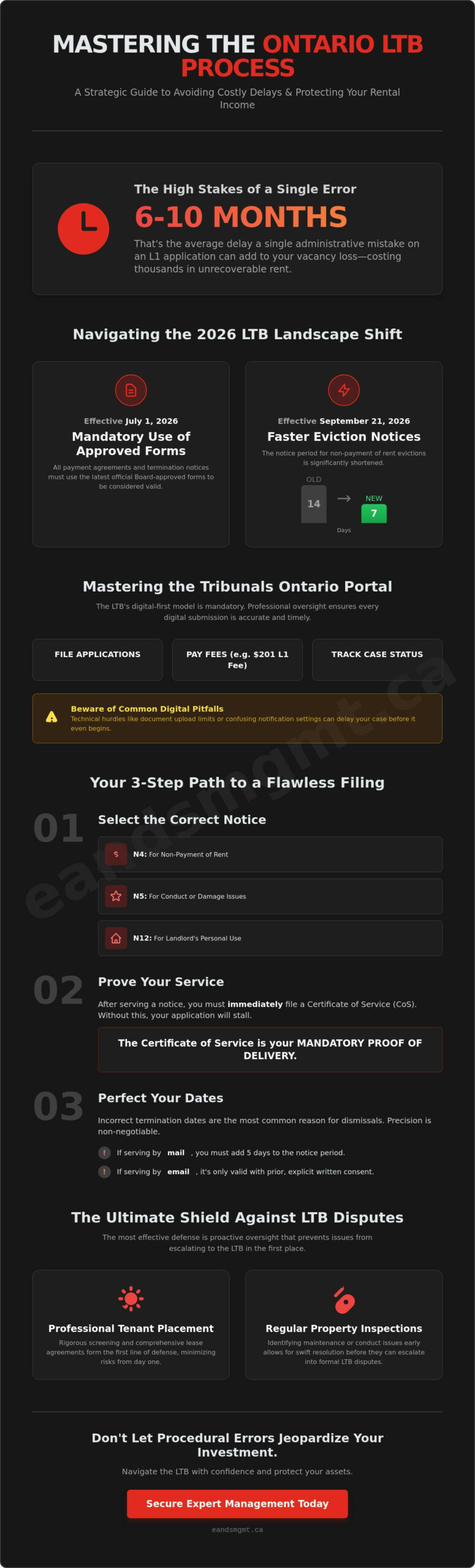
The “Fighting Delays, Building Faster Act, 2025,” commonly known as Bill 60, represents a significant legislative effort to address the LTB’s historic backlogs. While many of these amendments were pending earlier this year, several critical changes take effect throughout 2026. On July 1, 2026, the Board begins enforcing mandatory use of approved forms for all payment agreements and termination notices. Even more impactful is the change scheduled for September 21, 2026, which shortens the notice period for non-payment of rent evictions from 14 days to just 7 days. These updates aim to accelerate the dispute resolution process, but they also leave less room for landlord error. You must ensure your internal documentation processes align with these specific dates to maintain the legal viability of your claims and protect your rental income.
Digital Transformation: The Tribunals Ontario Portal
The LTB has moved to a digital-first model, making the Tribunals Ontario Portal the primary gateway for all filings. This system is designed for administrative efficiency, allowing you to file applications, pay fees like the $201 L1 fee, and track case status in real-time. The “Navigate Tribunals Ontario” tool offers a starting point for basic procedural queries, but it doesn’t replace the need for strategic foresight. Many landlords encounter technical hurdles, such as document upload limits or confusing notification settings, that can delay a case before it even reaches a mediator. Mastering this portal is no longer optional; it’s a core requirement for any property owner who wants to protect their asset longevity and minimize operational friction. Professional oversight ensures that every digital submission is accurate, complete, and filed within the strict timelines mandated by the RTA.
Filing Your LTB Application: Avoiding Fatal Procedural Errors
Precision is your only safeguard against the LTB’s strict procedural standards. While the board exists to resolve disputes, adjudicators often operate with a no-mercy policy regarding clerical mistakes. Successfully navigating the Landlord and Tenant Board Ontario requires you to treat every form as a legal affidavit where a single typo can reset your six to ten month waiting period. If your notice contains a mathematical error or an incorrect termination date, your application will likely be dismissed at the hearing, forcing you to start the process from the beginning while your rental income remains at risk.
The foundation of any successful case is the hierarchy of notices. You must select the specific form that matches your grievance: the N4 for non-payment of rent, the N5 for conduct or damage issues, or the N12 for personal use. Once served, you must immediately complete a Certificate of Service (CoS). This document is your proof of delivery; without it, the board cannot verify the tenant received the required notice, and your file will stall. Using the Official Landlord and Tenant Board Forms and Rules ensures you are working with the most current versions of these documents, which is vital as regulations shift throughout 2026.
Step 1: Serving a Flawless Notice to Terminate
Calculating termination dates is the most common point of failure for self-represented landlords. You must account for the method of service; for example, adding five days if you send the notice by mail. In the digital age, service by email is only permitted if the tenant has explicitly agreed to it in writing, typically within the Ontario Standard Lease. Errors in the Notice of Rent Increase (N1) are the primary cause of dismissed L1 applications because any mistake in the historical rent calculation makes the claimed arrears legally incorrect. Many owners find that professional property oversight is the most reliable way to ensure these technical details are handled correctly the first time.
Step 2: Navigating the Filing Process
After the notice period expires, you must transition to the Tribunals Ontario Portal to file your application. The current online filing fee for an L1 application is $201, a necessary investment to secure a hearing date. You are required to upload a copy of the mandatory Ontario Standard Lease as evidence. If this document is missing or incomplete, the board may stay your application. Once filed, use the portal to track your status regularly. This allows you to respond to any requests for information from the LTB immediately, preventing further administrative delays in your case resolution.
Mastering Virtual LTB Hearings: Evidence and Conduct
The virtual hearing is the critical climax of navigating the Landlord and Tenant Board Ontario. In 2026, most proceedings occur via digital platforms, requiring a blend of technical readiness and legal composure. You will likely be part of a “Block Hearing,” where multiple cases are scheduled for the same time slot. This format requires significant patience; you might wait several hours before the Adjudicator calls your file. During this time, the Tenant Duty Counsel (TDC) will often meet with tenants to provide legal advice or suggest mediation. Understanding that the TDC is there to protect tenant rights helps you remain focused on your own evidence and professional presentation.
Strict adherence to evidence disclosure rules is non-negotiable for achieving a successful case resolution. As the applicant, you must upload all documents, photos, and ledgers to the portal at least seven days before the hearing. The respondent has a five-day deadline for their submissions. If you fail to meet these timelines, the Adjudicator may exclude your evidence entirely, rendering months of preparation useless. For smaller landlords, utilizing Landlord’s Self-Help Centre Resources can provide additional clarity on how to format these submissions to meet the Board’s specific standards.
Preparing Your Evidence Package
Clarity is the primary objective when organizing your evidence. Your rent ledger should be a transparent, line-by-line accounting of every payment received and every missed amount. For maintenance disputes, rely on time-stamped professional photography captured during regular property inspections rather than blurry smartphone images. The Board places much higher weight on written communication, such as emails and text messages, than on verbal testimony. Ensure these logs are organized chronologically to demonstrate a consistent and professional effort to resolve issues before seeking Board intervention.
What to Expect on Hearing Day
The hearing begins with a sign-in process where a Moderator confirms your presence and technical functionality. Once the Adjudicator begins, maintain a professional decorum that reflects your role as a disciplined property owner. Cross-examination can be intense, especially when a tenant or their counsel challenges your records. Maintaining a steady hand and a calm demeanor during high-stress testimony projects an image of reliability and competence to the Board. Focus on providing direct, factual answers without becoming defensive. This disciplined approach ensures that the Adjudicator focuses on the merits of your application rather than interpersonal conflict.
Beyond the Hearing: Mediation, Orders, and Enforcement
Securing a favorable decision at a hearing is a significant milestone, but it doesn’t immediately translate to possession of your property or the recovery of funds. Successfully navigating the Landlord and Tenant Board Ontario requires a clear understanding of the post-hearing administrative phase. Once the hearing concludes, the Adjudicator takes the matter under advisement to draft a written Order. While some decisions are delivered orally on the day of the hearing, the enforceable document often takes several weeks to arrive via the Tribunals Ontario Portal. This waiting period can be a source of stress, especially when rental income is at stake.
Mediation remains a strategic option throughout this process. The LTB offers Dispute Resolution services as a faster alternative to a formal Adjudicator’s Order. A “Mediated Order” is a binding agreement where both parties concede certain points to reach a resolution. The primary advantage is certainty; you avoid the risk of an unfavorable ruling. However, you may have to accept a payment plan or a later move-out date than you initially sought. Conversely, a “Standard Order” is a unilateral decision by the Board. Under the Bill 60 updates effective July 1, 2026, any request to review these Board decisions must be submitted within 15 days, leaving a very narrow window for corrective action.
The Role of the Court Enforcement Office (Sheriff)
It’s a common misconception that the LTB physically removes tenants. The Board only issues the legal authority to evict; the actual enforcement is the exclusive jurisdiction of the Court Enforcement Office, often referred to as the Sheriff. Once you receive an Order for eviction, you must file it with the Small Claims Court to obtain a Writ of Possession. Only the Sheriff has the legal right to physically remove a tenant and their belongings. You should never attempt a “self-help” eviction, such as changing the locks or cutting off utilities. These actions carry severe legal penalties and will jeopardize your standing with the Board and the courts.
Collecting Unpaid Rent Post-Eviction
The resolution of a tenancy doesn’t always resolve the financial debt. If a tenant vacates while still owing rent, you can use the L10 application to pursue those arrears through the LTB for up to one year after they’ve moved out. This process requires accurate record-keeping and a transparent paper trail. Maintaining detailed Financial Reporting for Your Ottawa Rental is essential for substantiating these claims during a secondary hearing or when engaging a collection agency for asset recovery. If you find the enforcement phase overwhelming, our full-service property management solutions provide the steady hand needed to see these complex files through to a final resolution.
Professional Property Management: Your Shield Against LTB Complexity
The most effective strategy for navigating the Landlord and Tenant Board Ontario is to implement systems that prevent disputes from escalating to a tribunal. While the LTB provides a necessary framework for resolution, the administrative and emotional toll on a self-managed landlord is substantial. Proactive oversight serves as your primary defense. By maintaining a disciplined approach to property stewardship, you ensure that every interaction, from the initial lease signing to the final inspection, is documented and compliant with current regulations. This foresight reduces the likelihood of legal friction and protects your rental income from the delays discussed in previous sections.
Professional tenant placement services are the foundation of this proactive defense. Industry professionals report that rigorous screening processes significantly reduce the risk of encountering tenants with a history of non-payment or conduct issues. For Foreign Service officers and non-resident landlords, the risks of a DIY approach are even higher. Distance makes it nearly impossible to maintain the strict paper trail required by the LTB or to respond to emergency maintenance issues that could lead to a tenant-filed T2 application. Without localized expertise, a simple maintenance oversight can quickly transform into a costly legal battle.
The E&S Approach to Conflict Resolution
We act as an approachable yet authoritative bridge between your rights and your tenants’ needs. Our methodical system for rent collection and maintenance oversight ensures that issues are identified and resolved before they require legal intervention. By taking on the full administrative burden of property management, we remove the operational friction that often leads to landlord-tenant disputes. This disciplined stewardship protects your asset longevity while providing a stable, predictable environment for your residents. We handle the difficult conversations and the technical filings so you don’t have to sacrifice your time or peace of mind.
Protecting Your Ottawa Investment
Operating within the Ottawa-Gatineau rental market requires specialized regional knowledge. With over 40 years of regulatory experience, we provide the steady hand needed to manage the complexities of Ontario’s evolving rental laws. We handle everything from regular property inspections to detailed financial reporting and accounting, ensuring your investment remains both profitable and compliant. You deserve the security that comes from knowing your property is in the hands of seasoned professionals who value order and results. Protect your investment with professional oversight and let us handle the complexities of the LTB on your behalf.
Securing Long-Term Resolution for Your Rental Assets
Successfully navigating the Landlord and Tenant Board Ontario requires more than just legal knowledge; it demands a disciplined commitment to administrative accuracy. The 2026 landscape is defined by strict digital filing requirements and shortened notice periods that leave no room for error. By prioritizing procedural precision and maintaining a transparent paper trail, you protect your rental income from the risks of administrative dismissal and prolonged vacancies.
The transition from conflict to resolution depends on foresight and professional preparation. You don’t have to carry this operational burden alone. With over 40 years of residential expertise in the Ottawa market, E&S Property Management provides the steady hand required to manage complex tenancies. We offer specialized support for Foreign Service members and ensure comprehensive CRA tax compliance for our non-resident clients through NR6 and NR4 filings.
Let E&S Property Management handle the complexities of your Ottawa rental so you can focus on your broader strategic goals. Your path to a stable and profitable rental experience starts with the right partner.
Frequently Asked Questions
How long is the current wait time for an LTB hearing in Ontario?
Most property owners currently experience wait times between six and ten months for an LTB hearing. These systemic delays emphasize the importance of administrative accuracy, as a single error can force you to restart the entire process. Navigating the Landlord and Tenant Board Ontario requires immense patience and a disciplined approach to documentation. If you encounter a long wait, focus on maintaining a meticulous paper trail of all tenant communications to ensure your evidence remains current when your hearing date finally arrives.
Can I evict a tenant for non-payment of rent without an LTB order?
You cannot legally evict a tenant in Ontario without a formal eviction order from the Board and subsequent enforcement by the Court Enforcement Office. Attempting a “self-help” eviction, such as changing locks or removing a tenant’s belongings, is a direct violation of the Residential Tenancies Act. Such actions can result in significant fines and legal liability for the landlord. Always follow the prescribed legal path by serving an N4 notice and filing the appropriate application to protect your rights and your property.
What is the “Ontario Standard Lease” and is it mandatory?
The Ontario Standard Lease is a mandatory document for most new private market tenancies established after April 30, 2018. It’s designed to ensure both parties understand their rights and responsibilities clearly. If you fail to use this standard form, a tenant has the right to withhold one month’s rent or terminate their tenancy with 60 days’ notice. Using the correct lease is a foundational step in maintaining a compliant and enforceable rental agreement that stands up to Board scrutiny.
What happens if I make a mistake on an L1 application?
A mistake on an L1 application, such as an incorrect rent amount or a typo in the tenant’s name, often leads to the immediate dismissal of your case. Adjudicators rarely allow significant amendments during a hearing, prioritizing procedural perfection. If your application is dismissed, you must start the process over, which includes serving a new notice and paying the filing fee again. This reset can cost you another six to ten months of potential rental income and significant operational stress.
How much does it cost to file an application with the LTB in 2026?
Filing an L1 application through the Tribunals Ontario Portal currently costs $201. Other standard applications generally cost $53 if filed on paper or $48 if submitted digitally through the online portal. These fees are non-refundable, even if your application is dismissed due to a procedural error. It’s essential to verify every detail before submitting payment to ensure your investment in the legal process isn’t wasted on a flawed or incomplete digital submission.
Can a property manager represent me at the LTB?
Professional property managers can represent you at the LTB, provided they follow the Law Society of Ontario’s guidelines regarding legal services. A manager acts as your agent, presenting evidence and testimony on your behalf during the proceedings. This representation is particularly valuable for non-resident owners or Foreign Service members who cannot attend virtual hearings. Having a disciplined steward manage the hearing ensures that your case is presented with the necessary professional decorum and technical accuracy.
What is the difference between mediation and a hearing at the LTB?
Mediation is a voluntary, informal process where a Board-appointed mediator helps both parties reach a mutual agreement. A hearing is a formal proceeding where an Adjudicator listens to evidence and makes a binding legal decision. Mediation often results in a faster resolution, but it requires both parties to compromise. Navigating the Landlord and Tenant Board Ontario effectively often involves weighing the speed of a mediated settlement against the definitive nature of a formal Board Order.
How do I serve legal documents to a tenant who is avoiding me?
If a tenant is avoiding service, you can use permitted methods such as placing the document in their mailbox or sliding it under their door. You must then complete a Certificate of Service to verify the delivery for the Board. If these standard methods are impossible, you can apply for an “Order for Substituted Service.” This allows you to serve the tenant via email or other non-traditional means to ensure the legal process continues without further delay.


