Your signature on Form 047-2229E is only the beginning of a secure tenancy; the real protection for your investment lives in the specific terms you choose to add. It’s common for property owners to feel that a government-mandated form leaves little room for genuine asset protection. You likely worry that a single non-compliant clause might void your agreement or lead to a costly dispute at the Landlord and Tenant Board. This Ontario Standard Lease agreement guide is designed to replace that anxiety with a structured, professional approach to documentation.
You’ll learn how to master mandatory sections while utilizing Section 15 to include enforceable, legal protections for your specific property. We provide the essential facts on the 2026 rent increase guideline of 2.1% and clarify the rules for units exempt from rent control. This manual moves from basic compliance to strategic oversight, giving you the confidence to execute a binding lease that secures your financial interests and maintains the long-term value of your assets.
Key Takeaways
- Identify the mandatory components of the standard form to ensure your rental agreement is legally binding and compliant with current regulations.
- Use this Ontario Standard Lease agreement guide to leverage Section 15, allowing you to include customized, enforceable rules for property maintenance.
- Recognize and eliminate void or illegal clauses that undermine your authority and create unnecessary liability during LTB proceedings.
- Master the precise documentation of rent breakdowns and tenancy terms to maintain clear financial records and administrative order.
- Understand the value of professional document administration in protecting your assets and establishing a structured relationship with your tenants.
What is the Ontario Standard Lease Agreement?
Every successful tenancy begins with a foundation of legal clarity. The Residential Tenancy Agreement (Standard Form of Lease) is the mandatory template that governs most private residential rental arrangements in the province. It serves as a standardized bridge between the complex regulations of the Residential Tenancies Act (RTA) and the daily operations of a rental property. This Ontario Standard Lease agreement guide clarifies how the form creates a predictable environment for both parties, ensuring that rights and responsibilities are transparent from day one.
While a general lease agreement might outline basic occupancy terms, Ontario’s specific form is designed to prevent confusion and eliminate the use of illegal clauses. It applies to a wide range of residential properties, including single-family homes, basement apartments, and condominiums. Whether you manage a single unit in Ottawa or a portfolio of institutional assets, using the current version of this form is a non-negotiable step in professional asset stewardship. It provides a structured framework for documenting essential details, such as utility responsibilities and rent deposits, which reduces the likelihood of future administrative friction.
When the Standard Lease is Required
Compliance is mandatory for most private residential tenancies entered into on or after April 30, 2018. Landlords must use the updated version of the form, specifically Form 047-2229E, which was revised in December 2020 and became effective on March 1, 2021. While this form is the baseline for most rentals, certain exceptions exist. Care homes, mobile home parks, and co-operative housing projects aren’t required to use this specific template. For standard residential owners, however, this document is the only legally recognized way to establish a new tenancy agreement.
Consequences of Non-Compliance
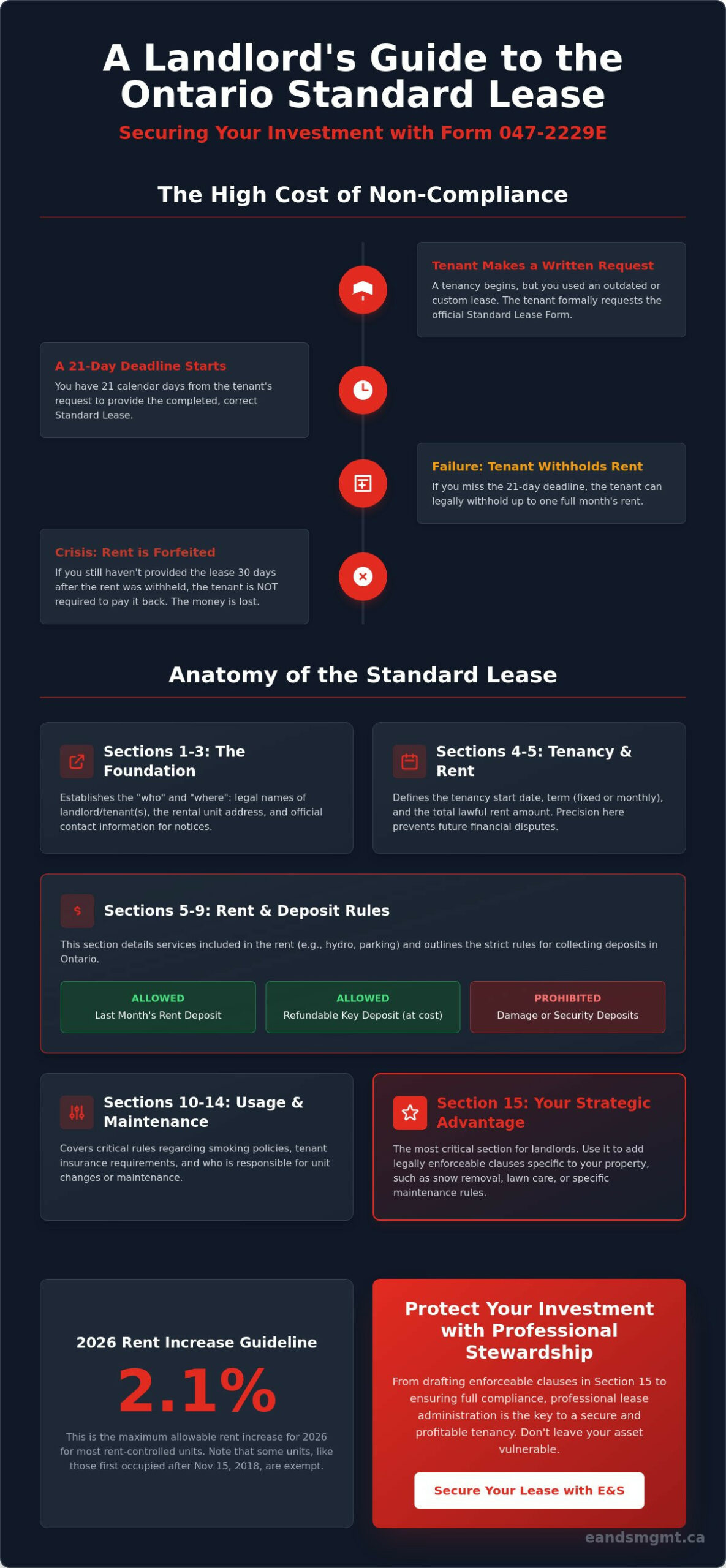
Failing to provide the standard form creates immediate legal and financial vulnerabilities. If a landlord uses an alternate contract, the tenant has the right to demand the official standard lease in writing. Once this request is made, the landlord has 21 days to provide the document. Failure to comply allows the tenant to withhold one month’s rent. If the landlord still hasn’t provided the form 30 days after the tenant began withholding, the tenant isn’t required to pay that month’s rent back. This scenario often leads to avoidable disputes at the Landlord and Tenant Board (LTB), which can compromise the stability of your investment and your reputation as a professional steward of property.
Key Sections of the Ontario Standard Lease Explained
The standard form is organized into 15 distinct sections, each designed to eliminate ambiguity and protect the integrity of the rental relationship. The first three sections establish the legal identities of the landlord and tenant, the physical address of the unit, and the essential contact information for legal notices. In a market like Ottawa, where many residents are federal employees or transient professionals, ensuring you have a valid service address for the landlord is a critical administrative requirement. Sections 4 and 5 define the duration of the tenancy and the exact breakdown of the monthly rent, providing a clear financial roadmap for both parties.
Understanding these components is easier when you reference the Official Guide to Ontario’s Standard Lease, which provides the government’s own interpretation of these requirements. This Ontario Standard Lease agreement guide focuses on the practical application of these rules to ensure your property remains a high-performing asset. Accuracy in these early sections prevents the administrative chaos that often arises from poorly documented agreements. For owners who find the initial documentation process overwhelming, utilizing a professional tenant placement service can ensure every field is completed with precision.
Navigating Rent and Deposits (Sections 5-9)
Defining the lawful rent is more than just stating a number. You must clearly outline what services, such as heat or parking, are included in that base amount to avoid future disputes. If you offer a rent discount, it must follow specific RTA rules to remain enforceable. When it comes to deposits, Ontario law is strict. You can only collect a rent deposit for the last month’s rent, and it cannot be used as a security deposit for damages. Key deposits are permitted but must be refundable and limited to the actual replacement cost of the keys or fobs. Setting these amounts incorrectly can lead to mandatory rebates and potential fines if challenged at the LTB.
Smoking and Unit Changes (Sections 10-14)
Sections 10 through 14 address the lifestyle and maintenance aspects of the tenancy. While you can’t prohibit a tenant from having pets unless they violate local bylaws, you can strictly define non-smoking areas under the Smoke-Free Ontario Act. This is particularly relevant for Ottawa condo owners, as municipal requirements and specific condo corporation bylaws often dictate where smoking is permitted. Section 11 is where you should insist on tenant liability insurance, a standard practice for professional managers to mitigate risk. Finally, these sections clarify that while tenants can make “reasonable” cosmetic changes, any significant alterations require your written consent, preserving the long-term value and structural integrity of your investment.
Section 15: The Power of Additional Terms
Section 15 represents the most critical opportunity for landlords to tailor the Official Ontario Standard Form of Lease to their property’s unique requirements. While the first 14 sections provide a rigid regulatory framework, this section allows for the attachment of an appendix containing additional terms. It’s the space where professional stewards define the operational boundaries that protect the asset’s longevity. This Ontario Standard Lease agreement guide emphasizes that while you have the freedom to add terms, they must never conflict with the Residential Tenancies Act (RTA). Any clause that contradicts the RTA is automatically void, which is why methodical document preparation is essential for every landlord.
Expert oversight is often required to navigate this section because the line between a helpful rule and an illegal clause is thin. Landlords who include unenforceable terms risk losing credibility at the Landlord and Tenant Board (LTB). By focusing on value-driven descriptors and clear expectations, you can create a supplement that enhances the standard form rather than undermining it. This section is essentially your administrative resolution for property-specific challenges that the government’s template doesn’t cover in detail.
Common Legal Additional Terms
In regions like Ottawa, where seasonal changes are extreme, Section 15 is vital for defining maintenance responsibilities. Landlords often assume tenants are automatically responsible for snow clearing or lawn care, but the RTA generally places this burden on the owner. To shift these duties, you must draft clear, enforceable terms that don’t violate the landlord’s primary obligation to maintain the property. In many cases, a separate service agreement is the most legally sound approach to ensure the property remains safe and compliant with municipal bylaws.
Another common addition involves the condition of the unit at the end of the tenancy. While you can’t charge a non-refundable cleaning fee, you can include terms regarding the professional cleaning of carpets if the unit was provided in that state. Clearly outlining expectations for the use of common areas in multi-unit dwellings also helps prevent disputes. This structured approach to additional terms ensures that every stakeholder understands their role in preserving the property’s value and maintaining a harmonious living environment.
Condo-Specific Considerations
Managing a rental within an Ottawa high-rise requires a specific layer of administrative oversight. Section 15 allows you to formally integrate the Condominium Declaration and Bylaws into the lease agreement. This step is vital because the tenant must legally comply with the corporation’s rules, just as the owner does. Failing to include these can leave the landlord liable for the tenant’s infractions or fines levied by the condo board. You should also use this section to document logistical requirements like elevator bookings for move-in and move-out dates. If the condo corporation charges a move-in fee, clearly state which party is responsible for that cost. By requiring a tenant’s signature on a copy of the condo rules, you create a documented trail of acknowledgement that protects your investment from unnecessary liability.
The Trap of Void and Illegal Clauses
A legally binding contract is only as strong as its most vulnerable clause. In Ontario, the Residential Tenancies Act (RTA) serves as the ultimate authority, rendering many traditional landlord preferences entirely void even if a tenant signs the document. Including unenforceable terms doesn’t just invalidate those specific rules; it can severely undermine your credibility during a Landlord and Tenant Board (LTB) hearing. An adjudicator who sees a lease filled with illegal requirements may view the landlord as a non-compliant operator, which can complicate even the most straightforward eviction or maintenance dispute. This Ontario Standard Lease agreement guide highlights the importance of distinguishing between a landlord’s wish list and what the law actually permits.
Professional stewardship requires a disciplined approach to document preparation. You must resist the urge to “copy and paste” terms from outdated templates or out-of-province agreements. Every addition to your lease should be screened for RTA compliance to ensure your administrative foundation remains stable. If you’re uncertain about the legality of your customized terms, securing a professional tenant placement service can provide the oversight needed to avoid these common legal traps from the start.
Top Unenforceable Clauses to Avoid
Many landlords unknowingly include clauses that are strictly prohibited under Ontario law. For instance, you cannot ban overnight guests or charge “guest fees” for visitors who stay for extended periods. The RTA protects a tenant’s right to reasonable enjoyment, which includes having guests of their choice. Similarly, you can’t require post-dated cheques or automatic rent withdrawals as a condition of the lease. While a tenant can volunteer these payment methods, they cannot be mandated. Perhaps the most common error is the inclusion of a “damage deposit.” In Ontario, the only legal deposit is for the last month’s rent and a modest, refundable key deposit. Any funds collected for “potential damages” must be returned, and keeping them can lead to mandatory rebates and administrative fines.
Managing Pet Risks Legally
The “no pets” clause is perhaps the most misunderstood element of Ontario’s rental market. Under Section 14 of the RTA, a “no pets” provision in a lease is void. This means a tenant can move a pet into the unit at any time, regardless of what the lease says. However, there are specific legal resolutions for pet-related issues. A pet can be legally removed if it causes severe allergic reactions for the landlord or other tenants, if it’s inherently dangerous, or if it causes substantial interference with the reasonable enjoyment of the premises. In many Ottawa high-rises, specific condominium bylaws may actually prohibit certain animals. If a condo bylaw bans pets, that rule can often be enforced even if the RTA generally allows them. Instead of using void clauses, focus on regular property inspections to document the unit’s condition and ensure any pet-related damage is addressed through the proper legal channels.
Professional Lease Administration and Stewardship
Professional execution transforms a standard document into a robust administrative resolution for your property. While this Ontario Standard Lease agreement guide has detailed the legal requirements, the actual administration of these forms requires a methodical approach to ensure long-term stability. For over 40 years, we’ve provided this steady hand to Ottawa property owners, ensuring that every lease is executed with precision and strategic foresight. This level of oversight is essential for maintaining the longevity of your asset and fostering a disciplined relationship with your tenants.
Our approach centers on the removal of operational burdens for the owner. We don’t just facilitate a signature; we establish a structured framework for the entire tenancy. This includes clear financial reporting and accounting that begins the moment the first rent deposit is secured. By treating the lease as a professional consultation between landlord and tenant, we set a tone of mutual respect and clear expectations from day one.
Lease Execution for Remote Landlords
Managing a rental while posted abroad presents unique logistical challenges. Foreign Service members and expatriates require a digital signature workflow that allows for secure, remote execution of the mandatory lease form. We coordinate these digital processes alongside comprehensive move-in inspections to anchor the commencement of the lease. This ensures that the property’s condition is documented at the exact moment the tenant takes possession, providing a clear baseline for future assessments.
We also manage mandatory disclosures that remote owners might overlook, such as specific information regarding electricity suite meters. For non-resident owners, our NR6 and NR4 tax filing support integrates seamlessly into our lease administration. This ensures you remain compliant with Canadian tax laws while you are out of the country, providing a sense of security and predictability for your international holdings.
The E&S Advantage in Tenant Placement
A well-drafted lease is only effective if the tenant is committed to its terms. Our tenant placement service moves beyond the basic form by utilizing a disciplined screening process. We identify individuals who value order and respect the professional standards established in your agreement. This foresight reduces the likelihood of future disputes and ensures the property is maintained according to your standards. Our team also provides regular property inspections to verify that the terms of the lease are being upheld throughout the tenancy.
Once the tenancy begins, our role shifts to ongoing oversight, handling renewals and terminations with the same methodical care used during the initial placement. This continuous stewardship ensures your investment remains a high-performing asset regardless of market fluctuations. Secure your investment with professional tenant placement and lease management to ensure your property is managed with the expertise it deserves.
Securing Your Investment Foundations
Mastering mandatory documentation is a vital step in professional property stewardship. This Ontario Standard Lease agreement guide has detailed how to utilize Section 15 for legitimate protection while avoiding the legal traps of unenforceable clauses. Whether you’re managing a local Ottawa condo or a detached home, your administrative precision directly impacts the long-term value of your assets. Accuracy in these early stages prevents future disputes and ensures your rights as a landlord are fully preserved.
Since 1981, we’ve acted as the steady hand for owners navigating these regulatory complexities. We specialize in supporting clients with unique needs, such as those on Foreign Service postings who require methodical remote execution and comprehensive NR6/NR4 tax compliance support. Our team ensures your documents are legally sound and your property is managed with meticulous detail. Protect your property with E&S Full-Service Management and transform your lease into a strategic asset. You can move forward with confidence knowing your rental operations are in expert hands.
Frequently Asked Questions
Is the Ontario Standard Lease mandatory for all rentals?
The Ontario Standard Lease is mandatory for the vast majority of private residential tenancies entered into on or after April 30, 2018. This requirement includes most apartments, houses, and condominiums. While certain exemptions exist for care homes, mobile home parks, or co-operative housing, standard residential landlords must use Form 047-2229E. This Ontario Standard Lease agreement guide clarifies that using the correct version is the first step toward administrative order and legal compliance.
Can I still use my own custom lease agreement in Ontario?
You can’t replace the mandatory form with a custom agreement, but you can add tailored rules in Section 15. The government’s template is a baseline that ensures consistency across the province. Any additional terms you include in an appendix must align with the Residential Tenancies Act. If your custom clauses contradict the law, they’ll be considered void and unenforceable during a legal dispute at the Landlord and Tenant Board.
What happens if I don’t use the Standard Form of Lease?
Failing to provide the standard form after a written request allows the tenant to withhold one month’s rent. You have 21 days to provide the document once the tenant asks for it in writing. If you don’t comply within that timeframe, the tenant can keep that withheld month of rent permanently. This creates a significant financial loss and administrative friction that’s easily avoided by using the correct documentation from the start.
Can a landlord ask for a security deposit in Ontario?
Landlords in Ontario are strictly prohibited from collecting security or damage deposits. You’re only permitted to collect a rent deposit, which is applied to the last month of the tenancy. You may also collect a refundable key deposit, provided it doesn’t exceed the actual cost of replacement. Any other funds collected for potential damages are illegal and must be returned to the tenant immediately to avoid legal penalties.
Are ‘no pet’ clauses legal in an Ontario lease?
“No pet” clauses are legally void in Ontario under Section 14 of the RTA. A tenant can’t be evicted simply for having a pet, even if they signed a lease stating otherwise. However, a pet can be removed if it causes substantial interference with others, causes severe allergies, or violates specific condominium bylaws. Professional stewards focus on thorough screening and regular inspections rather than relying on unenforceable pet prohibitions.
Can I add rules about snow removal to the Standard Lease?
You can add snow removal rules to Section 15, but you must do so carefully to remain RTA compliant. The law generally makes the landlord responsible for exterior maintenance and safety. Shifting these duties to a tenant often requires a separate service contract with clear compensation. This Ontario Standard Lease agreement guide recommends seeking professional oversight to ensure these maintenance terms don’t create unexpected liability or void your agreement.
How do I change the terms of a lease after it’s been signed?
Changing a lease after execution requires the express written consent of both the landlord and the tenant. You can’t unilaterally alter terms like utility responsibilities or parking access once the agreement is signed. If both parties agree to a change, it’s best to document the amendment clearly and attach it to the original lease. This keeps your records organized and prevents future disagreements about the evolving terms of the tenancy.
Does the Standard Lease apply to Ottawa condominiums?
The standard lease is mandatory for all residential condominium rentals in Ottawa. Owners should use Section 15 to incorporate the condo corporation’s specific declaration and bylaws into the agreement. This step is vital because it ensures the tenant is legally required to follow the same rules as the owner. Providing these documents at the start of the tenancy protects you from fines related to a tenant’s non-compliance with condo rules.