
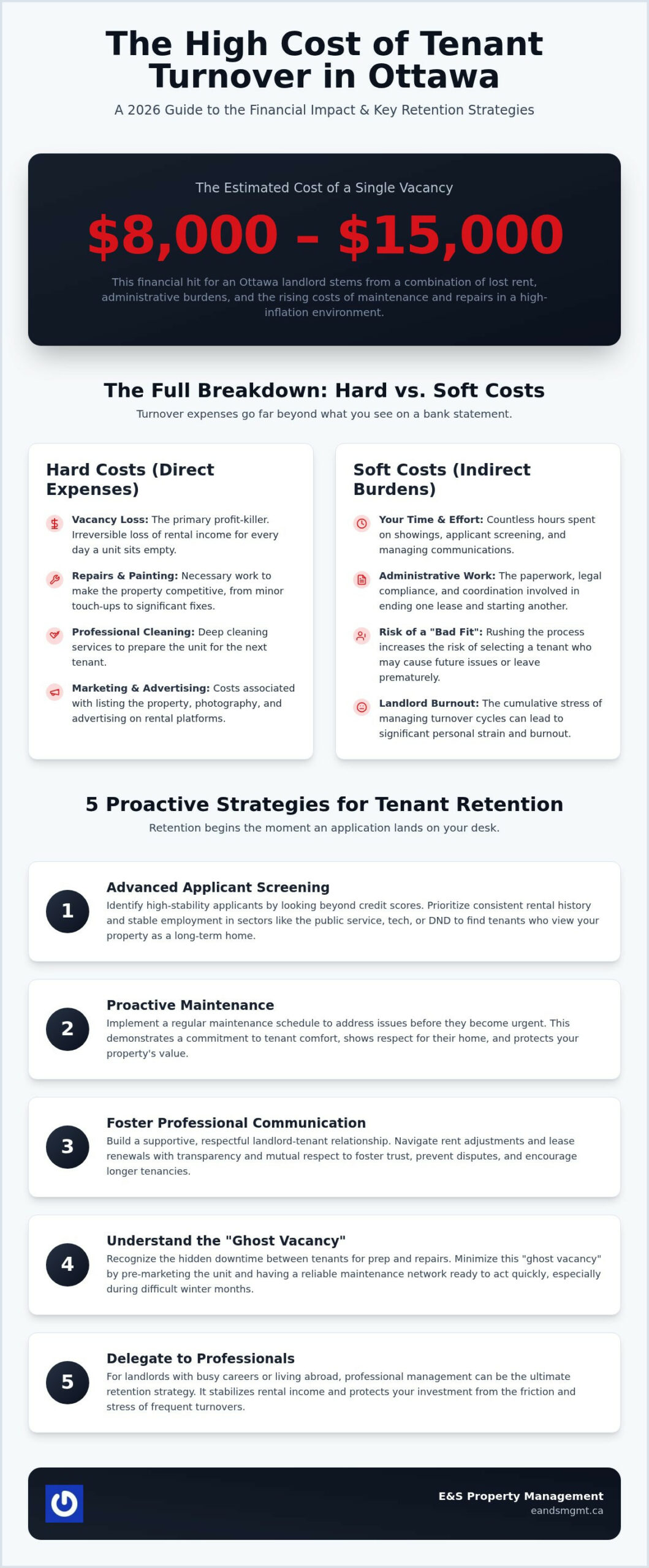
Did you know that losing a single tenant in 2026 can cost an Ottawa landlord between $8,000 and $15,000 in lost rent, repairs, and marketing? It’s a heavy burden to carry, especially when you’re managing properties while balancing a busy career or serving abroad. You likely feel the stress of every vacancy notice, knowing it marks the start of another cycle of deep cleaning, endless applicant screenings, and the persistent worry of lost income during the transition.
We understand that your rental property is more than just an asset; it’s a vital part of your financial future that deserves meticulous care. Learning how to reduce tenant turnover Ottawa isn’t just about protecting your bottom line. It’s about building a stable environment where your tenants feel at home and you feel at ease. This guide shares the professional strategies we’ve refined over 40 years to help you keep your best tenants longer and eliminate the high costs of vacancy in the local market.
We’ll walk through a methodical approach to tenant retention, from mastering proactive maintenance to navigating the latest 2026 legislative changes. You’ll discover how a supportive, professional relationship can prevent disputes and ensure your investment remains a source of relief rather than a source of constant administrative strain.
Key Takeaways
- Calculate the true financial burden of a vacancy by accounting for the hidden marketing, administrative, and repair costs that arise between tenancies.
- Learn how to reduce tenant turnover Ottawa by identifying high-stability applicants during the initial screening process who prioritize long-term residency.
- Implement a proactive maintenance schedule that addresses seasonal needs before they become urgent repairs, demonstrating a commitment to your tenant’s comfort.
- Foster a supportive, professional relationship with your residents to navigate rent adjustments and lease renewals with mutual respect and transparency.
- Discover how delegating day-to-day operations to an experienced steward can stabilize your rental income and protect your investment from the friction of frequent turnovers.
The True Cost of Tenant Turnover in Ottawa (2026)
Tenant turnover represents the complete cycle from the moment a resident provides notice to the day a new lease officially begins. In 2026, this transition has become more expensive and legally intricate than ever before. With current estimates suggesting a single turnover in Canada can cost between $8,000 and $15,000, landlords are searching for ways to protect their margins. This financial hit stems from a combination of lost rent, administrative burdens, and the rising costs of maintenance in a high-inflation environment.
For the independent landlord, the toll is often deeply personal. The stress of managing showing schedules around a full-time job or responding to urgent repair requests can lead to significant burnout. Successfully learning how to reduce tenant turnover Ottawa is about more than just saving money; it’s about reclaiming your time and peace of mind. Every vacancy represents a period of uncertainty that can disrupt your long-term financial planning.
Hard Costs vs. Soft Costs
Direct expenses are the ones you see clearly on your bank statement. These include professional cleaning services, fresh paint touch-ups, and the minor repairs necessary to keep your property competitive in a market where one-bedroom units average $1,950. However, the indirect costs are often more damaging. Your time spent vetting applicants is a finite resource, and rushing the process increases the risk of a “bad fit” replacement who might cause issues down the road. A foundational understanding landlord-tenant law is essential here, especially as Bill 60 has changed notice periods and appeal windows. Vacancy loss is the primary profit-killer for Ottawa investors as it represents the irreversible disappearance of rental income for every day a unit sits empty.
The “Ghost Vacancy” Period
Unit preparation often takes longer than landlords anticipate, especially during Ottawa’s unpredictable climate. Winter months can make moving logistics difficult and slow down contractor response times for essential repairs. This “ghost vacancy” is the time when the unit is technically empty but not yet ready for a new resident. Seasonal timing plays a massive role in how to reduce tenant turnover Ottawa; missing the peak spring or summer moving windows can result in a unit sitting empty for much longer than expected. Professional management helps bridge this gap through strategic pre-marketing and a reliable maintenance network, ensuring that a new, qualified tenant is ready to move in as soon as the previous one departs.
Selecting for Longevity: How to Reduce Tenant Turnover Ottawa
Retention doesn’t start at the one year mark; it begins the moment an application lands on your desk. In a city like Ottawa, where the vacancy rate sits near 1.8%, finding someone to fill a unit is rarely the challenge. The real goal is identifying the right person who views your property as a home rather than a temporary stop. Successfully learning how to reduce tenant turnover Ottawa requires a strategic look at local employment hubs. Residents working in the public sector, the tech corridor in Kanata, or with the Department of National Defence (DND) often seek the same stability in their housing that they have in their professional lives.
Aligning your property’s features with a tenant’s specific lifestyle needs prevents the “lifestyle mismatch” that frequently leads to early departures. If a tenant moves into a downtown studio but works in Nepean, the commute will eventually become a reason to leave. By vetting for geographic and professional alignment during the initial showing, you’re already building a foundation for a multi year stay.
Advanced Screening for Stability
High quality screening looks far beyond a simple credit score. While a score shows financial responsibility, a consistent rental history reveals the psychology of a long term tenant. We look for patterns of residency that span several years, suggesting a preference for roots over frequent moves. Verifying employment within Ottawa’s stable government and military sectors provides an extra layer of security. Implementing effective tenant retention strategies means selecting individuals whose needs, such as proximity to the O-Train or specific school zones, align perfectly with your property. For landlords who find this vetting process overwhelming, our tenant placement service leverages over 40 years of local experience to secure residents who prioritize longevity.
Setting Realistic Expectations Early
A positive relationship is built on a foundation of clarity. Using the Ontario Standard Lease is more than a legal requirement; it’s a tool to establish clear boundaries from day one. We recommend conducting a meticulous move-in inspection alongside the tenant. This process shows you care about the property’s condition and respect their right to a well-maintained home. When you document everything clearly, you eliminate the ambiguity that often leads to friction later. Clear communication during the first week sets a professional tone that persists throughout the tenancy. It transforms a simple transaction into a partnership based on mutual trust, which is often the deciding factor when a tenant considers renewing for another two or three years.
Proactive Maintenance as a Retention Tool
Waiting until a pipe bursts or a furnace fails is a common mistake that quickly erodes the trust you’ve built with your residents. While some landlords focus on keeping immediate costs low by deferring minor repairs, this reactive approach usually leads to higher turnover. A tenant who feels their home is neglected will eventually look for a new one, regardless of how friendly the initial relationship might have been. Professional stewardship means anticipating needs before they become frustrations. When considering how to reduce tenant turnover Ottawa, your maintenance schedule must respect the city’s extreme seasonal swings to keep residents comfortable year-round.
The Ottawa climate demands a rigid maintenance cycle that aligns with our local weather patterns. Fall furnace inspections are vital to ensure your tenants aren’t left in the cold during a January freeze; similarly, spring AC servicing prevents discomfort during humid July heatwaves. Conducting regular property inspections isn’t about policing the tenant’s lifestyle. Instead, it serves as a clear signal that you’re an active guardian of their living space. Catching a small leak under a sink during a routine visit prevents a future emergency and proves your commitment to their well-being.
The Preventative Stewardship Model
Moving beyond basic repairs involves scheduling annual health checks for your property’s plumbing and electrical systems. This methodical approach keeps your investment safe while providing predictable costs for your financial reporting. We also suggest a neighborly check-in after major Ottawa weather events, such as severe windstorms or heavy ice accumulation. A simple message asking if the property is secure shows empathy and genuine care. By using a trusted network of vetted contractors, you ensure that every repair is handled correctly the first time, avoiding the friction of repeat visits that can disrupt a tenant’s daily life.
Handling Emergency Repairs Without Stress
Crisis management is where a landlord’s reputation is truly earned. For members of the Foreign Service or DND who are posted abroad, managing a midnight emergency from a different time zone is nearly impossible. Our emergency 24/7 maintenance response network acts as a stabilizing force, shielding you from stress while protecting your property. A calm, decisive response to a flood or power outage can actually deepen tenant loyalty. Residents who know their landlord will act quickly in a crisis are far more likely to remain in place for the long term. Documenting these repairs thoroughly protects your property value and offers the tenant lasting peace of mind, reinforcing the idea that they are in very capable hands.
Communication: Building the “Neighborly” Relationship
Successful property management relies on a delicate balance of supportive authority. It’s about being firm enough to protect your investment while remaining approachable enough that your residents feel valued. When you treat tenants as respected neighbors rather than just rent payers, you create a sense of belonging that is difficult for them to leave. This human connection is a cornerstone of how to reduce tenant turnover Ottawa, especially in a market where residents have many choices but few truly positive rental experiences. By acting as a steady, reliable presence, you turn a simple house into a long term home.
In Ottawa, this relationship often involves navigating the unique needs of the Foreign Service and DND communities. These residents may require specific diplomatic immunity clauses or have unpredictable posting cycles that demand a high level of administrative expertise. Understanding these nuances allows you to provide a seamless experience for high-quality tenants who might otherwise feel transient. When you demonstrate that you’re technically proficient in these local requirements, you build a level of trust that prevents the friction that leads to early lease terminations.
The Strategic Rent Increase
Discussing money is often the most stressful part of the landlord-tenant relationship. For 2026, the Ontario rent increase guideline is set at 2.1%, and how you communicate this adjustment matters as much as the number itself. We recommend being transparent about the “why” behind any increase, whether it’s rising property taxes, insurance premiums, or essential maintenance costs. Comparing your adjusted rate to the current Ottawa market, where a two-bedroom unit averages $2,450, helps tenants see the ongoing value you provide. A small, consistent increase is significantly better than a large, sudden leap that might force a good tenant to reconsider their budget and look elsewhere.
Empathetic Conflict Resolution
Disputes over noise complaints or roommate changes can quickly turn a stable tenancy into a stressful situation for everyone involved. Handling these moments with a steady hand and emotional intelligence prevents small issues from escalating into legal battles at the Landlord and Tenant Board. Many landlords find that a professional third party removes the heat from these difficult conversations, allowing for resolutions that are fair and objective. If you’re feeling the weight of these administrative duties, delegating to our full-service property management team ensures that every interaction is handled with professional care, protecting your peace of mind while maintaining a positive environment for your residents.
Professional Management: The Ultimate Retention Strategy
DIY landlords often find themselves caught in a cycle of constant reactivity. Managing a rental property independently is manageable when things are quiet, but the cumulative weight of maintenance, legal compliance, and tenant relations can lead to significant burnout. When a landlord is exhausted, their response times slow down and their attention to detail slips, which are common drivers of tenant dissatisfaction. Professional management serves as a stabilizing force, ensuring that the high standards required for long-term retention are met every single day without exception.
For over 40 years, E&S Property Management has acted as a dedicated steward for Ottawa properties, specializing in the unique needs of Foreign Service and DND members. We understand that for those serving abroad, the anxiety of an empty or poorly managed unit is a heavy burden to carry. By creating a seamless, professional experience, we eliminate the “friction of living” for your tenants. They enjoy the reliability of a 24/7 response network and clear communication, while you enjoy the security of a stable, long-term rental income. Understanding how to reduce tenant turnover Ottawa often comes down to the consistency of the experience you provide.
Delegating the Administrative Burden
The administrative side of landlording is often where the most stress resides. From meticulous rent collection to the complex requirements of NR6 and NR4 tax filing support for non-residents, these tasks require a high level of precision. Our digital systems simplify the process for everyone involved, making lease renewals and monthly payments effortless for your tenants. This modern approach reduces the likelihood of administrative errors that can frustrate residents and lead to turnover. By handing over these logistical duties, you complete the transition from landlord stress to investor relief, knowing that every financial and legal detail is being managed by a seasoned hand.
Why E&S is the Protective Guardian of Your Asset
We view ourselves as the protective guardians of your investment, treating every property with the same meticulous care we would our own. This commitment to detail ensures that your property remains a true home for your tenants, which is the most effective way to encourage them to stay for three or more years. When residents feel that their living environment is actively protected and cared for, the thought of moving elsewhere becomes far less appealing. Learning how to reduce tenant turnover Ottawa is ultimately about providing a level of service that makes the tenant feel secure and the landlord feel completely supported.
Let E&S Property Management protect your Ottawa investment and provide the peace of mind you deserve while you focus on your career or your time abroad.
Securing Your Rental Legacy in Ottawa
Reducing vacancy isn’t just a financial objective; it’s a commitment to creating a stable environment where your residents feel truly at home. By focusing on meticulous screening and proactive seasonal maintenance, you remove the friction that often drives good tenants to move. You’ve seen that the true cost of turnover in 2026 can disrupt your financial goals, but a methodical approach to communication and care can change that narrative. Understanding how to reduce tenant turnover Ottawa is about moving from a reactive mindset to one of professional stewardship.
With 40 years of local residential expertise, we specialize in shielding landlords from the administrative and emotional burdens of property management. Whether you need 24/7 maintenance coordination or specialized NR6 and NR4 tax filing support while serving abroad, we act as your dedicated partner on the ground. Discover how E&S Property Management can stabilize your Ottawa rental income. You don’t have to navigate these complexities alone. We’re here to ensure your investment thrives so you can enjoy the peace of mind you deserve.
Frequently Asked Questions
What is the average tenant turnover rate in Ottawa?
In Ottawa, the rental market is currently characterized by a low vacancy rate of approximately 1.8%. While specific turnover percentages vary by neighborhood, most property owners experience a transition every two to three years. This tight market means demand is high, but the logistical effort to find a high-quality replacement remains a significant hurdle for those managing properties without professional support or a local network.
How much can a property manager really reduce my turnover costs?
Professional management can significantly lower turnover costs by reducing the “ghost vacancy” period between tenancies. By implementing pre-marketing strategies and utilizing a 24/7 maintenance network, a manager ensures the unit is ready for a new resident immediately. This efficiency protects you from the $8,000 to $15,000 in average turnover expenses, effectively allowing the service to pay for itself through preserved rental income and reduced marketing spend.
Should I offer a lease renewal incentive to keep a good tenant?
Offering a small incentive, such as a professional carpet cleaning or a minor appliance upgrade, can be a highly effective way to show appreciation. These gestures cost far less than a single month of vacancy. When considering how to reduce tenant turnover Ottawa, these neighborly touches often weigh more heavily in a resident’s decision to stay than the 2.1% rent increase guideline set by the province for 2026.
How do I handle a tenant who wants to leave mid-lease in Ottawa?
Handling a mid-lease departure requires a calm, professional approach that follows the Residential Tenancies Act. You can explore a lease assignment, where the tenant finds a qualified replacement to take over their current terms. This protects your income stream while providing the tenant with a legal exit strategy. Clear communication during this transition prevents disputes and ensures the property remains occupied by a vetted individual who respects your investment.
What are the most common reasons tenants leave Ottawa rentals?
Tenants often leave due to lifestyle changes, such as job transfers to other government hubs or a desire for more space as families grow. However, preventable reasons include slow maintenance responses and a lack of clear communication from the landlord. Addressing these “friction points” early is a primary strategy for those learning how to reduce tenant turnover Ottawa. A well-maintained home is much harder for a resident to leave.
Can I raise the rent every year under Ontario law?
Yes, you can typically increase the rent once every 12 months, provided you follow the provincial guidelines and provide at least 90 days of written notice. For 2026, the maximum increase for most residential units is 2.1%. It’s essential to use the proper Landlord and Tenant Board forms to ensure the increase is legally binding and clearly communicated to your residents to maintain a transparent and professional relationship.
How does living abroad affect my ability to manage tenant retention?
Living abroad introduces significant logistical challenges, particularly regarding time zones and emergency response times. Residents may feel neglected if they cannot reach you quickly for urgent repairs, which often leads to dissatisfaction and turnover. Delegating these duties to a local steward ensures that your property receives 24/7 attention. This protective oversight keeps your tenants happy and your investment secure, even while you’re serving with the Foreign Service or DND.
What is the best month to list a rental property in Ottawa to ensure long-term tenants?
The spring and early summer months, particularly May through July, are the most effective times to list a property in Ottawa. This window aligns with the peak relocation cycle for government employees, military members, and academic professionals. Listing during this high-demand period allows you to be more selective, choosing applicants who are looking for stable, long-term housing rather than those in a rush to find a temporary solution.


