
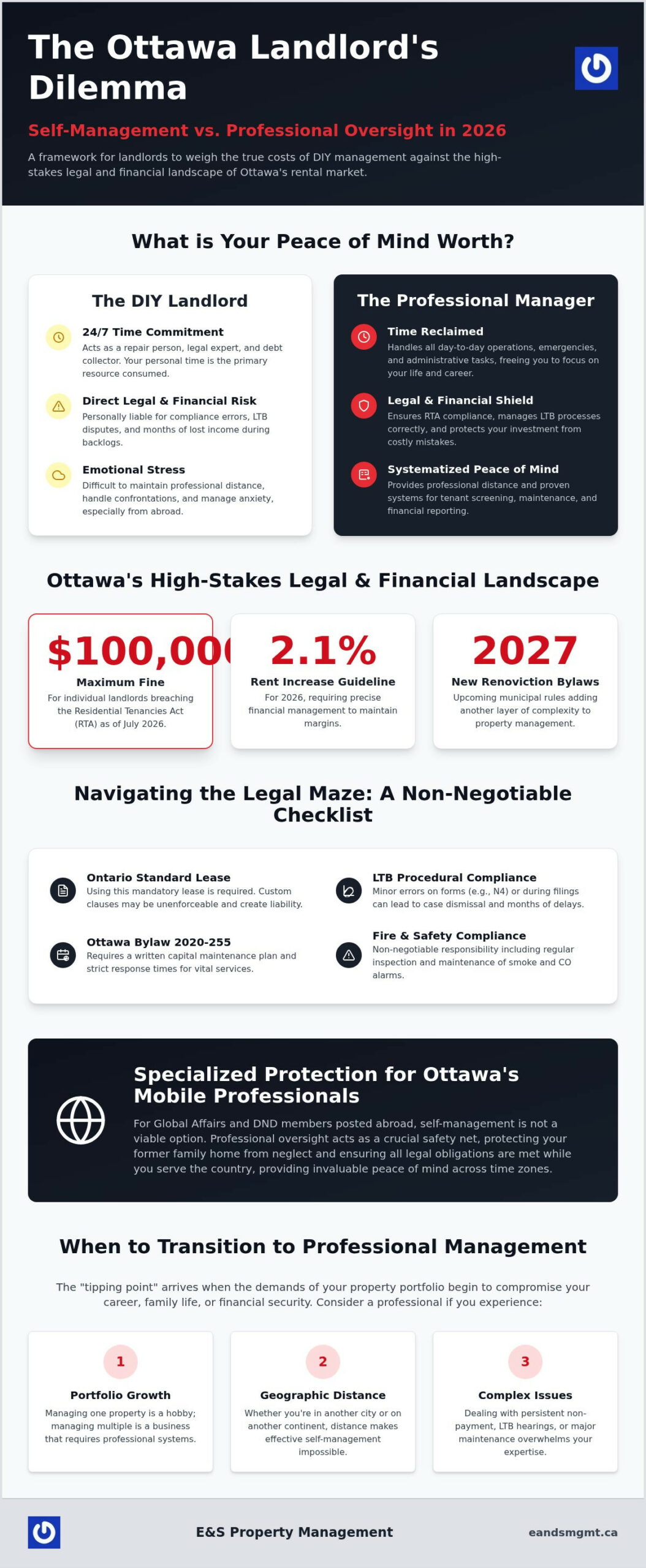
Imagine waking up at 3:00 AM to a frantic call about a burst pipe during a -30°C Ottawa cold snap, only to remember your tenant is already weeks behind on rent. Deciding between self-managing vs property manager Ottawa has become a high-stakes choice for local landlords in 2026. With individual fines for Residential Tenancies Act offences now reaching $100,000, the margin for error has never been thinner. You likely started this journey to build long-term wealth, yet you might find yourself acting as a 24/7 repair person, legal expert, and debt collector instead of an investor.
We understand the weight of these daily pressures, especially when navigating the Landlord and Tenant Board backlogs and new municipal licensing requirements. This guide evaluates the true cost of DIY landlording against the stability of professional oversight. We’ll walk through the 2.1% rent increase guidelines, the upcoming 2027 renoviction bylaws, and the specific risks of managing a property while balancing a career or a posting abroad. By the end, you’ll have a clear framework to decide if delegating these burdens is the right path to reclaiming your time and securing your financial future.
Key Takeaways
- Weigh the true value of your personal time against professional fees to determine if DIY management is financially sustainable for your lifestyle.
- Navigate the high-stakes legal landscape of self-managing vs property manager Ottawa, including the mandatory Ontario Standard Lease and the city’s specific 2027 renoviction bylaws.
- Learn how to implement a rigorous 5-point tenant screening process to shield your investment from the risks of non-payment and lengthy LTB disputes.
- Identify the “tipping point” indicators that signal when your growing portfolio requires professional systems to maintain your peace of mind.
- Discover specialized management frameworks designed to protect the properties of Global Affairs and DND members while they are posted outside of Ottawa.
Is Self-Managing Your Ottawa Rental Right for You?
Owning a rental property in the capital is often seen as a milestone of financial stability. However, the decision between self-managing vs property manager Ottawa often boils down to a single question: what is your peace of mind worth? While the initial appeal of saving on management fees is strong, many owners quickly find that the “passive” income they expected feels more like a second full-time job. With Ontario’s 2026 rent increase guideline set at 2.1%, managing your margins requires precision and a clear understanding of your own hourly value.
The geographic reality of Ottawa also plays a significant role. If you live in Orleans but your rental is in Kanata, a simple leaky faucet becomes a four-hour ordeal in Queensway traffic. Beyond the travel, you must consider your temperament. Are you prepared to deliver an N4 notice for non-payment to a tenant you’ve grown to like? Professional distance is a protective shield that many DIY landlords lack, making it difficult to treat the property as the business it truly is.
The Time Commitment of a DIY Landlord
Professional-grade management isn’t just about collecting a cheque. It involves a heavy administrative load that includes monthly bookkeeping, annual tax preparation, and staying ahead of lease renewals. Marketing a property in 2026 requires more than a simple post online; it demands high-quality photos, rigorous screening, and multiple showings to find the right fit. When you factor in being “on-call” for a furnace failure during a -30°C January night, the time commitment often exceeds the cost of professional help. Most landlords don’t realize they’re trading their weekends for tasks that a dedicated team could handle in a fraction of the time.
Assessing Your Legal and Financial Risk
The financial risks in Ontario have intensified significantly. As of July 1, 2026, fines for Residential Tenancies Act offences have doubled, with individuals facing up to $100,000 for non-compliance. If a tenant stops paying, the current LTB backlogs mean you could face months of lost income without a quick resolution. There’s also an emotional cost to consider. Many Ottawa landlords are Foreign Service or DND members managing their former family homes from a distance. Watching a beloved space suffer from neglect while you’re posted abroad creates a level of anxiety that no spreadsheet can fully quantify. Professional oversight acts as a safety net, ensuring your home is protected and your legal obligations are met without the personal stress.
Navigating Ottawa’s Unique Legal Requirements and Bylaws
The legal framework for landlords in Ontario is a complex tapestry of provincial and municipal rules. When deciding between self-managing vs property manager Ottawa, you’re choosing between staying current on hundreds of pages of legislation or letting an expert handle the compliance. The Ontario Residential Tenancies Act (RTA) sets the foundation, but Ottawa adds its own layers of municipal bylaws that can catch even seasoned investors off guard. For instance, using anything other than the mandatory Ontario Standard Lease is more than just a mistake; it’s a liability that can render your custom clauses unenforceable and leave you vulnerable during disputes.
In 2026, the Landlord and Tenant Board (LTB) remains a challenging environment. While the notice period for non-payment (Form N4) was reduced to 7 days in September 2026, the procedural hurdles remain high. One small error in a notice or a hint of Human Rights Code non-compliance during tenant selection can result in months of delays. Professional oversight ensures every interaction is documented and compliant, providing a shield against the doubled fines that took effect in July 2026. These fines now reach up to $100,000 for individuals, making “learning as you go” an expensive strategy.
Ottawa Rental Housing Property Management Bylaw (2020-255)
Ottawa’s Bylaw 2020-255 is a specific hurdle that many DIY landlords overlook. It requires you to maintain a written capital maintenance plan and provide every tenant with a comprehensive information package. You must also post emergency contact information clearly within the property. The city enforces strict response times for vital service disruptions like heat or water. If a boiler fails in January, the city expects a resolution or a clear plan of action within hours. Failing to meet these municipal standards can lead to inspections and orders that complicate your management and relationship with your tenants.
Fire Safety and Smoke Alarm Compliance
Safety is a non-negotiable responsibility that requires meticulous record-keeping. Ottawa Fire Services maintains strict standards for multi-unit dwellings and converted homes. You don’t just need working alarms; you need documented annual testing and battery changes. Carbon monoxide detectors must be placed near all sleeping areas in homes with fuel-burning appliances or attached garages. For those posted abroad with Global Affairs or DND, ensuring these annual checks occur is a logistical challenge. Our full-service property management includes these critical safety inspections, ensuring your property remains a safe haven for tenants and a secure asset for you.
The Hidden Costs of DIY Property Management in Ontario
When evaluating self-managing vs property manager Ottawa, most landlords focus on the monthly percentage fee. It’s a visible line item on a spreadsheet. However, the invisible costs of DIY management often represent a much larger financial drain. Consider your own opportunity cost. If you spend ten hours a month handling tenant inquiries, property inspections, and bookkeeping, you’re essentially paying yourself a low hourly wage. For many Ottawa professionals, your time is significantly more valuable than the cost of delegating these tasks to a seasoned hand.
Beyond your time, DIYers often face a “retail premium” for maintenance. Without a high-volume relationship, you’ll likely pay 20% to 30% more for emergency repairs than a professional management firm with a vetted contractor network. Legal mistakes add another layer of expense. A single error on an LTB form can lead to a dismissed application, forcing you to pay new filing fees and wait months for a new hearing while rent goes unpaid. These financial leaks can quickly turn a profitable investment into a source of constant stress.
Tenant Turnover and Marketing Expenses
A vacant unit is the most expensive unit. In competitive markets like the Glebe or Barrhaven, professional marketing is essential to minimize “days on market.” DIY landlords often rely on basic smartphone photos and free listing sites, which can lead to extended vacancies. Professional managers use high-tier screening tools and staging techniques that attract reliable tenants faster. If your unit sits empty for just two extra weeks while you manage showings around your work schedule, you’ve already lost more than the cost of a placement service. Investing in professional photography and rigorous background checks is an act of active protection for your asset’s cash flow.
Maintenance and Repair Surcharges
Ottawa winters are unforgiving, and plumbing or HVAC emergencies rarely happen during business hours. As a DIY landlord, you’ll likely face steep after-hours surcharges from contractors who don’t know you. We’ve seen how skipping a $200 preventative furnace service in October results in a $2,000 emergency replacement in the middle of a January blizzard. For Foreign Service or DND members serving abroad, these logistical hurdles are even more daunting. Managing a major roof repair or flood from another time zone is nearly impossible without a trusted steward on the ground to oversee the work and ensure you aren’t being overcharged.
A Practical Roadmap for the Self-Managing Ottawa Landlord
If you decide to handle the daily operations yourself, success depends on moving from a reactive mindset to a proactive system. The debate of self-managing vs property manager Ottawa often highlights the workload, but a structured approach can help mitigate the most common stresses. To protect your investment, start with these five fundamental steps:
- Conduct a deep market analysis: Don’t just look at basic listings. Check recent 2026 data for your specific neighborhood to ensure your rent is competitive yet profitable.
- Build a 5-point screening process: This should include credit checks, income verification, landlord references, social media reviews, and a personal interview.
- Secure a 24/7 trade network: Have a plumber, electrician, and HVAC technician on speed dial who prioritize your calls during peak seasons.
- Compile a digital “Property Bible”: Document every shut-off valve, furnace filter size, and paint code in a shared folder for quick reference during emergencies.
- Automate seasonal care: Schedule snow removal and gutter cleaning months in advance to survive the Ottawa freeze-thaw cycle.
Effective Tenant Screening in a Government Town
Ottawa is uniquely populated by DND and Global Affairs employees. While these roles suggest stability, you must still verify employment through official channels. Ask for recent pay stubs or a letter of employment that includes a contact person for verification. When conducting reference checks, focus on objective facts like payment history and property care to remain compliant with privacy laws. Watch for red flags, such as gaps in rental history or a rush to move in without a proper viewing. If this level of scrutiny feels overwhelming, our tenant placement service can handle the heavy lifting of finding and vetting the perfect fit for your home.
Maintenance Systems for the DIY Landlord
The extreme Ottawa climate demands a rigorous seasonal checklist. In the autumn, ensure gutters are cleared to prevent ice dams. During the winter, have a clear agreement on who is responsible for salting walkways to reduce liability. If a furnace fails in February, communication is your most important tool. Respond immediately, provide space heaters if necessary, and keep the tenant updated on repair timelines. Always document your inspections with photos and written notes. This creates a paper trail that protects you against future LTB damage claims and ensures your property remains a well-tended asset rather than a source of conflict.
When to Transition to Professional Management with E&S
Deciding between self-managing vs property manager Ottawa often comes down to the “tipping point.” This is the specific moment when the complexity of your rental portfolio begins to outpace your available free time. You might find that the administrative load, once a minor weekend task, now disrupts your career or family life. For members of the Foreign Service or DND posted abroad with Global Affairs, this transition isn’t just about convenience; it’s about necessity. Managing an Ottawa home from a different time zone while navigating the intricacies of non-resident tax requirements, such as NR6 and NR4 filings, is a burden no one should carry alone. We act as your eyes and ears on the ground, providing a level of active protection that distance simply doesn’t allow.
Our 40-Year Approach to Protecting Ottawa Assets
Since 1981, we’ve acted as a stabilizing force for local landlords, positioning ourselves as a dedicated steward for your interests. We leverage a deeply vetted network of local Ottawa contractors to secure lower repair costs, passing that reliability and peace of mind on to you. Our team maintains proactive LTB compliance to shield your investment from the expensive legal headaches and doubled fines that often plague DIY owners. Every month, you’ll receive transparent financial reporting and accounting. These systems simplify your annual tax season and provide a sense of order, turning a chaotic cycle of receipts into a clear, professional narrative of financial growth.
Taking the First Step Toward Passive Income
Moving from DIY management to professional oversight is a methodical and steady process designed to offer immediate relief from the burdens we’ve explored. We begin by understanding your specific anxieties, whether they involve tenant relations, maintenance emergencies, or legal obligations. You can request a free rental assessment for your Ottawa property to understand its current market value and potential in the 2026 market. Professional tenant placement further protects your long-term asset value by ensuring only the most qualified individuals occupy your home. Contact E&S Property Management today for a supportive, neighborly consultation. Let us take the weight off your shoulders so you can finally experience the true benefits of passive income.
Securing Your Investment and Your Peace of Mind
The choice between self-managing vs property manager Ottawa is about more than just numbers on a spreadsheet; it’s about the quality of your daily life. We’ve explored the high stakes of 2026 legal compliance and the hidden costs that often erode the profits of even the most diligent DIY landlords. Whether you’re navigating the LTB for the first time or managing a property while posted overseas with Global Affairs or the DND, you don’t have to carry the burden alone.
For over 40 years, we’ve acted as a stabilizing force for Ottawa property owners, providing meticulous care and specialized NR6 and NR4 tax support. Our goal is to transform your rental from a source of stress into a reliable engine for passive income. If you’re ready to delegate the middle-of-the-night emergencies and administrative cycles to a seasoned hand, we’re here to help. Request a Free Rental Assessment from E&S Property Management today to see how we can protect your asset. You’ve worked hard to build your portfolio, and you deserve the relief that comes with professional stewardship.
Frequently Asked Questions
Can I manage my own rental property if I am posted abroad with the Foreign Service?
You can technically self-manage from abroad, but Ontario law requires a local representative to handle emergencies and legal notices. Managing a property from a different time zone makes responding to a 3:00 AM burst pipe or a tenant dispute nearly impossible. For Foreign Service members, the logistical strain often outweighs the savings. A professional manager acts as your local steward, ensuring your home remains protected while you focus on your mission.
What is the most critical Ottawa bylaw for local landlords to follow?
The Rental Housing Property Management Bylaw (2020-255) is vital for every Ottawa landlord. It mandates a written capital maintenance plan and specific tenant information packages. You must also post emergency contact details within the building. Failing to comply with these municipal standards can lead to city inspections and significant fines. Understanding this bylaw is a key part of the self-managing vs property manager Ottawa debate, as professionals ensure these administrative details are never missed.
How do I handle a tenant who stops paying rent in Ottawa?
If a tenant stops paying rent, you must immediately issue an N4 notice. As of September 21, 2026, the notice period for non-payment has been reduced from 14 days to 7 days. This allows you to start the LTB filing process sooner. It’s essential to ensure every detail on the form is perfect. Any small error can cause the Board to dismiss your case, leading to more months of lost rental income.
Is the Ontario Standard Lease mandatory for all residential rentals?
Yes, the Ontario Standard Lease is mandatory for most residential tenancies. Using a custom contract or an old template is a major liability. If you don’t provide the standard lease upon a tenant’s written request, they can legally withhold one month’s rent. Custom clauses that contradict the Residential Tenancies Act are also void. Sticking to the official document protects your rights and ensures your agreement is enforceable at the Landlord and Tenant Board.
How much should I budget for annual maintenance on an Ottawa rental?
A reliable rule of thumb is to budget 1% of the property’s value or one full month’s rent for annual maintenance. In Ottawa, our extreme climate requires extra funds for seasonal tasks like furnace servicing and roof inspections. Older homes in neighborhoods like Westboro or the Glebe may require more frequent updates. Setting aside these funds ensures that a sudden C$2,000 HVAC repair doesn’t derail your investment’s cash flow or your personal finances.
What are the tax implications for non-resident landlords in Canada?
Non-resident landlords are subject to a 25% withholding tax on gross rental income. However, you can apply for an NR6 to pay tax on your net income instead, which significantly improves your monthly cash flow. You’ll also need to issue an NR4 slip annually. Navigating these CRA requirements is complex and carries heavy penalties for errors. Professional management firms often provide specialized support to ensure your non-resident tax filings remain compliant and stress-free.
How often should I legally inspect my Ottawa rental property?
There is no legal limit on the number of inspections, but you must provide at least 24 hours’ written notice before entering. Entry is only permitted between 8:00 AM and 8:00 PM. We recommend conducting thorough inspections quarterly or semi-annually. Regular walkthroughs allow you to spot small leaks or safety issues before they become expensive emergencies. It also signals to your tenants that you are a dedicated steward who cares about the property’s condition.
Do I need a business license to be a landlord in the City of Ottawa?
Currently, Ottawa doesn’t require a general business license for residential landlords. However, a new “renoviction” bylaw takes effect on January 1, 2027. This will require you to obtain a municipal license before evicting a tenant for major renovations. You’ll need to have building permits secured before applying. Staying ahead of these shifting municipal regulations is crucial for long-term compliance and avoiding the doubled fines that took effect in July 2026.


