
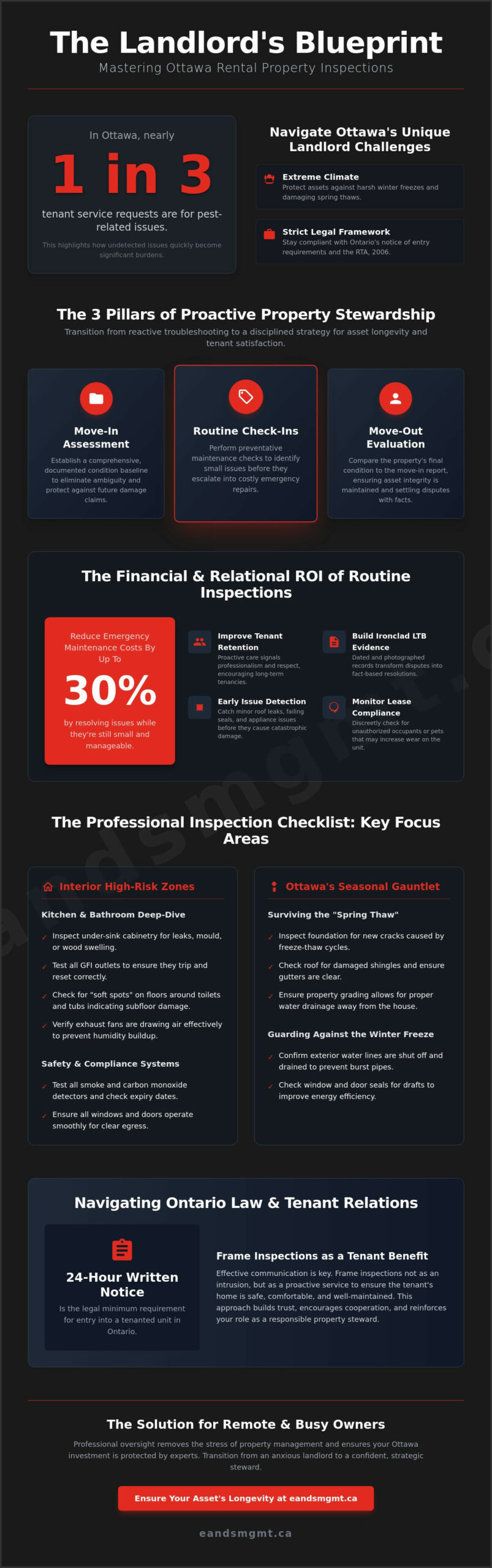
Did you know that pest control issues account for nearly one third of all tenant service requests across Ottawa? It’s a sobering statistic that highlights how easily small, undetected issues can escalate into significant operational burdens for even the most diligent owner. You likely feel the pressure of protecting your asset against the city’s extreme temperature swings while staying compliant with Ontario’s strict notice of entry requirements and the 2.1% rent increase guideline for 2026.
Using a structured rental property inspection checklist Ottawa landlords can rely on is the most effective way to transition from reactive troubleshooting to disciplined property stewardship. This article provides a professional framework for your inspections, covering everything from the specific mandates of Ottawa By-law 2020-255 to the critical exterior checks required after a harsh winter. We will detail the tangible steps you can take to identify vulnerabilities early, ensuring your property remains a stable, high-performing asset that fosters positive, long-term tenant relationships. By establishing a clear and repeatable process, you remove the anxiety of the unknown and replace it with a predictable strategy for asset longevity.
Key Takeaways
- Focus your room-by-room assessments on high-risk interior zones where undetected leaks or seal failures can lead to costly repairs.
- Prepare your property for the “Spring Thaw” and winter freeze with targeted exterior checks designed for the capital’s specific environmental challenges.
- Deploy a professional rental property inspection checklist Ottawa landlords use to create a verifiable record of stewardship and asset condition.
- Navigate Ontario’s legal entry requirements with a communication strategy that frames inspections as a proactive benefit for your tenants.
- Explore how regular property inspections provide a stable solution for remote owners who require dependable, expert oversight of their investments.
The Strategic Role of Rental Property Inspections in Ottawa
Property ownership in the capital requires more than passive administration. It demands a disciplined approach to maintenance that recognizes the city’s extreme seasonal shifts and evolving regulatory standards. By implementing a consistent rental property inspection checklist Ottawa landlords can move beyond simple repairs to true asset stewardship. This framework relies on three distinct pillars:
- Move-in assessments to establish a condition baseline.
- Routine check-ins to identify preventative maintenance needs.
- Move-out evaluations to verify asset integrity at the end of a lease.
Each phase serves a unique purpose in protecting your investment and ensuring compliance with Ontario’s Residential Tenancies Act, 2006. Consistent oversight isn’t just about catching damage; it’s a strategic tool that builds trust with tenants and protects your financial interests.
Move-In vs. Move-Out: Establishing the Baseline
The move-in inspection is your most critical defensive tool. This process involves creating a comprehensive “Status of Premises” report that details every room’s condition before the tenant takes possession. We recommend using high-resolution digital photography to capture the state of flooring, appliances, and walls. This documentation removes ambiguity and creates a clear record of pre-existing wear and tear. The baseline condition serves as the definitive legal standard for any future damage claims. When a tenant moves out, comparing the current state to this initial report ensures that the security of the asset is maintained and disputes are resolved with objective evidence rather than hearsay.
The ROI of Preventative Routine Oversight
Routine inspections are about foresight. In Ottawa, where a single frozen pipe or a minor roof leak can lead to catastrophic structural damage during the spring thaw, staying ahead of issues is essential. Regular check-ins allow you to identify small leaks or failing seals before they require emergency intervention. These visits also offer a chance to monitor lease compliance, such as checking for unauthorized occupants or pets that may increase wear on the unit. Professional industry data suggests that routine oversight can reduce overall emergency maintenance costs by up to 30% by resolving issues while they’re still manageable. Beyond the financial benefits, this level of care signals to tenants that their home is being managed by a professional steward, which significantly improves long-term retention rates.
When disputes arise at the Landlord and Tenant Board (LTB), the quality of your documentation often dictates the outcome. Having a dated, signed, and photographed record of every inspection provides the steady hand evidence needed to defend against claims of negligence or to justify maintenance-related decisions. It transforms a potentially chaotic legal encounter into a structured, fact-based resolution process. Effective inspections don’t just find damage; they serve as a strategic tool for risk mitigation and long-term asset longevity.
Executing a thorough interior review requires a methodical eye for detail that moves beyond aesthetic assessments. When utilizing a rental property inspection checklist Ottawa owners should prioritize systems vulnerable to moisture and mechanical wear. This disciplined approach ensures that small irregularities don’t evolve into structural liabilities, protecting the asset’s long-term value.
Kitchen and Bathroom Deep-Dive
Water management is the primary objective in these high-traffic zones. Inspect under-sink cabinetry for evidence of slow-drip leaks or wood swelling, as these issues often precede significant mould growth. Test all Ground Fault Interrupter (GFI) outlets to ensure they trip and reset correctly. In bathrooms, check for “soft” spots on the floor around the base of toilets and bathtubs, which indicate subfloor water damage. You should also verify that exhaust fans draw air effectively to prevent humidity-related issues. If the technical nature of these checks feels overwhelming, a professional regular property inspection service can provide the necessary oversight to keep your asset in peak condition.
Safety and Compliance Systems
Adhering to Landlord and Tenant Board guidelines on maintenance requires strict attention to life-safety systems. The Ontario Fire Code mandates the testing of smoke alarms on every level and carbon monoxide alarms near all sleeping quarters. Document these tests with the date and the inspector’s initials to create a verifiable compliance trail. Beyond alarms, check the expiry dates on fire extinguishers and clear any lint buildup from dryer vents to mitigate fire risks. Ensure all egress points, including windows and secondary doors, are unobstructed and operate smoothly. A window that’s painted shut isn’t just a nuisance; it’s a liability.
In living areas, focus on the performance of window seals and flooring integrity. Ottawa’s temperature fluctuations can cause seals to fail, leading to drafts and increased heating costs. Check for condensation between glass panes, which indicates a thermal seal breach. In the basement, look for moisture intrusion along foundation walls and monitor for pest activity. Since pest control accounts for nearly a third of all tenant service requests in Ottawa, preventative inspections are your best defense. Look for entry points around utility pipes or gaps in the baseboards. Finally, evaluate your mechanical systems by replacing HVAC filters and ensuring the furnace area is free of combustible materials. Following this rental property inspection checklist Ottawa framework maintains the property’s value while providing a safe, professional environment for your tenants.
Ottawa-Specific Seasonal and Exterior Inspection Points
Ottawa’s environmental conditions demand a specialized approach to exterior oversight. A standard rental property inspection checklist Ottawa landlords use in milder climates won’t suffice here. The city’s extreme temperature swings, which can fluctuate 30 degrees in a single week, place immense stress on the building’s envelope. Effective stewardship requires a proactive schedule that aligns with the “Spring Thaw” and “Pre-Winter” transitions to prevent structural degradation. While much of this work occurs outside, you must still adhere to Ontario’s official rules for landlord entry if your inspection requires access through the unit or into private tenant spaces like fenced yards and balconies.
During the spring thaw, your primary objective is water redirection. Inspect the grading around the foundation to ensure snowmelt flows away from the structure. Clogged eavestroughs or poorly positioned downspouts can lead to basement seepage, especially during heavy April rains. Verify that the roof is weathertight and free from leaks, as mandated by Ottawa By-law No. 2013-416. You should also assess walkways and porch structures for salt damage. Winter de-icing agents are corrosive; they can quickly erode concrete and compromise the integrity of wooden deck supports if left unaddressed.
Managing the Freeze-Thaw Cycle
Extreme temperature shifts cause building materials to expand and contract at different rates. Inspect foundation walls for new or widening cracks that may have developed during the deep freeze. Small fissures can allow moisture to enter, which then freezes and expands, causing significant structural damage. Check the condition of window caulking and weatherstripping. Ottawa’s wind chill can turn a minor seal failure into a major source of heat loss and tenant discomfort. Additionally, test the sump pump operation before the water table rises. A failing pump during a spring surge is a liability that is easily avoided through disciplined routine oversight.
Landscaping and Property Perimeter
The property’s perimeter requires regular evaluation to mitigate risk and maintain community standards. Examine tree limbs for proximity to power lines or the roofline; heavy ice accumulation in winter can cause branches to snap and damage the asset. In shared Ottawa laneways, check the integrity of fences and gates. Ensure that these structures remain stable and don’t create hazards for tenants or neighbors. Proper drainage is the final priority. Confirm that yards are kept clean and free of debris that could block drainage paths. By following a localized rental property inspection checklist Ottawa framework, you protect the building’s foundation and ensure the exterior remains a safe, well-maintained component of your investment.
Navigating Legal Entry and Tenant Relations in Ontario
Maintaining a property requires physical access. In Ontario, this process is strictly regulated to protect a tenant’s right to quiet enjoyment. Landlords often feel anxiety when navigating this legal landscape, fearing that a routine check might lead to friction or Landlord and Tenant Board (LTB) disputes. Adopting a “Professional Steward” mindset changes this dynamic. Instead of viewing the visit as an intrusion, frame it as a commitment to the tenant’s safety and the building’s integrity. This approach fosters a collaborative environment that can significantly improve tenant retention.
The Legal Mechanics of Entry
Compliance begins with a valid Notice of Entry. Under the Residential Tenancies Act, you must provide at least 24 hours’ written notice before entering a rental unit. This document must specify the reason for entry and the date and time, which must fall between 8:00 AM and 8:00 PM. While you don’t need the tenant’s explicit permission if the notice is valid, clear communication prevents misunderstandings. Tenants cannot unreasonably withhold consent for valid inspections. If you encounter a refusal, document the interaction methodically and avoid forced entry, as this can escalate to legal complications.
Communication Strategies for Conflict Resolution
Transparency is your best tool for building trust. After completing your rental property inspection checklist Ottawa, provide the tenant with a brief summary or a copy of the report. This confirms that the visit was focused on maintenance rather than surveillance. Use the time to solicit feedback on minor repairs, such as a sticking door or a slow drain. This proactive dialogue often uncovers small issues before they become emergency service requests. It also aligns with Ottawa By-law 2020-255, which mandates clear systems for tenant service requests and information sharing.
If you discover a lease violation, such as an unauthorized pet or unsanitary conditions, remain objective. Document the findings with high-resolution photography and written notes. For sensitive issues like hoarding, focus on the fire safety risks and property standards rather than personal judgment. This professional distance helps in reaching a resolution without triggering immediate litigation. If managing these interpersonal complexities feels like an operational burden, our Full-Service Property Management provides a steady hand to handle all tenant communications and legal compliance on your behalf.
Effective stewardship means using your rental property inspection checklist Ottawa as a bridge for communication. When tenants see that you are invested in the property’s longevity, they are more likely to respect the premises and comply with lease terms. This professional rhythm creates a sense of predictability and competence, which is essential for reducing chaos and uncertainty in your investment strategy.
Professional Oversight: The E&S Property Management Solution
Executing a rental property inspection checklist Ottawa landlords can trust is a demanding process that requires consistent local presence and technical expertise. For many owners, particularly those in the Foreign Service or expats living abroad, remote asset oversight presents significant logistical challenges. Maintaining the integrity of an Ottawa property from a different time zone often leads to delayed maintenance and increased operational burdens. E&S Property Management provides a disciplined solution to these complexities, acting as the steady hand that protects your investment through methodical scheduling and professional stewardship.
Our approach centers on transparency and reliability. We utilize a digital reporting system that provides owners with a clear, documented view of their property’s condition, regardless of their geographic location. This system ensures that you remain informed about every routine check and repair resolution. When our inspections identify a vulnerability, we deploy a vetted network of local contractors to provide immediate repairs. This proactive oversight prevents minor issues from escalating into structural liabilities, ensuring long-term asset longevity and financial stability for the client.
Specialized Support for Non-Resident Landlords
Non-resident owners face unique administrative requirements that extend beyond physical property maintenance. E&S Property Management integrates physical oversight with comprehensive financial support, including managing CRA compliance and handling NR6 and NR4 tax filing support. This holistic management style removes the stress of navigating complex Canadian tax regulations for those living outside the country. Our team also manages emergency 24/7 maintenance response within the Ottawa core, ensuring that urgent issues are addressed instantly without requiring your direct intervention. This level of professional oversight provides the security and confidence needed to maintain a high-performing rental portfolio from afar.
Next Steps for Ottawa Property Owners
The transition from DIY management to professional stewardship is a strategic move toward risk mitigation and improved ROI. By offloading the recurring tasks of tenant placement, regular property inspections, and financial reporting, you can focus on the broader vision of your investment strategy. We invite you to move away from the uncertainty of reactive repairs and toward a structured framework of preventative care. Our team is ready to provide the professional oversight necessary to maintain your property’s value in Ottawa’s competitive and climatically challenging market.
Contact E&S Property Management for a professional rental assessment to learn how our tailored management resolutions can protect your asset and provide the peace of mind you require.
Transitioning to Professional Property Stewardship
Maintaining an investment in the capital requires a disciplined approach to maintenance and a deep understanding of local regulations. By implementing a comprehensive rental property inspection checklist Ottawa owners can move from reactive troubleshooting to a state of strategic oversight. You’ve learned how to identify high-risk interior zones, prepare for the city’s extreme seasonal transitions, and navigate the legal nuances of tenant entry with professional transparency. These actions don’t just protect the physical structure; they preserve the financial value of your asset and foster stable tenant relations.
For those managing properties from a distance or seeking to remove the operational burden of DIY oversight, E&S Management provides the steady hand you need. With over 40 years of residential expertise in the Ottawa market, we specialize in supporting Foreign Service members and expat landlords. Our team utilizes a vetted network of local licensed contractors to ensure every repair resolution is handled with precision. Secure your investment with E&S Property Management’s expert oversight today. Taking these steps ensures your property remains a dependable, high-performing asset for years to come.
Frequently Asked Questions
How often should I legally inspect my rental property in Ottawa?
You can legally inspect your property as often as is reasonable to ensure it remains in a good state of repair. While the Residential Tenancies Act doesn’t specify a numerical limit, most professional stewards conduct inspections quarterly or bi-annually. This frequency allows you to identify preventative maintenance needs without infringing on the tenant’s right to quiet enjoyment or creating unnecessary friction.
Can a tenant refuse a routine inspection if I provide 24 hours notice?
No, a tenant cannot legally refuse entry if you’ve provided a valid 24-hour written notice that specifies a reasonable reason and a time between 8 a.m. and 8 p.m. If the tenant denies access under these conditions, they are in breach of their obligations. In such cases, you should document the refusal methodically and avoid forced entry to prevent escalating the conflict.
Do I need to be present for the inspection if I use a property manager?
You don’t need to be physically present if you’ve authorized a property manager to act as your agent. A professional manager handles the entire process, from drafting the notice to completing the rental property inspection checklist Ottawa requires for thorough oversight. This allows owners to maintain high standards of stewardship without the logistical burden of attending every site visit personally.
What are the most common maintenance issues found in Ottawa rental homes?
Pest control issues are the most frequent concern, accounting for nearly one third of all tenant service requests in the city. Other common issues include moisture intrusion from Ottawa’s freeze-thaw cycles and failed window thermal seals. Routine checks also frequently uncover neglected HVAC filters and expired smoke alarm batteries, which are essential for maintaining safety and administrative efficiency.
Is a move-in inspection mandatory under the Ontario Standard Lease?
While the Ontario Standard Lease doesn’t strictly mandate a move-in inspection report, it’s a critical step for establishing a condition baseline. Without a documented “Status of Premises” report, it’s difficult to prove damages at the Landlord and Tenant Board. Most disciplined landlords consider this a mandatory part of their risk mitigation strategy to protect the asset’s long-term value.
Can I take photos of the tenant’s belongings during an inspection?
You should focus your photography strictly on the condition of the property rather than the tenant’s personal items. Capturing images of a tenant’s private property can lead to privacy complaints or disputes regarding quiet enjoyment. If you need to document damage, frame the shot to minimize the inclusion of personal items while clearly showing the structural or maintenance issue.
What happens if I find damage during a routine inspection?
If you discover damage, document it immediately with high-resolution photography and detailed notes. You must then determine if the issue is normal wear and tear or tenant-caused damage. Provide the tenant with a formal notice regarding the repair resolution and the expected timeline for completion. Clear documentation is your primary defense if the matter requires a hearing at the LTB.
How do I handle inspections if I am a non-resident landlord living outside Canada?
Non-resident landlords typically rely on a local property management firm to provide remote oversight. This ensures your rental property inspection checklist Ottawa is completed on schedule by a professional who understands the local climate and regulatory environment. A manager also handles the associated administrative tasks, such as NR6 and NR4 tax filings, providing a stable solution for investors living abroad.


