
What if the professional you hire to protect your investment actually becomes your greatest legal liability? In 2026, the complexity of Ontario’s Residential Tenancies Act and the rising standards for administrative efficiency mean that a simple rent collector is no longer sufficient. Identifying a true steward for your asset requires a strategic approach and a specific set of questions to ask a property manager before hiring to ensure they have the systems in place to protect your property’s longevity. Failing to vet your candidate properly can lead to more than just bad tenants; it can result in non-compliance with evolving provincial regulations or costly errors in mandatory tax filings for non-residents.
It’s natural to seek the peace of mind that comes with true passive income, yet many owners are held back by the fear of property damage or confusion over opaque fee structures. We recognize that navigating the nuances of the Ottawa rental market while ensuring financial and legal compliance can feel overwhelming. This guide provides a comprehensive vetting framework to help you identify a reliable, professional partner. You’ll learn how to evaluate a firm’s local expertise, their rigorous screening protocols, and the financial transparency required to remove operational burdens and secure your financial future.
Key Takeaways
- Identify the operational markers that separate professional management firms from hobbyists to ensure your asset receives disciplined oversight.
- Master the critical questions to ask a property manager before hiring to verify that their tenant screening systems prioritize long-term asset protection.
- Learn how regular inspections and a 24/7 emergency maintenance response protect your property’s longevity and reduce overall repair costs.
- Navigate the complexities of financial transparency and tax compliance, including the necessity of year-end reporting and NR6/NR4 filing support.
- Understand the high-resolution communication and management protocols required to support Foreign Service members and out-of-province owners.
Evaluating Experience, Local Expertise, and Company Culture
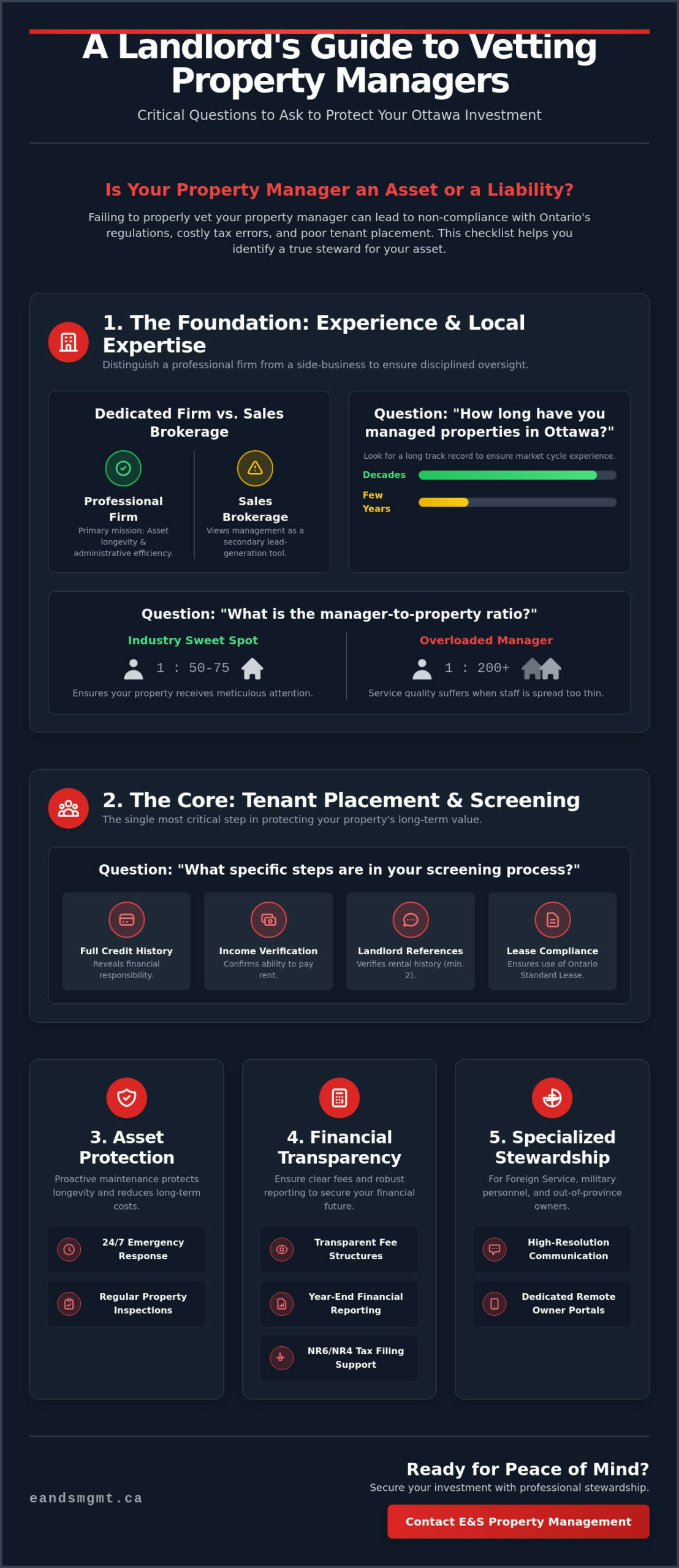
Selecting a partner to oversee your rental asset is a strategic decision that impacts your long-term financial health. It’s not just about finding someone to collect checks; you’re hiring a steward for your property’s future. One of the first questions to ask a property manager before hiring is whether they are a dedicated management firm or a real estate brokerage that manages properties on the side. A professional firm focuses on administrative efficiency and asset longevity as its primary mission. In contrast, sales-focused offices often view management as a secondary lead-generation tool. This distinction is vital for understanding what property management entails at a professional level. A dedicated firm invests in the specialized systems required for high-level oversight and maintenance resolution.
Localized expertise is non-negotiable for maximizing your ROI. Setting an accurate rental rate in Ottawa requires more than just looking at generic online listings. A professional manager understands why a three-bedroom home in Rockcliffe Park commands a different demographic and price point than a similar unit in Westboro. They track seasonal demand shifts unique to the National Capital Region, such as the influx of diplomatic and military personnel. This foresight prevents long vacancies and ensures your property isn’t undervalued. When a manager knows the specific street-level nuances of a neighborhood, they can position your asset to attract the highest quality tenants.
Longevity and Market Knowledge
Ask: ‘How long have you managed properties specifically in the Ottawa market?’ Guidance: A firm’s ability to navigate various market cycles is a marker of stability. Look for teams with a proven track record over decades rather than just a few years. They’ve managed assets through high-interest environments and low-vacancy periods. This depth of experience translates into better strategic advice for your specific property. It also ensures they have established relationships with local authorities and utility providers, which streamlines administrative tasks.
Staffing Ratios and Points of Contact
Ask: ‘Who will be my primary point of contact and how many doors do they personally manage?’ Accountability depends on a logical internal structure. If a single manager oversees 200 units, your property likely won’t get the meticulous attention it deserves. A ratio of 1 manager to 50-75 units is the industry sweet spot for quality service. You should also inquire about the administrative support team. Who handles the NR6 and NR4 tax filing support for non-residents? Who coordinates the emergency 24/7 maintenance response? A transparent staff structure indicates a firm built for stability and professional oversight.
Tenant Placement: Screening Systems and Marketing Strategies
Securing a high-quality tenant is the single most critical step in protecting your property’s long-term value. This phase dictates your cash flow stability and the physical condition of your asset for years to come. Professional managers don’t rely on luck. They use structured marketing and rigorous vetting to find reliable residents who respect the property and the lease terms. When considering your options, the questions to ask a property manager before hiring should focus heavily on their ability to minimize vacancy while maximizing tenant quality.
Marketing involves more than just a sign on the lawn. Effective strategies include professional photography and wide digital distribution across platforms like MLS, social media, and specialized rental sites. This broad reach creates a larger pool of applicants, allowing for more selective screening. You can find more detailed strategies in our Tenant Placement in Ottawa: A Landlord’s Guide. Using a standardized approach also ensures compliance with the Ontario Standard Lease, which is a legal requirement for most residential tenancies in the province. Missteps in the lease agreement can lead to significant legal disputes or the inability to enforce specific house rules.
Rigorous Screening Protocols
Ask: ‘What specific steps are included in your tenant screening process?’ A disciplined manager performs a multi-point check on every applicant. This process should include a full credit history, employment and income verification, and a minimum of two previous landlord references. Checking multiple references provides a clearer picture of a tenant’s long-term behavior rather than just their most recent experience. Due diligence in this context means applying consistent, non-discriminatory criteria that adhere to the Ontario Human Rights Code to ensure a fair and legal selection process.
Marketing and Vacancy Management
Ask: ‘Where will my property be listed and how do you handle showings?’ Inquire about their presence on high-traffic real estate portals and how they manage prospect inquiries. You should also ask about their average ‘Days on Market’ for properties similar to yours in size and location. A manager who tracks this data demonstrates a commitment to administrative efficiency and market awareness. High-resolution marketing, including professional images and virtual tours, isn’t just an aesthetic choice; it’s a financial one that attracts a higher tier of applicants.
If you’re looking for a partner who prioritizes asset longevity through meticulous vetting, consider exploring our professional tenant placement services to see how a structured approach reduces operational burdens. A steady hand during the placement phase prevents the chaos of bad tenancies later on.
Maintenance Coordination and Asset Protection
Maintaining the physical integrity of your rental property is a core component of professional stewardship. It’s the difference between a high-performing asset and a financial burden. When evaluating potential partners, the questions to ask a property manager before hiring should reveal their proactive strategy for maintenance resolution. A disciplined manager doesn’t wait for a tenant to call about a leak. They employ a pre-vetted network of licensed and insured contractors who understand the standards required for high-end residential assets. This network ensures that repairs are performed correctly the first time, preventing small oversights from escalating into structural failures.
Establishing clear financial boundaries is equally important for a stable partnership. You should expect defined maintenance spending limits and a transparent approval workflow. This structure allows the manager to handle minor repairs efficiently while ensuring you retain oversight on major capital expenditures. You can learn more about our specific protocols regarding Property Maintenance & Inspections in Ottawa. A steady hand in maintenance coordination removes the operational burden from the owner and instills confidence that the property’s longevity is being prioritized through foresight rather than just reaction.
Routine and Preventative Inspections
Ask: ‘How often do you perform physical inspections and what do you look for?’ Guidance: Demand at least two thorough inspections per year accompanied by detailed photographic reports. These visits shouldn’t just be a cursory walkthrough. They must identify potential issues like water intrusion, HVAC performance, or unauthorized tenant activity. Ask how they document the property’s condition during move-in and move-out. Meticulous documentation, including high-resolution images, is essential for protecting your asset and providing clarity if damage occurs.
Emergency Response and Repair Oversight
Ask: ‘How are after-hours emergencies handled for both the tenant and the owner?’ Guidance: An emergency 24/7 maintenance response system is non-negotiable for professional oversight. Real estate assets don’t follow business hours; a burst pipe at 2:00 AM requires immediate action to mitigate damage. You should also ask if the firm charges a markup on contractor invoices. Transparency in billing reflects a firm’s ethical positioning. Whether they charge a flat coordination fee or pass through costs directly, you deserve a clear understanding of the financial arrangement to ensure your interests remain the priority.
Financial Transparency, Fees, and Tax Compliance
A property’s financial performance depends on more than just gross rent. It relies on administrative efficiency and precise accounting. One of the most vital questions to ask a property manager before hiring is how they handle the “all-in” cost of management. Professional firms provide clear, monthly financial statements and comprehensive year-end tax packages. This level of transparency ensures you aren’t surprised by unexpected expenses. It also simplifies your tax preparation. A disciplined manager views themselves as a financial steward, ensuring every dollar is accounted for and every regulatory requirement is met without fail.
Meticulous financial reporting involves an itemized breakdown of all income and expenses. You should expect a statement that clearly shows rent collected, management fees deducted, and any maintenance costs paid to third-party contractors. This steady flow of information creates a sense of predictability. It allows you to monitor your investment’s health in real-time. When a firm provides high-level consulting alongside these reports, they help you understand the strategic vision for your asset’s longevity.
Fee Structure and Hidden Costs
Ask: ‘Can you provide a complete schedule of all potential fees, including leasing, renewals, and project management?’ Guidance: Avoid firms that advertise a low monthly percentage but inflate costs through hidden markups on repairs or excessive lease renewal fees. A professional partner earns their keep through proactive asset protection, not by nickel-and-diming the owner. Inquire specifically about their policy on renewal fees. If a tenant stays for several years, is the manager still providing value that justifies a recurring placement fee? A transparent fee schedule reflects a firm’s ethical positioning and commitment to a long-term partnership.
CRA Compliance for Non-Resident Owners
Ask: ‘Do you have experience managing NR6 and NR4 filings for landlords living abroad?’ Guidance: For expats and foreign service members, tax compliance is a high-stakes area. The Canada Revenue Agency (CRA) requires strict withholding and reporting for non-resident rental income. Errors in these filings can lead to significant financial penalties. A specialized manager acts as your Canadian Agent for tax withholding, ensuring that the correct amounts are remitted and reported on time. You can learn more about these specialized requirements through our Non-Resident Landlord Tax Services in Ottawa. This service is a critical differentiator for clients who need to ensure their investment remains compliant while they are stationed outside the country.
Managing the financial complexities of a rental property shouldn’t be a source of stress. Our team provides the stability and foresight needed to protect your assets and maintain full legal compliance. If you require a partner who prioritizes financial integrity and regulatory expertise, learn more about our financial reporting and tax filing support.
Specialized Stewardship for Foreign Service and Expats
For Foreign Service officers, DND members, and expats, property oversight requires a higher degree of resolution than standard management. When you are stationed thousands of miles away, perhaps in a region with limited connectivity or significant time zone differences, you cannot manage minor disputes or maintenance coordination personally. You need a representative who acts with the same level of care you would provide yourself. This specialized stewardship is a core differentiator for professionals who understand the unique pressures of a diplomatic or military posting. One of the most important questions to ask a property manager before hiring is how they adapt their systems for clients who are physically removed from their assets for years at a time.
A steady hand approach is essential to removing the operational burden while you are abroad. This involves more than just sending an occasional email. It requires a structured framework of administrative efficiency where every inspection, financial report, and maintenance resolution is documented and accessible regardless of your location. We specialize in providing property management for Foreign Service officers, ensuring that your home in Ottawa remains a secure and appreciating asset while you focus on your mission elsewhere. Our localized expertise in the National Capital Region allows us to navigate local regulations and tenant needs without requiring your direct intervention.
Communication Protocols for Global Clients
Ask: ‘How do you communicate with owners who are in different time zones or have limited connectivity?’ Guidance: Look for firms that utilize digital portals. These systems should allow 24/7 access to photographic inspection reports, financial statements, and lease documents. You should also ask how they handle urgent decisions when you are unreachable. A professional firm establishes clear pre-authorization limits for repairs, allowing them to protect your asset from further damage during an emergency without waiting for a response that might be delayed by an eight-hour time difference.
The Long-Term Partnership Model
Ask: ‘What is your average client retention rate for owners on multi-year postings?’ A high retention rate among expats and Foreign Service members is a strong indicator of a dependable steward. It suggests the firm is capable of maintaining asset longevity and tenant stability over the long term. A partnership that spans multiple postings provides a level of continuity that is invaluable for your financial peace of mind. By choosing a partner with a proven track record in this specialized niche, you ensure your property is managed with foresight and meticulous attention to detail.
Finding a reliable, professional steward for your rental property is the key to achieving passive income without the headache. If you are preparing for a posting or moving abroad, take the first step toward secure asset oversight. Schedule a consultation with E&S Property Management to discuss how our full-service management and tax filing support can protect your investment.
Securing Your Property’s Future with Professional Oversight
Choosing a property manager is a strategic investment in your asset’s longevity. By utilizing a structured framework of questions to ask a property manager before hiring, you ensure your partner possesses the administrative efficiency and legal foresight required in 2026. Professional stewardship requires more than just rent collection. It demands meticulous financial reporting, rigorous tenant vetting, and a reliable 24/7 emergency maintenance response. These systems transform a rental property from a source of stress into a stable financial engine.
Since 1981, we’ve provided this level of disciplined oversight to the Ottawa residential market. We’ve earned the trust of Global Affairs and DND members through over 40 years of specialized expertise, including critical NR6 and NR4 tax compliance support for non-resident landlords. Our team acts as the steady hand capable of navigating the complexities of maintenance and oversight on your behalf. Request a Professional Property Consultation with E&S to see how our solution-oriented approach can remove your operational burdens. Your peace of mind starts with a partner who values order and results as much as you do.
Frequently Asked Questions
What is the average property management fee in Ottawa for 2026?
Most professional firms in the Ottawa market charge between 8% and 12% of the monthly rent collected. This percentage reflects the industry standard for full-service oversight in the National Capital Region. It’s vital to clarify if a firm calculates this fee based on rent collected or rent due, as the former ensures you only pay for occupied units. Some agencies may also offer flat-fee structures for specific unit types to provide better cost predictability.
Do I need a property manager if I only have one rental unit?
Hiring a professional is often more about risk mitigation than unit volume. Even with a single property, you face the same legal requirements regarding the Ontario Standard Lease and human rights codes as institutional investors. A manager removes the operational burden of tenant placement and emergency calls. This ensures your investment remains a passive income stream rather than a demanding second job that requires constant attention to local regulations.
Can a property manager help me with my NR6 tax filing?
Specialized firms provide comprehensive NR6 and NR4 tax filing support for non-resident owners. This service is a core component of professional stewardship for expats and foreign service members stationed abroad. The manager acts as your Canadian Agent, handling the necessary withholding and reporting to the Canada Revenue Agency. This support ensures you remain compliant with federal regulations and avoid the heavy financial penalties associated with incorrect filings.
What happens if a tenant doesn’t pay rent while I am out of the country?
A dedicated manager initiates a structured resolution process immediately upon a missed payment. This involves serving the appropriate legal notices under the Residential Tenancies Act and coordinating with the Landlord and Tenant Board if the situation escalates. Having a local representative ensures that rent collection and legal enforcement continue without interruption. You won’t have to navigate the complexities of provincial law from a different time zone or continent.
How do property managers in Ottawa handle emergency repairs in the middle of the night?
Reliable firms maintain an emergency 24/7 maintenance response system to protect your asset from immediate damage. Tenants are provided with a dedicated contact line for after-hours issues like burst pipes, electrical failures, or furnace breakdowns. The manager coordinates with pre-vetted, licensed contractors to stabilize the situation. This proactive approach prevents small issues from becoming structural failures and ensures tenant safety is prioritized at all hours.
Should I hire a property manager who is also a real estate agent?
Dedicated management firms generally offer higher administrative efficiency than agents who manage properties as a secondary business. While some brokerages offer management, a specialized firm focuses entirely on asset protection and maintenance resolution rather than sales commissions. This specialized focus ensures your property receives the meticulous attention and technical tax support required for long-term financial health and asset longevity.
What is the difference between a ‘leasing fee’ and a ‘management fee’?
A leasing fee, or tenant placement fee, is a one-time charge for marketing the property and vetting new residents. The management fee is an ongoing monthly charge for the daily oversight of the asset, including inspections and financial reporting. Understanding this distinction is one of the key questions to ask a property manager before hiring to ensure you have a clear picture of the total cost of professional stewardship.
How often should a property manager provide me with financial reports?
You should expect detailed financial reporting and accounting statements on a monthly basis. These reports must itemize all income and expenses, providing a transparent view of your investment’s performance. Professional managers also provide a comprehensive year-end package to simplify your tax preparation. This steady flow of information creates a sense of predictability and allows you to monitor your property’s cash flow with confidence.


